



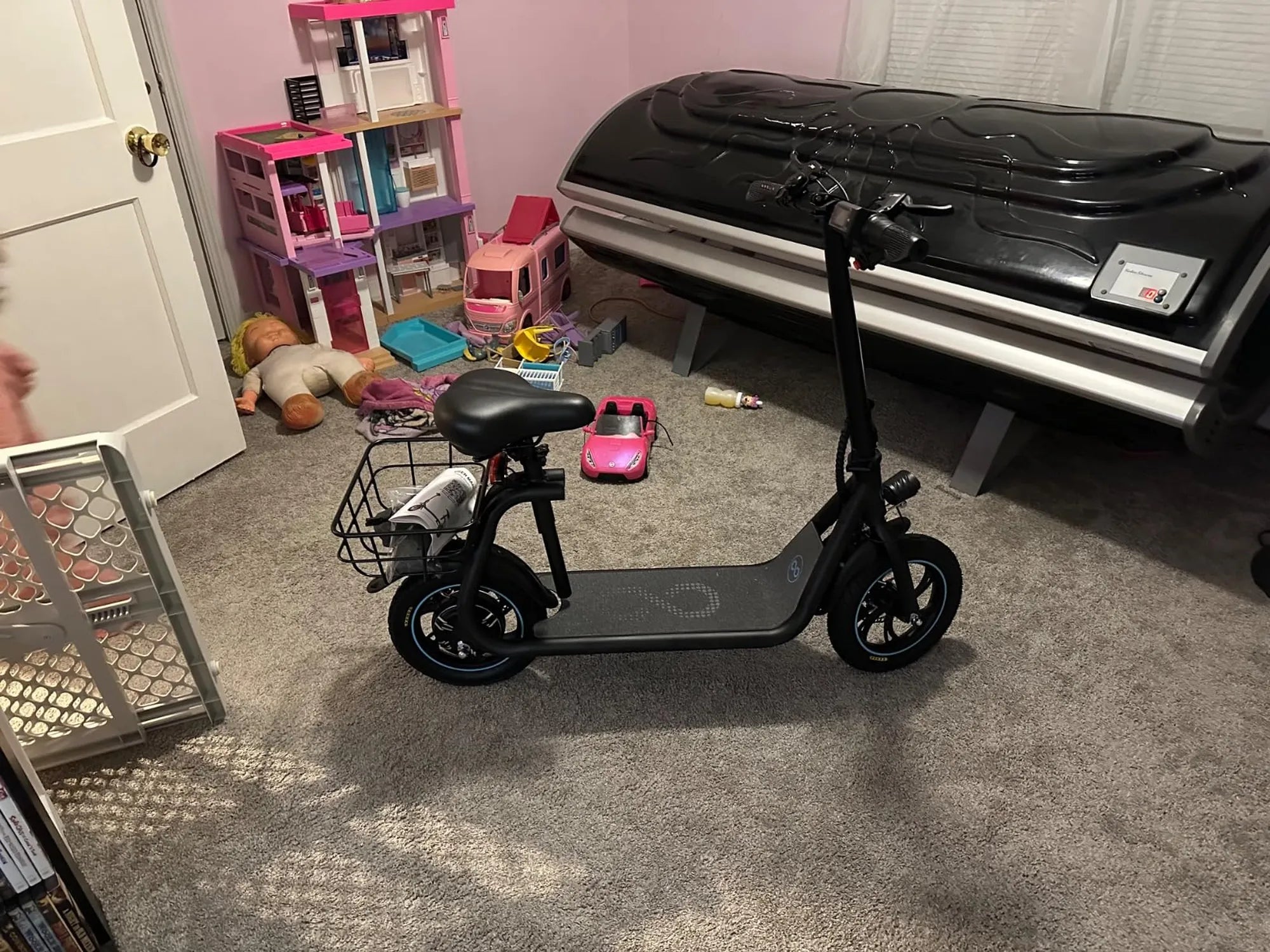
The Rise of the Fast Commuter Bike
Forget gridlock and crowded transit. The fast commuter bike represents a fundamental shift in urban mobility, combining the agility of a bicycle with electric propulsion to create a legitimate car alternative. This isn't about leisurely rides; it's about engineered efficiency, enabling riders to cover significant distances at speeds that make commuting by car seem obsolete. The core problem for modern urbanites isn't a lack of options, but a lack of fast, reliable, and practical ones that fit seamlessly into a demanding schedule.
A true fast commuter bike is defined by its ability to sustain higher speeds over typical commute distances, offering a blend of motor power, rider ergonomics, and durable construction. It's designed for the rider who views their commute not as lost time, but as an opportunity for efficiency and even enjoyment. Brands like Gyroor engineer solutions specifically for this need, focusing on the performance metrics that matter most when time is of the essence.
This guide will dissect what makes a bike a true speed-commuting tool. We'll move beyond marketing claims to examine the hard specifications that dictate real-world performance. You'll learn how to compare models, understand the critical balance between speed and safety, and discover how to maximize your investment for a faster, smarter daily journey.
The goal is clear: to provide you with the data-driven knowledge needed to select a fast commuter bike that reclaims your time, expands your radius, and delivers unmatched urban freedom. Let's move beyond traffic, together.
What Makes a Bike a True "Fast Commuter"?
Top speed is just one metric in a much larger equation. A genuine fast commuter bike is a system where multiple components work in harmony to deliver consistent, reliable performance day after day. It starts with a robust motor, but extends to every part that influences acceleration, stability, and endurance.
The motor's sustained power output is more critical than its peak wattage. A motor that can deliver 500W of continuous power will handle a 10-mile commute with hills far better than a 750W motor that overheats and reduces power after five minutes. Torque, measured in Newton-meters (Nm), is equally vital for quick starts from traffic lights and confident climbing on urban inclines.
Frame geometry and materials dictate both aerodynamics and weight. A lightweight aluminum or carbon frame allows for quicker acceleration and easier handling, while a more aggressive, forward-leaning riding position reduces wind resistance. Furthermore, efficient gearing on pedal-assist models or a responsive throttle system ensures power is delivered smoothly and intuitively.
Finally, real-world range is paramount. A fast bike with a 15-mile range is impractical for most commutes. The battery capacity, motor efficiency, and riding mode must align to provide a reliable buffer beyond your daily distance, accounting for variables like wind, weight, and terrain.
Speed vs. Safety: Finding the Balance
High speed is meaningless without absolute control. The safety features on a fast commuter bike are not accessories; they are integral performance components. Superior braking is the most critical element. Hydraulic disc brakes offer consistent, powerful stopping force in all weather conditions, a non-negotiable feature for any bike capable of sustaining 20+ mph.
Tire choice profoundly affects stability and confidence. Wider, puncture-resistant tires (often 2.1 inches or more) provide a larger contact patch, improving grip during cornering and on wet roads. Their added volume also absorbs road vibrations, leading to a more controlled and comfortable ride at speed.
Integrated lighting is essential for visibility. A bright, always-on headlight and a rear brake light ensure you are seen by other road users, which is a primary safety strategy. A robust frame construction, often with reinforced welding at stress points, ensures the bike can handle the repeated demands of high-speed commuting without compromising structural integrity.
True performance is measured not just by how fast you can go, but by how quickly and safely you can stop. Investing in a bike that prioritizes this balance, like those from Gyroor with their reliable braking systems and durable frames, is investing in long-term confidence on the road.
Key Specifications to Compare When Shopping
Navigating the market requires a disciplined, data-driven approach. Focus on these core specifications to cut through the noise and identify bikes built for serious commuting. Use this framework as a comparative checklist.
Motor & Drivetrain: Note the motor's nominal (sustained) wattage and its torque rating (Nm). Hub motors are common and offer good reliability, while mid-drive motors provide better weight distribution and hill-climbing efficiency by leveraging the bike's gears. The type of pedal assist sensor (cadence vs. torque) also affects responsiveness.
Speed & Range: Distinguish between the theoretical top speed and the realistic cruising speed you can maintain. For range, always look for tests or estimates based on real-world conditions (e.g., PAS level 3, mixed terrain), not ideal laboratory settings. A larger battery (measured in Watt-hours, Wh) generally correlates with longer range.
Battery & Charging: Battery certification is a safety imperative. UL-certified battery packs, like those used by Gyroor, have undergone rigorous testing for safety and longevity (500+ charge cycles). Also check voltage (e.g., 48V) and amp-hour (Ah) rating. A 48V 15Ah battery offers more power and range than a 36V 15Ah unit.
Weight & Portability: Total weight impacts acceleration, hill climbing, and your ability to carry the bike if needed. Consider if features like a folding frame are necessary for multi-modal commuting or apartment storage.
Warranty & Support: A comprehensive warranty is a sign of manufacturer confidence. Look for at least a 1-year warranty on the frame, motor, and battery, and confirm the availability of customer support and replacement parts in your region.
The Gyroor Advantage: Engineered for Confident Speed
Gyroor's design philosophy directly targets the needs of the performance-oriented commuter. It begins with power systems you can trust. Every Gyroor e-bike utilizes UL-certified battery packs. This ensures safe, stable power delivery that protects against overheating and maintains consistent performance over the battery's entire lifespan, which is critical for maintaining speed and range over time.
Commuting doesn't stop for drizzle. Gyroor models feature IPX5 water-resistant designs, safeguarding critical electrical components from rain and road spray. This engineering allows you to ride in confidence regardless of the weather, ensuring your fast commuter bike is a truly all-weather vehicle.
Beyond the hardware, Gyroor backs its products with a reliable 1-year warranty and dedicated support, trusted by over 100,000 riders across North America and Europe. This combination of certified safety, environmental durability, and strong customer assurance means you can focus on the ride, not on reliability concerns.
Performance Comparison: Fast Commuter Bike Categories
Not all fast commuter bikes are the same. Your ideal model depends on your commute length, terrain, and storage needs. The following table breaks down the key attributes of the primary categories.
| Bike Type | Ideal Use Case | Typical Motor Power | Key Advantages | Considerations |
|---|---|---|---|---|
| High-Speed City E-Bike | Long urban commutes (10+ miles), flat to rolling hills. | 500W-750W sustained | High top speed (28mph Class 3), comfortable geometry, integrated racks/lights. | Heavier, less portable, higher price point. |
| Performance Folding E-Bike | Multi-modal commutes (train/bus), limited storage space. | 350W-500W sustained | Extreme portability, quick folding, easier to store indoors. | Smaller wheels can affect high-speed stability, often shorter range. |
| Lightweight Commuter E-Bike | Shorter commutes (5-10 miles), riders who also pedal actively. | 250W-500W sustained | Very agile, feels more like a traditional bike, often more affordable. | Less power for steep hills, may have fewer cargo-carrying options. |
High-Speed City E-Bikes are the workhorses of the fast commuter world. They are built for covering longer distances quickly and in comfort, often featuring larger batteries and more powerful motors. Their design prioritizes a stable, confident ride at sustained higher speeds.
Performance Folding E-Bikes solve the "last-mile" and storage problem brilliantly. Modern folders from reputable brands no longer sacrifice significant performance for portability. They offer a compelling blend of speed and convenience for the urban dweller who needs to combine cycling with public transit.
Lightweight Commuter E-Bikes appeal to the rider who wants an electric boost but still enjoys the physical act of cycling. They provide enough assistance to maintain a brisk pace without sweat, making them perfect for shorter commutes where agility and ease of handling are top priorities.
The Practical Rider's Guide: Maximizing Your Fast Commute
Owning a fast commuter bike is step one. Optimizing its use is what transforms it from a purchase into a lifestyle upgrade. Start with route planning. Use apps to identify dedicated bike lanes, paved trails, and quieter residential streets. A slightly longer route that is safer and more continuous often results in a faster and less stressful overall trip.
Your gear directly impacts comfort and efficiency. Padded cycling shorts are invaluable for longer rides. A moisture-wicking base layer and a wind-resistant jacket will keep you comfortable in variable conditions. Don't wear loose clothing that can catch in the chain or wheels.
Security is non-negotiable for a valuable e-bike. Invest in a high-quality, hardened steel U-lock (or two) and always lock the frame and rear wheel to a solid, immovable object. Consider secondary cable locks for the front wheel. If possible, bring the battery indoors with you to deter theft and prolong its life.
Basic maintenance sustains performance. Weekly checks should include tire pressure (properly inflated tires roll faster and resist punctures), brake pad wear, and that all bolts are snug. A clean and lubricated chain also ensures efficient power transfer, whether from your legs or the motor.
Beyond the Bike: Essential Gear for the Fast Commuter
Your safety equipment is as important as the bike's components. A high-quality helmet is mandatory. Look for models with MIPS (Multi-directional Impact Protection System) technology, which provides added protection against rotational forces in a crash.
For carrying cargo, a set of waterproof panniers keeps weight off your back and maintains your center of gravity, improving handling. If using a backpack, choose one designed for cycling with a chest strap and ventilation.
Enhance your visibility with additional gear. Reflective ankle bands, a reflective vest or jacket, and even gloves with reflective elements make you significantly more visible to drivers from all angles, especially in low-light conditions.
A portable tire repair kit is a commuter's insurance policy. Include tire levers, a patch kit, a compact pump or CO2 inflator, and a multi-tool. Knowing how to fix a flat quickly can be the difference between a minor delay and being severely late.
Frequently Asked Questions (FAQ)
How fast can a commuter e-bike legally go?
In the United States, federal law defines three classes of electric bicycles. Class 1: Pedal-assist only, no throttle, with a maximum assisted speed of 20 mph. Class 2: Throttle-assisted, with a maximum motor-powered speed of 20 mph. Class 3: Pedal-assist only, no throttle, with a maximum assisted speed of 28 mph. Most states have adopted this classification system. Always check your local regulations, as rules can vary by state, county, or even city. Gyroor offers models compliant with these classes to ensure legal operation.
Is a faster commuter bike worth the higher cost?
The value proposition extends far beyond the initial price tag. A faster bike directly translates to time saved on every trip, which compounds over weeks and months. It expands your viable commuting radius, potentially opening up new housing or job opportunities. By replacing car trips, you save significantly on fuel, parking, insurance, and maintenance. There are also clear health benefits from consistent, low-impact exercise and the mental well-being that comes from an enjoyable, stress-free commute. When viewed as a transportation solution rather than a recreational toy, the return on investment is often substantial.
How does weather affect a fast commuter bike's performance?
Cold temperatures (below 50°F/10°C) can reduce lithium-ion battery efficiency, potentially lowering range by 10-30%. It's best to store the battery indoors and only install it before riding. Wet conditions require increased stopping distances, making quality disc brakes essential. Rain and road grime also increase wear on the drivetrain, necessitating more frequent cleaning and lubrication. This is where features like Gyroor's IPX5 water resistance provide crucial protection for the electrical system, ensuring reliable operation and longevity despite the elements.
Can I use a fast commuter bike for fitness?
Absolutely. The pedal-assist function allows you to tailor the workout to your desired intensity. You can use a lower assist level (or none) to get a vigorous cardiovascular workout, or use a higher assist level for active recovery while still getting outside and moving. Many riders find that an e-bike encourages them to ride more often and for longer distances, leading to greater overall physical activity compared to a traditional bike that might sit unused on challenging days.
What is the most important maintenance task for an e-bike?
Beyond the basics of tire pressure and brake checks, caring for the battery is paramount for long-term performance and safety. Avoid regularly draining it to 0%. Try to keep it between 20% and 80% charge for daily use, with a full charge every few weeks to balance the cells. Store it in a cool, dry place, away from extreme heat or cold. Following the manufacturer's charging guidelines, which for Gyroor involves using only the provided UL-certified charger, is critical for safety and battery health.
Investing in Your Time and Freedom
A fast commuter bike is more than a vehicle; it's a strategic investment in reclaiming your most valuable asset—time. It transforms the daily grind into an efficient, enjoyable, and empowering part of your day. The success of this investment hinges on choosing a machine built not just for speed, but for the relentless demands of daily urban travel.
This requires a partner that prioritizes performance, safety, and durability in equal measure. It means selecting a brand that uses certified components, engineers for real-world conditions, and stands behind its products with robust support. The right bike unlocks a new level of urban freedom, reducing stress, improving health, and offering a sustainable alternative to car dependency.
Your journey toward a faster, smarter commute starts with informed choices. Evaluate your needs, compare the critical specifications, and prioritize long-term reliability over short-term savings. The road ahead is clearer, faster, and more open than you think.
Ready to experience the fusion of speed, reliability, and urban freedom? Explore engineering designed for the demanding commuter. Browse the full Gyroor collection, featuring UL-certified batteries, IPX5 water-resistant designs, and a reliable 1-year warranty, at gyroorboard.com.
Mini Trike Tires: Your Complete Guide to Size, Safety, and Performance
Mobility Scooter Under 400: Your Guide to Affordable Independence