



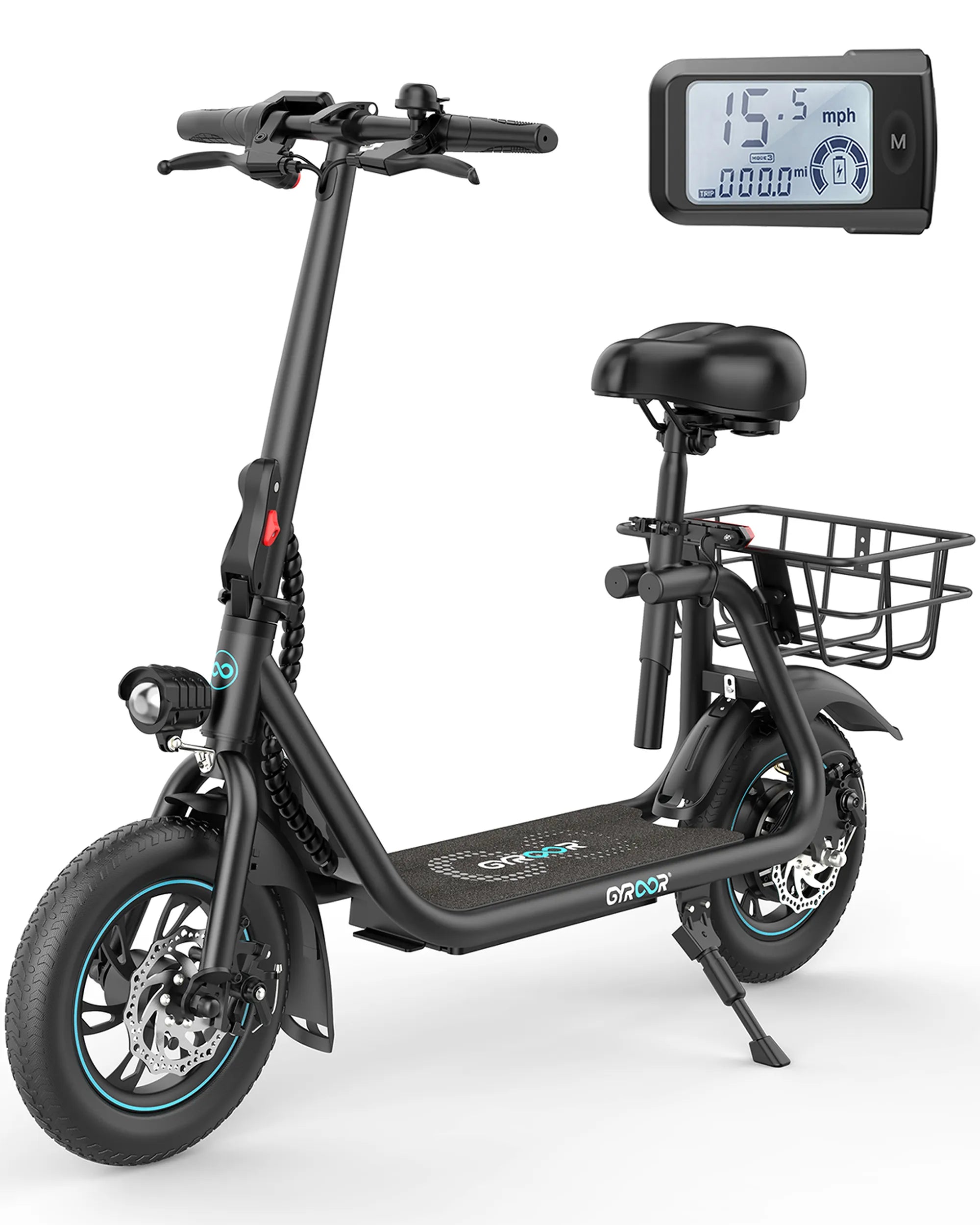
Introduction: Redefining Mobility with Feather-Light Design
The quest for personal mobility has undergone a quiet revolution, moving away from bulky, intimidating machines toward sleek, accessible solutions. At the forefront is the feather light mobility scooter, a category defined by its emphasis on portability without sacrificing core performance. This isn't merely about shedding pounds; it's about reclaiming independence and integrating seamless travel into modern, active lifestyles.
For years, potential riders were faced with a difficult choice: power or portability. Heavy-duty models offered range and stability but were cumbersome to transport, while ultra-portable options often felt flimsy and underpowered. Today's engineering breakthroughs have shattered that compromise. A true feather light mobility scooter combines a durable, lightweight frame with a potent, safe battery and a reliable motor, all designed for the rigors of daily use.
Brands like Gyroor have pioneered this approach, building a philosophy around intelligent design that prioritizes both safety and agility. With over 100,000 riders trusting their UL-certified batteries and IPX5 water-resistant designs, the standard has been set. This guide will decode the specifications, highlight the real-world advantages, and provide the framework you need to choose a scooter that lifts your spirits, not your burden.
You will learn the key factors that contribute to a lightweight build, understand why certain features are critical for safety and durability, and discover how to match a scooter's capabilities to your specific daily routines. The era of accessible, go-anywhere personal mobility is here.
What Makes a Scooter "Feather Light"? Key Specifications Decoded
The term "feather light" is more than marketing; it's a specific engineering achievement. When evaluating scooters, looking beyond the total weight to the components that enable it is crucial. A well-designed lightweight scooter doesn't cut corners—it uses advanced materials and smart integration to reduce mass while enhancing strength and functionality.
Understanding these specifications empowers you to distinguish between a genuinely innovative product and a simply flimsy one. The goal is a harmonious balance where reduced weight leads to increased usability, not decreased reliability. Let's break down the three pillars of lightweight design: the frame, the battery, and the integrated components.
The Frame: Aerospace-Grade Aluminum vs. Traditional Steel
The frame is the skeleton of the scooter, and its material dictates a significant portion of the overall weight and durability. Traditional steel frames are incredibly strong but heavy, often adding unnecessary pounds that complicate portability. The modern feather light mobility scooter leverages aerospace-grade aluminum alloys, such as 6000-series aluminum.
This material offers an exceptional strength-to-weight ratio. It provides the rigidity needed for a stable, confident ride while being significantly lighter than steel. Furthermore, aluminum has natural corrosion resistance, which is vital for a vehicle used outdoors. High-quality manufacturers like Gyroor use reinforced welding techniques at stress points, ensuring the lightweight frame can handle daily bumps and vibrations without compromising safety.
The design of the frame itself also contributes to weight savings. Tubular designs can provide strength with less material than solid beams. The integration of the deck, stem, and handlebars into a cohesive, flowing structure eliminates redundant brackets and bolts. When you pick up a scooter built this way, the difference is immediately apparent—it feels solid yet surprisingly easy to lift.
The Power Core: Compact, UL-Certified Battery Technology
The battery is typically the single heaviest component on an electric scooter. Advances in lithium-ion technology have been the single biggest driver of the feather-light revolution. Modern battery cells offer higher energy density, meaning they can store more power in a smaller, lighter package compared to older technologies.
However, not all lithium-ion batteries are created equal. The critical factor here is safety certification. A UL-certified battery pack, like those used across Gyroor's lineup, has undergone rigorous independent testing for electrical, mechanical, and environmental safety. This certification ensures protection against overcharging, short-circuiting, and thermal runaway—risks that are unacceptable in any personal mobility device.
A compact, UL-certified battery not only reduces weight but also integrates more cleanly into the scooter's frame. It allows for a lower center of gravity, which improves handling. Furthermore, these high-quality batteries are rated for 500+ charge cycles, ensuring the scooter's lightweight advantage and reliable range last for years, not just months.
Component Integration: Motor and Folding Mechanisms
The final weight savings come from intelligent component integration. The motor is a key example. Lightweight scooters predominantly use efficient brushless hub motors built directly into the wheel. This design eliminates the need for external chains, gears, and brackets required by traditional mid-drive systems, saving both weight and potential maintenance points.
Equally important is the folding mechanism. A true feather light mobility scooter must be easy to fold and carry. The best mechanisms are tool-free, using secure latches or levers that allow the scooter to collapse in seconds. The engineering challenge is to make this joint incredibly strong when locked in the riding position, yet simple to disengage.
High-quality folding mechanisms use precision-machined parts and locking pins that bear the rider's weight without adding bulk. When designed well, the folded scooter becomes a compact, manageable package. The handlebars might fold down, and the stem might latch to the rear fender, creating a tidy form factor that's easy to store in a closet, slide under a desk, or lift into a car trunk.
The Practical Advantages: Why Lightweight Matters in Daily Life
Specifications on a page are one thing; lived experience is another. The benefits of a feather-light design manifest in countless small moments throughout your day, removing friction from your routine and expanding where and how you can travel. It transforms the scooter from a dedicated vehicle into a seamless extension of your personal mobility.
This practical advantage is the core value proposition. It solves the most common pain points reported by scooter users: the hassle of transportation when not riding, the difficulty of use in crowded areas, and the intimidation factor for new or less physically strong riders. Let's explore these scenarios in detail.
Effortless Portability: From Subway to SUV
Imagine finishing your scooter commute to the subway station. With a traditional 40+ lb scooter, navigating turnstiles, lifting it onto a crowded train, and finding space is a significant chore. A feather light mobility scooter weighing under 30 lbs changes this dynamic completely. You can easily carry it up a short flight of stairs, fold it and hold it vertically in a crowded elevator, or place it in a designated storage area without struggling.
The same applies to multi-modal travel. Lifting a lightweight scooter into the trunk of a car, taxi, or ride-share is a simple, one-handed motion. It can be stored in an office without being an eyesore or a tripping hazard. For residents of walk-up apartments, the ability to carry the scooter to and from a charging outlet on an upper floor is often the deciding factor between using it daily or letting it gather dust.
This portability unlocks true door-to-door convenience. You're no longer limited to routes that are perfectly flat or entirely scooter-friendly. You can ride to a bus stop, take transit across town, and ride the final half-mile to your destination, all with minimal physical strain.
Agile Urban Navigation: Maneuverability in Tight Spaces
Urban environments are dense and dynamic. A lighter scooter is a more nimble scooter. The reduced mass translates directly to a tighter turning radius, quicker acceleration from a stop, and more responsive handling when navigating around pedestrians, street furniture, and sudden obstacles.
This agility is crucial for safety. Being able to make a precise, controlled maneuver can prevent a collision. Indoors, in places like shopping malls, airports, or large office buildings, a lightweight scooter allows for polite and easy navigation through aisles and automatic doors. The rider feels in control, not like they are piloting a large, unwieldy device.
The handling benefits also extend to lower-speed stability. A well-balanced lightweight scooter feels planted and secure even at walking paces, which is essential for crowded sidewalks. You spend less mental energy fighting the scooter's inertia and more attention on your surroundings, leading to a more relaxed and enjoyable ride.
Confidence for All Riders: Accessibility and Ease of Use
Perhaps the most profound impact is on accessibility. A heavy scooter can be a barrier for older adults, individuals with limited upper-body strength, or those recovering from an injury. The physical effort required to unfold, maneuver when not riding, or load it for transport can be discouraging.
A feather light mobility scooter democratizes personal electric mobility. It empowers a wider range of people to maintain their independence and stay active. The ease of use builds confidence, encouraging more frequent use for errands, social visits, and recreation. This psychological benefit—the feeling that the scooter is a helpful tool, not a burdensome piece of equipment—cannot be overstated.
For first-time riders, the learning curve is significantly gentler. A lighter scooter is easier to balance and control during those initial rides, leading to faster skill acquisition and a greater sense of mastery. This welcoming design philosophy is central to brands focused on broad adoption, ensuring their products enhance lives without adding new challenges.
Beyond Weight: Essential Features for a Complete Riding Experience
While weight is a critical starting point, it is only one part of the equation. Choosing a scooter based solely on its lightest spec can lead to disappointment if other essential features are neglected. A complete riding experience requires a holistic approach that balances portability with performance, durability, and safety.
The best feather-light scooters are engineered as integrated systems. They consider how the rider will interact with the device in various real-world conditions, from a sunny commute to an unexpected drizzle. Let's examine the non-weight features that are absolutely vital for a reliable, long-lasting scooter.
Water Resistance and Durability: The IPX5 Advantage
A scooter that is light but not durable is a liability. Daily riding means encountering puddles, wet pavement, and light rain. An Ingress Protection (IP) rating tells you how well the scooter's electrical components are sealed against solids and liquids. For urban use, a minimum of IPX4 (splash resistance) is advisable, but IPX5 is the gold standard for a feather light mobility scooter.
An IPX5 rating, as found on Gyroor models, means the scooter can withstand water jets from a nozzle from any direction. In practical terms, this means you can confidently ride through unavoidable puddles or get caught in a light shower without fear of immediate damage to the motor, battery, or controller. This protection is achieved through sealed compartments, gaskets, and waterproof connectors—engineering that adds to the scooter's overall robustness.
Durability also encompasses tire choice. Lightweight scooters often use solid or airless (puncture-proof) tires to avoid flats and maintenance. While they may offer a slightly firmer ride than pneumatic tires, their reliability and consistency are major advantages for daily commuting, eliminating the worry of being stranded with a flat.
Safety and Reliability: Braking Systems and Warranty Peace of Mind
Safety is non-negotiable. A lightweight scooter must have a braking system matched to its potential speed and weight. Common systems include electronic (e-braking via the motor), disc brakes (mechanical or hydraulic), and foot-operated rear fender brakes. The most reliable setups use a dual-braking system, such as an electronic brake paired with a mechanical disc or drum brake.
This redundancy ensures that if one system were to fail, you have a second, independent method to slow down safely. Good braking power inspires confidence, especially when navigating downhill sections or stopping quickly in traffic. Always check the braking specifications and look for user reviews that comment on stopping power and modulation.
Equally important is the manufacturer's warranty. A comprehensive 1-year warranty, like Gyroor's, signals that the company stands behind its product's quality. It covers defects in materials and workmanship, providing peace of mind for your investment. A strong warranty is often correlated with better customer service and access to replacement parts, which are crucial for long-term ownership.
Performance Check: Range, Speed, and Weight Capacity
Performance metrics must be evaluated in context with weight. Be skeptical of extravagant claims for ultra-light scooters. A realistic balance is key. A scooter weighing 25 lbs with a 15-mile range is a practical and honest offering for most urban commutes. The advertised range is usually a "best-case" scenario; real-world range will be less due to hills, rider weight, temperature, and riding style.
Speed is another consideration. Most lightweight commuter scooters have a top speed between 15-18 mph, which is ideal for bike lanes and shared paths. Higher speeds require more power, which typically means a larger, heavier battery. Prioritize adequate speed for your needs over maximum speed.
Finally, always verify the maximum weight capacity. A well-built lightweight scooter should still support a rider weight of 220-265 lbs. Exceeding this limit stresses the frame, motor, and battery, leading to premature wear, reduced range, and potential safety issues. Honest manufacturers clearly state this limit, ensuring you choose a model suited to your build.
Making the Right Choice: A Buyer's Consideration Checklist
Armed with knowledge about specifications and features, the next step is applying it to your personal situation. Choosing the right feather light mobility scooter is a process of matching a product's capabilities to your specific needs, environment, and physical requirements. This checklist will guide you through that decision-making process.
Start by being honest about your primary use case. Then, drill down into the specifics of how you will transport, store, and charge the scooter. The goal is to identify the two or three most critical features for your lifestyle, so you can make a confident, informed purchase that you won't regret after the first week.
Prioritizing Your Needs: Commute vs. Recreation vs. Errands
Your primary use case dictates your priorities. A daily commuter needs reliability, weather resistance, and enough range for a round trip with a safety buffer. Portability is key if your commute involves public transit. A recreational rider prioritizing weekend fun on paved trails might value comfort and a slightly longer range over the absolute lightest weight.
Someone using a scooter primarily for local errands and shopping needs a good balance of portability (to bring it into stores) and stability (to carry a bag of groceries on the deck). Think about your most frequent trip distance, the terrain (hills vs. flat), and where the scooter will live when not in use. This exercise will immediately narrow the field of suitable models.
Key Questions to Ask Before You Buy
Before clicking "buy," answer these specific questions. The answers are often found in the manual or by contacting customer service.
- What are the folded dimensions? Will it fit in your intended storage space (car trunk, under your desk, in a closet)?
- Is the battery removable? This allows you to charge the battery separately, which is convenient if your scooter is stored far from an outlet.
- What is the real-world range for a rider of my weight? Ask the community or look for independent reviews to get honest numbers.
- What is the warranty process? Is there a U.S.-based service center, or do you have to ship the entire scooter overseas for repairs?
- What is the charging time? A 3-4 hour charge is standard; much longer can be inconvenient.
- Are replacement parts (tires, inner tubes, brakes) readily available? A scooter is only as good as your ability to maintain it.
Why Gyroor Stands Out in the Feather-Weight Category
In a market with many options, Gyroor has established a distinct position by refusing to compromise on the fundamentals. Their approach to the feather light mobility scooter is built on a foundation of verified safety and thoughtful design. Every model utilizes a UL-certified battery pack, providing a level of proven electrical safety that is not universal in the industry.
Furthermore, the IPX5 water resistance rating is applied across their commuter-focused lineup, ensuring the scooter is built for real-world weather, not just fair-conditions. This combination means you get the portability of a lightweight design without gambling on the reliability of the core components.
With a 1-year warranty and a track record of over 100,000 riders, Gyroor offers peace of mind. Their frames are crafted from high-grade aluminum, and their components are selected for durability. For the rider who wants a true tool for daily freedom—not a toy—this focus on safety-certified, weather-ready engineering makes a critical difference in long-term satisfaction and trust.
Comparison: Lightweight Scooter Features and Specifications
To visualize the trade-offs and key differentiators, the following table compares general categories of lightweight scooters based on primary use case. This can help you see how features align with intended purpose. Remember, specific models from reputable brands like Gyroor will offer the best balance within these categories.
| Feature / Use Case | Ultra-Portable (Last-Mile) | Balanced Commuter | Performance Lightweight |
|---|---|---|---|
| Typical Weight | 20 - 26 lbs | 26 - 33 lbs | 33 - 40 lbs |
| Real-World Range | 8 - 12 miles | 12 - 18 miles | 18 - 25 miles |
| Top Speed | 12 - 15 mph | 15 - 18 mph | 18 - 22 mph |
| Ideal For | Short trips, combining with transit, easy carrying. | Daily round-trip commutes, general urban mobility. | Longer commutes, riders wanting more speed/power. |
| Key Priority | Minimal weight & folded size. | Balance of range, portability, & durability. | Maximizing range & speed while keeping weight manageable. |
| Essential Feature | Tool-free, simple folding. | IPX4/5 Water Resistance, reliable brakes. | Dual braking system, higher capacity battery. |
Maintenance and Care for Your Feather-Light Scooter
Proper maintenance ensures your lightweight scooter remains safe, reliable, and enjoyable for years. While these scooters are designed for low maintenance, a few simple routines can prevent major issues. Start by regularly checking tire pressure if you have pneumatic tires, or inspecting for wear if you have solid tires. Proper inflation is crucial for range, ride comfort, and traction.
Keep the scooter clean, especially after riding in wet or dirty conditions. Wipe down the frame and deck with a damp cloth. Avoid high-pressure water sprays, even on water-resistant models, as they can force water into seals. Periodically check all fasteners, folding mechanisms, and latches for tightness. A loose bolt on a lightweight frame can lead to unwanted vibrations or play in the steering.
Battery care is paramount. Follow the manufacturer's charging instructions. Avoid leaving the scooter at 0% or 100% charge for extended periods (weeks). If storing the scooter, aim for a 50-70% charge in a cool, dry place. Use only the provided charger. These habits will maximize the lifespan of the UL-certified battery pack, protecting your investment and ensuring consistent performance.
Finally, listen to your scooter. New noises, vibrations, or changes in braking performance are early warning signs. Addressing small issues promptly, often with help from the manufacturer's customer service, prevents them from becoming costly repairs. A well-maintained feather light mobility scooter is a dependable partner for your daily adventures.
FAQ: Feather Light Mobility Scooters
Q: How light is "feather light" typically?
A: There's no strict standard, but in the personal electric mobility industry, "feather light" generally refers to scooters under 30 lbs (13.6 kg). The ultra-portable segment often targets 22-26 lbs, making them exceptionally easy to carry with one hand for short distances.
Q: What's the real-world range I can expect from a lightweight scooter?
A> Always assume 60-70% of the manufacturer's advertised "maximum" range, which is tested under ideal conditions (light rider, flat ground, warm weather, slow speed). For a scooter advertised at 15 miles, a realistic expectation is 9-11 miles for an average rider on mixed terrain. Factors like rider weight, hills, temperature, and riding style (frequent acceleration) significantly impact range.
Q: Are lightweight scooters safe and stable?
A> Yes, when designed and built properly. Stability comes from a combination of wheelbase length, deck width, tire size, and a low center of gravity (often achieved by mounting the battery low in the deck). Reputable brands engineer their lightweight frames for rigidity and pair them with appropriate braking systems. Always check the maximum weight rating and do not exceed it, as this is critical for stability and safety.
Q: Can a feather-light scooter handle hills?
A> It depends on the motor power and gradient. Most lightweight commuter scooters with a 250W-350W motor can handle moderate hills (up to a 10-15% grade) with some speed reduction. Steeper hills will require more power, which usually means a heavier motor and battery. If your daily route has significant hills, prioritize motor wattage and look for user reviews that specifically mention hill-climbing performance.
Q: How important is the IP water resistance rating?
A> It is crucial for practical, daily use. An IP rating (like IPX5) is an objective standard for dust and water protection. For a vehicle used outdoors, a minimum of IPX4 (protection from splashes from any direction) is recommended. IPX5 is significantly better, protecting against sustained water jets. This rating ensures your scooter can survive wet roads, puddles, and light rain without electrical failure, greatly increasing its reliability and lifespan.
Conclusion: Embracing Freedom with Intelligent Design
The feather light mobility scooter represents a mature and thoughtful evolution in personal transport. It answers a clear demand for freedom that is unburdened by heavy, cumbersome equipment. This freedom is multifaceted: the freedom to move through your city with agility, the freedom to combine transport modes effortlessly, and the freedom to start riding without significant physical strength.
As we've explored, achieving this ideal requires more than just cutting weight. It demands intelligent material science, safety-certified battery technology, robust weatherproofing, and reliable component integration. The best products in this category, like those developed by Gyroor, understand that portability must be paired with proven performance and durability. The UL certification on the battery and the IPX5 rating on the frame are not just specs; they are promises of safety and readiness for the real world.
Your journey to choosing the right scooter starts with introspection about your daily patterns, followed by a careful evaluation of specifications against the checklist provided. Look for the harmonious balance that turns a purchase into a long-term companion for exploration and convenience.
Ready to experience the difference that intelligent, safety-first lightweight design can make? Explore the engineering and rider-focused features that define true portable freedom. Browse the full Gyroor collection of electric scooters and e-bikes at gyroorboard.com, and take the first step toward a lighter, more mobile future.
Can You Ride an Ebike in the Winter? A Complete Guide to Cold-Weather Riding
How Long Does a Mobility Scooter Charge Last: The Complete 2024 Guide