



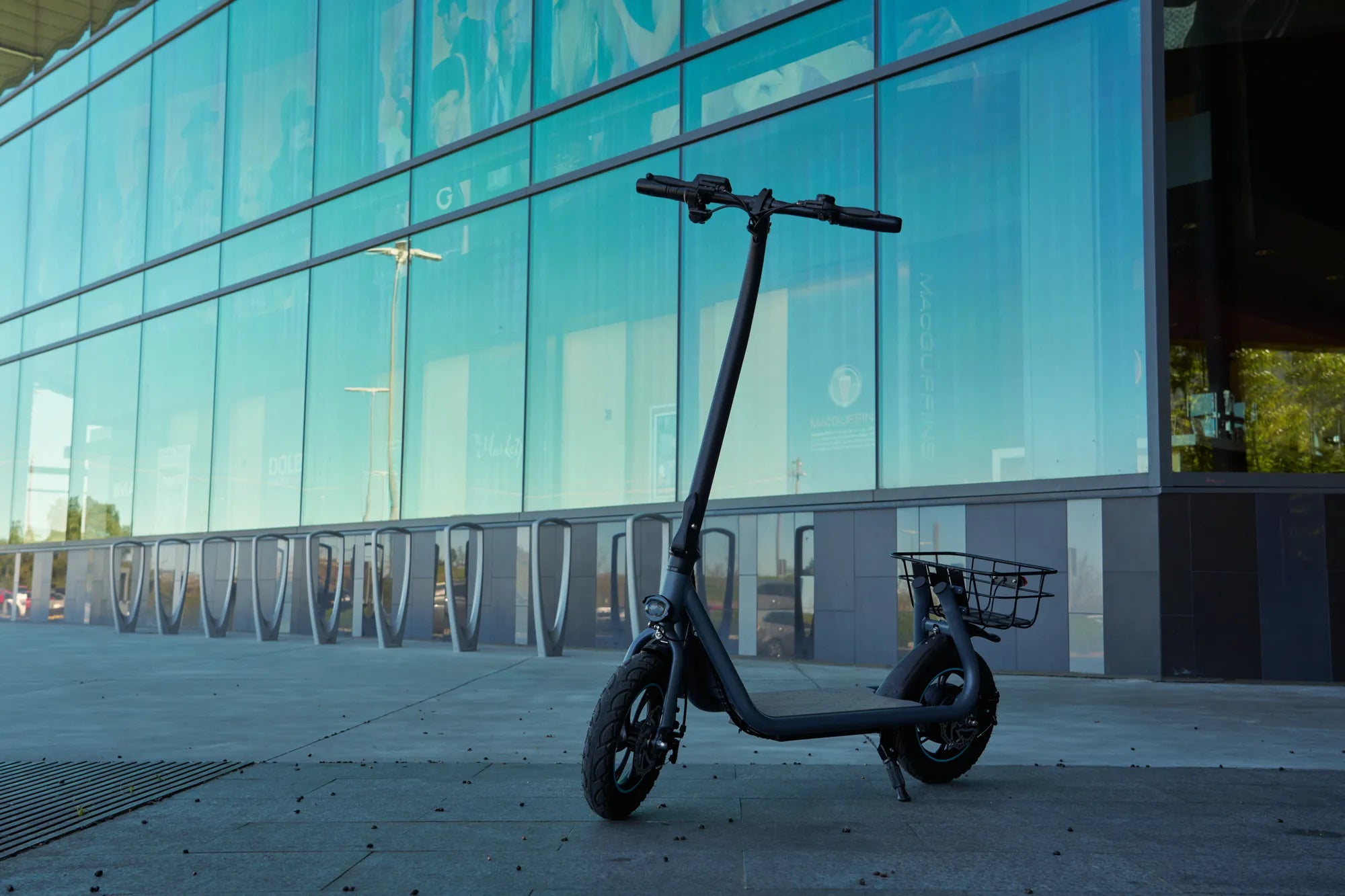
Introduction: Redefining Mobility for Seniors with Foldable Electric Scooters
Maintaining independence and staying connected to community is a fundamental desire for many seniors. A fold up scooter for elderly individuals is not merely a vehicle; it's a key to freedom, enabling safe, convenient, and personal transport for errands, visits, and leisure. This guide will explore how the right foldable electric scooter can enhance quality of life, what specific features ensure safety and ease of use, and why choosing a reliable brand like Gyroor, trusted by over 100,000 riders, is a critical decision for peace of mind.
We will analyze the engineering behind senior-friendly scooters, moving beyond basic specs to focus on stability, intuitive controls, and robust construction. You'll learn a practical maintenance routine and safe riding practices tailored for older adults. By the end, you will be equipped to select a fold up scooter for elderly use that combines safety, reliability, and true portability, empowering a more active and independent lifestyle.
Key Considerations When Choosing a Foldable Scooter for Seniors
Selecting a fold up scooter for elderly riders requires a shift in perspective. While speed and range are often highlighted, for seniors, the paramount considerations are stability, safety, and effortless operation. The goal is to find a scooter that feels like a natural extension of the user, not a complex machine to master.
Performance metrics must be evaluated through the lens of safety. A moderate top speed is preferable to a high one, as it promotes control. Range should be sufficient for daily needs without necessitating a heavy, cumbersome battery. The core value of a fold up scooter for elderly users lies in its ability to provide confident, stable transportation for short to medium distances in urban or suburban settings.
Stability and Rider Safety Features
Stability is the non-negotiable foundation for any senior scooter. It begins with a wide, anti-slip deck that allows for a comfortable, balanced stance with feet placed apart. A longer wheelbase—the distance between the front and rear axles—contributes significantly to stability at low speeds and over minor pavement imperfections.
The braking system must be redundant and intuitive. A combination of a mechanical disc brake and an electronic brake (e-brake) is ideal. The disc brake provides consistent, powerful stopping power, while the e-brake engages automatically when the throttle is released, adding a layer of safety. Integrated safety features like bright headlights, brake taillights, and side reflectors are essential for visibility during dawn, dusk, or overcast days.
Ease of Folding and Portability
The "foldable" aspect is what makes these scooters truly practical for seniors. The mechanism must be simple, requiring minimal steps and physical force. A one-step or two-step folding process that can be managed without straining is crucial. The folded dimensions should be compact enough to fit in a car trunk or be stored in a closet easily.
Portability is further enhanced by a manageable overall weight and thoughtful design elements. A built-in carrying handle or, even better, trolley wheels on the folded scooter allows it to be rolled like luggage rather than lifted. This dramatically increases its usability for seniors who may need to navigate a few steps or store it in a tight space.
Comfort and Accessibility
Comfort directly impacts how often and how far a senior will use their scooter. Beyond the deck, the handlebar should be adjustable or ergonomically designed to suit different heights, preventing hunching or overreaching. The controls must be intuitive: a responsive thumb throttle is generally easier to modulate than a trigger-style one, and brake levers should be within easy reach without requiring a strong grip.
The display should be clear, uncluttered, and easy to read in direct sunlight, showing essential information like speed, battery level, and riding mode. A comfortable, stable ride is also dependent on suspension and tire type. Air-filled or wide, solid honeycomb tires can better absorb vibrations from uneven surfaces than small, hard solid tires, reducing fatigue on joints.
Why Gyroor Scooters Are Engineered for Senior Safety and Peace of Mind
Gyroor's approach to personal electric vehicles aligns perfectly with the needs of elderly riders. The brand's core engineering principles—UL-certified battery safety, IPX5 water resistance, and a comprehensive warranty—are not just marketing points; they are foundational elements that build a trustworthy product for a demographic that values reliability above all.
With a product range of over 20 models and a customer base of over 100,000 riders across North America and Europe, Gyroor has refined its designs based on real-world feedback. This experience informs features that prioritize rider security and long-term durability, making a Gyroor fold up scooter for elderly users a considered investment in safe, independent mobility.
The Gold Standard in Battery Safety: UL Certification
For seniors and their families, battery safety is a top concern. Gyroor uses UL-certified battery packs in its scooters, which means the battery's design, construction, and performance have been rigorously tested and verified by a globally recognized safety organization (Underwriters Laboratories). This certification significantly reduces the risk of thermal runaway, fire, or failure.
These batteries are tested for over 500 charge cycles, ensuring long-term capacity retention and reliability. For a senior rider, this translates to predictable performance and range for years, eliminating anxiety about sudden power loss or hazardous battery issues. It is a critical feature that distinguishes a responsibly engineered fold up scooter for elderly riders.
Built for All Conditions: IPX5 Water-Resistant Design
Daily mobility means encountering unexpected puddles, wet pavement, or light rain. An IPX5 water-resistant rating means the scooter's electrical components are protected against water jets from any direction. This engineering protects the motor, battery compartment, and control systems from water damage caused by road spray or weather.
This feature adds a layer of practical safety and utility. A senior rider can confidently use their scooter for a quick trip to the store without worrying that a damp road will end their journey or cause a costly repair. It ensures the scooter is a reliable tool for daily life, not a fair-weather novelty.
Unmatched Support: The 1-Year Comprehensive Warranty
Confidence in a product is bolstered by strong after-sales support. Gyroor offers a straightforward 1-year comprehensive warranty on its scooters, covering manufacturing defects in materials and workmanship. This warranty, backed by accessible customer support, provides significant peace of mind.
For a senior making this investment, knowing that assistance is readily available if an issue arises is invaluable. It protects the purchase and ensures that the fold up scooter for elderly mobility remains a source of freedom, not frustration. This commitment to customer care reflects the brand's confidence in its product's durability and safety.
Comparison: Key Features for Senior-Friendly Foldable Scooters
The table below compares essential attributes to look for when evaluating a fold up scooter for elderly riders. It highlights how safety and usability features should be prioritized over maximum performance specs.
| Feature Category | High-Priority for Seniors | Lower Priority for Seniors | Why It Matters |
|---|---|---|---|
| Speed & Power | Moderate, controllable speed (10-15 mph); smooth acceleration. | High top speed (>18 mph); extreme torque. | Promotes stability and control, reducing accident risk. |
| Stability | Wide anti-slip deck; long wheelbase; low center of gravity. | Narrow, performance-oriented deck. | Prevents wobbles and increases confidence, especially at low speeds. |
| Braking System | Dual braking (e.g., disc + e-brake); progressive lever feel. | Single, overly aggressive brake system. | Ensures reliable, predictable stopping power in all conditions. |
| Folding Mechanism | Simple 1-2 step process; requires minimal force; has trolley wheels. | Complex, multi-step folding; no carry aids. | Enables true portability and independent use without strain. |
| Comfort & Ride | Pneumatic or wide honeycomb tires; some suspension; adjustable handlebar. | Small, solid tires; rigid frame; fixed handlebar. | Absorbs vibrations, reduces fatigue, and accommodates different statures. |
| Battery & Safety | UL-certified battery; IPX5+ water resistance; clear battery indicator. | Uncertified battery; no weather protection. | Mitigates fire risk, ensures all-weather reliability, and prevents being stranded. |
Practical Guide: Using and Maintaining Your Foldable Scooter
Owning a fold up scooter for elderly mobility is most rewarding when used safely and maintained properly. This section provides actionable steps to build confidence and ensure the scooter remains in optimal condition for years of reliable service.
Safe Riding Practices for Seniors
Begin your riding journey in a safe, controlled environment like an empty parking lot or a quiet sidewalk. Practice starting, stopping, turning, and using the brakes until the controls feel second nature. Always wear a helmet designed for cycling or micro-mobility, and consider knee/elbow pads during the learning phase.
Maintain high visibility. Use the scooter's lights during the day in low-light conditions and always at night. Wear bright or reflective clothing. Be hyper-aware of your surroundings—scan for cars, pedestrians, and road hazards like cracks, gravel, or wet leaves. Avoid riding in heavy rain or on icy surfaces. Practice folding and unfolding the scooter several times at home to become proficient before you need to do it in public.
Routine Maintenance Checklist
Consistent, simple maintenance is key to safety and longevity. Before each ride, perform a quick visual check: ensure tires are properly inflated (if pneumatic), confirm brakes are responsive, and check that all lights are functional. Listen for any unusual noises from the motor or wheels.
On a weekly or monthly basis, conduct a more thorough inspection. Wipe down the scooter with a damp cloth to remove dirt and debris, paying attention to the folding mechanism and brake calipers. Check that all bolts and fasteners, especially around the stem and folding latch, are tight. Keep the battery charged; avoid letting it fully deplete for extended periods. Store the scooter in a dry, temperate place, and if storing for weeks, keep the battery at around 50-60% charge.
FAQ: Foldable Scooters for Elderly Riders
Q1: What is the ideal speed range for a senior's scooter?
A1: For safety and control, a top speed between 10 and 15 miles per hour is ideal. Most daily errands and recreational rides are comfortably completed within this range. Scooters often have multiple speed modes, allowing a senior to start in a slower, more restrictive mode (e.g., 8 mph) and progress as confidence grows.
Q2: How difficult is it to lift a folded scooter?
A2: This depends heavily on the model's design. The best fold up scooter for elderly users will either be relatively lightweight (under 35 lbs) or, more importantly, feature trolley wheels. Trolley wheels allow the folded scooter to be rolled like luggage, eliminating the need for heavy lifting altogether, which is a crucial design element for accessibility.
Q3: Can these scooters handle slight inclines or uneven pavement?
A3>Yes, but capability varies. Look for a scooter with a motor rated for at least 300W of continuous power and good torque. Wider, air-filled or honeycomb tires provide better traction and shock absorption on uneven surfaces like brick paths or slightly cracked sidewalks. Always approach obstacles slowly and at a right angle.
Q4: How do I ensure the battery lasts for my daily errands?
A4>Plan your routes. Know the scooter's realistic range (often 10-15 miles per charge for senior-friendly models) and ensure your round-trip errands fit within that. Use the eco or mid-speed mode to conserve power. Avoid constant stop-and-go acceleration. Charge the battery after use, and do not regularly drain it to 0%.
Q5: What should I do if I have a technical issue?
A5>First, consult the user manual for troubleshooting steps. For issues covered under warranty, contact Gyroor's customer support directly. Having your purchase information ready will expedite the process. For minor adjustments like brake calibration, a local bike shop can often assist. The 1-year comprehensive warranty provides a clear path for resolving manufacturing-related problems.
Conclusion: Embracing Independence with Confidence
The right fold up scooter for elderly individuals is a powerful tool for reclaiming independence and enhancing daily life. By prioritizing safety features like stable design, reliable brakes, and UL-certified batteries, and by valuing ease-of-use through simple folding mechanisms and comfortable rides, seniors can find a vehicle that truly serves their needs. This choice is about more than transportation; it's about maintaining social connections, running errands with dignity, and enjoying the freedom to explore.
Gyroor's commitment to engineered safety—through certified battery packs, water-resistant construction, and strong warranty support—provides the foundation for this confidence. A fold up scooter for elderly riders from a trusted brand represents a smart investment in long-term, reliable mobility. It empowers seniors to navigate their communities on their own terms, fostering a continued sense of agency and adventure.
Ready to explore models designed with safety and senior-friendly features in mind? Browse the full Gyroor collection at gyroorboard.com to find the perfect foldable scooter to support your journey toward greater independence.
Do You Need a Helmet for a Scooter? The Definitive Safety Guide
What's the Best Scooter Brand? A Data-Driven Guide to Choosing Wisely