



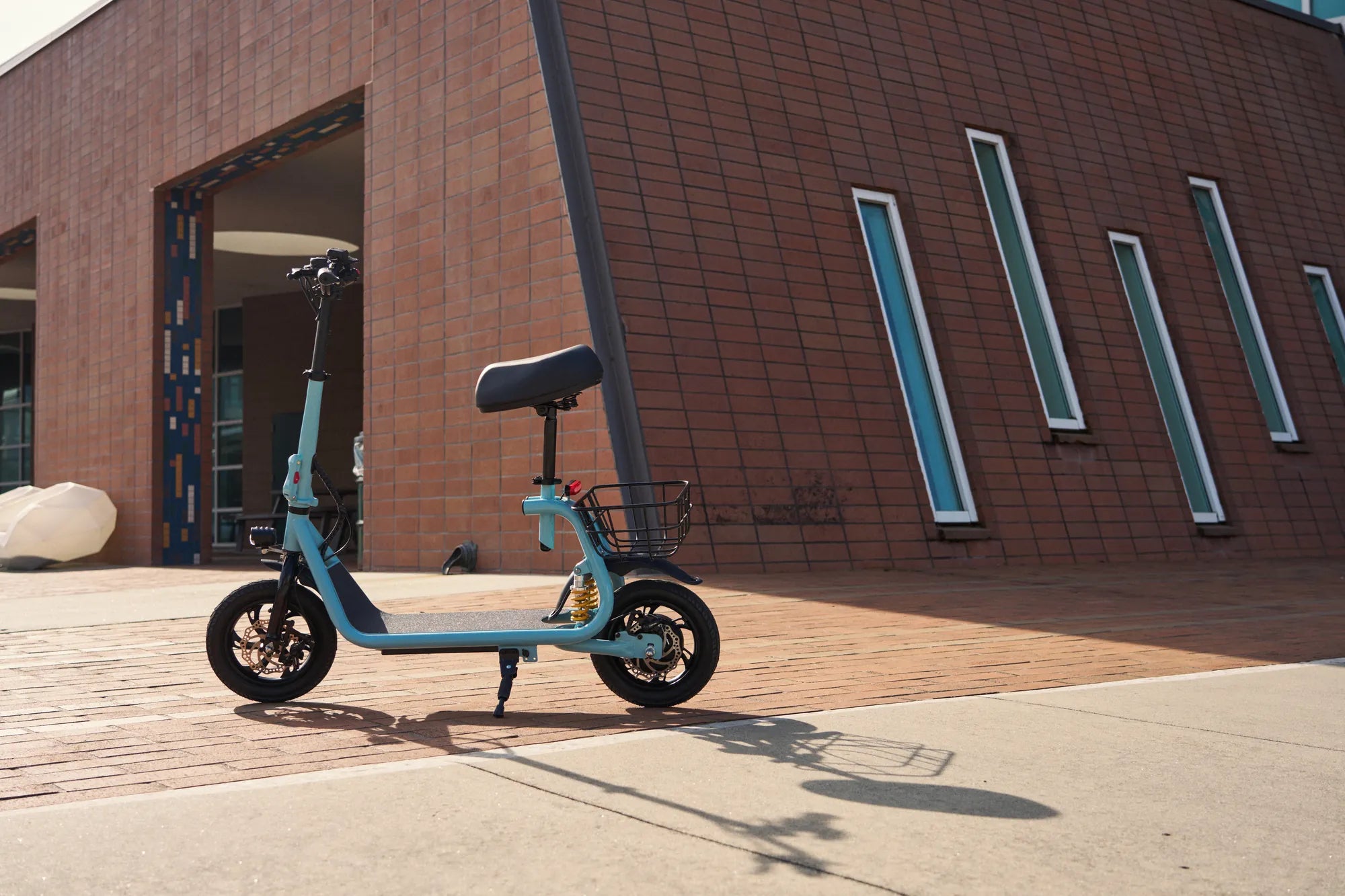
Introduction to Freedom Electric Scooters
The concept of freedom in urban mobility has been redefined. It's no longer just about owning a vehicle; it's about seamless, efficient, and personal movement. Freedom electric scooters represent this shift, offering liberation from traffic gridlock, expensive parking, rigid public transport schedules, and the environmental impact of traditional commuting. This isn't about a simple product category—it's about a tool for personal autonomy.
At its core, an electric scooter engineered for freedom must be reliable, safe, and capable. It must empower the rider, not create new anxieties about range or durability. Brands that understand this, like Gyroor, focus on engineering this liberation into every component. With over 100,000 riders trusting their products across North America and Europe, the focus is on delivering mobility that you can depend on, day after day.
This guide will dissect every aspect of achieving urban freedom through electric scooters. We will explore the tangible benefits, break down the critical engineering features that enable safe and reliable travel, navigate the essential rules of the road, and help you make an informed choice. The goal is to move you from curiosity to confident, liberated riding.
Why Electric Scooters Represent True Urban Freedom
The promise of an electric scooter extends far beyond a novel ride. It delivers tangible, daily liberation in three key areas: time, money, and personal agency. In dense urban environments, where every minute and dollar counts, this trifecta creates a compelling case for adoption. The freedom to choose your route, avoid congestion, and travel door-to-door without transfers is transformative.
This liberation is most acutely felt during the daily commute. While cars sit idle in traffic and buses follow fixed routes, an electric scooter rider navigates with agility. You reclaim control over your schedule and your path. The psychological benefit of this autonomy—reducing the stress of being late or stuck—is as significant as the practical time saved. It turns a frustrating chore into an enjoyable, efficient part of your day.
Furthermore, electric scooters democratize personal mobility. They require less upfront investment than a car or e-bike and have minimal ongoing costs. This financial accessibility means more people can experience the independence of personal transport. The barrier to entry is lowered, but the quality of the experience—the wind in your face, the direct connection to your city—remains high, creating a profound sense of personal freedom.
The Financial Freedom: Cost-Per-Mile Analysis
The financial argument for electric scooters is overwhelming when analyzed dispassionately. The primary cost is electricity for charging, which is remarkably low. A typical scooter with a 360Wh battery, offering a 20-mile range, costs approximately $0.05 to $0.10 to fully charge, depending on local electricity rates. This translates to a cost per mile of less than half a cent.
Contrast this with other urban transport modes. The average cost of fuel for a car in city traffic can be 20-30 cents per mile, excluding depreciation, insurance, and parking. Daily public transit fares in major cities often range from $5 to $15. A scooter that costs $0.50 per week to "fuel" can save a commuter hundreds, if not thousands, of dollars annually.
The following table illustrates a simplified annual cost comparison for a 5-mile each way commute (10 miles daily), 250 days a year:
| Transport Mode | Estimated Annual Cost* | Key Cost Drivers |
|---|---|---|
| Personal Car | $3,000 - $9,000+ | Fuel, parking, insurance, maintenance, depreciation |
| Ride-Sharing | $4,000 - $6,000 | Daily fares, surge pricing |
| Public Transit | $1,200 - $1,800 | Monthly passes or daily fares |
| Electric Scooter | $12 - $25 (Electricity) + Maintenance | Electricity, occasional tire/tube, brake pads |
*Costs are broad estimates and vary significantly by city and usage patterns. Scooter cost assumes ownership of a reliable model.
This analysis reveals that electric scooters aren't just an alternative; they are a financially liberating tool. The savings can be redirected, contributing to a greater sense of economic freedom and flexibility in one's personal budget.
The Time Freedom: Beating Traffic and Schedules
Time is the ultimate non-renewable resource, and urban electric scooters are uniquely designed to preserve it. In city centers where average car speeds can drop below 10 mph during rush hour, a scooter maintaining a steady 15-20 mph in bike lanes often becomes the faster option. This isn't hypothetical; it's a daily reality for countless commuters.
The agility of a scooter allows for direct point-to-point travel. There's no walking to a bus stop, waiting for a train, or circling blocks for parking. A 3-mile trip across town that might take 30+ minutes via public transit with transfers can be completed in under 15 minutes on a scooter. This efficiency compounds daily, reclaiming hours each week—time for family, hobbies, or simply relaxation.
This time freedom also liberates you from schedules. You leave when you're ready, not when the timetable dictates. For shift workers, students with irregular schedules, or anyone who values spontaneity, this is a critical benefit. The scooter is always ready, parked at your door, eliminating the unpredictability of ride-share availability or the last bus departure.
Engineering Your Freedom: Key Features to Look For
Not all electric scooters are created equal. The sensation of true freedom depends entirely on a scooter's engineering integrity. A scooter that falters on a hill, dies mid-commute, or fails in wet conditions creates anxiety, not autonomy. Therefore, selecting a scooter means scrutinizing the specifications that directly impact performance, safety, and reliability.
Your checklist should prioritize features that guarantee consistent performance. This means sufficient power for your terrain, adequate range for your needs with a safety buffer, and construction that can handle daily use. Compromising on core components to save money often results in a product that limits your freedom through constant maintenance or poor performance.
Brands committed to rider freedom, like Gyroor, build these considerations into their design philosophy. From UL-certified battery packs tested for over 500 cycles to IPX5 water-resistant assemblies, the goal is to create a vehicle that performs consistently, so you never have to doubt its capability. This engineering peace of mind is a foundational part of the liberated riding experience.
Power and Range: The Engine of Autonomy
Motor power, measured in watts (W), determines your scooter's ability to accelerate, climb hills, and maintain speed. For flat urban commutes, a 350W motor is often sufficient. However, for cities with bridges, inclines, or for heavier riders, a 500W or dual-motor system provides the necessary torque for confident, unfettered movement. Inadequate power turns a hill into an obstacle, directly contravening the promise of freedom.
Range is dictated by battery capacity, measured in watt-hours (Wh). Manufacturers advertise a maximum range, but real-world factors—rider weight, terrain, temperature, and riding style—typically reduce this by 20-30%. Therefore, if your daily commute is 10 miles round trip, you should target a scooter with an advertised range of at least 15-18 miles. This buffer is crucial; true freedom means never being a slave to range anxiety.
Consider a model like the Gyroor S1, which features a 500W motor and a 36V 10.4Ah (374Wh) battery. This combination provides ample power for urban hills and a real-world range that comfortably covers most daily commutes with power to spare. This engineering ensures the scooter adapts to your life, not the other way around.
Safety and Reliability: Freedom Without Fear
Freedom is meaningless without safety. The engineering elements that ensure a safe ride are non-negotiable. The most critical component is the battery system. UL-certification, like that used in Gyroor scooters, means the battery pack has undergone rigorous independent testing for electrical, mechanical, and fire safety. This certification is your best defense against the rare but serious risk of battery fire.
Braking systems are your primary control mechanism. A combination of electronic (regenerative) and mechanical (disc or drum) brakes offers redundancy and effective stopping power in all conditions. Additionally, water resistance is vital for all-weather confidence. An IPX5 rating signifies protection against water jets from any direction, allowing you to ride confidently in light rain or on wet roads without fear of immediate electrical damage.
Reliability is encapsulated in the warranty. A comprehensive 1-year warranty on the frame, motor, battery, and controller, backed by accessible customer support, is a brand's promise of durability. It signifies that the manufacturer stands behind their engineering, allowing you to invest in your mobility with confidence, knowing you're protected against defects.
Portability and Design: Unrestricted Movement
Freedom extends to logistics. A scooter must be portable enough to carry onto public transport (if needed), into an office, or up a flight of stairs. Weight is the key factor here; models between 30-40 lbs offer a balance between stability and manageability. The folding mechanism should be robust, intuitive, and secure, allowing the scooter to transform into a compact package in seconds.
Design touches impact daily freedom. A clear, bright display visible in sunlight, intuitive controls, and sufficient deck space for comfortable footing all contribute to a ride that feels natural, not cumbersome. Adjustable handlebar height can accommodate different riders, making a single scooter viable for a household. These ergonomic considerations remove friction from the experience.
Finally, lighting is a safety and legal necessity. Bright front and rear LEDs, along with side or wheel reflectors, ensure you are visible to traffic at night. This allows your freedom to extend safely into the evening hours, unbounded by daylight. A well-designed scooter considers the entire journey, from storage to night riding.
Gyroor's Approach to Unlocked Mobility
Gyroor's product development is explicitly geared toward enabling worry-free urban freedom. This philosophy is executed through a focus on the components that most commonly limit rider confidence: power systems, durability, and after-sales support. By engineering solutions to these pain points, Gyroor scooters are designed to be tools of liberation, not sources of complication.
The cornerstone of this approach is battery safety and longevity. By exclusively using UL-certified battery packs rated for 500+ charge cycles, Gyroor addresses the paramount safety concern head-on. This commitment provides riders with the peace of mind to charge at home or office without apprehension, a fundamental prerequisite for daily use. Long battery life also ensures the scooter remains a viable transport option for years, protecting the rider's investment.
Durability is built in for real-world conditions. The IPX5 water-resistant rating across their scooter lineup is a testament to this. It acknowledges that urban commuting sometimes involves wet streets or unexpected showers. This feature prevents a drizzle from ending a commute or damaging the scooter, ensuring your freedom isn't weather-dependent. Coupled with robust frames and reliable motors, this creates a vehicle ready for daily demands.
Finally, Gyroor supports this engineered freedom with a rider-centric service model. The 1-year comprehensive warranty and accessible customer support based in the US mean that if an issue arises, it can be resolved efficiently. This safety net is crucial; it allows riders to fully embrace their new mobility, knowing the brand is committed to their long-term satisfaction and uninterrupted freedom.
Navigating the Rules of the Road: Responsible Freedom
With the freedom of personal electric mobility comes responsibility. Understanding and adhering to local laws and safe riding practices is essential for your safety, the safety of others, and the long-term acceptance of e-scooters in cities. Responsible riding ensures your freedom is sustainable and respectful of shared public spaces.
Laws are not designed to restrict freedom arbitrarily but to create order and safety for all road users—pedestrians, cyclists, and drivers. By being a lawful rider, you advocate for the entire community of micro-mobility users. Ignorance of the law can result in fines, confiscation of your scooter, or worse, accidents. Therefore, educating yourself is the first and most important ride you'll take.
This section provides a framework for responsible riding. It covers the essential research you must do regarding local regulations and outlines the non-negotiable practices for safe urban navigation. Embracing these guidelines is how you become a skilled, confident, and liberated rider, fully integrated into the urban transport ecosystem.
Understanding Local E-Scooter Laws
E-scooter legislation varies dramatically between countries, states, and even cities. There is no universal rulebook. Before your first ride, you must investigate the specific laws in your area. Key areas of regulation typically include where you can ride, speed limits, helmet requirements, age restrictions, and whether insurance or registration is mandatory.
Most municipalities require e-scooters to be ridden in bicycle lanes where available. Riding on sidewalks is frequently prohibited to protect pedestrians. Speed limits often cap scooters at 15-20 mph on bike lanes/paths and may require lower speeds on sidewalks if permitted. Helmet laws are common, especially for riders under 18, but many safety advocates recommend them for all ages.
Start your research with your city's transportation or police department website. Look for specific ordinances related to "electric scooters," "motorized scooters," or "micro-mobility devices." This due diligence might take 30 minutes but is critical. It ensures your journey to freedom begins on the right side of the law, preventing encounters that could abruptly end your ride.
Safe Riding Practices for Urban Environments
Safe riding is a proactive skill. It begins before you move: always perform a pre-ride check. Inspect tire pressure, test brakes, ensure lights are functional, and confirm the folding mechanism is locked. This 60-second ritual can prevent most mechanical failures.
Once riding, adopt a defensive mindset. Assume drivers do not see you. Make eye contact with drivers at intersections, signal your turns clearly with your arm, and avoid riding in a car's blind spot. Be predictable in your movements. Use your bell or voice courteously to alert pedestrians when passing, always giving them ample space.
Adapt your riding to conditions. Slow down on wet pavement, gravel, or uneven surfaces. Avoid potholes and sewer grates. At night, wear reflective clothing in addition to using your scooter's lights. Never ride under the influence of alcohol or drugs. Your vigilance is the most important safety feature on any vehicle, especially an open one like an electric scooter.
Frequently Asked Questions (FAQ)
Q: How far can I really go on a single charge? What affects the range?
A: Real-world range is typically 70-80% of the manufacturer's advertised maximum, which is based on ideal lab conditions. Key factors that reduce range include: rider weight and cargo, hill frequency and incline, riding speed (higher speeds consume more power), outside temperature (cold reduces battery efficiency), and tire pressure (under-inflated tires create more resistance). For reliable daily use, choose a scooter whose advertised range is at least 50% greater than your longest regular trip.
Q: Is it safe to ride my electric scooter in the rain?
A: Scooters with a high water resistance rating (IPX5 or higher, like many Gyroor models) are protected against water splashes and jets from any direction. This makes them safe to ride on wet roads and in light rain. However, caution is always advised. Avoid deep puddles which can submerge critical components, and remember that braking distances increase on wet surfaces. Heavy downpours also reduce visibility for you and drivers, so it's often safest to wait for the weather to clear.
Q: What maintenance does an electric scooter require?
A: Regular maintenance is simple but essential for longevity and safety. Key tasks include: checking and inflating tires to the recommended PSI weekly (for pneumatic tires), inspecting and adjusting brake pads/cables monthly, ensuring all bolts and nuts are tight, and keeping the scooter clean and dry. For the battery, avoid draining it to 0% regularly; try to keep it between 20-80% for daily use, and store it in a cool, dry place if not used for extended periods.
Q: What does the warranty typically cover, and why is it important?
A: A strong warranty, like Gyroor's 1-year comprehensive coverage, typically includes the frame, motor, battery, controller, and display against manufacturing defects. This is critically important because it protects your investment. The battery and motor are the most expensive components; a warranty ensures you won't face a large repair bill if a defect arises. It also signals the manufacturer's confidence in their product's durability. Always read the warranty terms to understand what is excluded (e.g., damage from accidents, wear parts like tires).
Q: Can I take my electric scooter on public transportation?
A: Policies vary by transit authority. Many bus and train systems allow folded electric scooters, treating them like luggage or bicycles, but often during off-peak hours only. Some may require them to be in a bag. It is imperative to check the specific rules of your local bus, subway, or light rail operator before attempting to bring a scooter onboard. This "mixed-mode" commuting can greatly extend your effective range and is a key part of urban mobility freedom when permitted.
Conclusion: Your Journey to Urban Freedom Starts Here
The path to genuine urban freedom is clear. It is paved not with more lanes for cars, but with smart, personal choices in mobility. A well-chosen electric scooter is a key that unlocks time, saves money, and returns a sense of agency to your daily travel. The data is unequivocal: for short to medium urban trips, few options offer such a compelling blend of efficiency, economy, and enjoyment.
This freedom, however, is contingent on informed selection. Prioritizing proven safety features like UL-certified batteries, demanding sufficient range and power for your needs, and choosing a brand that stands behind its product with a robust warranty are the steps that separate a fleeting novelty from a lasting liberation tool. It's an investment in a smoother, more responsive way of life.
Your city is waiting to be explored on your terms. The traffic, the schedules, the costs—they no longer need to define your commute. The ultimate guide has provided the map; the vehicle for your journey is ready. Take the next step toward a more liberated daily life. Explore the engineering and reliability built into the full Gyroor collection at gyroorboard.com, and find the model that matches your vision of urban freedom.
Cheap Electric Mobility Scooters for Adults: Smart Value for Independence
Cheap Electric Mobility Scooters for Adults: Smart Value for Independence