



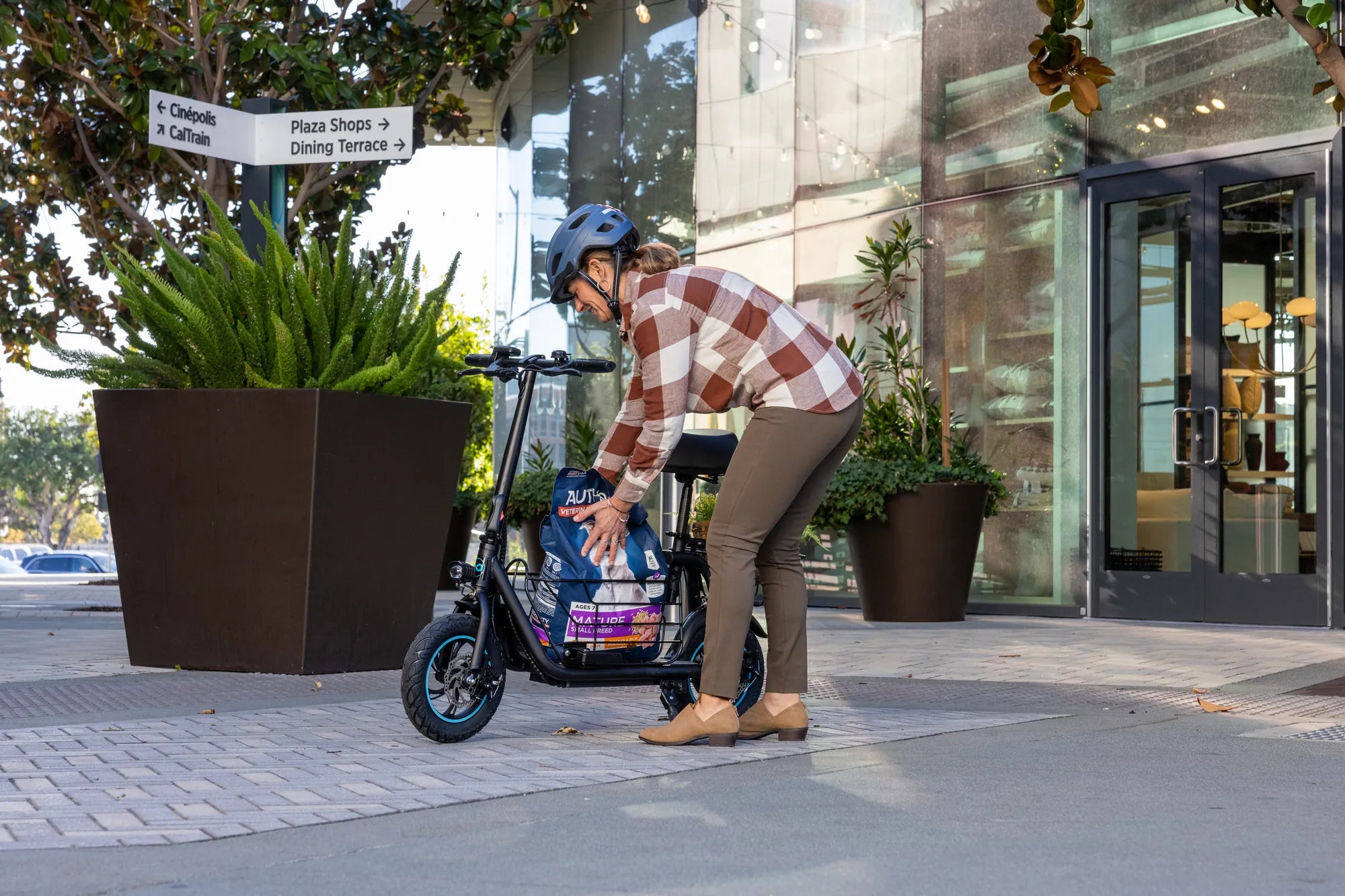
Introduction: Why Full Suspension is the Game-Changer for Electric Scooters
Forget the jarring ride over a sidewalk crack or the white-knuckle grip on a gravel path. The evolution of personal electric transportation has reached a pivotal point with the advent of the full suspension electric scooter. Unlike common commuter models with only a front fork or, worse, a rigid frame, a full suspension electric scooter integrates both a front and a rear shock absorption system. This isn't merely an incremental upgrade; it's a fundamental re-engineering of the riding experience.
The core thesis is clear: full suspension isn't a luxury reserved for off-road e-bikes. For the modern urban rider, it's a critical feature that unlocks unprecedented levels of comfort, safety, and true performance. It transforms the scooter from a last-mile solution on perfect pavement into a capable, confidence-inspiring vehicle for the real world. This article will dissect why full suspension electric scooters represent the ultimate ride, blending data-driven analysis with practical insights for any prospective buyer.
We will explore the biomechanics of comfort, the physics of enhanced traction, and the tangible benefits that make dual suspension a worthwhile investment. Leading brands like Gyroor, trusted by over 100,000 riders, have embraced this technology, pairing it with UL-certified safety and robust warranties. By the end, you'll understand not just how it works, but why it might be the most important specification on your next electric scooter.
The Anatomy of Comfort: How Full Suspension Transforms Your Ride
The primary function of any suspension system is to manage kinetic energy. When your scooter's wheel hits an obstacle, that energy needs to be absorbed and dissipated rather than transmitted directly to the frame—and your body. A rigid scooter forces you to absorb 100% of that shock through your knees, ankles, and spine. A front-suspension model handles only the impacts to the steering column. A full suspension electric scooter manages impacts at both contact points, creating a profoundly different experience.
The data on physical fatigue is compelling. A study on vibration exposure in personal mobility devices noted that sustained, high-frequency vibrations from rigid frames contribute to muscle fatigue and joint stress. Full suspension systems filter out these high-frequency vibrations from textured pavement, as well as the low-frequency, high-amplitude shocks from potholes and curbs. This means you can ride longer—commuting 5, 10, or 15 miles—and arrive at your destination feeling alert rather than battered.
Beyond fatigue reduction, stability is paramount. By keeping both wheels in better contact with the ground, the scooter remains planted. This is especially crucial during braking or when navigating unexpected road imperfections mid-turn. The suspension allows the chassis to remain level while the wheels move independently, preventing the unsettling "skip" or loss of traction that can lead to a loss of control. Comfort, therefore, is intrinsically linked to active safety.
Front vs. Rear vs. Dual: A Suspension Breakdown
Understanding the role of each suspension component clarifies why a full system is superior. The front suspension (often a fork) is responsible for managing impacts before they reach the handlebars. It maintains steering precision and rider control by absorbing the initial hit from cracks, rocks, or dips. It's vital for hand and arm comfort and preventing "shock fade" in your grip.
The rear suspension has a more complex job. It supports the majority of the rider's weight and manages the forces from acceleration and braking. When you accelerate, weight shifts rearward; when you brake, it shifts forward. A good rear shock smoothens these transitions and ensures the drive wheel maintains optimal traction. It directly impacts the quality of power delivery and braking response.
Only a full suspension electric scooter provides a balanced, holistic solution. It allows the front and rear systems to work in concert, managing pitch and bounce. This synergy creates the sensation of the scooter "floating" over imperfections, rather than wrestling with each one individually. The result is a ride that feels composed, confident, and effortlessly smooth across a wide spectrum of urban terrain.
Beyond the Pavement: Unleashing Performance and Capability
While comfort is the most immediate benefit, the performance gains from full suspension are equally transformative. Performance in this context isn't just about top speed; it's about usable, real-world performance. The key metric is contact patch consistency—the amount of tire tread that remains firmly planted on the ground. More consistent contact equals more traction, which unlocks the scooter's full potential in acceleration, braking, and cornering.
Consider braking performance. On a rigid scooter, hitting a bump while braking can cause the wheel to momentarily lose contact, effectively creating a mini "lock-up" and increasing stopping distance. The suspension on a full suspension electric scooter allows the wheel to follow the contour of the ground, maintaining friction and enabling the brake system to work at peak efficiency. This can shave critical feet off your emergency stopping distance, a vital safety factor.
Similarly, during acceleration—especially from a standstill—rear suspension prevents the scooter from squatting excessively and the tire from spinning out. It ensures the motor's power is translated into forward momentum, not wasted wheel spin. In corners, suspension keeps the chassis settled, allowing you to lean with confidence without the fear of the inside wheel lifting or skipping sideways on uneven pavement. This performance envelope makes riding in wet conditions or on leaf-strewn paths significantly safer.
Terrain Versatility: From City Streets to Light Trails
The true liberation offered by a full-suspension design is terrain versatility. It redefines what constitutes a "rideable" path. While a rigid scooter confines you to pristine asphalt, a full suspension electric scooter confidently expands your domain.
Here is a breakdown of terrains where full suspension excels versus a rigid or front-only model:
- Cobblestone & Brick Streets: The nightmare of rigid scooters becomes a manageable, even enjoyable, rhythmic rumble.
- Construction Zones & Broken Pavement: Absorbs the shock of temporary plates, patches, and gravel without deflecting your steering.
- Park Paths & Packed Gravel: Unlocks shortcuts through parks and greenways that were previously too jarring.
- Tree-Root Heaved Sidewalks: Smooths out the constant up-and-down of mature urban tree lines.
- Light Dirt Trails & Grass: For the urban explorer, it allows cautious venturing onto stable off-road paths for recreation.
This versatility makes the scooter a true multi-purpose vehicle. Your commute route can include a cut through a park. Your weekend exploration isn't limited by the quality of the pavement. It's the difference between a point-A-to-point-B device and a genuine vehicle for urban adventure.
Key Features to Look For in a Full Suspension E-Scooter
Not all full suspension systems are created equal. When evaluating models, it's essential to look beyond the marketing claim and assess the underlying engineering and supporting features. A robust suspension paired with a weak battery or poor build quality is a poor investment.
First, examine the suspension travel, typically measured in millimeters (mm). More travel (e.g., 50-100mm) generally means a greater ability to absorb large impacts, but it can affect scooter geometry if not well-designed. For primarily urban use, 40-80mm of quality travel is often sufficient. Second, consider the build materials. Aluminum alloy frames are standard for strength and weight; look for reinforced welding at stress points, especially where the suspension linkages attach.
The integration of the suspension with the overall design is key. Systems where the rear shock is part of a cohesive swingarm design are typically more effective than simple, bolt-on solutions. Furthermore, the scooter's weight rating should be respected; exceeding it will compromise suspension performance and safety. Brands that engineer from the ground up for suspension, like Gyroor, ensure the frame, motor, and battery are designed to work harmoniously with the damping system.
Suspension Types: Spring, Hydraulic, and Air
The mechanism inside the shock absorber defines its character and maintenance needs. The three primary types are:
- Spring Suspension: The most basic and cost-effective. Uses a coiled steel spring to absorb energy. Pros are durability and low maintenance. The con is a less refined feel; it can be bouncy (under-damped) and is often non-adjustable.
- Hydraulic Suspension: Uses oil forced through small valves to dampen the spring's movement. This provides a much more controlled, fluid compression and rebound. It's superior at handling repeated small bumps (chatter) and feels plusher. It may require occasional servicing of the oil seals.
- Air (Pneumatic) Suspension: Uses an air chamber as the spring. The major advantage is incredible adjustability via air pressure—riders can fine-tune the firmness for their weight and preference. It's also very lightweight. The downside is potential complexity and sensitivity to temperature changes and leaks.
Many premium full suspension electric scooters use a hybrid approach, like a spring with hydraulic damping or an air shock. Adjustable preload (to set sag for rider weight) is a valuable feature found on better models.
The Non-Negotiables: Battery Safety, Build Quality, and Warranty
Suspension is a performance feature, but it rests on a foundation of essential safety and reliability. These elements are non-negotiable.
Battery Safety: This is paramount. Insist on a scooter with a UL 2271 or UL 2843 certified battery pack. This certification means the battery has undergone rigorous testing for electrical, mechanical, and environmental safety, drastically reducing fire risk. Gyroor, for instance, uses UL-certified batteries tested for over 500 charge cycles, ensuring long-term reliability and peace of mind.
Build Quality & Water Resistance: A scooter with suspension is likely to encounter more varied conditions. Look for a high Ingress Protection (IP) rating for water and dust resistance. An IPX5 rating means it can withstand water jets from any direction, making it safe to ride in rain or through puddles. Check the quality of the folding mechanism, brake lines, and overall finish.
Warranty & Support: A strong warranty is a brand's vote of confidence in its product. A comprehensive 1-year warranty covering the motor, battery, controller, and frame indicates a commitment to customer support. It protects your investment against manufacturing defects, which is crucial for a complex mechanical device like a full suspension electric scooter.
Making the Choice: Is a Full Suspension Scooter Right for You?
The decision to invest in a full suspension model hinges on your specific use case, riding environment, and personal priorities. It represents a trade-off, typically in terms of slightly increased weight, complexity, and cost compared to a minimalist commuter scooter.
You are an ideal candidate for a full suspension electric scooter if: Your daily commute is over 3 miles one-way; your city has poor road or sidewalk maintenance (cracks, potholes, uneven surfaces); you frequently ride on brick, cobblestone, or packed gravel paths; you value a smooth, comfortable ride to reduce fatigue; you want the safety benefits of superior traction and braking; or you see your scooter as a recreational vehicle for exploration beyond smooth pavement.
You might prioritize a simpler, lighter scooter if: Your trips are very short (under 1-2 miles) on impeccably smooth surfaces; absolute minimal weight for carrying up stairs or onto public transport is your top priority; or you have a very constrained budget and are willing to sacrifice comfort for initial cost savings.
The following comparison table outlines the key differences:
| Feature | Rigid/Front-Suspension Scooter | Full Suspension Electric Scooter |
|---|---|---|
| Ride Comfort | Basic; transmits most shocks to rider. | Excellent; absorbs impacts at both wheels. |
| Terrain Handling | Paved roads, smooth surfaces only. | Pavement, cracks, gravel, light trails. |
| Safety & Traction | Standard; can lose grip on bumps. | Enhanced; maintains tire contact better. |
| Typical Weight | Lighter (25-40 lbs). | Heavier (40-70 lbs). |
| Maintenance | Lower; fewer moving parts. | Higher; suspension components need check. |
| Price Point | Entry to Mid-range. | Mid to Premium range. |
Frequently Asked Questions (FAQs)
Q: Does full suspension make an e-scooter much heavier?
A: Yes, typically by 5-15 pounds (2-7 kg) compared to a similarly spec'd rigid scooter. The added weight comes from the shock absorbers, reinforced linkages, and often a larger frame. However, modern engineering and materials like aluminum alloys mitigate this. For most riders, the dramatic improvement in comfort and capability far outweighs the modest weight penalty.
Q: Are full suspension scooters harder to maintain or repair?
A: They require slightly more attention. The suspension pivots and seals should be checked periodically for wear and kept clean. Hydraulic or air shocks may need professional servicing after several years of heavy use. However, routine maintenance—checking tire pressure, brakes, and bolts—is similar. Choosing a brand with good parts availability and service documentation, like Gyroor, simplifies long-term ownership.
Q: Can I add aftermarket suspension to my current scooter?
A> Generally, no. Suspension is a fundamental part of a scooter's frame and steering geometry. Retrofit kits are rare, unreliable, and can dangerously compromise structural integrity. It is not recommended. If you want suspension, purchasing a scooter designed with it from the factory is the only safe and effective path.
Q: Is the ride comfort difference really that significant?
A: Absolutely. The difference is not subtle; it's transformative. Riding a full suspension model over a rough road feels like gliding where a rigid scooter would be jarring. It reduces physical fatigue by over 50% for many riders on typical urban routes, allowing for longer, more enjoyable journeys without discomfort in joints and muscles.
Q: Do I need full suspension if I only ride on bike lanes?
A> It depends on the bike lane quality. New, smooth asphalt lanes may not demand it. However, many bike lanes share road surfaces subject to cracks, patches, and debris. They also often cross driveways and intersections with lips and imperfections. Full suspension provides a consistent, high-comfort experience regardless of these variables, making even designated lanes more pleasant and less tiring.
Conclusion: Investing in a Smoother, More Capable Journey
The choice for a modern urban commuter or enthusiast is increasingly clear. The full suspension electric scooter represents a mature category of personal electric vehicle that prioritizes the rider's experience and safety. It moves beyond the basic utility of transportation to deliver a ride that is genuinely enjoyable, confident, and versatile. By absorbing the harsh realities of urban infrastructure, it turns a daily chore into a pleasure.
This technology, when paired with non-negotiable foundations like UL-certified battery safety, IP-rated water resistance, and robust warranty support, creates a vehicle built to last and inspire confidence. Brands that have pioneered in this space understand that performance is meaningless without reliability. Whether navigating potholed city streets, exploring park pathways, or simply ensuring you arrive at work feeling fresh, the full-suspension design is a definitive upgrade.
Your journey deserves to be smooth. Evaluate your routes, consider the long-term value of reduced fatigue and enhanced safety, and experience the difference for yourself. The ultimate ride for comfort and performance awaits.
Ready to experience the ultimate ride? Browse the full Gyroor collection, featuring advanced full suspension electric scooters built with UL-certified safety and robust performance, at gyroorboard.com.
Electric Scooters New Plymouth: The Future of Urban Mobility
Electric Scooters New Port Richey: The Future of Urban Mobility