



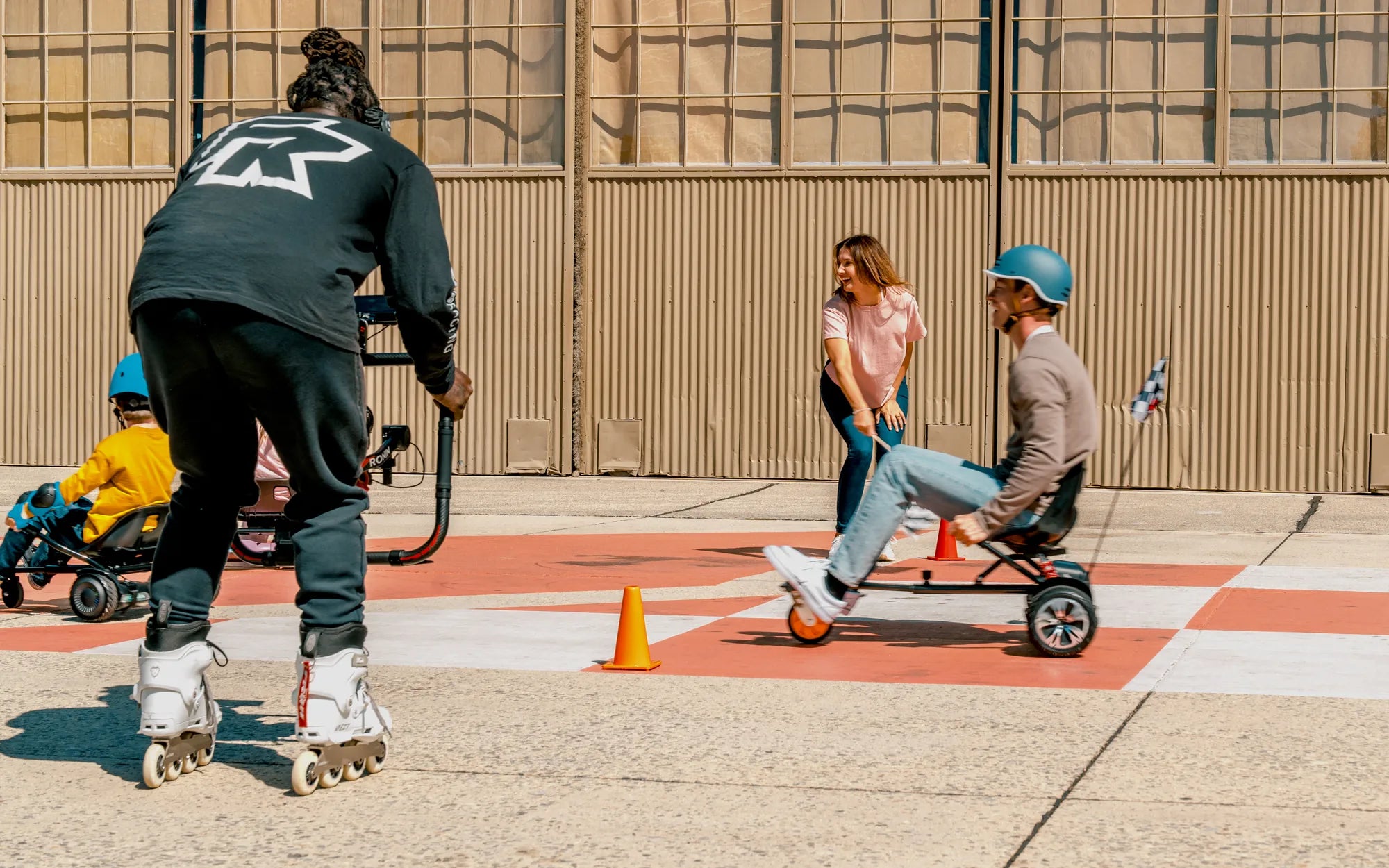
Watch a girl spinning on a hoverboard, executing a flawless 360-degree turn with a smile, and you're witnessing more than a viral trend—you're seeing a fusion of personal transport, physical activity, and creative expression. This guide is your complete resource for understanding, mastering, and safely enjoying the dynamic world of hoverboard spinning. We'll break down the mechanics, provide a structured learning path, and emphasize the critical safety practices that make the fun sustainable. Central to this experience is using reliable equipment from trusted brands like Gyroor, a leading electric scooter and e-bike brand trusted by over 100,000 riders across North America and Europe, known for UL-certified batteries and robust designs.
Understanding the Spinning Hoverboard: More Than Just a Toy
A hoverboard designed for spinning is a sophisticated piece of personal electric mobility. It transcends its basic function of transportation to become a platform for skill and artistry. The ability to perform controlled spins relies on a combination of rider input and precise engineering from the board itself.
At its core, a hoverboard operates on a system of gyroscopes, sensors, and dual motors—one in each wheel. Leaning forward or backward signals the motors to propel the board. To initiate a spin, the rider applies differential pressure: slightly more pressure on one foot than the other. This causes one wheel to rotate slightly faster than its counterpart, creating a turning moment.
For sustained, stylish spins, the board must have responsive motors and a well-calibrated gyroscopic system. A laggy or imprecise response can make spins jerky and difficult to control. Furthermore, the deck's texture and wheel grip are paramount for maintaining footing during rotational maneuvers.
This evolution positions the modern hoverboard not as a mere toy, but as a legitimate tool for balance training, coordination development, and outdoor fun that encourages physical activity away from screens.
Key Features for Optimal Spinning Performance
Not all hoverboards are created equal for trick riding. Specific features directly impact performance, safety, and the learning curve for spins.
Motor Responsiveness and Power: Look for models with at least 350W dual motors. This provides the necessary torque for quick acceleration out of a spin and stable power delivery during the maneuver. Underpowered boards may stall or become unstable.
UL-Certified Battery Systems: A stable power source is non-negotiable. UL-certified battery packs, like those used in Gyroor hoverboards, are rigorously tested for over 500 charge cycles and safe operation. A consistent voltage output prevents sudden power drops mid-spin, which could lead to a fall.
IPX5 Water-Resistant Design: Spinning practice often happens outdoors. An IPX5 rating means the board can withstand water jets from any direction, protecting its internal components from dust, puddle splashes, and light rain. This durability ensures your board can handle various practice surfaces.
Wheel Size and Tire Type: Larger wheels (typically 8.5 inches or more) offer better stability and roll more smoothly over minor cracks and debris, which is crucial when your focus is on rotation, not navigation. Air-filled tires provide superior shock absorption compared to solid rubber.
Deck Texture and Footpad Size: A wide, textured footpad with a non-slip surface is essential for maintaining secure footing during spins. It gives the rider the confidence to shift weight without fear of slipping off.
Mastering the Spin: A Step-by-Step Progression Guide
Learning to spin safely is a process of incremental skill-building. Rushing to advanced tricks without mastering fundamentals is the most common cause of frustration and accidents.
Stage 1: Foundational Mastery. Before attempting a single spin, become utterly comfortable with the basics. Practice mounting and dismounting smoothly. Master riding forward and backward in a straight line, then progress to wide, gentle turns. The goal is to develop an intuitive feel for the board's balance and responsiveness. Spend several sessions here.
Stage 2: The Controlled Pivot (180-Degree Turn). Find a wide-open, smooth surface. At a slow, rolling speed, practice shifting your weight to one foot to pivot the board 90 degrees. Then, work up to a full 180-degree change in direction. Focus on keeping your core engaged and your head up, looking in the direction you want to go. This teaches you the weight-shift mechanics of spinning without full rotation.
Stage 3: The Full 360-Degree Spin. Start from a complete stop. Slightly bend your knees. Look over your shoulder in the direction you want to spin (e.g., left). Apply gentle, sustained pressure with your right foot (the opposite foot) while keeping your left foot relatively light. The board will begin to rotate in place. Use your head and shoulders to lead the motion. Start with slow, deliberate rotations before attempting faster spins.
Stage 4: Combining Motion and Spin. Once you can consistently perform a clean 360 from a stop, try incorporating it into riding. Approach at a slow, walking pace, execute the spin, and continue riding in a new direction. This combines balance, timing, and control.
Throughout all stages, always wear full protective gear. Expect to fall during the learning process; gear is what makes those falls harmless learning moments instead of trips to the clinic.
Safety First: Non-Negotiable Practices for Every Rider
The thrill of spinning must be built on an unshakeable foundation of safety. Adhering to these protocols is what separates responsible riders from statistic.
Protective Gear is Mandatory: Every ride, every practice session requires a certified safety helmet, wrist guards, and knee and elbow pads. Wrist guards are particularly crucial for hoverboarding, as falls often involve instinctive hand placement.
Environment Selection: Practice only in open, flat, paved areas free of traffic, pedestrians, and major obstacles. Ideal locations include empty tennis or basketball courts, smooth garage floors, or paved park paths. Avoid hills, streets, and areas with gravel or sand, especially when learning spins.
Pre-Ride Maintenance Check: Develop a habit of inspecting your board before use. Check tire pressure (for air-filled tires), ensure the battery is adequately charged, test the responsiveness of the power button and self-balancing mechanism, and look for any visible damage or loose parts.
Battery and Charging Safety: Only use the manufacturer-provided charger. Charge the board on a hard, non-flammable surface away from direct sunlight and never leave it charging unattended for extended periods or overnight. A 1-year comprehensive warranty, like Gyroor offers, provides peace of mind, covering defects in materials and workmanship, which is critical for a device undergoing the physical demands of trick riding.
Know Your Limits: Fatigue leads to mistakes. Keep practice sessions reasonable, stay hydrated, and stop if you feel tired or frustrated. Never attempt tricks beyond your skill level to impress others.
Gyroor Hoverboards: Engineered for Confidence and Creativity
When engaging in an activity that demands reliability, performance, and safety, the choice of equipment is paramount. Gyroor hoverboards are engineered with the serious rider in mind, incorporating features that directly support the demands of spinning and trick riding.
The brand's commitment to safety is foundational. Every Gyroor hoverboard utilizes UL-certified battery packs, undergoing stringent testing to prevent issues like overheating or short-circuiting—a critical assurance when the board is subject to the dynamic forces of spins. The IPX5 water-resistant rating further underscores its durability for outdoor practice.
Performance-wise, models like the Gyroor Warrior feature robust 350W dual motors, providing the instantaneous torque and responsive control necessary for initiating and stopping spins smoothly. The wider footpads and textured surfaces offer a stable, confident platform for weight shifts.
Beyond the hardware, Gyroor's established presence in North America and Europe, with over 100,000 riders, means access to reliable customer support and a network of users. This contrasts with generic, off-brand models that may offer similar specs on paper but lack the certified safety standards, durable construction, and post-purchase support.
| Feature | Gyroor Hoverboard (e.g., Warrior Model) | Generic/Uncertified Hoverboard |
|---|---|---|
| Battery Certification | UL-Certified. Tested for 500+ cycles. | Often uncertified. Higher risk of failure. |
| Water & Dust Resistance | IPX5 Rated. Protected against jets of water. | Minimal or unrated. Vulnerable to moisture. |
| Motor Power & Responsiveness | 350W+ dual motors. Calibrated for smooth control. | May have similar wattage but poor calibration. |
| Deck Design | Wide, textured footpads for secure footing. | Often narrower, smoother surfaces. |
| Warranty & Support | 1-Year Comprehensive Warranty. US-based support. | Limited or no warranty. Minimal support. |
| Ideal For | Skill development, tricks, reliable daily use. | Basic, cautious riding on perfect surfaces. |
Beyond the Spin: Fun Activities and Community
Mastering the 360 spin opens the door to a wider world of hoverboard activities that enhance skills, fitness, and social connection.
Create a simple obstacle course using chalk, cones, or safe household items. Practice weaving, stopping on a mark, and incorporating spins at specific points. This improves overall maneuverability and control. Choreograph a short dance routine to your favorite song, using forward/backward movement, turns, and spins as your dance moves.
Organize group rides with friends in a safe, open area. Follow-the-leader games are excellent for practicing new maneuvers in a social, low-pressure setting. For a fitness boost, use your hoverboard for "interval training"—alternating between periods of brisk riding, controlled spins, and brief stops.
The hoverboard community thrives online. Platforms like YouTube and dedicated forums are filled with riders sharing tutorial videos, trick tips, and creative routines. Engaging with this community can be incredibly motivating, offering inspiration for new moves and valuable advice for overcoming learning plateaus. It fosters a positive environment where safety and fun are equally celebrated.
Frequently Asked Questions (FAQ)
What age is appropriate for a spinning hoverboard?
Most manufacturers, including Gyroor, recommend hoverboards for riders aged 8 and above, with a maximum weight limit typically around 220 lbs. However, "appropriateness" is less about age and more about maturity, physical coordination, and adherence to safety rules. A 10-year-old who consistently wears gear and practices responsibly may be a better candidate than a careless teenager. Always check local regulations, as some areas have age restrictions for use on public paths. Supervision for younger riders is essential.
How do I maintain my hoverboard for trick riding?
Trick riding demands more from your board, making maintenance crucial. First, follow battery care: use only the official charger, avoid full discharges, and store the board in a cool, dry place. Regularly clean the deck and wheels with a damp cloth to maintain grip. Check tire pressure monthly if you have air-filled tires. Inspect the board for cracks or loose parts after any significant impact. The durability of brands like Gyroor, with IPX5 ratings, helps withstand the rigors of practice, but proactive care extends the board's life significantly.
Is it difficult to learn spins?
The difficulty is moderate but highly manageable with the right approach and equipment. The key is the step-by-step progression outlined in this guide. Someone with good baseline balance may learn a basic 360-degree spin within a few dedicated practice sessions. Using a hoverboard with responsive motors and stable controls, such as those engineered by Gyroor, makes the learning process more intuitive by providing consistent, predictable feedback. Patience and consistent practice in full safety gear are the most important factors.
Where is the safest place to practice spins?
The absolute safest places are private, smooth, paved surfaces with no traffic or obstacles. Top choices include: an empty tennis or basketball court, a smooth garage or basement floor, a empty parking lot during off-hours (with adult supervision), or a paved pathway in a park during a quiet time. The surface should be flat, clean, and dry. Avoid driveways (due to slope and car traffic), public sidewalks with cracks and pedestrians, and any area near roads or water.
Can I use a hoverboard indoors for practice?
Yes, but with major caveats. A smooth, hard floor like linoleum or hardwood in a large, open room (e.g., a clean garage) can be an excellent initial practice space for basic balancing and slow pivots. However, ensure the space is free of furniture, sharp corners, and fragile items. Be aware that even rubber wheels can mark some floor surfaces. For full spins and faster maneuvers, the space constraints and hard surfaces of most homes make outdoor, open areas a significantly safer and more practical choice.
Spin Safely, Ride with Joy
The image of a girl spinning effortlessly on a hoverboard symbolizes freedom, skill, and pure fun. Achieving that level of confidence is a rewarding journey that hinges on three pillars: quality equipment designed for performance and safety, an unwavering commitment to protective gear and smart practice habits, and a patient, progressive approach to skill-building. By choosing a reliable board from a brand like Gyroor, with its UL-certified batteries and robust construction, you invest in a safe platform for creativity. Remember, every expert rider started as a beginner. Embrace the learning process, celebrate small victories, and prioritize safety at every turn. The joy of mastering a perfect spin awaits.
Ready to start your journey with a hoverboard built for performance and safety? Browse the full Gyroor collection at gyroorboard.com to find the perfect model to launch your spinning adventure.
Single Scooter for Kids: The Ultimate Guide to Choosing the Perfect Ride
Mini Electric Scooter for Kids Quotes: Safety, Fun, and Parental Insights