



Introduction: Why Choosing a High-Quality Kids' Electric Scooter Matters
Selecting the right electric scooter for your child involves more than just picking a fun-looking toy. It's a significant investment in their safety, enjoyment, and development of outdoor independence. A high-quality electric scooter for kids is engineered with precise safety protocols, durable materials, and age-appropriate performance limits that cheap, uncertified models simply ignore. This guide will equip you with the knowledge to make an informed decision, focusing on the engineering and safety standards that truly matter. We'll explore how leading brands like Gyroor, trusted by over 100,000 riders, build scooters that prioritize your child's safety without compromising on the thrill of the ride.
Defining "High-Quality" in a Kids' E-Scooter: Beyond Just Speed
The term "high-quality" in the context of children's electric scooters is defined by a synergy of safety engineering, robust construction, and reliable performance. It transcends maximum speed or flashy lights, focusing instead on the integrity of components that protect your child. Key differentiators include certified battery systems, responsive braking mechanisms, stable frame geometry, and water-resistant construction. These features collectively ensure the scooter can withstand the rigors of active play while providing consistent, controlled power delivery. A true high-quality electric scooter for kids is one where safety features are integrated into the design from the outset, not added as an afterthought.
The Safety Triad: Battery, Brakes, and Stability
Safety is non-negotiable and rests on three pillars: the battery, the braking system, and overall stability. The power source is the most critical component. Premium scooters utilize UL-certified battery packs, like those in Gyroor models, which have undergone rigorous testing for overcharge protection, short-circuit prevention, and thermal stability across 500+ charge cycles. This certification is your best defense against potential fire hazards. For braking, a dual-system combining electronic (e-brake) and mechanical (disc or foot) brakes offers redundancy and control, allowing for smooth stops even if one system is engaged. Stability is determined by wheelbase length, deck width, and tire design. A wider deck and pneumatic or air-filled tires provide better grip and shock absorption than solid plastic wheels, significantly reducing the risk of tipping or losing control on uneven surfaces.
Built to Last: Materials, Water Resistance, and Warranty
Durability directly correlates with safety and value. Frames constructed from aircraft-grade aluminum alloy offer an optimal strength-to-weight ratio, resisting bends and cracks from impacts. Look for an IPX5 water-resistance rating, which means the scooter can withstand water jets from any direction. This rating, a standard feature in Gyroor's design, protects the electrical components from puddle splashes and light rain, preventing corrosion and electrical faults. Finally, a comprehensive warranty is the manufacturer's vote of confidence. A trustworthy 1-year warranty on the frame, motor, and battery, backed by accessible customer support, provides long-term peace of mind and protects your investment from manufacturing defects, ensuring your high-quality electric scooter for kids remains reliable for years.
How to Match the Perfect Scooter to Your Child's Age & Skill Level
Choosing a scooter with inappropriate power or size is a common mistake that can lead to frustration or accidents. The ideal model aligns with your child's age, weight, physical coordination, and riding experience. Manufacturers provide recommended age ranges and weight capacities for a reason—these guidelines ensure the scooter's power output and physical dimensions are manageable for the rider. A scooter that is too powerful can be intimidating and dangerous for a beginner, while one that is underpowered will quickly become boring for an experienced child. This section provides a detailed, age-banded guide to help you navigate the specifications and find the perfect match for your child's current abilities.
Ages 6-8: First Rides Focused on Control and Confidence
For young beginners, the primary goals are building confidence and mastering basic control. The ideal high-quality electric scooter for kids in this range has a speed cap of 10 MPH or lower, often with multiple speed modes so they can start even slower. A motor power between 120W and 200W provides gentle acceleration. A kick-start function, where the child must push off to about 3 MPH before the motor engages, is crucial for teaching balance and preventing sudden, jerky starts. Physically, look for a lower deck height, smaller 6-8 inch wheels, and a handlebar height that allows for a slight bend in the elbows. These features make mounting, dismounting, and steering more intuitive, fostering a positive first experience with electric mobility.
Ages 9-12: Enhanced Performance for Confident Riders
Older, more confident children are ready for scooters that offer enhanced performance and can handle slightly more varied terrain. Models in this category typically feature 250W to 350W motors, providing better hill-climbing ability and acceleration. Top speeds can range up to 15 MPH, but parental speed-lock features via a companion app or physical key are essential for maintaining control. Suspension systems, often a combination of front spring and rear shock absorption, become important for comfort on sidewalks and paved paths. The deck lengthens and widens for a more stable platform, and weight capacities increase to accommodate growing kids. These scooters balance increased capability with the robust safety frameworks expected from a high-quality electric scooter for kids.
Essential Safety Gear and Riding Rules Every Parent Must Know
The safety of the scooter itself is only half of the equation. Proper protective gear and established family rules form the critical second layer of defense. No matter how advanced the scooter's safety features are, they do not replace a certified helmet, pads, and responsible riding behavior. Instituting these practices from day one sets a standard that encourages fun while prioritizing well-being. This section outlines the non-negotiable safety kit and foundational rules that should accompany every ride, turning your child's new high-quality electric scooter for kids into a tool for safe, outdoor adventure.
The Non-Negotiable Safety Kit: Helmets, Pads, and Visibility
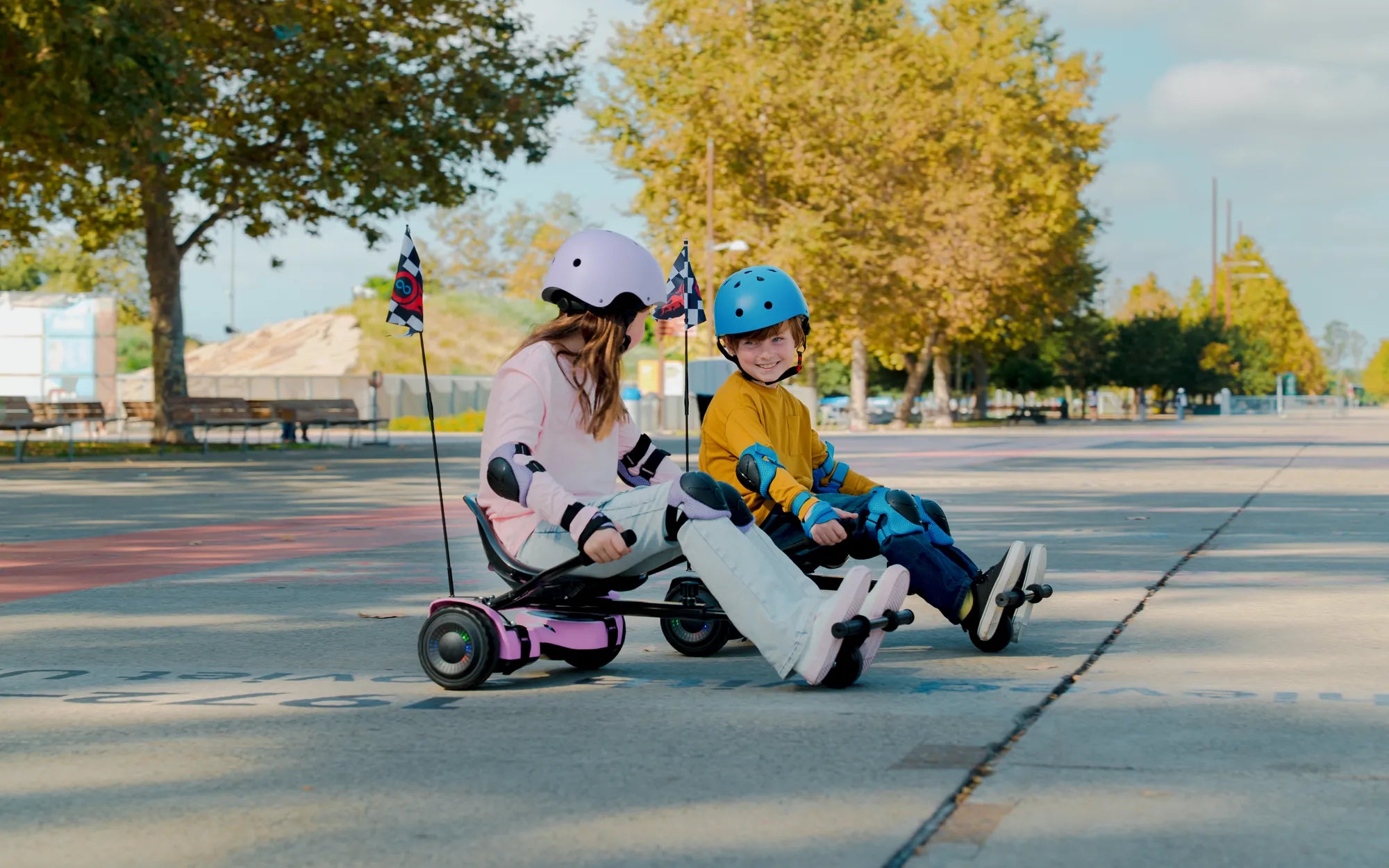
A properly fitted helmet certified by the CPSC (Consumer Product Safety Commission) is mandatory for every single ride. It should sit level on the head, with the strap snug under the chin. Knee and elbow pads are equally critical, as falls often result in scrapes and impacts to these joints. For visibility, especially in the evening, equip the scooter and rider with additional lighting. While many high-quality electric scooters for kids come with integrated LED headlights and taillights, adding reflective stickers to the helmet and clothing and wearing bright colors significantly increases visibility to others. This comprehensive kit mitigates the risk of injury and should be treated as part of the scooter itself—never ride without it.
Setting Ground Rules: Where, When, and How to Ride Safely
Clear, consistent rules create a safe riding environment. First, designate practice areas: empty parking lots, smooth park paths, or sidewalks where local laws permit. Riding on public roads should be strictly prohibited. Supervise all rides until you are confident in your child's skill and judgment. Establish that riding in wet conditions, on gravel, or on steep hills is off-limits, as traction is severely reduced. Teach hand signals for turning and stopping. Finally, implement a pre-ride "T-CLOCS" check: inspect Tires, Controls (brakes, throttle), Lights, Overall condition (frame for cracks), and Charge (battery level). These rules, combined with a high-quality electric scooter for kids, establish a culture of responsibility and safety.
Key Specifications Comparison: What the Numbers Really Mean
Understanding product specifications is key to comparing models objectively. This table breaks down the core specs of a high-quality electric scooter for kids and explains their real-world impact on performance, safety, and suitability.
| Specification | What It Means | Why It Matters for Kids |
|---|---|---|
| Motor Power (Wattage) | The power output of the electric motor. | Higher wattage (250W+) provides better acceleration and hill-climbing. Lower wattage (120W-200W) is safer for beginners, offering gentler power. |
| Max Speed (MPH) | The top speed the scooter can achieve. | Must be age-appropriate. Speed-lock features are vital. 10 MPH for young kids, up to 15 MPH for older, experienced riders. |
| Battery & Range | Battery capacity (Ah/Volts) determines how far it can go on a charge. | UL-certification is the #1 priority for safety. Range (e.g., 10-15 miles) should match intended use to avoid frustration. |
| Weight Capacity (lbs) | The maximum rider weight the scooter is designed to safely support. | Choosing a scooter with a capacity well above your child's weight ensures frame integrity, performance, and longevity. |
| Tire Type | Pneumatic (air-filled) vs. Solid (airless) rubber. | Pneumatic tires offer superior shock absorption and traction, providing a smoother, safer ride on uneven surfaces. |
| Brake Type | Disc, electronic (e-brake), foot, or combination. | A dual-brake system (e.g., electronic + disc) provides reliable, redundant stopping power, essential for safety at higher speeds. |
The Gyroor Advantage: Engineered for Parental Peace of Mind
When evaluating brands, Gyroor stands out by directly addressing the core concerns of safety-conscious parents through engineering and policy. Their approach to building a high-quality electric scooter for kids is holistic, focusing on certified components, real-world durability, and accessible support. With a track record of over 100,000 satisfied riders and a 4.5/5 average customer rating, Gyroor's commitment is reflected in specific, tangible features that align perfectly with the criteria established in this guide. This section details how their unique selling propositions translate into everyday safety and reliability for your child.
Trust in Every Charge: The UL-Certified Battery Promise
The battery is the heart of the scooter and its greatest potential risk point. Gyroor eliminates this worry by exclusively using UL-certified battery packs across its entire lineup. This certification means each battery has passed independent laboratory tests for electrical, mechanical, and environmental safety, including overcharge, short circuit, and abnormal operation tests. For parents, this translates to a fundamental reduction in the risk of battery-related incidents, allowing kids to enjoy their rides and parents to relax during charging. It’s a cornerstone feature that defines a true high-quality electric scooter for kids and is a non-negotiable standard for Gyroor.
Built for Real-World Play: Durability and Support You Can Rely On
Children's play is unpredictable, involving jumps off curbs, rides through puddles, and the occasional tip-over. Gyroor scooters are built for this reality. The IPX5 water-resistant rating ensures that splashes and light rain won't damage the electrical system, a common failure point in lesser models. The aircraft-grade aluminum frame is designed to withstand impacts without compromising structural integrity. Furthermore, Gyroor backs this durability with a straightforward 1-year warranty and accessible customer support, providing a clear path for assistance if needed. This combination of rugged design and strong warranty means your investment is protected, and the scooter is built to deliver fun season after season.
Smart Shopping Guide: Key Questions to Ask Before You Buy
Before making a purchase, use this checklist to evaluate any potential high-quality electric scooter for kids. These questions cut through marketing claims and get to the heart of safety, quality, and suitability.
- Is the battery UL-certified? This is the single most important safety question. Never compromise on this.
- What is the brake system? Does it have a redundant dual-brake system (e.g., electronic + mechanical) for reliable stopping?
- What is the IP water-resistance rating? Look for at least IPX4, with IPX5 (like Gyroor's) being ideal for worry-free play.
- Does it have speed-lock or beginner modes? Can you limit the top speed as your child learns?
- What is the warranty coverage? A comprehensive 1-year warranty on core components (battery, motor, frame) indicates manufacturer confidence.
- Does the weight capacity comfortably exceed my child's weight? This ensures longevity and stable performance.
- Are replacement parts (tires, inner tubes, brake pads) readily available? Easy maintenance is key for long-term usability.
Frequently Asked Questions (FAQ)
Q1: At what age is a child typically ready for an electric scooter?
Most children develop the necessary balance, coordination, and judgment between ages 6 and 8. Start with a model specifically designed for beginners, featuring a low speed cap (≤10 MPH), a kick-start function, and a lightweight frame. Always assess your individual child's maturity and physical ability.
Q2: How long does the battery last, and how do I maintain it?
A quality battery in a high-quality electric scooter for kids typically provides a range of 8-15 miles per charge and lasts for 2-3 years with proper care. To maximize lifespan, avoid draining the battery completely before recharging, store it in a cool, dry place, and use only the manufacturer-provided charger. Never leave the scooter charging unattended for extended periods.
Q3: Can my child ride it in the rain or through puddles?
While a scooter with an IPX5 rating (like Gyroor's) is protected against water jets and puddle splashes, it is not waterproof or submersible. Riding in heavy rain is not recommended. Always dry the scooter thoroughly after riding on wet surfaces to prevent corrosion and ensure electrical safety.
Q4: What is the most important safety feature?
While brakes and stability are critical, the most important safety feature is a UL-certified battery. It is the foundational component that prevents the most severe potential hazard. Following that, a dual-brake system and a properly fitted CPSC-certified helmet are equally vital for operational safety.
Q5: How do I know if a scooter is high-quality or just a toy?
Key differentiators include: the use of UL-certified batteries, a frame made of aluminum alloy (not cheap plastic), a legitimate IP water-resistance rating, a warranty of one year or more, and specifications that match professional standards (e.g., disc brakes, pneumatic tires). Toys often lack these certifications and use inferior materials.
Investing in Fun, Safety, and Lasting Memories
Choosing the right electric scooter is a decision that impacts your child's outdoor play for years. By prioritizing certified safety, durable construction, and age-appropriate performance, you are investing in more than a product—you are investing in countless hours of healthy, exhilarating, and safe outdoor fun. A true high-quality electric scooter for kids, such as those engineered by Gyroor with UL-certified batteries, IPX5 water resistance, and robust warranties, provides the peace of mind that allows the whole family to enjoy the ride. It fosters independence, confidence, and a love for active play, creating memories that will last far longer than the scooter itself. Ready to find the perfect match for your young rider? Explore the full range of certified, durable, and fun options designed with your child's safety as the top priority.
Browse the full Gyroor collection at gyroorboard.com.
Hoverboard Learning to Ride: The Ultimate Guide for Beginners
Best 10 Inch Hoverboard: Top Picks for Smooth and Safe Riding