



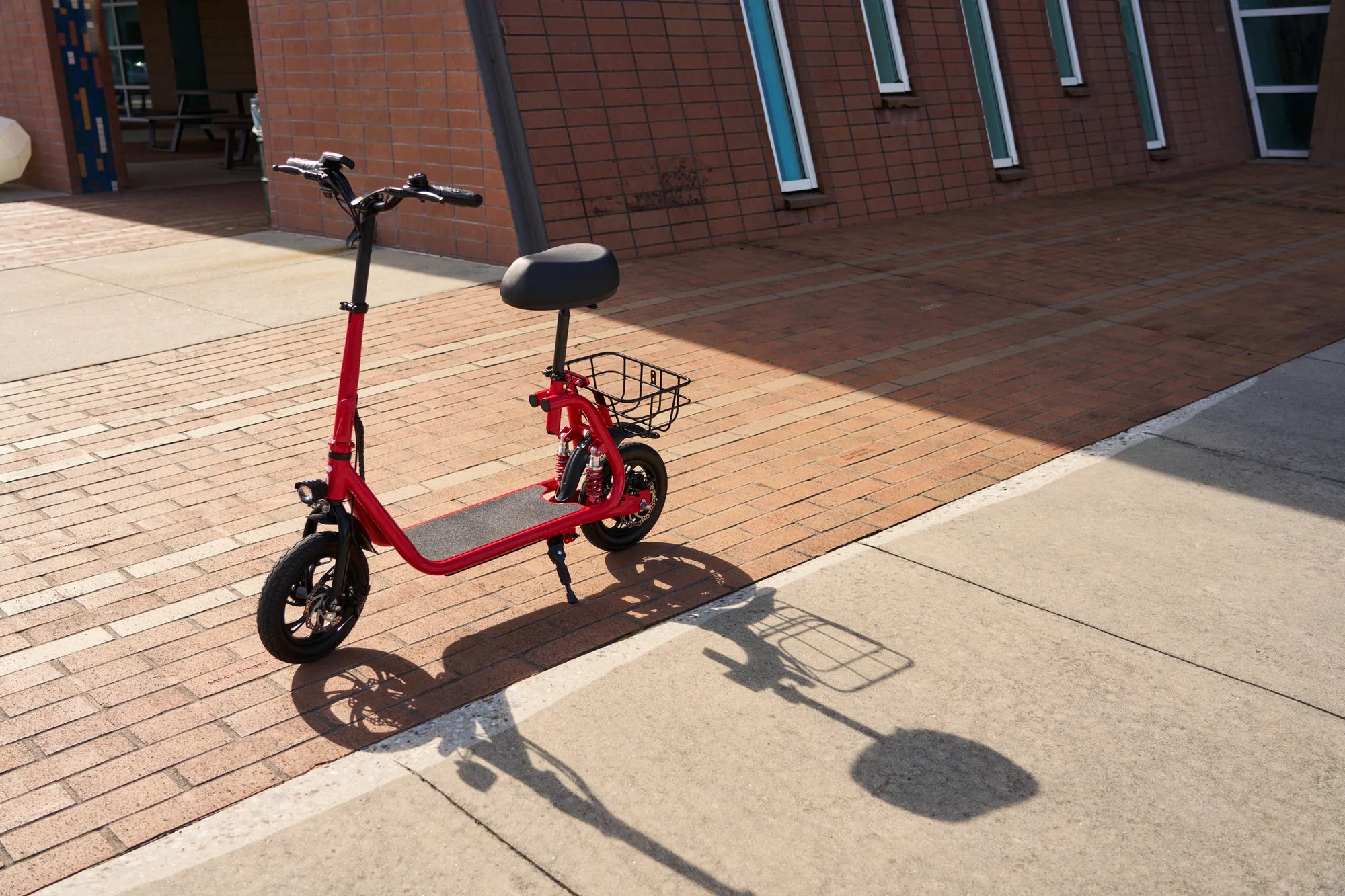
Introduction to E-Bike Power: Understanding Wattage
Electric bicycle performance fundamentally revolves around wattage—the measure of power output from the motor. Understanding watts is crucial for selecting an e-bike that matches your terrain, load requirements, and performance expectations. The highest watt ebike category represents the pinnacle of electric-assist technology, designed for riders who demand maximum torque, acceleration, and hill-climbing capability.
Wattage directly translates to mechanical work performed per second. In practical terms, higher wattage means stronger acceleration from stops, better maintenance of speed on inclines, and greater ability to carry heavy loads. While standard commuter e-bikes typically feature 250W to 750W motors, highest watt models push beyond 1000W, with some reaching 2000W or more for extreme applications.
This power measurement exists in two forms: continuous (nominal) and peak wattage. Continuous wattage represents the power a motor can sustain indefinitely without overheating. Peak wattage indicates maximum short-term output, often during acceleration or steep climbs. The highest watt ebike distinction generally refers to continuous wattage ratings, though peak numbers matter for burst performance.
Riders considering high-wattage e-bikes should understand that power alone doesn't guarantee performance. The entire system—battery, controller, thermal management, and drivetrain—must harmonize to deliver that power effectively. This guide explores every aspect of high-watt e-bikes, from technical specifications to real-world applications.
The Power Spectrum: What Does "Highest Watt" Really Mean?
The electric bicycle market categorizes power across a broad spectrum, with "highest watt" representing the upper echelon of available systems. Common power tiers include 750W (often the legal limit for street-legal Class 3 e-bikes in many US jurisdictions), 1000W (a popular threshold for off-road and high-performance models), and 1500W+ (reserved for specialized, extreme-performance applications). Understanding where your needs fall on this spectrum prevents overbuying or underbuying.
At 750W, e-bikes offer substantial assist for most urban and moderate trail riding. They typically reach speeds of 20-28 mph with good hill-climbing ability. The 1000W category provides noticeable improvements in acceleration and grade climbing, often enabling 30+ mph speeds where unrestricted. When we discuss the highest watt ebike territory—1500W to 3000W—we're addressing machines with motorcycle-like acceleration and the ability to conquer severe off-road terrain.
Power delivery characteristics differ significantly between these tiers. Lower-wattage systems prioritize efficiency and range, while highest watt systems emphasize raw performance. The difference becomes most apparent on sustained 15%+ grades, into strong headwinds, or when carrying substantial cargo. A 750W bike might slow considerably in these conditions, while a 2000W model maintains momentum with minimal rider effort.
Manufacturers sometimes use marketing numbers that reference peak rather than continuous wattage. A "2000W" e-bike might sustain only 1200W continuously. Discerning riders should look for specifications listing both continuous and peak ratings. This transparency indicates a manufacturer's confidence in their thermal management and component quality.
Legal Limits and Off-Road Use
Legal frameworks significantly influence what constitutes a "highest watt ebike" for street use. In the United States, three-class system defines street-legal e-bikes: Class 1 (pedal-assist up to 20 mph), Class 2 (throttle-assist up to 20 mph), and Class 3 (pedal-assist up to 28 mph). Most states limit street-legal e-bikes to 750W, though enforcement varies. The European Union maintains a stricter 250W limit for pedal-assist e-bikes (EPACs).
These regulations mean the truly highest watt ebikes—those exceeding 1000W—are generally intended for use on private property or designated off-road trails. Purchasers must understand their local laws before riding high-wattage e-bikes on public roads. Some jurisdictions treat e-bikes over certain wattage or speed thresholds as mopeds or motorcycles, requiring registration, insurance, and licensing.
For off-road enthusiasts, these restrictions matter less. Private land, closed courses, and designated OHV (Off-Highway Vehicle) areas often permit higher-powered electric vehicles. Many highest watt e-bike manufacturers explicitly market their products as off-road only. Responsible riders verify local trail regulations, as some natural surface trails prohibit motorized vehicles regardless of power source.
The legal landscape creates a clear distinction: street-legal "high-power" e-bikes typically max at 750W, while true highest watt machines (1000W+) exist primarily for off-road recreation. This distinction guides design priorities, with off-road models emphasizing durability, suspension, and knobby tires, while street-legal high-power models might prioritize integrated lighting, fenders, and commuter features.
Key Components of a High-Wattage E-Bike
Building a reliable highest watt ebike requires more than just a powerful motor. The entire system must be engineered to handle increased electrical and mechanical stresses. Four components work in concert: the motor, battery, controller, and thermal management system. Weakness in any area limits performance or causes premature failure.
The motor converts electrical energy from the battery into mechanical rotation. High-wattage motors use thicker copper windings, higher-grade magnets, and robust bearings to handle increased current and heat. They often feature advanced cooling methods—aluminum housings act as heat sinks, while some incorporate internal fans or liquid cooling channels. Motor efficiency percentages become crucial at high power; a 5% efficiency loss at 2000W means 100W of wasted heat.
The battery serves as the energy reservoir. High-watt systems demand high-voltage (typically 48V, 52V, or 72V) and high-current batteries. Voltage determines potential speed, while current (Amps) delivery capability determines torque and acceleration. A quality high-watt battery uses premium lithium-ion cells (like Samsung, LG, or Panasonic) with high discharge ratings, managed by a sophisticated Battery Management System (BMS) that prevents over-discharge, overcharge, and monitors cell balance.
The controller acts as the brain, regulating power flow from battery to motor. For high-watt applications, controllers must feature high-current MOSFET transistors, robust capacitors, and efficient heat dissipation. Programmable controllers allow riders to customize power delivery curves, regenerative braking strength, and speed limits. The controller's current limit (in Amps) multiplied by battery voltage determines maximum potential wattage delivery.
The Motor: Hub vs. Mid-Drive in High-Power Applications
Motor placement significantly impacts high-watt e-bike performance characteristics. Hub motors mount within the wheel hub (front or rear), delivering power directly to the wheel. Mid-drive motors mount at the bike's crank, leveraging the bicycle's existing gears. Each approach has advantages for high-power applications.
High-watt hub motors excel in simplicity and direct power delivery. Because they drive the wheel directly, they provide immediate torque without drivetrain wear. Modern geared hub motors offer excellent torque for their size, while direct-drive hubs provide smooth, quiet operation with inherent regenerative braking capability. For highest watt applications (1500W+), large direct-drive hub motors are common, as their size accommodates ample copper for heat dissipation. The main drawback is unsprung weight affecting suspension performance, particularly with rear hub motors.
High-watt mid-drive motors offer superior efficiency on varied terrain by leveraging the bicycle's gears. Climbing a steep hill? Shift to a low gear, and the motor spins faster at lower torque, operating in its efficient RPM range. This mechanical advantage means a 1000W mid-drive can often outperform a 1500W hub motor on technical climbs. However, mid-drives transfer stress to the chain, cassette, and chainring, requiring more frequent drivetrain maintenance. They also tend to be more complex and expensive.
The choice depends on riding style. For off-road trail riding with constant elevation changes, a high-watt mid-drive often proves superior. For urban commuting, flatland trail riding, or applications prioritizing simplicity and low maintenance, a high-watt hub motor may be preferable. Some premium highest watt ebikes offer both configurations, allowing riders to select their preferred power delivery character.
The Battery: The Fuel for the Fire
No component is more critical to a highest watt ebike than its battery. It must store substantial energy (for range) and deliver it rapidly (for power). These demands are quantified by two specifications: voltage (V) and amp-hour capacity (Ah). Watt-hours (Wh), calculated as V × Ah, indicate total energy storage, while continuous discharge rating (in Amps) indicates power delivery capability.
High-watt systems require high-voltage batteries—48V is standard, 52V offers a performance edge, and 72V systems deliver exceptional power. Higher voltage allows the same power (watts) at lower current (Amps), reducing heat generation in wiring and controllers. For example, a 1500W system draws 31.25A at 48V but only 20.8A at 72V. Lower current means less energy loss as heat and potentially longer component life.
The battery's discharge capability must match the motor's demands. A 1500W motor on a 48V system requires about 31A continuous. The battery's BMS and cells must sustain this without voltage sag (a drop in voltage under load that reduces power). Premium batteries use cells with high discharge ratings (like Samsung 30Q or Molicel P42A) configured in parallel groups to share the current load. A battery labeled "48V 20Ah" with a 40A BMS can theoretically deliver 1920W (48V × 40A) peak.
Safety is paramount with high-power batteries. UL certification (like UL 2271 or UL 2849) indicates rigorous testing for electrical, mechanical, and environmental safety. This certification is especially important for highest watt ebikes, where battery failures can be catastrophic. Quality batteries feature robust enclosures, temperature sensors, and proper fusing. Riders should never compromise on battery quality to save cost—the battery represents both the heart and potential hazard of a high-watt e-bike.
The Controller and Thermal Management
The controller is the electronic bridge between battery and motor, modulating power based on throttle or pedal-assist sensor input. In a highest watt ebike, the controller handles immense current, generating significant heat. Controller quality directly determines reliability, smoothness of power delivery, and thermal safety.
High-current controllers utilize multiple MOSFET transistors in parallel to share the electrical load. More MOSFETs typically mean better heat distribution and higher reliability. The controller's firmware manages acceleration curves, electronic braking, and protection features like over-current, over-temperature, and low-voltage cutoff. Programmable controllers allow customization—useful for optimizing a high-watt system for specific riding conditions.
Thermal management becomes critical at sustained high power. Controllers generate heat proportional to current squared times resistance (I²R losses). A 40A controller might generate 50+ watts of heat during hard acceleration. Effective cooling strategies include aluminum heat sinks bonded to MOSFETs, thermal paste for optimal heat transfer, and in some cases, fan-forced air or liquid cooling. Controllers should be mounted in locations with adequate airflow, not enclosed in sealed compartments.
The entire system's thermal performance determines sustainable power. A motor might handle 2000W peak but only 1200W continuous before overheating. Quality highest watt ebikes design for thermal equilibrium—the point where heat dissipation matches heat generation. Features like temperature sensors in the motor and controller allow the system to reduce power automatically before damage occurs, a crucial safeguard during extended climbs or heavy loads.
Performance Expectations: What Can a Highest Watt E-Bike Do?
Moving from specifications to real-world experience, highest watt ebikes deliver transformative performance. The difference between a 500W commuter e-bike and a 1500W performance machine is not incremental—it's categorical. Understanding these capabilities helps set realistic expectations and guides appropriate use.
Acceleration is the most immediately noticeable difference. Where a 750W e-bike provides brisk assistance, a 1500W+ model delivers motorcycle-like launch. From a standstill, these e-bikes can reach 20 mph in under 4 seconds, with higher-power models achieving even more startling numbers. This acceleration improves safety in traffic by quickly matching vehicle speeds, though it demands responsible throttle control.
Hill-climbing ability redefines what's possible on two wheels. A 250W e-bike struggles on 10% grades, requiring significant rider effort. A 750W model handles 15% grades reasonably. A true highest watt ebike (1500W+) conquers 25-30% inclines—essentially anything traction will allow—with minimal pedal input. This capability opens mountainous terrain previously requiring exceptional fitness or hiking.
Sustained high-speed performance separates high-watt systems from lower-powered ones. While many e-bikes can briefly reach 28-30 mph on flat ground, maintaining that speed into a headwind or on a slight incline requires continuous power. A 1500W system can sustain 30+ mph in conditions where a 750W system drops to 22-25 mph. This makes high-watt e-bikes viable for longer-distance commuting where average speed matters.
Acceleration and Hill Climbing
Quantifying acceleration, a typical 1500W hub-drive e-bike can achieve 0-20 mph in approximately 3.5 seconds, depending on rider weight and battery voltage. Compare this to approximately 6-7 seconds for a 750W model. This difference feels dramatic—the high-watt bike launches with authority, requiring firm grip on handlebars. Throttle modulation becomes an important skill, as full throttle application from standstill can cause wheel slip on loose surfaces.
Hill climbing performance depends heavily on motor type and gearing. A 1500W mid-drive e-bike, utilizing low gears, can climb virtually any paved incline at 10+ mph. Steep off-road trails with 30% grades become manageable at 5-8 mph with moderate pedaling. The same wattage in a hub motor might struggle slightly on the steepest sections due to fixed gear ratio, but still outperforms lower-power alternatives dramatically.
Torque, measured in Newton-meters (Nm), is the rotational force applied to the wheel. High-watt motors produce high torque—often 80-160 Nm for mid-drives, 60-100 Nm for hub motors. This torque translates directly to climbing force. For perspective, 100 Nm can theoretically lift 100 kilograms vertically against gravity. In practice, traction and bike geometry become limiting factors before motor torque on steep climbs.
Real-world testing reveals consistent patterns. On a standardized 10% grade, a 750W e-bike might maintain 12-15 mph with moderate pedaling. A 1500W e-bike maintains 18-22 mph with similar effort. On extreme 20%+ grades, the 750W bike slows to 5-8 mph with heavy pedaling, while the 1500W bike holds 10-14 mph with light pedaling. This performance gap widens with increased load—adding cargo or a heavier rider affects the lower-power bike disproportionately.
Top Speed and Sustained Power
Top speed in e-bikes involves multiple factors: motor power, motor RPM limits, battery voltage, controller settings, aerodynamics, and rolling resistance. While wattage enables speed, it doesn't guarantee it—a 2000W motor geared for hill climbing might have lower top speed than a 1500W motor optimized for velocity. Generally, highest watt ebikes achieve 30-40 mph top speeds, with some exceeding 50 mph under ideal conditions.
The key advantage of high wattage isn't necessarily maximum speed but sustained speed under adverse conditions. Consider riding into a 15 mph headwind: aerodynamic drag increases with the square of velocity. Maintaining 28 mph against that wind might require 800-1000W of continuous power—beyond many 750W systems' sustainable output. A 1500W system handles this demand comfortably, maintaining speed where a lower-power system would gradually slow.
Battery voltage significantly influences top speed potential. Motor RPM is proportional to voltage (minus losses). A 48V system might spin a particular motor at 500 RPM no-load, while a 52V system spins it at about 540 RPM, and a 72V system at 750 RPM. Higher voltage thus increases potential top speed without changing motor windings. Many highest watt ebikes utilize 52V or 72V systems specifically for this speed advantage.
Sustained power matters for distance riding. Riding at 25 mph on flat ground typically requires 300-500W of total power (motor + rider). A 750W motor contributing fully could theoretically maintain this indefinitely, but thermal limits often reduce continuous output to 500-600W. A 1500W motor might have 1000-1200W continuous rating, providing substantial overhead for hills, headwinds, or faster cruising. This overhead translates to consistent performance throughout a ride, without power reduction due to heat buildup.
Introducing the Gyroor High-Power Lineup: Engineered for Performance
Gyroor brings its engineering philosophy—emphasizing safety, reliability, and rider-focused design—to the high-watt e-bike category. With over 100,000 riders across North America and Europe trusting Gyroor products, the brand's expansion into performance e-bikes applies proven electric vehicle expertise to demanding applications. Gyroor's approach balances extreme power with essential safeguards.
The Gyroor performance lineup recognizes that highest watt ebike riders have distinct priorities: uncompromising capability for off-road adventures, cargo hauling, or conquering extreme terrain. These riders also need assurance that their powerful machine won't compromise on safety or longevity. Gyroor addresses this through certified components, robust construction, and comprehensive support.
Every Gyroor high-watt e-bike begins with motor selection tailored to the intended use. For technical trail riding, mid-drive systems leverage gear reduction for maximum torque. For all-terrain versatility, high-torque hub motors provide simplicity and reliability. Each motor undergoes testing beyond its rated capacity to ensure durability under real-world stresses, including thermal cycling and vibration resistance.
Battery systems receive particular attention. Gyroor exclusively uses UL-certified battery packs, a critical safety decision for high-power applications where battery failures carry greater risk. These packs undergo testing for 500+ charge cycles while maintaining performance, ensuring long-term value. The Battery Management System includes multiple protection layers: over-current, over-voltage, under-voltage, short-circuit, and individual cell monitoring for balance.
Model Spotlight: Gyroor Hurricane All-Terrain E-Bike
The Gyroor Hurricane exemplifies the high-watt philosophy, featuring a 1000W peak (750W continuous) geared hub motor optimized for torque and thermal performance. This motor delivers 80 Nm of torque, enabling climbs up to 25° gradients. While respecting 750W continuous limits for broader compatibility, its peak capability provides the acceleration and hill-climbing punch riders expect from high-performance e-bikes.
Powering the Hurricane is a 48V 15Ah UL-certified lithium-ion battery, providing 720Wh of energy. This configuration balances power delivery with range, achieving 25-50 miles per charge depending on mode and terrain. The battery integrates seamlessly into the downtube, lowering center of gravity for improved handling. A smart charger completes the system, restoring full charge in 5-7 hours with automatic cutoff at 100%.
The Hurricane doesn't sacrifice features for power. Full suspension (front fork and rear shock) absorbs trail imperfections, while hydraulic disc brakes provide consistent stopping power in all conditions. An IPX5 water-resistant rating protects electrical components from rain and splashes. The color LCD display shows speed, battery level, assist mode, and trip data, with intuitive controls for power adjustment.
This model demonstrates Gyroor's balanced approach: substantial power for demanding riding, integrated with practical commuter features like integrated headlight/taillight, fenders, and rear rack compatibility. It serves dual purposes as a capable off-road explorer and a high-performance urban commuter, adapting to rider needs through five levels of pedal assist plus throttle-only operation.
Safety and Reliability First: The Gyroor Difference
In the highest watt ebike category, safety considerations multiply. Higher speeds, greater mass, and increased system energy demand rigorous engineering. Gyroor addresses these concerns through multiple layers of protection, beginning with the fundamental electrical system. UL certification for batteries isn't just a marketing point—it represents verification of safe cell selection, proper spacing, adequate fusing, and robust enclosure design.
Thermal protection extends throughout the system. The motor controller includes temperature monitoring, reducing power output if components approach limits during sustained climbs. This prevents damage while allowing maximum performance within safe parameters. Motor windings use high-temperature rated enamel, and housings incorporate cooling fins where appropriate. These design choices prevent the gradual degradation that plagues some high-power e-bikes.
Water resistance becomes critical for e-bikes used in varied conditions. The IPX5 rating indicates protection against water jets from any direction, suitable for riding in heavy rain or through puddles. This protection extends beyond the motor to controller connections, display, and throttle. Proper sealing prevents corrosion and electrical shorts—common failure points in poorly designed e-bikes exposed to moisture.
Gyroor supports its high-watt e-bikes with a comprehensive 1-year warranty covering frame, motor, battery, and electronic components. This warranty reflects confidence in the durability of these systems under normal use. With support centers in North America and Europe, riders have access to technical assistance and genuine parts. This support network is particularly valuable for high-performance e-bikes, where specialized knowledge ensures proper maintenance and repair.
Who Truly Needs a Highest Watt E-Bike? A Buyer's Guide
Determining whether a highest watt ebike suits your needs requires honest assessment of riding conditions, physical demands, and performance expectations. These powerful machines excel in specific scenarios but represent overkill for casual riders. Matching the e-bike to your actual use case ensures satisfaction and value.
Riders in exceptionally hilly terrain benefit dramatically from high-watt systems. If your regular routes include sustained 10%+ grades, a 750W+ e-bike transforms the experience from strenuous to enjoyable. For those facing mountain passes or extremely steep residential streets (20%+), 1000W+ becomes almost necessary to maintain reasonable speeds without excessive pedaling effort. The alternative is arriving at destinations sweaty and fatigued.
Off-road and trail riders constitute another core demographic. Technical singletrack with roots, rocks, and steep climbs demands instant torque and power reserves. A high-watt mid-drive e-bike provides the "boost" to clear obstacles and maintain momentum where traditional mountain bikes require explosive effort. This capability expands trail access for riders of varying fitness levels while still providing vigorous exercise through adjustable assist levels.
Cargo and heavy riders present clear use cases. Hauling groceries, children, or work equipment adds significant weight—easily 50-100+ pounds beyond the rider. Standard e-bikes struggle with these loads, especially on inclines. High-watt systems handle the additional mass while maintaining acceleration and hill-climbing performance. Similarly, riders over 220 pounds often find standard e-bikes underpowered; high-watt models provide appropriate assist for their mass.
The Ideal Rider: Off-Road, Heavy Cargo, and Steep Terrain
The ideal highest watt ebike rider combines specific needs with responsible usage. Off-road enthusiasts riding technical trails benefit from mid-drive systems that leverage gearing. These riders appreciate the ability to clear obstacles, climb seemingly impossible grades, and extend riding range in challenging terrain. They typically already possess mountain biking skills and understand trail etiquette regarding motorized vehicles.
Cargo e-bike users represent a growing segment. Delivering goods, transporting children, or simply running errands without a car becomes practical with adequate power. High-watt cargo e-bikes maintain 15-20 mph even with 100+ pounds of cargo, making them viable car replacements for urban families. These riders prioritize stability, braking performance, and cargo capacity alongside power.
Commuters facing extreme topography or distance benefit from high-watt systems. A 10-mile commute with 1000 feet of climbing becomes manageable without arriving exhausted. The sustained power maintains schedule consistency regardless of headwinds or slight inclines that would slow lower-power e-bikes. These riders often appreciate higher top speeds (where legal) to better integrate with urban traffic flow.
Adventure riders exploring mixed terrain—pavement, gravel, forest roads—value the versatility of high-watt e-bikes. The power reserve handles unexpected steep sections or soft surfaces. Longer battery range (often accompanying high-watt systems) enables all-day exploration without range anxiety. These riders typically seek durable construction, comfortable geometry, and reliable components alongside pure power.
Considerations Before You Buy: Trade-offs of High Power
Prospective highest watt ebike buyers must acknowledge inherent trade-offs. Increased power typically reduces range when used aggressively. While battery capacity might be larger, the higher energy consumption during acceleration and hill climbing can offset this advantage. Riders must balance their desire for performance with realistic range expectations—using lower assist levels when possible extends distance.
Weight increases substantially with high-power components. A 1500W motor, larger battery, and reinforced frame add 10-15+ pounds compared to a 500W commuter e-bike. This matters when lifting the bike onto racks, carrying upstairs, or pedaling without assist (though high-watt e-bikes typically have excellent freewheel characteristics). The added mass also affects handling, particularly at low speeds.
Legal restrictions represent the most significant consideration. Riders must verify local e-bike classifications and power limits. Using a 1500W e-bike on roads where 750W is the legal maximum risks fines, confiscation, or classification as an unregistered motor vehicle. Responsible riders either limit usage to private property/trails or ensure their high-watt e-bike has programmable limits to comply with local regulations when needed.
Cost increases proportionally with power. High-watt motors, robust batteries, and capable controllers command premium prices. Additionally, wear components—brakes, tires, drivetrain—experience greater stress and require more frequent replacement. Buyers should budget not only for purchase but ongoing maintenance. The investment justifies itself for riders with genuine need, but represents unnecessary expense for casual users.
FAQ: Your High-Watt E-Bike Questions Answered
Q: Is a 1000W e-bike street legal where I live?
Street legality depends entirely on local regulations. In the United States, most states adopting the three-class system limit street-legal e-bikes to 750W (though some states have higher limits or none specified). The European Union limits street-legal pedal-assist e-bikes to 250W continuous. Many 1000W e-bikes are marketed as off-road only. Always check your specific municipal, state/provincial, and national laws before riding on public roads.
Q: How does high wattage affect my e-bike's range?
Higher wattage increases potential energy consumption, reducing range if used aggressively. However, high-watt e-bikes typically pair with larger batteries, offsetting this effect. The relationship isn't linear—riding a 1500W e-bike gently at 250W consumption yields similar range to a 250W e-bike working hard. Actual range depends more on riding style than maximum wattage. Using lower assist levels on flats preserves battery for climbs where high power is needed.
Q: Do I need a special license or insurance for a high-watt e-bike?
This depends on how your jurisdiction classifies the vehicle. If classified as a bicycle (typically under 750W, 20-28 mph limit), no license or insurance is required. If classified as a moped or motorcycle (common for e-bikes over 1000W or capable of >28 mph), registration, insurance, and possibly a driver's license or endorsement may be required. Some homeowners or renters insurance policies offer limited e-bike coverage; specialized e-bike insurance is available for high-value models.
Q: Can a high-watt e-bike still be a good workout?
Absolutely. Pedal-assist systems allow adjustable effort. You can set minimal assist for maximum workout or higher assist for recovery. High-watt e-bikes enable riders to tackle more challenging terrain and longer distances, potentially increasing total calorie burn despite the assist. Many riders report getting more exercise with an e-bike because they ride more frequently and for longer durations than they would on a traditional bicycle.
Q: How important is the brand and warranty when buying a high-power model?
Extremely important. High-watt e-bikes stress components significantly. Reputable brands like Gyroor engineer for these stresses, use quality materials, and conduct rigorous testing. A comprehensive warranty (1 year is standard for quality brands) protects your investment. Brand reputation also affects availability of replacement parts and technical support. With complex electrical systems, manufacturer support proves invaluable for troubleshooting and repairs.
Q: What maintenance does a high-watt e-bike require compared to regular e-bikes?
High-watt e-bikes require similar basic maintenance (brake adjustments, tire pressure, drivetrain cleaning) but with greater attention to wear items. Brakes experience higher stopping forces, tires wear faster due to acceleration forces, and drivetrains (especially on mid-drives) endure more torque. Electrical connections should be checked periodically for tightness. The battery benefits from proper charging habits—avoiding complete discharges and extreme temperatures extends its life significantly.
Comparison Table: High-Watt E-Bike Performance Tiers
| Specification | 750W (High-Power Commuter) | 1000W (Performance) | 1500W+ (Highest Watt) |
|---|---|---|---|
| Typical Continuous Power | 500-750W | 750-1000W | 1000-2000W+ |
| Peak Power | 900-1200W | 1200-1500W | 1800-3000W+ |
| Expected Top Speed | 20-28 mph | 28-35 mph | 30-45+ mph |
| 0-20 mph Acceleration | 5-7 seconds | 4-6 seconds | 3-5 seconds |
| Max Grade Climbability | 15-20% | 20-25% | 25-30%+ |
| Typical Battery Voltage | 48V | 48V-52V | 52V-72V |
| Range per Charge* | 25-50 miles | 20-45 miles | 15-40 miles |
| Common Motor Type | Geared Hub | Hub or Mid-Drive | Direct Hub or Mid-Drive |
| Street Legal Status | Often Class 3 | Limited/Off-road | Typically Off-road Only |
| Relative Weight | Medium (50-65 lbs) | Medium-Heavy (55-70 lbs) | Heavy (60-80+ lbs) |
*Range varies dramatically with riding style, terrain, rider weight, and assist level. Values assume mixed use with moderate assist.
Conclusion: Power with Purpose and Peace of Mind
The highest watt ebike represents the ultimate expression of electric bicycle performance, delivering capabilities that redefine personal transportation and recreation. From conquering mountain trails to transforming challenging commutes, these powerful machines expand what's possible on two wheels. Yet this power demands respect—for mechanical limits, legal boundaries, and safety considerations.
Selecting a high-watt e-bike requires matching technical specifications to genuine needs. Riders facing extreme terrain, heavy loads, or seeking off-road adventure benefit most from these systems. For casual urban commuting on moderate grades, lower-power options often provide better value and compliance. The performance comparison table illustrates clear distinctions between power tiers, helping buyers identify their appropriate category.
Quality engineering separates exceptional high-watt e-bikes from merely powerful ones. Components must withstand increased electrical and thermal stresses through robust design and proper cooling. Safety systems—particularly battery protection and thermal monitoring—become non-negotiable at higher power levels. Brands like Gyroor prioritize these safeguards through UL-certified batteries, IP-rated water resistance, and comprehensive warranties.
Responsible ownership includes understanding local regulations, maintaining components subjected to greater wear, and using power appropriately for conditions. When matched to the right rider and application, a highest watt ebike delivers unparalleled freedom, capability, and enjoyment. It transforms impossible climbs into manageable ascents, extends riding range, and brings motorcycle-like performance to human-scale transportation.
Explore Gyroor's performance e-bike collection to experience engineered high-watt systems that balance extreme capability with essential safety and reliability. With models designed for off-road adventure, cargo hauling, and high-performance commuting, Gyroor offers solutions for riders who demand more from their electric bicycle. Visit gyroorboard.com to discover the perfect balance of power, range, and durability for your riding ambitions.
e bike 600 dollars: A Realistic Guide to Value, Safety, and Smart Buying
Dirt Bike Parts List: The Complete Anatomy Guide for Every Rider