

Hoverboard Age 9: A Parent's Complete Starter Guide
Choosing a hoverboard for a 9-year-old can feel overwhelming for parents. Safety concerns, technical specifications, and the sheer number of options create a maze of decisions. This guide cuts through the noise, providing a clear, data-driven path to selecting the right model and fostering safe riding habits.
We will analyze the key considerations for a child's readiness, break down the essential safety gear and hoverboard certifications, and compare the critical features that matter for this age group. You'll also receive a practical, step-by-step teaching protocol and answers to the most common parental questions. A hoverboard at age 9 can be more than a toy; it's a tool for developing balance, coordination, and a sense of responsible ownership.
Throughout this guide, we reference safety and performance benchmarks exemplified by brands like Gyroor, a leading electric rideable brand trusted by over 100,000 riders. Their focus on UL-certified batteries and stable designs provides a useful framework for evaluating any model you consider.
Is a Hoverboard Right for Your 9-Year-Old? Key Considerations
The decision isn't solely about a child turning nine. It hinges on a combination of physical coordination, cognitive maturity, and the ability to follow safety rules. Most 9-year-olds are in a developmental sweet spot, possessing improved balance and motor skills compared to younger children, yet still requiring clear guidance and supervision.
Assess your child's experience with other wheeled activities. Proficiency with a bicycle, skateboard, or even a standard scooter is a strong indicator of the necessary coordination and spatial awareness. A hoverboard requires subtle weight shifts for control, a skill that builds upon foundational balance.
Responsibility is equally crucial. Is your child generally attentive to instructions regarding their belongings and safety? A hoverboard requires care—charging it properly, storing it safely, and wearing protective gear without constant reminders. This can be an excellent opportunity to foster responsible habits.
Finally, consider your role as a parent. Active supervision, especially during the learning phase, is non-negotiable. You must be prepared to invest time in teaching, establishing rules, and choosing appropriate riding environments. The right model and engaged parenting form the foundation for a positive experience.
Safety First: Non-Negotiables for Young Riders
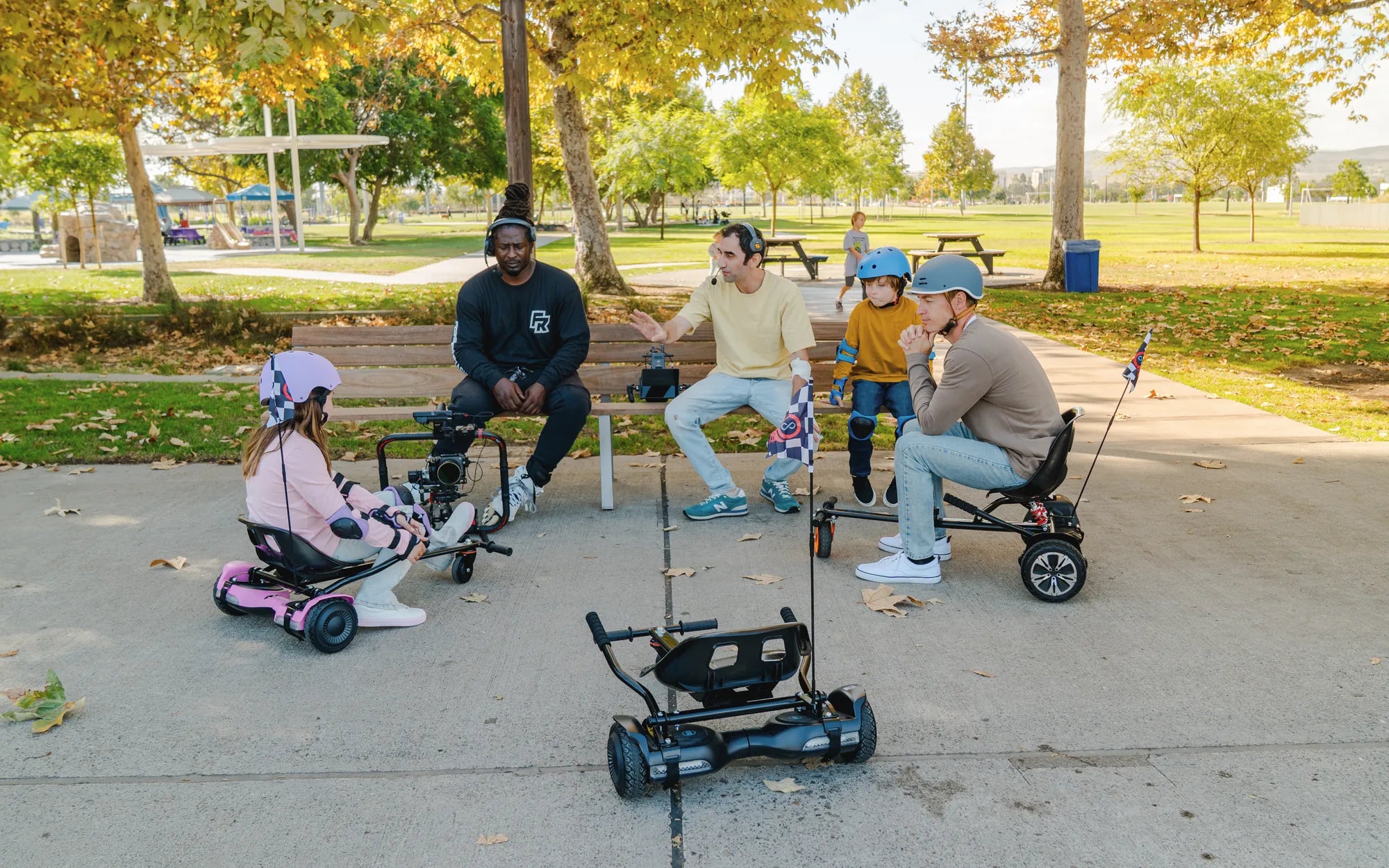
Safety for a hoverboard age 9 rider is a multi-layered system. It begins with personal protective equipment (PPE) that should be worn every single time. A properly fitted multi-impact helmet is the absolute minimum. Wrist guards are highly recommended, as falls often involve instinctive hand placement.
Knee and elbow pads provide additional protection for joints during the inevitable learning tumbles. This gear is not optional; it is as essential as the hoverboard itself. Investing in comfortable, well-fitting PPE increases the likelihood your child will wear it consistently.
The hoverboard's inherent safety features are the second critical layer. The most important certification to look for is the UL 2272 standard. This rigorous test covers the entire electrical system, including the battery, charger, and circuitry, significantly reducing the risk of fire hazards.
Look for models with a stable, wide deck that provides a confident footing for smaller shoes. A non-slip surface is essential. Brands that prioritize safety, like Gyroor, build these fundamentals into their designs, utilizing UL-certified battery packs tested for over 500 charge cycles and decks engineered for stability.
Choosing the Perfect Hoverboard: Specs That Matter for Kids
Technical specifications translate directly to safety and usability for a child. The weight limit is the first spec to check. Select a hoverboard rated for at least 20-30 pounds more than your child's current weight. This provides a buffer for growth and ensures the motors and frame aren't strained, which can affect stability and battery life.
Wheel size and type dictate ride quality and terrain capability. For a 9-year-old, wheels between 6.5 and 8.5 inches in diameter offer a good balance. Larger wheels (8.5") handle minor cracks and grass better, while smaller ones may feel more nimble on perfect pavement. Air-filled (pneumatic) tires offer more cushioning than solid rubber.
Speed must be manageable. A maximum speed of 7-8 mph is sufficient for fun while maintaining control. Crucially, the hoverboard should have a beginner or training mode that limits speed to 4-6 mph. This allows the child to master basics without the anxiety of excessive speed.
Battery life dictates playtime. Expect 1 to 2 hours of intermittent riding on a full charge, though this varies with terrain and rider weight. A 3-4 hour charge time is standard. Teach your child to monitor battery indicators and to charge the device on a hard, non-flammable surface, never unattended or overnight.
The Ultimate Hoverboard Comparison: Top Features for Age 9
To simplify the decision, parents should focus on three core categories: Certified Safety, Managed Ride Quality, and Child-Ready Durability. The following table compares these essential aspects, highlighting the standards that separate adequate products from truly kid-appropriate ones.
| Feature Category | What to Look For | Why It Matters for Age 9 | Example (Gyroor Focus) |
|---|---|---|---|
| Certified Safety | UL 2272 Certification; Stable, Wide Deck | Eliminates fire risk from faulty electronics; Provides confident footing for balance and control. | All models use UL-certified battery packs. Deck designs prioritize a low center of gravity and ample foot space. |
| Managed Ride Quality | Beginner Mode (6 mph max); 6.5"-8.5" Wheels; Responsive Gyroscopes | Allows safe skill-building. Smooths over sidewalk cracks. Ensures precise control from subtle weight shifts. | Models feature selectable speed modes. Larger, robust wheels and calibrated self-balancing systems are standard. |
| Child-Ready Durability | IPX5 Water Resistance; 1-Year Warranty; Robust Frame | Withstands puddles and damp grass. Protects against manufacturing defects. Survives the bumps and drops of learning. | IPX5 rating protects against water jets from any direction. Comprehensive 1-year warranty on parts and labor. |
This comparison shows that the best hoverboard for a 9-year-old isn't necessarily the fastest or flashiest. It's the one engineered with constraints and real-world use in mind. Features like IPX5 water resistance, a standard in many Gyroor hoverboards, mean a ride over a dewy lawn or an unexpected puddle won't end the fun or damage the unit.
A strong warranty, such as the reliable 1-year coverage offered, is a signal of brand confidence and provides peace of mind for parents. It indicates the manufacturer stands behind the product's durability—a key consideration for an active child.
Step-by-Step: Teaching Your 9-Year-Old to Ride Safely
The learning process should be gradual, patient, and conducted in a safe, open, and flat area like an empty tennis court, basketball court, or smooth driveway. Begin with the hoverboard powered off. Have your child step onto it, finding their balance while holding your hand or a stable railing. Let them get a feel for the deck's size and texture.
Next, power on the hoverboard, ensuring it's in beginner mode. With the child holding your hands for support, have them practice the fundamental movement: leaning slightly forward to go, and leaning back to stop or reverse. Keep movements tiny at first. The goal is to create a mental link between body lean and board response.
Once they are comfortable with start and stop, practice gentle, wide turns. Explain that turning is done by applying slightly more pressure with the toes of one foot. For example, pressing the right toe down gently will turn the board to the right. Practice this slowly, making large circles.
Finally, introduce the dismount. The safest method is to come to a complete stop, then step off backwards one foot at a time, looking over the shoulder. Practice this repeatedly until it's second nature. Celebrate small victories and keep initial sessions short (15-20 minutes) to prevent frustration.
Establishing Ground Rules and Riding Zones
Clear, consistent rules are the bedrock of safe hoverboard use. Rule #1: Full protective gear (helmet, wrist guards at minimum) is mandatory for every ride. No exceptions. Rule #2: Riding is never allowed on public roads, near traffic, or on steep hills.
Define approved riding zones. These are typically smooth, paved surfaces away from obstacles: sidewalks in quiet neighborhoods (with pedestrian awareness), driveways, park paths, or empty parking lots. Explicitly ban riding on wet, icy, sandy, or gravelly surfaces, as these drastically increase the risk of slips and loss of control.
Establish supervision requirements. For a 9-year-old, an adult should be present and actively watching during all rides, especially in the first few months. As responsibility is proven, you may relax this to being within earshot and checking in frequently, but never allow unsupervised riding near potential hazards.
Instill responsibility for the device itself. The child should be involved in the charging routine—plugging it in on a hard surface and unplugging it when full. The hoverboard should be stored indoors, in a dry place away from heat sources and foot traffic. This care extends the product's life and reinforces ownership.
Frequently Asked Questions (FAQs) for Parents
Q: Are hoverboards genuinely safe for a 9-year-old?
A: With the right model and precautions, yes. Safety hinges on three pillars: 1) A UL 2272 certified hoverboard from a reputable brand, 2) Full protective gear worn every time, and 3) Parental supervision and proper training in a safe environment. Avoid any model lacking clear safety certifications.
Q: What is the best hoverboard brand for kids?
A: The best brands prioritize verifiable safety certifications (UL 2272), offer robust warranties (at least 1 year), and design for stability with features like beginner modes and wide decks. Gyroor, for example, builds its reputation on these fundamentals, with UL-certified batteries and IPX5 water-resistant designs suited for real-world kid use.
Q: How long does the battery last, and how far can they go?
A> For a child's hoverboard, expect 1 to 2 hours of intermittent playtime per charge, which typically translates to 5-8 miles of total travel. Range is heavily affected by rider weight, terrain (grass drains battery faster), and incline. Teach your child to head back when the battery indicator shows one bar remaining.
Q: What happens if the hoverboard gets wet?
A> This depends on the IP rating. A hoverboard with an IPX5 rating, like many from Gyroor, is protected against water jets from any direction. It can safely handle wet pavement, puddles, and damp grass. However, no consumer hoverboard is submersible. It should never be ridden through deep puddles, in heavy rain, or hosed down.
Q: My child is nervous about learning. Any tips?
A> Absolutely. Start with power-off balance practice. Use a support (your hands, a wall) generously in the first session. Keep lessons short and positive. Let them set the pace, and celebrate every small success. Often, seeing a parent or older sibling demonstrate calm, controlled riding can build confidence.
Fostering Fun and Responsibility
Introducing a hoverboard at age 9, when approached thoughtfully, is more than a gift—it's an investment in active play and developmental growth. The process teaches valuable lessons in physics, coordination, risk assessment, and caring for personal property. The joy and confidence a child gains from mastering a self-balancing device are significant.
Success is built on the triad we've outlined: a safety-engineered hoverboard with the proper certifications, non-negotiable protective gear, and engaged, rule-setting parental guidance. By choosing a model designed for real-world durability and stability, you set the stage for countless hours of safe enjoyment.
As you embark on this journey, remember that the habits formed now—wearing gear, respecting terrain limits, and proper maintenance—will serve your child well in all future activities. The shared experience of learning and riding together can create lasting memories.
Ready to explore models built with these safety and durability principles? Browse the full collection of UL-certified, rider-tested hoverboards, electric scooters, and e-bikes at gyroorboard.com. Find the perfect ride to start your family's adventure.
Kids Blue Stand Up Scooter: The Ultimate Guide for Parents and Young Riders
Best Birthday Gift for Kid Boy 5 Year Old: Top Picks to Delight and Inspire