



Determining the right age for a hoverboard is one of the most common questions from parents and new riders. The answer is more complex than a single number, intertwining manufacturer safety guidelines, local legal statutes, and a critical assessment of a rider's maturity and physical coordination. Understanding the hoverboard age requirement is the first step in ensuring a safe and enjoyable riding experience. This guide will provide a comprehensive breakdown of official recommendations, legal landscapes, and practical safety checklists every parent and rider needs.
Navigating Hoverboard Age and Safety
The question "How old should you be to ride a hoverboard?" directly impacts safety outcomes. Age serves as a practical proxy for the balance, strength, and cognitive judgment required to operate a self-balancing electric vehicle. A rider must process their environment, react to obstacles, and maintain control while moving at speeds that can exceed 10 mph.
Setting a responsible hoverboard age requirement helps mitigate risks like falls, collisions, and loss of control. It's a guideline established through product testing and an understanding of developmental stages. Ignoring these benchmarks can lead to preventable accidents.
This analysis moves beyond simple age listings. We will examine why brands set these limits, how the law interprets them, and why a child's individual readiness is the ultimate deciding factor. Safety is not inherent in the device alone but is created through informed choices, proper gear, and supervised practice.
Understanding Official Manufacturer Recommendations
Reputable hoverboard manufacturers provide clear age and weight specifications in their user manuals. These are not arbitrary numbers but are derived from rigorous testing of the product's power, stability, and control mechanisms under typical use cases. Adhering to these guidelines is fundamental for warranty coverage and safe operation.
Most mainstream brands, including industry leaders like Gyroor, commonly recommend a minimum age of 8 years old. This recommendation correlates with the average child's developing motor skills, ability to follow complex instructions, and lower center of gravity, which aids in balance. Maximum weight limits, typically between 220 to 265 pounds, are equally critical for motor performance and deck integrity.
Why Brands Like Gyroor Set Minimum Ages
Brands establish age limits based on specific engineering and safety data. A hoverboard's motor wattage, maximum speed, and wheel size dictate the physical demand placed on the rider. A model with a 350W dual motor system requires more core strength and quicker reflexes for stabilization than a toy-grade device.
Gyroor's commitment to safety extends into its product design, influencing its age guidelines. By utilizing UL-certified battery packs tested for over 500 charge cycles and building IPX5 water-resistant frames, Gyroor ensures the device itself is reliable. The recommended age aligns with the capability needed to responsibly manage a robust piece of personal electric transportation. Their 1-year warranty and support for over 100,000 riders are backed by these clear operational parameters.
Legal Landscape: State and Local Hoverboard Laws
Beyond the manufacturer's manual, the legal hoverboard age requirement is dictated by your city and state. There is no single federal law in the U.S. governing hoverboards; instead, a patchwork of regulations has emerged since their rise in popularity. These laws primarily focus on where you can ride and what protective gear is mandatory.
Many municipalities classify hoverboards similarly to electric scooters or bicycles. Common restrictions include banning them from public roads with speed limits over 35 mph, prohibiting sidewalk riding in business districts, or mandating their use only in bike lanes. Ignorance of these laws can result in fines and confiscation of the device.
Key Regulations Parents Should Check
Before purchasing a hoverboard, parents must investigate three key areas of local law. First, check for a minimum operating age, which can range from 8 to 16 years depending on the jurisdiction. Second, helmet laws are almost universal for riders under 18, and some areas require them for all ages.
Third, understand the where-to-ride rules. Are sidewalks, bike paths, or public parks permitted? The best resources are your local city transportation department's website or the police department's non-emergency information line. Proactive research prevents legal issues and guides you toward safer, approved practice areas for your child.
The Crucial Role of Maturity and Skill Assessment
Chronological age is a benchmark, but individual maturity is the true gatekeeper for safe hoverboard use. A responsible 12-year-old may be a better candidate than a careless 15-year-old. Parents must evaluate their child's balance (e.g., from skateboarding or biking), coordination, respect for rules, and ability to assess risk.
Key indicators of readiness include the ability to focus on a task without distraction, follow multi-step safety instructions, and demonstrate physical confidence. A child who is overly cautious or prone to panic may need more time, while an overconfident child must be taught respect for the device's speed and momentum.
Safety Gear is Non-Negotiable
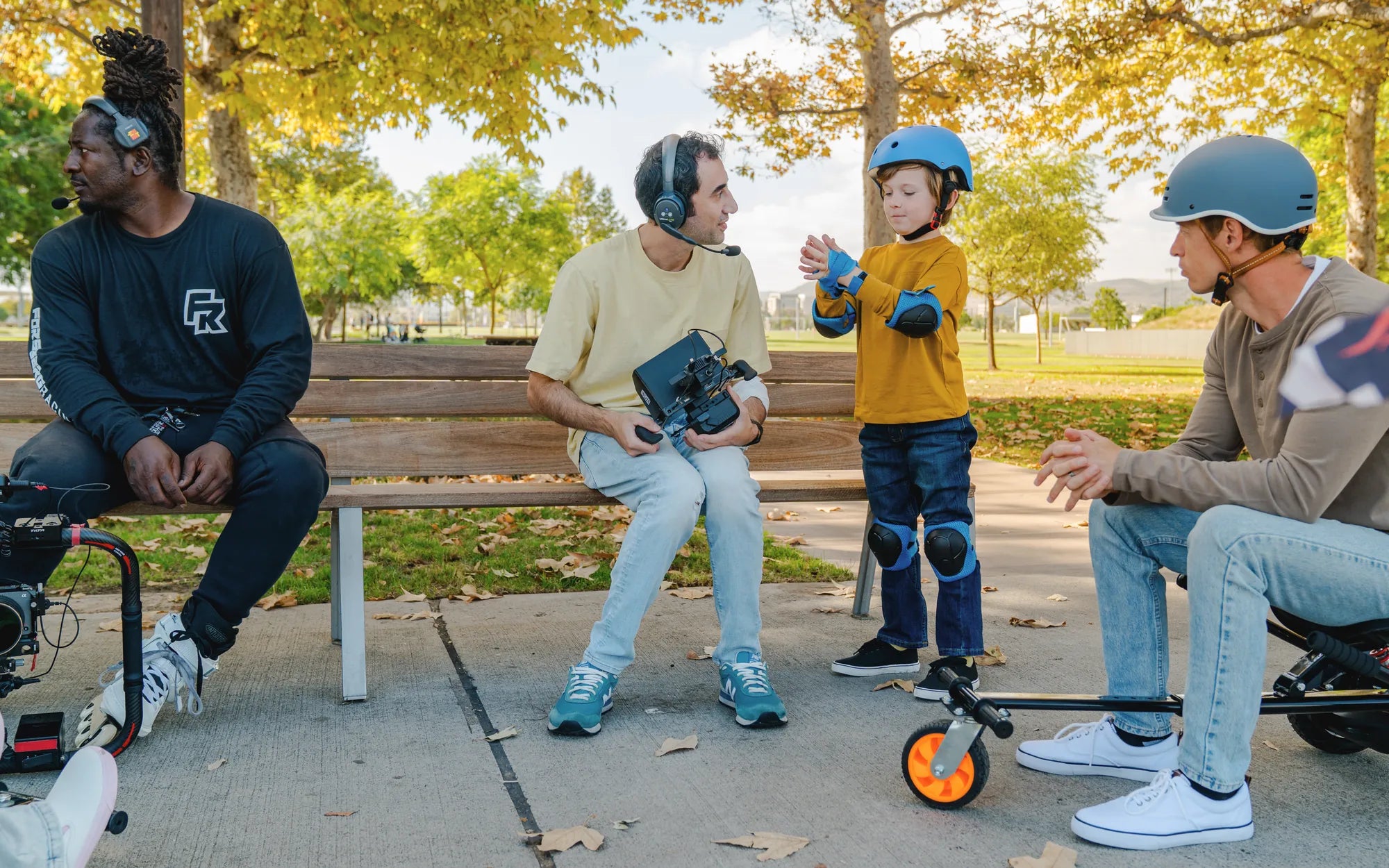
Maturity is demonstrated by the consistent use of full safety gear. This is non-negotiable, regardless of age or skill level. The essential kit includes an ASTM-certified bicycle or multi-impact helmet, wrist guards, and knee and elbow pads. Wrist guards are particularly critical, as falls naturally lead to outstretched hands, making wrist fractures a common injury.
While brands like Gyroor engineer their boards with IPX5 water-resistance to protect against puddles and splashes, this technology protects the device. Only proper safety gear protects the rider. Investing in high-quality, comfortable gear increases the likelihood it will be worn every single time.
Comparative Data: Hoverboards vs. Other Electric Rideables
Contextualizing the hoverboard age requirement is easier when compared to other personal electric vehicles. The skill sets and risks differ significantly, influencing appropriate age recommendations. The following table provides a clear comparison.
| Device Type | Typical Age Recommendation | Average Speed Range | Primary Skill Required | Best For |
|---|---|---|---|---|
| Hoverboard (Self-Balancing) | 8+ years | 6 - 12 mph | Core balance, subtle weight shifting | Closed-course recreation, short commutes on smooth paths |
| Electric Kick Scooter (e.g., Gyroor Commuter Models) | 12+ years | 15 - 20 mph | Steering coordination, hand braking, foot placement | Teenagers and adults for longer urban commutes |
| Electric Bike (Pedal-Assist) | 14+ years (varies by state) | 20 - 28 mph (Class 1-3) | Traditional cycling proficiency + understanding of power assist levels | Adults and mature teens for recreation, fitness, and transportation |
Choosing the Right Device for Your Child's Age
Matching the device to the rider's age and experience is paramount. For younger children (8-10), a hoverboard with a speed limit of 7-8 mph and a beginner (learning) mode is ideal. It allows them to master balance in a controlled way. Pre-teens (10-13) who have demonstrated proficiency may responsibly handle standard hoverboards or entry-level electric scooters with speed governors.
For teenagers (14+), more powerful electric scooters or e-bikes may be appropriate, but only after mastering fundamental riding etiquette and safety on slower devices. Gyroor's range, for example, includes models with adjustable speed settings, allowing parents to limit power as a rider learns. The principle is to graduate device power in line with demonstrated skill and responsibility.
Parental Checklist: Before Your Child's First Ride
Preparation is the foundation of safety. Use this actionable checklist to ensure every box is ticked before the first power-on.
- Verify Laws: Research local age, helmet, and riding location ordinances.
- Gear Up: Purchase a full safety kit (helmet, wrist guards, knee/elbow pads). Ensure proper fit.
- Inspect the Board: Check tire pressure, battery charge, and ensure no loose parts. Confirm the board is from a reputable brand with safety certifications.
- Choose a Practice Zone: Find a flat, smooth, paved area away from traffic, slopes, and pedestrians. An empty tennis court or parking lot is perfect.
- Supervise: Plan to actively supervise all initial riding sessions. Be present to guide and intervene.
Mastering the Basics: A Quick-Start Guide
The learning curve for a hoverboard is steep but short with proper technique. First, practice mounting and dismounting with support from a wall or railing. Step on one foot at a time, keeping the board steady. Find your balance point before attempting movement.
To move forward, lean gently from your ankles, not your waist. To turn, apply slight pressure forward with one foot. Practice emergency stops by stepping off backwards, one foot after the other, in a controlled manner. Initial sessions should focus solely on these fundamentals in a safe, open space. Mastery requires patience; avoid public pathways until control is instinctive.
Frequently Asked Questions (FAQ)
What is the typical hoverboard age requirement?
The most common manufacturer-recommended hoverboard age requirement is 8 years and older. This is the standard for reputable brands like Gyroor. However, always check the specific manual for your model, as some high-power or larger boards may recommend an older starting age, such as 10 or 12.
Can adults ride hoverboards?
Absolutely. Hoverboards are designed for a wide weight range, typically up to 220-265 lbs, accommodating most adults. Adults must follow all the same safety protocols: wear protective gear, obey local laws, and start learning in a safe, controlled environment. The principles of balance and control are the same regardless of age.
What is the most important safety tip for new riders?
Beyond wearing full gear, learning how to fall safely is paramount. Teach riders to tuck and roll if they lose balance, avoiding the instinct to break a fall with outstretched hands. Practicing this on grass can build muscle memory. Additionally, never ride near vehicular traffic or on public roads until expertise is very high.
Are hoverboards safe for indoor use?
It is not recommended, especially for beginners. Indoor spaces have hard surfaces, tight turns, and obstacles like furniture. Riding indoors significantly increases the risk of colliding with walls, tripping over rugs, or damaging property. All initial learning and regular riding should occur outdoors in a suitable, open area.
Does Gyroor offer models suitable for different age groups?
Yes. Gyroor's lineup includes models with varying specifications to suit different skill levels. For younger or newer riders, models with adjustable speed settings allow parents to restrict top speed. Features like robust deck padding for comfort and UL-certified batteries for peace of mind make them a considered choice for parents. Their 1-year warranty and US-based customer support provide additional resources for ensuring a safe and positive experience.
Conclusion: Balancing Fun with Responsibility
The hoverboard age requirement is a vital intersection of engineering, law, and personal development. A safe rider is not created by age alone but through a combination of choosing an appropriate device, understanding and obeying local regulations, insisting on complete safety gear, and honestly assessing the rider's maturity and skill. When these elements align, hoverboarding offers unparalleled fun and a unique sense of mobility.
Brands like Gyroor support this ecosystem by building reliable, well-tested products with clear guidelines. By prioritizing safety and responsibility from the first ride, parents and riders ensure that the enjoyment of personal electric transportation is both immediate and lasting. The journey begins with informed choices.
Ready to find a hoverboard that matches your safety standards and performance needs? Browse the full Gyroor collection at gyroorboard.com to explore UL-certified, feature-rich models designed for riders at various skill levels.
Two Wheel Balancing Electric Scooter: The Future of Urban Mobility
Two Wheel Balancing Electric Scooter: The Future of Urban Mobility