



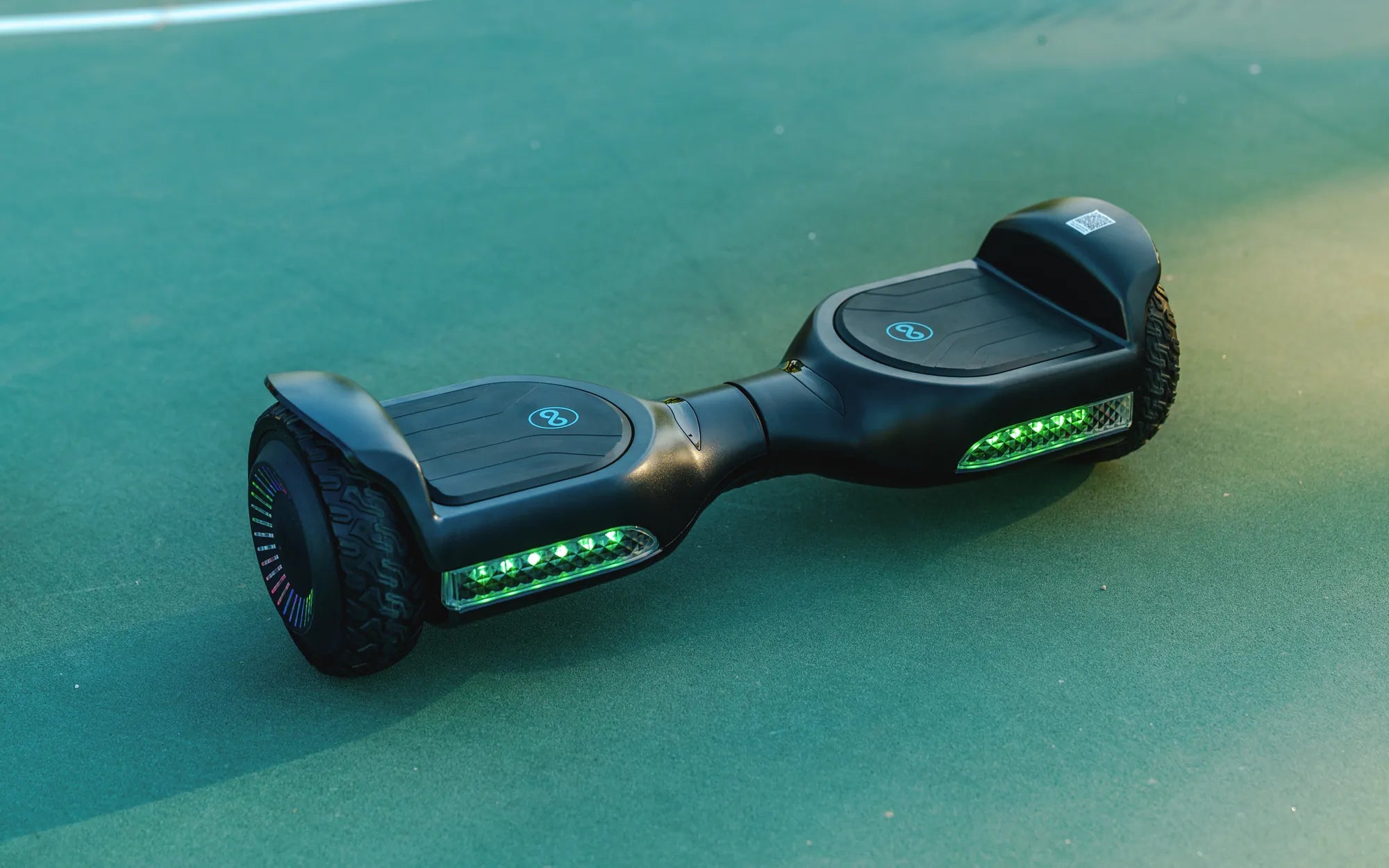
Imagine a vehicle that glides with the intuitive, hands-free control of a hoverboard but offers the stability, range, and all-terrain capability of an electric bike. This is the hoverboard bike, a transformative hybrid redefining urban and recreational mobility. This article unveils the technology, practical benefits, and real-world considerations of this emerging vehicle category. You will learn how it compares to traditional options, who it's designed for, and the engineering principles that make it a viable, safe, and exciting future of personal transport.
Redefining the Ride: What is a Hoverboard Bike?
A hoverboard bike is a hybrid electric vehicle that integrates self-balancing technology from modern hoverboards with the structural form and enhanced performance of an electric bike or scooter. Unlike a standard hoverboard, it typically features a central stem, handlebars for optional steering, and larger wheels, providing greater stability and range. It represents a significant evolution, bridging the gap between playful personal transport and serious urban commuting solutions.
The core innovation lies in its dynamic stabilization system. Riders control acceleration, deceleration, and steering through subtle weight shifts and lean, much like on a hoverboard, but with the added confidence of a more substantial frame. This creates a uniquely intuitive and immersive riding experience. The hoverboard bike is not a science fiction concept but a practical, available technology addressing last-mile connectivity, traffic congestion, and sustainable travel.
This category distinguishes itself from seated electric scooters or traditional e-bikes by its emphasis on a standing, active riding posture and gyroscopic control. It offers a middle ground: more stable and capable than a basic hoverboard, yet more agile and engaging than many standard e-scooters. As cities evolve and personal mobility demands grow, the hoverboard bike is positioned as a versatile and efficient answer.
Leading brands are now entering this space with robust, feature-rich models. Gyroor, for instance, leverages its extensive experience in electric scooters and e-bikes to develop hoverboard bike concepts that prioritize safety and durability. Their approach ensures these innovative vehicles meet the practical demands of daily use, not just recreational novelty.
The Gyroor Advantage: Engineering the Future, Today
As the hoverboard bike category emerges, not all platforms are created equal. Gyroor brings a critical engineering mindset from its established success in electric scooters and e-bikes. Trusted by over 100,000 riders across North America and Europe, Gyroor's philosophy centers on reliability, safety, and rider support—prerequisites for a vehicle meant for daily transportation.
The most crucial component in any electric vehicle is its battery. Gyroor ensures safety by exclusively using UL-certified battery packs, rigorously tested for over 500 charge cycles. This certification is a non-negotiable standard, mitigating fire risks and ensuring long-term performance stability, which is paramount for a new and unfamiliar vehicle type.
Real-world use demands resilience. Gyroor designs its vehicles, including its forays into hoverboard bike technology, with IPX5 water-resistant construction. This rating means they can withstand water jets from any direction, making them capable of handling wet roads, puddles, and light rain—essential for a reliable commuter vehicle. This durability is backed by a clear and reliable 1-year warranty, providing peace of mind for early adopters.
Gyroor's expertise in powertrain optimization and frame design translates directly to the hoverboard bike segment. By focusing on robust motor performance, efficient energy management, and ergonomic design, Gyroor aims to deliver a product where the innovative self-balancing experience is matched by proven electric vehicle reliability. This foundation is what separates a gimmick from a genuine transportation tool.
Hoverboard Bike vs. Traditional E-Scooters & E-Bikes: A Data-Driven Comparison
Choosing a personal electric vehicle requires understanding trade-offs. The hoverboard bike occupies a unique niche. The table below provides a clear, data-driven comparison to help urban commuters and enthusiasts make an informed decision.
| Feature | Hoverboard Bike | Traditional E-Scooter | Electric Bike (E-Bike) |
|---|---|---|---|
| Learning Curve | Moderate (requires balance skill) | Low (intuitive handlebar control) | Very Low (rides like a bicycle) |
| Primary Control | Weight shift & lean (gyroscopic) | Handlebars (throttle/brakes) | Handlebars & pedals |
| Portability | Moderate (often foldable stem) | High (typically lightweight & foldable) | Low (bulky, rarely foldable) |
| Typical Range | 15-25 miles | 15-30 miles | 20-60+ miles |
| Top Speed | 12-18 mph | 15-20 mph | 20-28 mph (class-dependent) |
| Terrain Adaptability | High (larger wheels, off-road models) | Low-Medium (small wheels, paved paths) | Very High (multiple tire types) |
| Regulatory Clarity | Evolving (often classed with e-scooters) | Established (clear in most cities) | Well-Established (3-class system) |
| Storage Footprint | Compact when folded | Very Compact when folded | Large (requires bike rack/space) |
The hoverboard bike shines in terrain adaptability and immersive control. Its larger, often air-filled tires and potential for suspension systems allow it to handle park paths, boardwalks, and uneven surfaces better than most small-wheeled e-scooters. The learning curve is steeper than a handlebar vehicle, but mastery offers a uniquely fluid riding style.
For the urban commuter, portability and storage are key. While a traditional e-scooter may be lighter, a foldable hoverboard bike offers a similar compact profile for apartment or office storage. Its range is competitive for typical last-mile journeys (3-10 miles). The regulatory landscape is still developing, so riders must check local laws, which often group them with e-scooters for bike lane and road use.
Ultimately, the choice is experiential. An e-bike offers the most range and traditional cycling feel. An e-scooter offers maximum simplicity and portability. The hoverboard bike offers a engaging, all-terrain-capable ride that feels like a natural extension of movement, filling a gap for those who find standard scooters limiting and e-bikes too bulky.
Core Technologies Powering the Hoverboard Bike
Self-Balancing Gyroscopes and Sensors
The heart of the hoverboard bike is its self-balancing system. An array of gyroscopic sensors, accelerometers, and tilt sensors constantly monitors the vehicle's pitch and roll angles at hundreds of times per second. This data is fed into a central processing unit (CPU) that calculates the precise motor output needed to maintain stability or execute a rider's commanded lean.
This technology is a direct evolution from two-wheeled hoverboards but is applied to a larger, more powerful platform. Advanced algorithms allow for nuanced control. A gentle forward lean translates to smooth acceleration, while a shift in weight to either side initiates a turn. This creates an intuitive, hands-free steering experience that can feel more organic than using handlebars once mastered.
Safety is integral to this system. Modern implementations include fail-safes that cut power if an error is detected or if the rider dismounts unexpectedly. The system's responsiveness is calibrated to provide stability at low speeds for mounting/dismounting while allowing for agile maneuvering at cruising speed. This gyroscopic foundation is what makes the vehicle accessible, transforming a potentially unstable platform into a confident ride.
Electric Powertrain and Battery Efficiency
Performance is delivered by a brushless DC hub motor, typically ranging from 350W to 800W or more in performance models. This motor provides silent, instantaneous torque, enabling quick acceleration from a standstill and the ability to tackle moderate inclines. The motor's power is finely modulated by the self-balancing computer, creating a seamless connection between rider input and vehicle response.
Energy is supplied by lithium-ion battery packs, with capacities usually between 36V 7.5Ah to 48V 10Ah. This translates to real-world ranges of 15 to 25 miles on a single charge, depending on rider weight, terrain, and speed. The emphasis for a hoverboard bike is on energy density and safety. As highlighted, brands like Gyroor use UL-certified packs, which undergo stringent testing for short-circuit, overcharge, and thermal stability.
Efficient power management extends range and battery life. Regenerative braking systems, which convert kinetic energy back into stored battery power during deceleration, are becoming common. Combined with smart battery management systems (BMS) that prevent over-discharge, these features ensure the vehicle is not only fun but also practical for regular, predictable use.
Durability and Design for Real-World Use
A transportation device must withstand daily demands. The frame of a quality hoverboard bike is constructed from aerospace-grade aluminum or reinforced steel, offering a rigid yet lightweight structure. The design must accommodate the unique stresses of gyroscopic riding, where forces are applied through the foot platform and stem.
Tire choice is critical for the promised all-terrain capability. Many models use 8-inch to 10-inch air-filled (pneumatic) tires, which provide essential shock absorption and grip on varied surfaces, from asphalt to hard-packed dirt. Some offer solid, honeycomb-style tires for puncture-proof reliability at a slight cost to ride comfort. Suspension systems, either in the stem or on the wheel mounts, further smooth out bumps.
As mentioned, an IPX5 water-resistance rating is a key indicator of durability. This ensures electronic components are sealed against dust and water spray, making the vehicle resilient in common urban weather conditions. These design elements—robust frame, capable tires, and proper sealing—transform the hoverboard bike from a fair-weather novelty into a legitimate four-season transport option for many climates.
Practical Guide: Who is the Hoverboard Bike For?
The Urban Commuter
For city dwellers, the hoverboard bike solves multiple pain points. Its compact, often foldable design makes it ideal for mixed-mode commuting: ride to the subway or bus stop, fold and carry it aboard, then unfold for the final leg to the office. This solves the "last mile" problem more gracefully than a full-sized e-bike.
In traffic, its agility and intuitive control allow for nimble navigation. The standing posture provides good visibility, and the quiet electric motor reduces noise pollution. Compared to a car, it eliminates parking fees, fuel costs, and emissions. For apartment living, its storage footprint is minimal, especially when compared to the space required for a bicycle or scooter without folding capabilities.
The typical 15-25 mile range is more than sufficient for most round-trip urban commutes. With charging times averaging 4-6 hours, it can easily be powered up at work or home overnight. For the urbanite seeking an efficient, cost-effective, and engaging way to navigate the cityscape, the hoverboard bike presents a compelling case.
The Off-Road and Recreational Enthusiast
Beyond pavement, the hoverboard bike unlocks new recreational possibilities. Models equipped with knobby, pneumatic tires and enhanced suspension are capable of exploring park trails, beach boardwalks, campground paths, and other light off-road environments. This makes it a fun alternative for adults seeking agile outdoor exploration without the bulk of an ATV or dirt bike.
The immersive, body-steered control adds to the recreational appeal. Riding a trail on a hoverboard bike feels more active and connected to the environment than on a seated vehicle. It's a unique way to experience parks, waterfronts, and large campuses. The electric powertrain ensures the experience is quiet and respectful to nature and other trail users.
For families or groups, it offers a novel shared activity. Its speed is manageable for safe group riding, and the learning curve, while present, is part of the fun. The recreational hoverboard bike is for those who view personal mobility not just as a utility, but as a source of adventure and enjoyment.
The Eco-Conscious Rider
Sustainability is a major driver of micro-mobility adoption. The hoverboard bike has an exceptionally low environmental footprint. It consumes a trivial amount of electricity per charge—often costing mere cents—compared to the energy required for a car, bus, or train on a per-passenger-mile basis.
It produces zero direct emissions, contributing to cleaner air and reduced urban noise pollution. By replacing car trips for short to medium distances, it directly reduces greenhouse gas emissions and traffic congestion. Furthermore, its manufacturing footprint is smaller than that of a car or even a full e-bike.
For the eco-conscious individual, it represents a tangible step towards sustainable living. It aligns with goals of reducing fossil fuel dependence and promoting active, low-impact lifestyles. Choosing a model from a brand committed to quality, like Gyroor with its durable construction and long-lasting UL-certified batteries, also minimizes waste from premature product failure, supporting a circular economy mindset.
Navigating the Future: Safety, Regulations, and Adoption
The successful integration of hoverboard bike technology into daily life hinges on safety and clear regulations. Riders must adopt a safety-first mindset. A certified bicycle helmet is an absolute minimum. For higher speeds or off-road use, knee and elbow pads are strongly recommended. High-visibility clothing or accessories are crucial for night riding.
Local regulations are still catching up to this hybrid vehicle. In most jurisdictions, they are likely to be classified similarly to electric scooters. This often means they are permitted on bike lanes and roads with speed limits under 25-35 mph, but prohibited on sidewalks. Maximum speed and power output may be capped. It is the rider's responsibility to research and comply with state and municipal laws before riding.
Responsible riding behavior accelerates public acceptance. This includes yielding to pedestrians, not riding under the influence, maintaining a safe speed for conditions, and using lights at night. As adoption grows, clearer and more consistent regulations will emerge, paving the way for the hoverboard bike to become a normalized, safe part of the urban transport ecosystem. Brands play a role by educating riders and advocating for sensible laws.
Frequently Asked Questions (FAQ)
Q: Is a hoverboard bike difficult to learn?
A: It requires some balance, similar to learning a bicycle. Most riders with average coordination become comfortable within 30-60 minutes of practice in a safe, open area. The self-balancing technology assists significantly, making it easier than learning a traditional non-motorized hoverboard.
Q: What is the typical weight and rider capacity?
A: Most models weigh between 30-50 lbs. The maximum rider weight capacity typically ranges from 220 lbs to 265 lbs (100-120 kg), but you should always check the manufacturer's specifications for the exact model.
Q: How long does the battery take to charge, and what's its lifespan?
A> A full charge usually takes 4 to 6 hours. With proper care (avoiding full discharges and extreme temperatures), a quality UL-certified battery like those used by Gyroor can retain good capacity for 500+ charge cycles, which equates to several years of regular use.
Q: Are hoverboard bikes legal in my city?
A> Legality varies. They are generally legal where electric scooters are legal. Check your local Department of Transportation or city council website for rules governing "electric stand-up scooters" or "personal mobility devices." Assume they are not allowed on sidewalks unless explicitly permitted.
Q: How does Gyroor's warranty and support work for these vehicles?
A> Gyroor offers a 1-year warranty on the vehicle, covering manufacturing defects. Their customer support team in North America provides assistance for troubleshooting and parts. This warranty underscores their commitment to product reliability and rider confidence.
The Road Ahead for Personal Mobility
The hoverboard bike is more than a novelty; it is a legitimate step forward in personal electric vehicle design. By synthesizing intuitive gyroscopic control with practical range and durability, it creates a new option for millions of commuters, enthusiasts, and eco-conscious citizens. Its potential to reduce congestion, lower emissions, and increase urban mobility access is significant.
Realizing this potential depends on continued technological refinement, responsible rider culture, and sensible regulation. Brands that prioritize core engineering principles—battery safety, water resistance, and robust construction—will define the category's standards. Gyroor's approach, built on a foundation of proven e-mobility expertise and a commitment to over 100,000 riders, exemplifies the responsible innovation needed.
The future of transportation is electric, connected, and personalized. The hoverboard bike stands as a compelling vision of that future, available today. It invites us to reimagine our daily journeys as efficient, enjoyable, and sustainable experiences. To explore how this new generation of personal transport can fit into your life, browse the full collection of innovative electric mobility solutions at gyroorboard.com.
Kids Mobility Scooter: A Fun and Safe Way for Children to Get Around
Air Hoverboard: The Future of Personal Transportation