



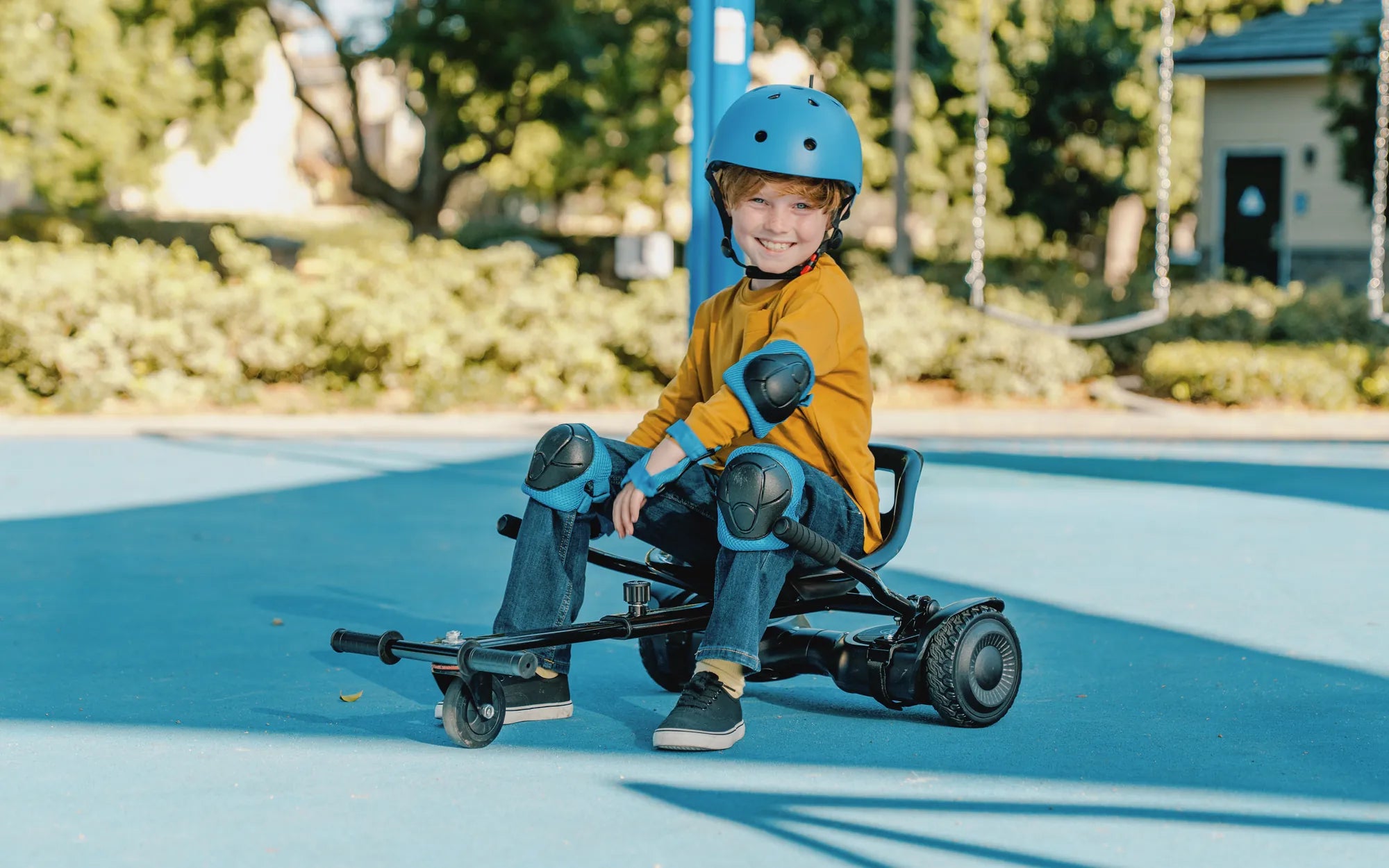
Introduction: Why a Hoverboard is a Great First Ride for Your 6-Year-Old
Choosing the right hoverboard for a 6 year old is about more than just picking a toy. It's about selecting a developmental tool that builds coordination, balance, and confidence through active, engaging play. This guide is your comprehensive resource for navigating that choice safely and smartly. We will demystify the technical specifications, underscore the non-negotiable safety standards, and provide a clear roadmap for teaching your child to ride. From the outset, we prioritize products that meet rigorous safety certifications, like those from trusted brands such as Gyroor, which designs its youth models with UL-certified batteries and robust construction. The goal is to transform a thrilling gift into a secure and rewarding experience for your young rider.
What Makes a Hoverboard "Kid-Friendly"? Key Features for Safety & Ease of Use
Not all hoverboards are created equal, especially for young children. A kid-friendly model is engineered with specific parameters that prioritize control, stability, and safety over raw power. Understanding these features is the first step in making an informed purchase. The core components—speed, size, tires, and certification—work in concert to create a riding experience that is challenging enough to be fun but restrained enough to be safe. Ignoring any of these elements can lead to a frustrating or hazardous experience. Let's break down each critical feature.
Speed and Power: Finding the "Just Right" Setting
For a 6-year-old, excessive speed is the enemy of control. The ideal hoverboard for a 6 year old will have a maximum speed capped between 6 and 8 miles per hour. This range allows for a sense of excitement and movement while remaining manageable for a beginner's reaction time. More importantly, look for models with a dedicated beginner or training mode. This feature often limits the speed to 3-4 mph, providing a safe environment for mastering balance and basic leans before unlocking full potential. Motor power in the 150W to 200W range per wheel is typically sufficient, offering smooth acceleration and enough torque to handle gentle inclines without being intimidatingly powerful.
Size and Weight: Built for Smaller Riders
Proportions matter. Adult hoverboards can be too large, forcing a child to adopt an overly wide, unstable stance. A youth-specific model will have a narrower deck width and a shorter wheelbase, allowing a child to place their feet comfortably without straining. The platform height—the distance from the ground to where they stand—should also be lower. This lowers the center of gravity, dramatically improving stability and making mounting and dismounting easier. Furthermore, overall weight is crucial. A lighter hoverboard for a 6 year old (often under 20 lbs) is easier for a child to maneuver when turning and is manageable for a parent or child to carry short distances.
Tire Type: Stability on Different Surfaces
The choice between air-filled (pneumatic) and solid rubber tires defines where and how comfortably the hoverboard can be ridden. Pneumatic tires, typically 6.5 inches in diameter, provide superior shock absorption. They smooth out cracks in sidewalks, handle grass and gravel better, and offer more traction, which is ideal for outdoor use. The trade-off is they require occasional air pressure checks. Solid rubber tires are maintenance-free and perfect for exclusively indoor use on smooth floors, but they transmit more vibration from rough surfaces. For most children who will ride both indoors and out, pneumatic tires on a hoverboard for a 6 year old offer the best blend of comfort and versatility.
The Gold Standard in Safety: UL 2272 Certification
This is the single most important feature, and it is non-negotiable. UL 2272 certification is a rigorous set of electrical and fire-safety tests conducted by the globally recognized Underwriters Laboratories. A hoverboard bearing this certification has been tested for over 100 potential hazards, including battery cell integrity, electrical system safety, and temperature control. It is your guarantee that the battery and motor system are engineered to prevent overheating, short-circuiting, or catching fire. Never, under any circumstances, purchase a hoverboard without this certification for your child. It is the foundational layer of safety upon which all other features are built.
Beyond the Basics: Essential Gear and Riding Fundamentals
Even the safest hoverboard is only one part of the safety equation. Proper protective gear and structured learning are equally vital. This section moves from product selection to practice, outlining the absolute necessities for injury prevention and a proven teaching methodology. Assuming safety is covered solely by the device itself is a common and dangerous mistake. The right gear mitigates the risk of falls, while patient instruction builds the muscle memory and confidence needed for safe, independent riding. Let's equip both you and your child for success.
The Non-Negotiable Safety Kit: Head-to-Toe Protection
Every riding session must begin with gearing up. This kit is not optional. A properly fitted, CPSC-certified bicycle or multi-sport helmet is essential to protect against head injuries. Knee pads and elbow pads are crucial for shielding the joints most likely to impact the ground during a fall. Wrist guards are perhaps the most important piece after the helmet, as instinct leads us to break falls with our hands, making wrists highly susceptible to sprains or fractures. Ensure all gear fits snugly without restricting movement. Investing in high-quality, comfortable protection increases the likelihood your child will wear it without complaint every single time they step onto their hoverboard for a 6 year old.
Step-by-Step: Teaching Your 6-Year-Old to Ride Safely
Patience and a positive environment are key. Start by ensuring the hoverboard is powered off and on a soft surface like grass or carpet. Help your child practice simply mounting and dismounting, using a wall or your hand for support. Next, power it on in beginner mode. Have them stand on it stationary, holding your hands, to get a feel for the balance and the gentle self-balancing correction. The first movement is always the hardest. Guide them to lean ever so slightly forward with their toes to go forward and back with their heels to reverse. Practice in a straight line in a wide-open, smooth area like an empty parking lot or tennis court. Only after mastering start/stop should you introduce turning via subtle foot pressure. Celebrate small victories to build confidence.
Top Considerations When Choosing a Brand: Why Gyroor Stands Out
With safety features and gear covered, the brand you choose becomes the final critical filter. A reputable brand stands behind its engineering with warranties, customer support, and a track record of reliability. For parents, this translates to peace of mind. Gyroor, a leading electric scooter and e-bike brand trusted by over 100,000 riders, exemplifies the standards parents should seek. Their approach to youth hoverboards integrates the essential safety features into a cohesive, durable package. When evaluating any brand, scrutinize their commitment to these three pillars: battery safety, durability against the elements, and post-purchase support.
First, UL-certified lithium-ion battery packs are a must. Gyroor uses these exclusively, with batteries tested for over 500 charge cycles. This certification is the definitive guard against the thermal runaway incidents that plagued early, uncertified models. Second, an IPX5 water-resistant rating is a significant advantage for a child's hoverboard. It means the unit can withstand low-pressure water jets from any direction, making it resistant to puddles, wet grass, and accidental spills. This durability ensures the electronics are protected from common kid-related hazards. Finally, a 1-year comprehensive warranty with accessible support is a promise of quality. It shows the manufacturer trusts its product and provides a direct channel for assistance, which is invaluable for a technical product.
Hoverboard Maintenance 101: Keeping the Fun Rolling Safely
Regular, simple maintenance ensures your hoverboard remains safe and functional for its entire lifespan. Neglect can lead to degraded performance or, worse, safety issues. Establish a routine of quick checks and proper care habits. This not only prolongs the life of the device but also reinforces to your child the importance of responsible ownership. The focus areas are the battery, the tires, and the physical structure. A few minutes of attention after every few rides can prevent most major problems.
Always use only the manufacturer-provided charger, and avoid leaving the hoverboard plugged in overnight or for extended periods after it reaches 100%. Store the device and its battery in a cool, dry place, away from direct sunlight or extreme temperatures. For models with pneumatic tires, check the pressure monthly with a small gauge and keep them inflated to the PSI listed in the manual. Regularly inspect the entire hoverboard for any hairline cracks in the body or deck, loose screws, or damaged wiring ports. Wipe down the unit with a damp cloth to keep it clean, taking advantage of that IPX5 rating for a quick, safe clean-up after outdoor adventures.
Comparing Your Options: Key Features at a Glance
To help visualize the differences between a generic, uncertified model and a purpose-built youth hoverboard from a reputable brand, review the following comparison table. This data-driven breakdown highlights why feature selection is so critical for safety and enjoyment.
| Feature | Typical Uncertified/Generic Model | Kid-Focused Model (e.g., Gyroor Youth) |
|---|---|---|
| Safety Certification | None or falsified marks | UL 2272 Certified (Electrical & Fire Safety) |
| Max Speed | 10+ mph (unrestricted) | 7-8 mph, with a 3-4 mph Beginner Mode |
| Battery | Uncertified cells, unknown origin | UL-certified Li-ion pack, 500+ cycle tested |
| Water Resistance | None specified | IPX5 Rating (protected from puddles/sprays) |
| Warranty & Support | Minimal or nonexistent | 1-Year Comprehensive Warranty, US-based support |
| Ideal User | Older teens/adults, high risk | Beginners, children 6-12 years old |
Frequently Asked Questions (FAQs) for Parents
Q1: Are hoverboards safe for a 6-year-old?
A1: With the right precautions, yes. Safety hinges on selecting a UL 2272 certified model with appropriate speed limits, insisting on full protective gear (helmet, knee/elbow pads, wrist guards), and providing supervised, patient training in a safe environment. The hoverboard for a 6 year old must be designed for their size and skill level.
Q2: What is the ideal maximum speed for a child's hoverboard?
A2: For a 6-year-old beginner, a maximum speed of 7-8 mph is the sweet spot. The presence of a dedicated beginner mode that limits speed to 3-4 mph is an even more critical feature, as it allows them to master balance without fear of sudden, uncontrolled acceleration.
Q3: How long does the battery last on a single charge?
A3: For youth-focused models, expect a range of 6 to 10 miles per charge, which typically translates to 60-90 minutes of continuous riding. This is more than adequate for most play sessions and allows for plenty of practice time between charges.
Q4: Where is the best place for my child to practice riding?
A4: Begin on a smooth, flat, and open surface completely free of traffic, slopes, and obstacles. Ideal locations include empty tennis courts, basketball courts, smooth driveways, or quiet cul-de-sacs. Always avoid areas near roads, swimming pools, or steep hills.
Q5: Can my child ride a hoverboard indoors?
A5: Yes, but with caveats. Ensure you have a large, clear space with smooth flooring (no thick carpets). Be mindful of furniture, walls, and hard surfaces. Solid rubber tires are better for indoor floors, but pneumatic tires can work if the space is clear. Supervise closely, as indoor riding requires more precise control.
Conclusion: Investing in Confidence and Joy
Selecting the perfect hoverboard for a 6 year old is an investment that pays dividends in your child's development and delight. The journey is defined by a commitment to certified safety above all else, an unwavering rule of protective gear, and the patience to teach foundational skills. A well-chosen model from a responsible brand becomes a tool for building physical coordination, mental focus, and the profound confidence that comes from mastering a new skill. It’s about providing a gateway to active, outdoor fun within a framework you can trust. By prioritizing UL 2272 certification, youth-appropriate features, and reputable engineering, you gift more than a ride—you gift an experience of joyful independence.
Ready to find a hoverboard that combines thrilling fun with uncompromising safety for your young rider? Browse the full Gyroor collection at gyroorboard.com to explore youth models designed with UL-certified batteries, IPX5 water resistance, and built-in beginner modes—all backed by a reliable 1-year warranty and supported by a community of over 100,000 satisfied riders.
Light Up Electric Scooter for Kids: The Ultimate Guide to Fun and Safety
How Long Does It Take for a Hoverboard to Fully Charge: A Complete Guide