

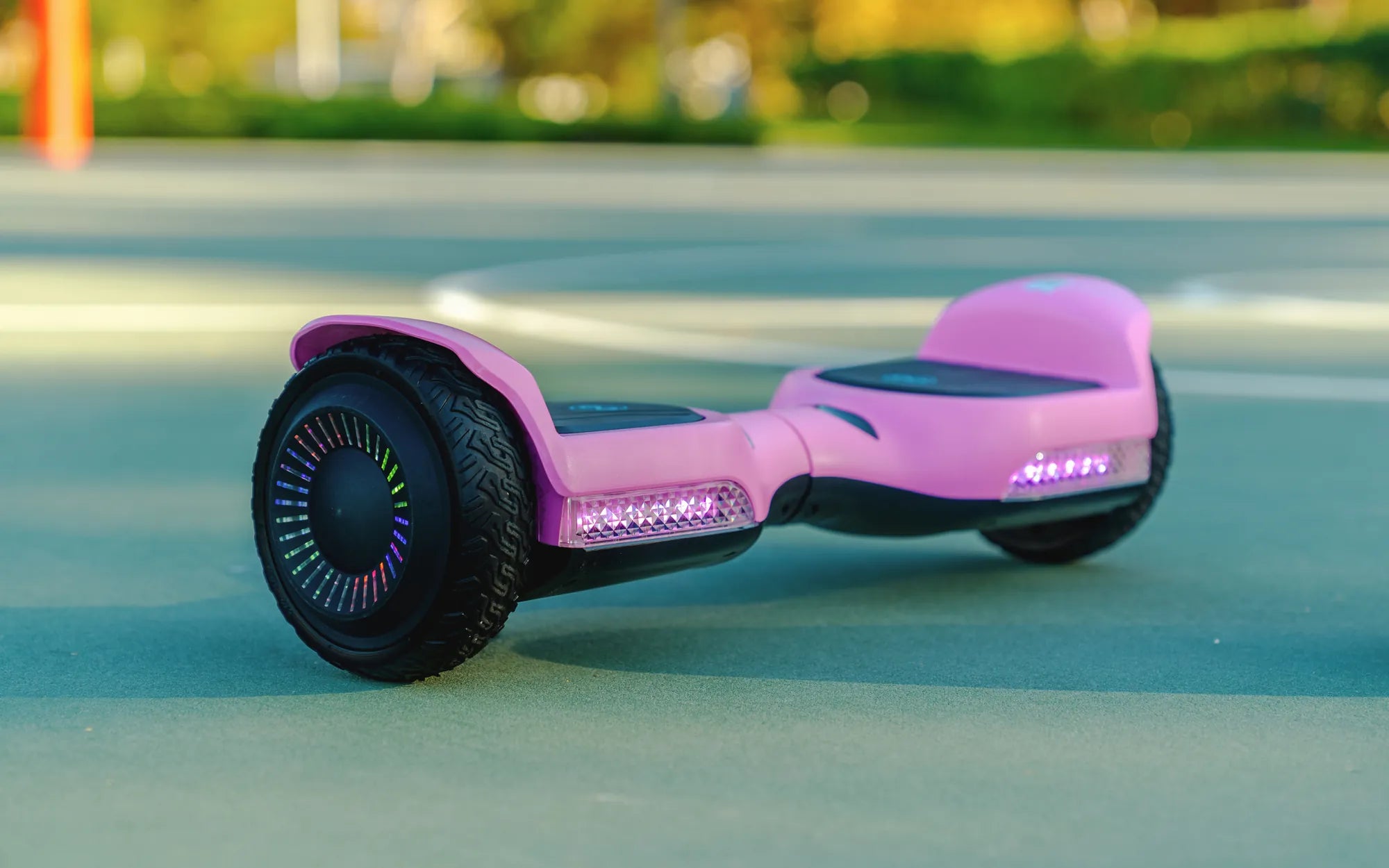
Ready to transform your short commutes and recreational rides? The hoverboard scooter with handle represents a significant evolution in personal electric transport, merging the intuitive, self-balancing fun of a hoverboard with the stability and control of a scooter's handlebar. This guide will provide you with everything you need to know: from understanding its core benefits and critical safety features from brands like Gyroor, to mastering riding techniques and making an informed purchase decision. You'll learn how to ride confidently, maintain your device, and navigate the urban landscape safely.
What is a Hoverboard Scooter with a Handle?
A hoverboard scooter with a handle, often called a self-balancing scooter or smart scooter, is a distinct hybrid vehicle. It fundamentally operates on the same self-balancing technology as a traditional hoverboard—using gyroscopes and sensors to detect rider lean for acceleration and braking. The key differentiator is the integrated T-bar or telescopic handle, which provides a physical anchor point for the rider.
This design directly addresses the primary limitations of early handle-less hoverboards: the steep learning curve and perceived instability, especially at higher speeds or on uneven terrain. The handle offers beginners a crucial point of balance while mounting, dismounting, and during initial rides. For experienced riders, it enhances control for precise maneuvers, making the device far more practical for utilitarian use like last-mile commuting.
The form factor typically features a central deck where the rider stands, with wheels on either side, and a handlebar rising from the front. Most models are foldable, enhancing portability. This fusion creates a unique riding category that prioritizes both fun and functional control, carving a niche between standard hoverboards and kick-style electric scooters.
Why Choose a Hoverboard Scooter? Key Benefits for Urban Riders
The decision to choose a hoverboard scooter with handle over other micro-mobility options comes down to a blend of safety, control, and practicality. The handlebar is not merely an add-on; it fundamentally changes the riding experience and expands the potential use cases.
First and foremost, the handle dramatically improves safety and stability. It provides a constant reference point for balance, allowing riders to easily correct their posture. This is invaluable when navigating unexpected bumps, making tight turns, or coming to a sudden stop. The psychological comfort of having something to hold onto cannot be overstated, especially for new riders or when riding in mixed traffic.
Secondly, the learning curve is significantly reduced. While a standard hoverboard can take hours or even days to master confidently, most individuals can achieve basic competency on a hoverboard scooter with a handle within 30 minutes. The handle allows riders to focus on the intuitive lean-to-steer mechanics without the overwhelming fear of falling backwards or forwards.
Furthermore, these devices offer superior portability and storage. The foldable handle and often compact deck design mean they can be easily carried onto public transit, stored under a desk, or tucked into a car trunk. This makes them an ideal solution for multi-modal commuters who need to cover the "first and last mile" of their journey efficiently.
Gyroor's Commitment to Safety: Engineering You Can Trust
When investing in a personal electric vehicle, the brand's commitment to safety is paramount. Gyroor has established itself as a leader by building its reputation on engineering integrity and certified safety standards, directly addressing historical concerns around hoverboard technology.
The cornerstone of this commitment is the use of UL-certified battery packs. These batteries undergo rigorous testing for overcharge protection, short-circuit prevention, and thermal stability. With testing for 500+ charge cycles, Gyroor ensures long-term battery health and, most critically, mitigates any risk of fire—a concern that plagued early, uncertified models in the market.
Beyond the battery, Gyroor designs its hoverboard scooters with IPX5 water resistance. This rating means the unit can withstand water jets from any direction, making it resilient against puddle splashes, wet roads, and light rain. This feature protects the internal electronics from moisture-related damage and expands the conditions in which you can ride confidently. However, it is crucial to understand that water-resistant is not waterproof; submerging the device is not advised.
Finally, Gyroor backs its products with a reliable 1-year warranty and has a proven track record with over 100,000 riders across North America and Europe. This warranty provides peace of mind, covering manufacturing defects and ensuring you have support for your investment. Choosing a brand with this level of transparent commitment is the first and most important step in safe riding.
Key Safety Features to Look For (Beyond the Brand)
While choosing a reputable brand is essential, evaluating individual model features is equally important. Here is a checklist of critical safety components to verify before purchasing any hoverboard scooter with a handle.
Sturdy Handlebar and Locking Mechanism: The handle should have minimal wobble and feature a secure, easy-to-use locking mechanism in both extended and folded positions. A loose handle compromises control.
Non-Slip Footpad Texture: The standing surface must have a pronounced, grippy texture to keep your feet firmly planted, especially during turns or sudden movements.
Comprehensive Lighting System: Look for bright LED headlights for forward visibility and clear brake/taillights to signal your intentions to others. Some models also include ambient deck lighting for side visibility.
Robust Wheel Construction: Larger, air-filled (pneumatic) tires generally offer better shock absorption on rough terrain than smaller, solid rubber tires. Check the wheel diameter and material.
Audible Warning Systems: The device should provide clear alerts, such as beeps, when approaching maximum speed, when the battery is low, or if there is a system error. This haptic feedback is crucial for safe operation.
Mastering Your Ride: A Step-by-Step Guide to Safe Operation
Confidence on a hoverboard scooter comes from practice and proper technique. Follow this step-by-step guide to build your skills safely and methodically.
Step 1: Pre-Ride Safety Check. Before every ride, inspect your device. Ensure the handlebar is locked securely in place, the tire pressure is adequate (if applicable), the battery has sufficient charge, and all lights are functioning. Perform this check in a stable, flat area away from traffic.
Step 2: Mounting and Finding Balance. Place the scooter on level ground. Hold the handlebar firmly with both hands. Place one foot on the deck, then quickly but smoothly step up with the other foot. Keep your knees slightly bent, look forward, and use the handlebar for support as the self-balancing system activates. Find your center of gravity.
Step 3: Basic Movement and Steering. To move forward, gently lean your body forward while maintaining a grip on the handlebar. To slow down or move backward, lean back slightly. Steering is achieved by applying gentle twisting pressure to the handlebar—turn left by guiding the handle left, and right by guiding it right. Start with slow, wide turns.
Step 4: Practicing Stops and Dismounting. To stop, gradually straighten your posture until the scooter comes to a complete halt. Always step off backwards, leading with the foot you placed on first. Never jump off forwards, as the scooter may continue moving. Practice mounting and dismounting until it becomes second nature.
Navigating Different Terrains Safely
Understanding your hoverboard scooter's capabilities on various surfaces is key to preventing accidents. The handlebar improves control but does not transform the device into an all-terrain vehicle.
Smooth Pavement (Ideal): This is the optimal surface. You can achieve maximum efficiency, range, and stability here. Be mindful of painted road lines and metal surfaces like manhole covers, which can be slippery when wet.
Cracks, Curbs, and Minor Obstacles: Approach perpendicularly at a reduced speed. Use your knees as shock absorbers by bending them slightly upon impact. The handlebar allows you to lift the front end slightly to navigate small bumps or shallow curbs.
Packed Dirt or Gravel Paths (Use Caution): Loose surfaces like gravel or sand drastically reduce traction and stability. Avoid them if possible. If you must cross, maintain a very slow, constant speed and avoid sharp turns or sudden braking, which can cause the wheels to slip.
Wet Surfaces: While an IPX5 rating protects the electronics from water damage, it does not improve tire grip. Riding on wet pavement, leaves, or ice significantly increases stopping distance and the risk of sliding. Reduce speed, avoid sharp leans for turning or braking, and allow extra space to stop.
Hoverboard Scooter vs. Traditional E-Scooters: A Data-Driven Comparison
For commuters deciding between a hoverboard scooter with a handle and a traditional kick-style electric scooter, the choice hinges on specific priorities like learning ease, portability, and riding feel. The table below provides a clear, data-driven comparison.
| Feature | Hoverboard Scooter with Handle | Traditional Electric Scooter |
|---|---|---|
| Learning Curve | Very Short (Minutes to 30 mins) | Short (Almost instant for balance) |
| Primary Control Method | Body Lean + Handlebar Steering | Throttle, Brake Lever, Handlebar Steering |
| Low-Speed Stability | Excellent (Self-balancing) | Good (Requires rider balance) |
| Typical Folded Portability | Very High (Compact, often lighter) | Moderate to High (Larger frame) |
| Typical Max Speed | 10-12 mph | 15-20+ mph |
| Typical Range | 10-15 miles | 15-30+ miles |
| Ideal Use Case | Recreational rides, short/medium commutes, crowded areas | Longer commutes, faster-paced travel, dedicated bike lanes |
The hoverboard scooter excels in intuitive control and stability at lower speeds, making it fantastic for relaxed commutes, campus travel, or park pathways. Its compact fold is a major advantage for mixed-mode travel. The traditional e-scooter offers higher speeds and longer range for those with lengthier commutes, but requires more active balancing at low speeds and often has a bulkier folded profile.
Essential Gear and Riding Etiquette for Every Rider
The presence of a handlebar does not eliminate the need for personal protective equipment (PPE). Responsible riding also involves adhering to shared-path etiquette and local regulations.
Mandatory Safety Gear: A properly fitted bicycle or multi-sport helmet is non-negotiable. Wrist guards are highly recommended, as falls often involve putting hands out to brace. For new riders or those riding in traffic, knee and elbow pads provide additional protection.
Know and Obey Local Laws: Regulations for electric personal transport devices vary widely by city, state, and country. Research rules regarding where you can ride (sidewalks, bike lanes, roads), age restrictions, speed limits, and any registration or licensing requirements. Ignorance of the law is not a valid excuse.
Practice Defensive Riding Etiquette: Always yield to pedestrians. Use a bell or your voice to alert others before passing. On shared paths, ride predictably in a straight line and avoid sudden swerves. When in bike lanes, be aware of cyclists who may be traveling faster. Never use headphones at a volume that blocks ambient traffic noise.
Be Visible and Predictable: Use your lights in low-light conditions. Signal your turns with arm signals when possible. Make eye contact with drivers at intersections. Assume that drivers may not see you. Your safety is ultimately your responsibility.
Frequently Asked Questions (FAQ)
Q: Do I need a license or insurance to ride a hoverboard scooter with a handle?
A: This depends entirely on local jurisdiction. In most U.S. states and European countries, these devices are classified similarly to electric scooters or bicycles and do not require a driver's license, registration, or insurance for use on sidewalks or bike paths at lower speeds. However, laws are evolving rapidly, so you must check your specific city and state regulations.
Q: What is the appropriate age for a rider?
A: Manufacturers typically specify a minimum age and weight, often 12-14 years and 44 lbs minimum weight. The maximum weight limit is usually between 220-265 lbs. These limits are based on motor power, battery capacity, and structural integrity. Always adhere to the manufacturer's guidelines for safe operation.
Q: How do I maintain the battery for maximum lifespan?
A> For UL-certified batteries like those in Gyroor models: Use only the official charger provided. Avoid routinely draining the battery to 0%; try to recharge when it reaches 20-30%. Do not leave the device plugged in for extended periods (days) after reaching 100%. Store the device in a cool, dry place if not used for weeks, with a charge level around 50-60%.
Q: Can I ride it in the rain?
A> A device with an IPX5 water-resistance rating, like many Gyroor models, is protected against water splashes and light rain. This means riding on damp roads or through puddles is generally safe for the electronics. However, you should avoid heavy downpours, standing water, and submerging any part of the scooter. Remember, wet conditions severely reduce tire traction, so extreme caution is required.
Q: How do I clean and perform basic maintenance?
A> Always power off and disconnect the charger before cleaning. Wipe the body and deck with a damp (not wet) cloth. Avoid high-pressure hoses or direct water jets on any part, including wheels. Regularly check tire pressure if you have pneumatic tires, and inspect for wear. Tighten any visible bolts on the handlebar and folding mechanism periodically. Refer to the user manual for specific lubrication points.
Elevating Your Commute with Confidence and Control
The hoverboard scooter with handle successfully bridges the gap between playful innovation and practical urban mobility. It offers a uniquely accessible and controlled riding experience, demystifying self-balancing technology for the masses. The key to unlocking its full potential lies in a two-part approach: investing in a well-engineered product from a safety-focused brand like Gyroor, and committing to responsible riding practices through proper gear and etiquette.
This fusion of certified hardware—UL batteries, water-resistant builds, robust warranties—and educated skill creates a foundation for countless miles of safe, enjoyable travel. Whether your goal is to breeze through campus, complete your last-mile commute without breaking a sweat, or simply enjoy a new way to explore your neighborhood, this hybrid vehicle delivers. It represents a mature evolution in personal electric transport, where fun does not come at the expense of security.
Ready to experience the perfect blend of stability and excitement? Explore engineering designed for real-world safety and performance. Browse the full Gyroor collection at gyroorboard.com to find the hoverboard scooter with a handle that matches your adventure.
Hoverboard Kart Attachment: The Ultimate Guide to Transforming Your Ride
Hoverboard Kart Attachment: The Ultimate Guide to Transforming Your Ride