



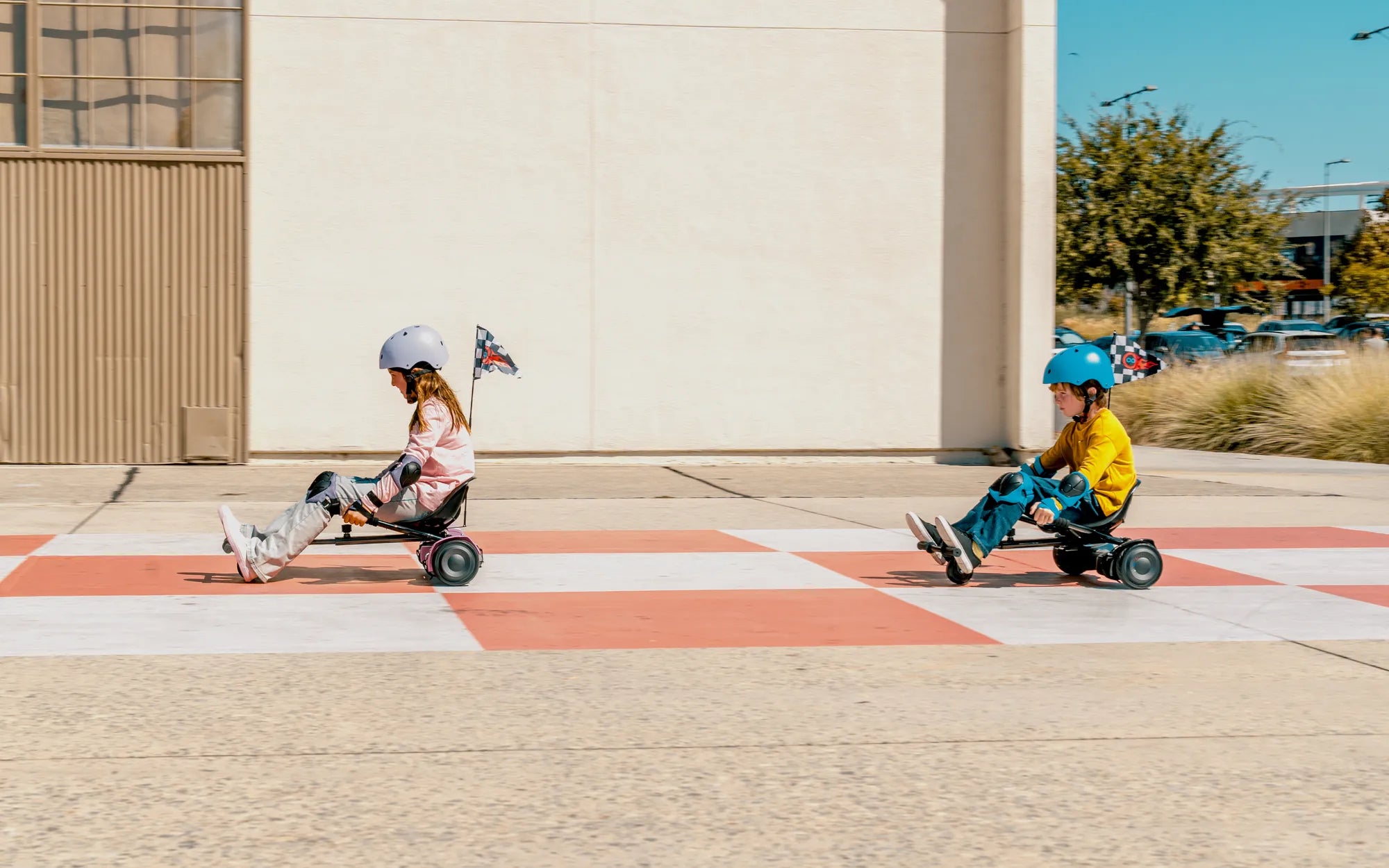
Imagine gliding through your commute or cruising a park path without leg strain or balance anxiety. A hoverboard seat attachment makes this possible, converting a standard self-balancing scooter into a seated, scooter-like vehicle. This comprehensive guide to the hoverboard seat attachment will detail how it enhances comfort, grants superior control, and unlocks new utility from your device. You'll learn how to select the perfect kit, master safe operation, and understand why this simple add-on is a game-changer for commuting, leisure, and accessibility.
Introduction to Hoverboard Seat Attachments
A hoverboard seat attachment, often called a seat kit or seat post, is a modular accessory that clamps or bolts onto a standard hoverboard's frame. Its primary function is to provide a stable, elevated seating platform, transforming the standing-only ride into a seated experience. This fundamentally alters the user interaction, shifting from active balancing to a more relaxed, controlled posture.
The core innovation lies in the attachment mechanism and the extended column that raises the seat above the hoverboard's wheels. This design maintains the self-balancing gyroscopic technology of the base unit while offering a new riding paradigm. The result is a hybrid vehicle that blends the agility of a hoverboard with the comfort of a mini-scooter.
For brands like Gyroor, whose hoverboards are engineered with robust frames and precise balance systems, adding a seat attachment is a logical extension of functionality. It leverages the existing powertrain and intelligence for a new purpose. The appeal spans from adults seeking a practical last-mile solution to younger riders or those less confident in their balance who desire a more stable platform.
Understanding this accessory is key to maximizing your investment. It's not merely a stool on wheels; it's a calculated modification that, when done correctly, enhances safety, enjoyment, and practicality. The following sections will dissect every aspect, from tangible benefits to technical specifications.
Why Consider a Hoverboard Seat Kit? Key Benefits Explored
The decision to add a seat kit is driven by concrete advantages that address common limitations of traditional hoverboard riding. The primary benefit is a dramatic increase in riding comfort. Long-distance standing can lead to fatigue in the legs, feet, and back. A seat eliminates this, allowing for extended journeys without physical strain.
This directly leads to the second major benefit: extended effective range. While the battery capacity remains unchanged, a rider who is not fatigued is more likely to use the hoverboard's full range on a single charge. You can travel farther for errands, tours, or commutes without the discomfort cutting your trip short. It transforms the device from a short-burst toy into a viable micro-mobility tool.
Furthermore, a hoverboard seat attachment significantly improves accessibility. Individuals who may find balancing on a standard hoverboard challenging—whether due to age, confidence, or physical preference—can enjoy the experience from a stable, seated position. It opens up the world of personal electric transport to a wider audience.
Finally, there's a novelty and fun factor. The seated riding style feels distinctly different and often more relaxing. It provides a new way to interact with a device you may already own, renewing interest and utility. The seated position also often feels more socially conventional and less conspicuous for adult riders in urban settings.
Enhanced Stability and Safety
The physics of a seated rider fundamentally improves stability. By lowering the rider's center of gravity relative to a standing position and anchoring them to the device, the risk of tipping forward or backward is reduced. This is especially crucial during low-speed maneuvers, starts, and stops—the moments when most balance-related falls occur.
This inherent stability builds rider confidence exponentially. New users can focus on learning the lean-to-steer controls without the simultaneous fear of falling. For parents, a quality seat kit on a compatible hoverboard can provide a safer learning platform for children, as the seated position prevents them from jumping off unexpectedly.
The safety enhancement is also ergonomic. With a proper seat and backrest, the rider maintains a neutral spine position, reducing the risk of back strain from compensating for the hoverboard's movements. Secure foot pegs provide a stable platform for the feet, preventing them from slipping off during bumps or turns.
It's important to note that this stability does not replace fundamental safety practices. Wearing a helmet and pads is still essential. However, the seated configuration mitigates one of the primary risk factors of hoverboard use: loss of balance.
Extended Riding Range and Reduced Fatigue
The connection between physical comfort and practical range is direct and significant. Standing on a hoverboard requires constant, subtle micro-adjustments from your leg muscles, core, and ankles to maintain balance. This is an isometric workout that leads to muscle fatigue, often long before the battery depletes.
By sitting down, you eliminate this constant balancing effort. Your body is at rest, with the seat bearing your weight. This conservation of energy means the limiting factor for your journey becomes battery capacity, not your physical endurance. Riders report being able to comfortably complete trips that would have been untenable while standing.
This makes the hoverboard a more serious tool for commuting or running local errands. You can plan a 30-minute round trip without worrying about sore legs. For brands like Gyroor, whose models often feature batteries rated for 10-15 miles per charge, a seat kit ensures you can realistically achieve those maximum distances in real-world use.
The reduction in fatigue also promotes better decision-making and awareness. A tired rider is more likely to make mistakes. A fresh, comfortable rider is better able to focus on the path ahead, traffic, and pedestrians, contributing to overall safer operation.
Choosing the Right Seat Attachment: A Buyer's Guide
Selecting a seat kit is not a one-size-fits-all process. Making an informed choice requires evaluating several key specifications against your hoverboard and your personal needs. Ignoring compatibility can lead to an unsafe installation or a non-functional product.
The first and most critical factor is the frame construction. High-quality kits use aerospace-grade aluminum alloy or reinforced steel for the main post and clamp. This ensures it can handle the dynamic stresses of riding without bending or cracking. Lightweight aluminum is preferred for not adding excessive weight, but steel offers ultimate strength for heavier riders.
Next, examine the seat itself. Options range from simple padded stools to full bicycle-style seats with backrests. A seat with back support is highly recommended for comfort and safety, as it prevents you from sliding off backward during acceleration. The padding should be high-density foam with a waterproof, tear-resistant cover (like PU leather) for durability.
Adjustability is a premium feature. Look for a seat post with multiple height settings to accommodate riders of different statures. Proper leg extension is crucial for control and comfort. Finally, check the stated weight capacity. Reputable kits will clearly list a maximum weight (often 220-265 lbs or 100-120 kg). Never exceed this limit.
Compatibility: Will It Fit Your Hoverboard?
This is the most common point of failure for buyers. Compatibility hinges on two main aspects: the attachment mechanism and your hoverboard's wheel size/frame shape. Most universal kits use a powerful, adjustable clamp that tightens around the hoverboard's main body or specific frame ridges.
You must verify the clamp's size range matches the thickness and shape of your hoverboard. A clamp designed for a slim, 6.5" hoverboard may not fit a bulkier 10" off-road model. Always measure your hoverboard's width at the point where the clamp will attach before purchasing.
Wheel size is a strong indicator. Kits are often categorized for 6.5", 8", or 10" hoverboards. For example, a seat attachment designed for Gyroor's 8" or 10" all-terrain models will account for their larger tire diameter and elevated footpad height. Using a kit meant for a smaller board on a larger one can result in an improper riding angle.
The safest approach is to choose a seat kit from or recommended by your hoverboard's manufacturer. Gyroor, for instance, designs its core hoverboard frames with the potential for accessory integration, ensuring a secure and level fit for their recommended seat attachments.
Build Quality and Safety Features
A poorly built seat attachment is a significant safety hazard. Beyond the frame material, inspect the locking mechanism. The clamp should have a robust, tool-tightened bolt (often a large wing bolt or hex bolt) rather than a simple plastic quick-release. This prevents gradual loosening from vibration.
The connection between the seat post and the seat base should be reinforced with gussets or a wide mounting plate to prevent wobble. The foot pegs must be made of slip-resistant metal or rubber-coated material and should fold or be positioned to not interfere with dismounting. All welding points should be smooth and consistent, not brittle or sloppy.
Look for kits that include safety stickers or a reminder to wear a helmet. While a small detail, it indicates the manufacturer considers safety part of their product ethos. A quality kit will feel substantial in your hands, not flimsy or hollow.
Remember, this accessory is subject to your body weight plus the forces of acceleration, braking, and bumps. Compromising on build quality risks catastrophic failure while riding. Investing in a well-reviewed, properly engineered kit from a known brand is non-negotiable.
Top Considerations for Safe and Effective Use
Owning a quality seat kit is only the first step. Its safe and effective integration into your riding routine depends on proper installation, adjustment, and technique. Neglecting these steps can negate all the benefits and introduce new risks.
First, always perform a pre-ride inspection. Check that the main clamp is tightly secured to the hoverboard. Ensure all bolts on the seat post and seat are tight. Verify the foot pegs are locked in position. This 30-second check should become as habitual as putting on your helmet.
Be acutely aware of the changed weight distribution and center of gravity. While more stable in a straight line, a seated hoverboard may have different turning characteristics. Avoid taking sharp corners at high speed, as the higher seating position can increase the feeling of centrifugal force.
Finally, respect the modified performance envelope. The added weight and aerodynamic drag of a seated rider will slightly reduce the hoverboard's top speed and acceleration. Plan your maneuvers with a bit more space and time. Avoid steep inclines that may now strain the motor beyond its capacity.
Installation and Adjustment Best Practices
Meticulous installation sets the foundation for safety. Always follow the manufacturer's instructions exactly. Typically, the process involves positioning the clamp around the hoverboard's central frame, ensuring it is centered and level, and then tightening the main bolt with the provided tool until it is extremely firm. Use a hex key or wrench for final tightening to achieve maximum security.
After the post is attached, adjust the seat height. The ideal height allows your feet to rest flat on the foot pegs with a slight bend in the knee (about 15-20 degrees). Your thighs should be parallel to the ground or angled slightly downward. A seat that is too high will make you feel unstable; too low will cramp your legs and hinder control.
Angle the seat and backrest for comfort. Most seats allow a slight tilt adjustment. A neutral or slightly forward-leaning seat pan can help you maintain an active posture. The backrest should contact your lower back for support without pushing you forward.
Once adjusted, conduct a static test. Sit on the hoverboard while it is powered off, on a level surface. Rock gently side-to-side and forward-backward. Feel for any movement, creaking, or flex in the seat post or clamp. If any is detected, power off and re-tighten all connections before riding.
Mastering the Riding Technique
Riding a seated hoverboard uses the same basic lean-to-steer principle but with a different body mechanic. Instead of using your ankles and lower legs, you'll initiate leans with your upper body and core. It's a subtler, more deliberate motion. Practice in a wide-open, flat area like an empty parking lot.
Start by mounting carefully. Power on the hoverboard, place one foot on a foot peg, then sit down and bring your other foot up. Keep your back against the backrest. To move forward, lean your shoulders and chest forward slightly. To brake or go backward, lean back into the seat. For turns, lean your upper body to the left or right.
Your hands can rest on your thighs or lightly hold the sides of the seat. Avoid making sudden, large upper-body movements. Smooth, controlled inputs are key. Practice figure-eights, emergency stops, and dismounting until they become second nature. Dismount by putting one foot down solidly on the ground before standing up fully.
This technique offers superior precision for low-speed navigation, such as in crowded areas. It allows for relaxed, hands-free operation, making it excellent for commuting where you might need to carry a bag or use a hand for a moment.
Performance Comparison: Seated vs. Standing Hoverboard
Understanding the performance trade-offs helps set realistic expectations. The following table compares key riding characteristics between a standard hoverboard and one equipped with a quality seat attachment.
| Feature | Standing Hoverboard | Hoverboard with Seat Attachment |
|---|---|---|
| Primary Riding Posture | Active standing, engaged core/legs | Relaxed sitting, supported back |
| Stability at Low Speed | Lower (requires active balance) | Higher (lowered center of gravity) |
| Maneuverability & Agility | High (direct ankle control) | Moderate (requires upper-body lean) |
| Rider Fatigue Level | High on longer rides | Very Low |
| Effective Range (User-Limited) | Often limited by user fatigue | Limited primarily by battery capacity |
| Learning Curve for Beginners | Steeper (balance is key skill) | Gentler (balance is assisted) |
| Top Speed | Maximum (e.g., 10 mph) | Slightly Reduced (e.g., 8-9 mph) |
| Ideal Use Case | Short trips, tricks, active fun | Commuting, long leisure rides, accessibility |
As the data shows, the hoverboard seat attachment excels in comfort, stability, and endurance, making it ideal for practical transportation. The standing configuration remains superior for dynamic, agile play. The choice isn't about better or worse, but about selecting the right tool for your specific riding goals.
The Gyroor Advantage: Engineered for Reliability
Choosing a seat attachment for a Gyroor hoverboard comes with inherent advantages rooted in the brand's engineering philosophy. Gyroor designs its electric rideables with durability and accessory compatibility in mind, ensuring a more seamless and secure integration.
Every Gyroor hoverboard undergoes rigorous testing for motor stress, frame integrity, and battery performance. This foundational robustness is critical when adding an accessory that applies new types of load to the frame. The clamp-on point on a Gyroor board is part of a reinforced chassis, designed to handle the torque and weight of a seated rider without compromising the vehicle's balance sensors or structural health.
Furthermore, Gyroor's commitment to safety standards, like UL certification for its battery packs and IPX5 water resistance, extends peace of mind. You can be confident that the core electronics are protected, even as you modify the riding format. The brand's precise calibration of gyroscopes and motors also means the board responds predictably to the altered weight distribution of a seat kit.
When you start with a reliable, well-engineered base platform like a Gyroor hoverboard, you minimize the variables that can lead to poor performance or safety issues with third-party accessories. It's a system designed for harmony between the board and its potential add-ons.
Built to Complement Gyroor Durability
Gyroor's product development often considers the ecosystem around the hoverboard. Models in their lineup, particularly the popular 8" and 10" all-terrain versions, feature frame geometries that are ideal for universal seat clamp attachment. The body is wide enough and strong enough to provide a secure mounting surface without interfering with the wheel arches or shell.
The use of high-grade materials in the hoverboard itself—such as the reinforced magnesium alloy frame—means the attachment point is not a weak link. This is crucial because a seat kit transfers force directly into the hoverboard's central structure. A flimsy frame would flex or crack; a Gyroor frame is built to withstand it.
This design synergy ensures that adding a seat does not void the intrinsic safety features of the hoverboard. The tilt-back speed limiter, overcharge protection, and durable LED lighting all continue to function, providing a safe, feature-rich experience even in the new seated configuration.
Ride with Confidence: Warranty and Support
A significant concern when modifying any electronic device is the impact on the manufacturer's warranty. Gyroor's approach is rooted in supporting the rider's experience. Using a well-made, properly installed seat attachment that does not physically damage the hoverboard's components (e.g., by over-tightening and cracking the shell) typically does not affect the coverage on the core electronics and frame.
Gyroor backs its products with a comprehensive 1-year warranty and has responsive, US-based customer support. This provides a valuable resource if you have questions about compatibility or installation specific to your Gyroor model. You can receive direct guidance rather than relying on generic online advice.
This support network is invaluable. Should any issue arise with the hoverboard's operation after seat attachment, you have a direct line to experts familiar with the product's engineering. This level of post-purchase support is a key differentiator and a critical factor in ensuring a long, safe, and enjoyable ownership experience with your modified hoverboard.
Frequently Asked Questions (FAQ)
Q: Can I attach a seat kit to any hoverboard?
A: No. Compatibility is not universal. You must check the seat kit's specifications for supported wheel sizes (6.5", 8", 10") and clamp width range. The hoverboard's frame design must also provide a safe, solid clamping point. Always match the kit to your specific model when possible.
Q: Does adding a seat affect the hoverboard's speed or battery life?
A: Yes, but the impact is nuanced. The added weight and wind resistance may reduce the top speed by 1-2 mph and can decrease the maximum range by 10-15% due to increased motor load. However, because rider fatigue is eliminated, you are more likely to use the battery's full capacity, often resulting in similar or greater practical distance traveled per outing.
Q: Are hoverboard seats safe for children?
A> They can be safer than standing for children, but only under strict conditions. The hoverboard and seat kit must both be rated for the child's weight. The child must wear full safety gear (helmet, knee/elbow pads). Adult supervision is mandatory during learning and use. The seated position prevents runaway boards if they jump off, but proper instruction on controlled dismounts is essential.
Q: How do I maintain my hoverboard seat attachment?
A: Maintenance is straightforward. Before each ride, check and tighten all bolts and clamps. Wipe down the metal post with a dry cloth to prevent dirt buildup. Periodically inspect the seat upholstery for tears and the foot pegs for secure attachment. Avoid high-pressure water sprays on the clamp mechanism to prevent rust in the threads.
Q: Can I easily remove the seat attachment when I want to stand?
A> Yes, that's one of the key benefits of a clamp-on kit. Most quality attachments can be loosened and removed in under a minute, and reinstalled just as quickly. This allows you to switch between seated and standing riding modes based on your need, making your hoverboard a versatile multi-use device.
Conclusion: Elevating Your Ride Experience
A hoverboard seat attachment is more than an accessory; it's a transformative tool that redefines what your self-balancing scooter can do. By prioritizing comfort and control, it shifts the device from a niche gadget into a legitimate, enjoyable form of personal micro-mobility. The key to success lies in informed selection—prioritizing compatibility, uncompromising on build quality, and adhering to safe installation and riding practices.
For riders of reliable brands like Gyroor, the integration is particularly seamless, leveraging engineered durability for a secure and confident experience. Whether your goal is a pain-free commute, extended exploratory rides, or simply a more accessible way to enjoy electric gliding, the right seat kit unlocks a new dimension of utility and fun. Remember, the ultimate ride combines the thrill of movement with the assurance of stability.
Ready to transform your hoverboard experience? Explore a world of durable electric rideables and discover compatible accessories designed for performance and safety. Browse the full Gyroor collection at gyroorboard.com and find the perfect foundation for your next adventure.
How to Connect Hoverboard to Bluetooth: A Step-by-Step Guide
Smart Self-Balancing Electric Scooter: The Future of Urban Mobility