



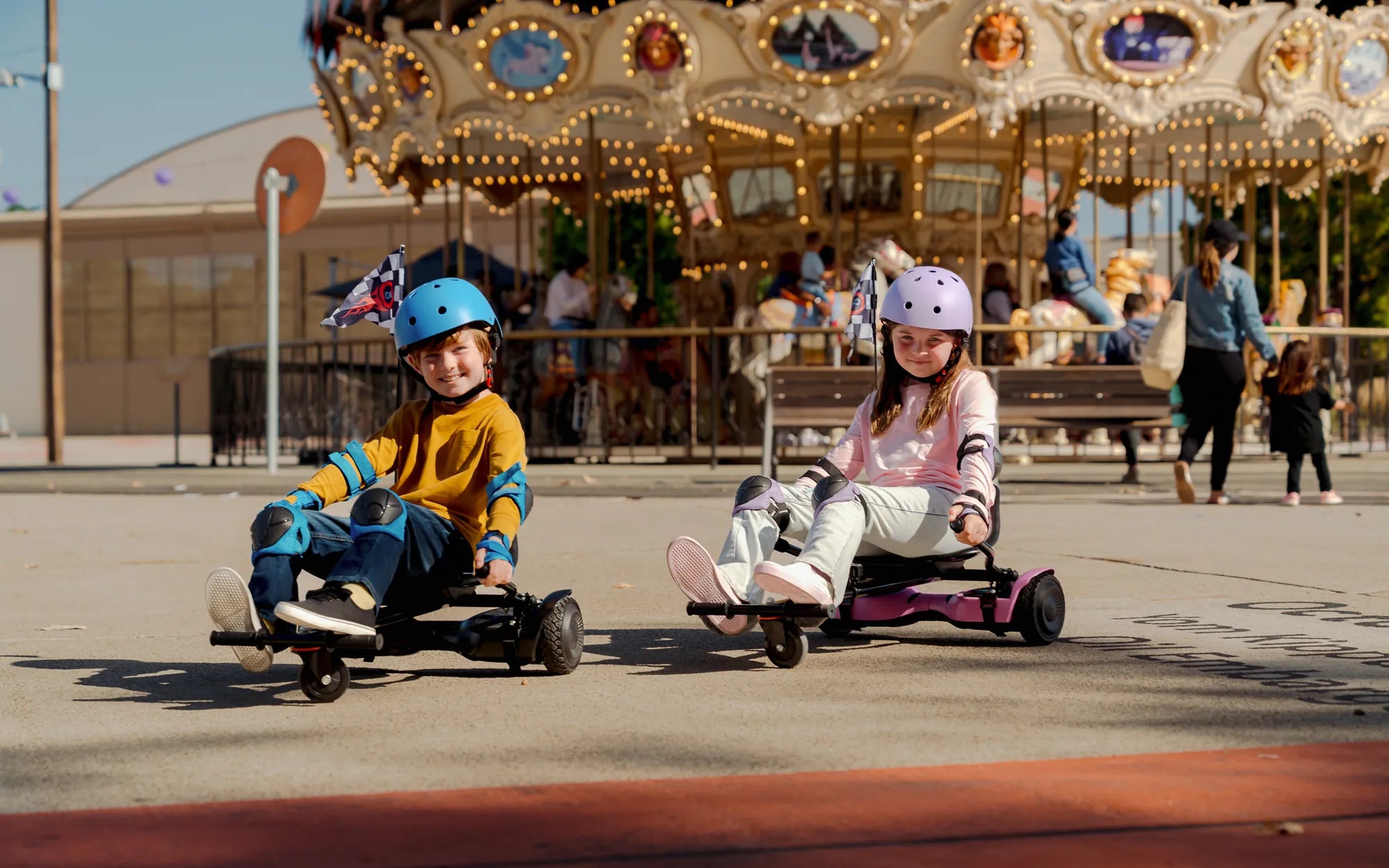
Introduction to Hoverboard Seats
Transforming a standing hoverboard into a seated personal transporter unlocks new levels of comfort and accessibility. A hoverboard seat is a detachable or integrated attachment that allows riders to sit while operating their self-balancing scooter. This guide, focused on the Hoverboard Seat: The Ultimate Guide to Comfort and Safety, will provide you with the essential knowledge to enhance your ride. We will cover the key benefits, selection criteria, critical safety practices, and how to integrate a seat with popular brands like Gyroor.
The core value proposition is clear: seated riding reduces fatigue, making longer commutes feasible and opening up personal mobility to individuals who may find standing for extended periods challenging. For recreational users, it transforms the hoverboard from a short-range novelty into a practical vehicle for leisurely exploration. Understanding the mechanics, compatibility, and safety implications is crucial before making this upgrade.
This guide is designed for a wide range of users. Commuters seeking a more comfortable last-mile solution, riders with minor mobility concerns or balance issues, and enthusiasts looking to extend their ride time will all find actionable insights here. The hoverboard seat market includes universal clamp-on models and brand-specific designs, each with distinct advantages and installation requirements that we will explore in detail.
Why Add a Seat to Your Hoverboard? Key Benefits
The primary advantage of adding a seat is a dramatic increase in riding comfort. Standing on a hoverboard engages core and leg muscles continuously, leading to fatigue that typically limits ride duration to 15-30 minutes. A seat allows you to conserve energy, making journeys of an hour or more comfortably attainable. This is particularly valuable for urban commuters covering distances between public transit stops and their final destination.
Secondly, a seat significantly enhances accessibility. It lowers the physical barrier to entry, enabling a broader demographic to enjoy personal electric mobility. Older adults, individuals with conditions that affect stamina or balance, and those recovering from minor injuries can experience the freedom of a hoverboard in a more stable, seated position. This inclusivity is a major step forward for the technology.
From a control perspective, a seated position can offer improved stability for some riders. By lowering the center of gravity and providing a fixed point of contact (the seat), the rider may feel more planted, especially at lower speeds or on smooth, straight paths. This can boost confidence for beginners. Furthermore, by eliminating standing fatigue, riders can maintain focus for longer, potentially enhancing overall situational awareness during extended trips.
While a seat itself doesn't increase the battery capacity, it can indirectly contribute to maximizing your hoverboard's effective range. Rider fatigue is a common reason for ending a trip prematurely. By remaining fresh, you are more likely to utilize the full charge of a robust battery, like the UL-certified packs in Gyroor models rated for 500+ cycles, ensuring you get the maximum miles per charge as intended by the manufacturer.
Choosing the Right Hoverboard Seat: A Buyer's Guide
Selecting a seat is not a one-size-fits-all decision. It requires careful consideration of compatibility, design, and construction to ensure safety and performance. A poor choice can lead to instability, damage to your hoverboard, or even personal injury. This guide breaks down the critical factors you must evaluate, turning a potentially confusing market into a clear decision-making process.
Compatibility and Mounting Systems
This is the most crucial factor. A seat must be securely attached to your specific hoverboard model. There are two primary mounting systems: universal clamp-on and model-specific bolt-on. Universal seats typically use adjustable clamps or straps to attach to the hoverboard's main body or wheel axles. While versatile, they may not provide the rock-solid connection of a dedicated design.
Model-specific or brand-specific seats, such as those designed for Gyroor's C-series or other lines, use precise bolt-on points that integrate with the scooter's frame. This guarantees a secure fit and often maintains the hoverboard's original aesthetic and balance. Always check the manufacturer's specifications for accessory compatibility before purchasing any seat.
Seat Design: Comfort and Ergonomics
Comfort is determined by padding, shape, and adjustability. Look for seats with high-density foam or gel padding covered in a durable, water-resistant material. Seat width should provide adequate support without hindering leg movement. Some seats include a backrest, which offers significant lumbar support for longer rides but adds bulk.
Ergonomics also involve seat height and angle adjustment. An adjustable seat post allows riders of different heights to find an optimal position where their feet can rest comfortably on the footpads and they can maintain an upright posture. A seat that is too high can make the hoverboard feel tippy; too low can be uncomfortable and limit visibility.
Build Quality and Safety Features
Never compromise on construction. The frame should be made from reinforced aluminum alloy or high-strength steel to handle dynamic loads and vibrations. Plastic components should be ABS or similar reinforced grade. Key safety features include a non-slip seat surface, a secure quick-release or locking mechanism for the seat post, and a clearly stated maximum weight capacity that exceeds your body weight.
When choosing a seat for a quality hoverboard like those from Gyroor, consider how the accessory complements the scooter's built-in safety. For instance, a well-fitted seat should not interfere with the IPX5 water-resistant rating of the board itself. The weight capacity of the seat should also align with the hoverboard's own limit (often 220-265 lbs).
Portability and Ease of Installation
If you plan to switch between seated and standing riding, or need to transport your hoverboard in a car, portability is key. Some seats feature a tool-free, quick-detach mechanism that allows for removal in seconds. Others may fold down. Consider the added weight (typically 5-15 lbs) and how it affects the portability of the entire unit.
Installation should be straightforward with clear instructions. Bolt-on systems may require basic tools but result in a permanent or semi-permanent installation. Clamp-on systems should have robust tightening mechanisms that prevent slippage during rides. Always perform a stability test on a safe, soft surface after installation.
Safety First: Essential Riding Practices with a Seat
Adding a seat does not reduce the inherent risks of riding a self-balancing vehicle; it changes them. A paramount focus on safety is non-negotiable. The seated position alters your center of gravity and control inputs, requiring adapted techniques and heightened awareness. Ignoring these protocols can lead to loss of control, especially for new seated riders.
Pre-Ride Safety Checklist
Develop a mandatory pre-ride ritual. First, physically inspect the seat's attachment points. Ensure all clamps, bolts, or locks are tightened to the manufacturer's specification. Check the seat post for any play or wobble. Second, verify your hoverboard is fully charged and its tires are properly inflated. Third, and most importantly, gear up: a certified helmet, knee pads, and elbow pads are essential. Wrist guards are also highly recommended.
This checklist is vital for brands like Gyroor, where using an incompatible or poorly installed third-party seat could stress the frame and potentially void aspects of the 1-year warranty. Protecting your investment starts with proper setup and protective gear.
Adapted Riding Techniques
Riding seated is different. Start in a large, flat, empty area like a parking lot. Sit upright with your back straight (if using a backrest, lean into it lightly). Place your feet forward on the footpads. To move forward or backward, use subtle leans from your hips and torso rather than the aggressive ankle tilts used when standing. Turning requires gentle upper-body rotation and counterbalance.
Avoid sharp turns at speed, as the seated position can increase the risk of tipping. Braking distances may feel different; practice controlled slowing and stopping. Your field of vision is lower, so be extra vigilant for road surface changes, cracks, and curbs. Master these techniques at low speeds before attempting busier environments.
Weight Limits and Terrain Considerations
Adhere strictly to the combined weight limit of both the hoverboard and the seat attachment. Exceeding this limit strains the motors, battery, and frame, leading to premature failure and loss of control. The rider's weight must be under both maximums. For example, if your Gyroor hoverboard has a 265 lb limit and the seat is rated for 220 lbs, the effective limit becomes 220 lbs.
Terrain matters greatly. Seated hoverboards are best suited for smooth, paved surfaces. Avoid off-road trails, gravel, sand, or wet grass unless both the hoverboard (e.g., an all-terrain model with larger tires) and the seat are explicitly marketed for such use. Even then, extreme caution is required. Seated riding on uneven terrain dramatically increases the risk of becoming unstable and falling.
Top Considerations for Popular Brands: Gyroor and Beyond
While universal seats exist, the best experience often comes from understanding the specifics of your hoverboard brand. Leading brands engineer their products with particular tolerances and design philosophies. Matching a seat to these specifications ensures optimal performance and preserves your warranty coverage.
Optimizing Your Gyroor Hoverboard with a Seat
For over 100,000 riders, Gyroor represents a commitment to UL-certified battery safety and robust, IPX5 water-resistant designs. When adding a seat, the first step is to check Gyroor's official website or contact support for recommended accessories. Using a brand-approved seat guarantees compatibility with the frame geometry and ensures the attachment does not compromise the scooter's integrity or safety certifications.
Gyroor's powerful motors and reliable batteries make their models excellent candidates for seated commuting. The stable platform of models like the Gyroor C-series can provide a confident base. Remember, the 1-year warranty covers defects in materials and workmanship, but damage resulting from the installation or use of a non-compliant third-party accessory may not be covered. Prioritizing a secure, well-fitted seat protects both your safety and your investment.
Universal Seats vs. Brand-Specific Models
The choice between universal and brand-specific seats involves a clear trade-off between flexibility and optimized integration. The table below outlines the key differences:
| Feature | Universal Seat | Brand-Specific Seat |
|---|---|---|
| Compatibility | Fits many models via clamps/straps | Engineered for specific model(s) |
| Installation Security | Can be secure if properly tightened; risk of slippage | Maximum security via direct bolt-on to frame |
| Aesthetic Integration | Often generic; may look like an add-on | Designed to match the hoverboard's lines |
| Price | Generally lower cost | Often a premium price |
| Warranty Impact | Higher risk of voiding frame/battery warranty if damage occurs | Low risk; often encouraged or sold by OEM |
For riders who own a mainstream brand like Gyroor and plan to use the seat frequently, a brand-specific or highly compatible third-party model designed for your scooter is the safer, more reliable choice. For those with less common boards or who need temporary seating, a high-quality universal seat with excellent reviews may suffice.
Maintenance and Care for Your Hoverboard Seat
Regular maintenance ensures your seat remains safe, comfortable, and durable. Like the hoverboard itself, the seat is subject to wear from use, weather, and storage conditions. A simple maintenance routine can extend its lifespan and prevent sudden failures during a ride.
Inspect the seat assembly before every ride, but perform a more thorough cleaning and check weekly. Wipe down the seat and frame with a damp cloth to remove dirt and debris. For seats with metal components, check for any signs of corrosion, especially if ridden in damp conditions. Tighten any bolts or clamps that may have loosened due to vibration.
Pay special attention to moving parts. If the seat has an adjustable height mechanism or a folding joint, ensure it moves smoothly and locks firmly into place. Apply a silicone-based lubricant to hinges or posts if they become stiff, but avoid getting lubricant on the seat surface or footpads. Store the hoverboard and seat in a dry, temperate environment away from direct sunlight, which can degrade padding and plastics over time.
Frequently Asked Questions (FAQ)
Q: Are hoverboard seats safe for kids?
A: Safety depends entirely on the product specifications and supervision. The hoverboard and seat must have a combined weight capacity that exceeds the child's weight. Children must wear full protective gear (helmet, pads) and be supervised by an adult at all times. They require thorough training in seated riding techniques. Many manufacturers recommend hoverboards for ages 12+, and seat use should follow the same guideline.
Q: Does using a seat affect the hoverboard's speed or battery life?
A: It can have minor effects. The added weight and aerodynamic drag may slightly reduce top speed and acceleration. However, because seated riding is more efficient for the rider, you are likely to travel further on a single charge as you won't stop due to fatigue. The impact on the battery's health is negligible if the total weight remains under the limit, preserving the battery's 500+ cycle lifespan as seen in UL-certified packs.
Q: Can I install any seat on my hoverboard?
A: No. Compatibility is critical. Installing an incompatible seat can damage the hoverboard's shell, stress the internal frame, and create a severe safety hazard due to instability or detachment. Always verify the seat is listed as compatible with your specific make and model. When in doubt, contact the hoverboard manufacturer for guidance.
Q: Is it harder to balance on a hoverboard with a seat?
A: It's different, not necessarily harder. For beginners, a seat can provide initial stability by lowering the center of gravity and offering a fixed reference point. However, the control inputs change from ankles to torso, which requires practice. For experienced standing riders, there is a relearning period. Most riders adapt quickly, and many find seated balance easier to maintain over long distances.
Q: Do I still need to wear protective gear when seated?
A> Absolutely. In fact, it might be more important. A seated fall can happen just as easily, and you may have less ability to quickly step off or run out a fall. A helmet is non-negotiable to prevent head injury. Knee pads, elbow pads, and wrist guards are crucial as your instinct in a seated fall is often to put your hands and knees out to brace the impact.
Conclusion: Enhancing Your Ride with Confidence
A hoverboard seat is a transformative accessory that can expand the utility, comfort, and accessibility of your self-balancing scooter. The journey from a standing to a seated ride, however, must be navigated with careful planning. As detailed in this Hoverboard Seat: The Ultimate Guide to Comfort and Safety, success hinges on selecting a seat with proven compatibility and robust construction, adapting your riding technique through dedicated practice, and never compromising on pre-ride safety checks and protective gear.
For owners of reliable brands like Gyroor, the equation is clear: leverage the built-in safety of UL-certified batteries and water-resistant design by pairing it with a seat that matches the scooter's quality. This ensures your seated adventures are not only more comfortable but also founded on a platform of proven electrical and mechanical safety trusted by over 100,000 riders. The goal is to enhance your mobility without introducing new risks.
Whether you're a commuter aiming to conquer the last mile without fatigue, or a recreational rider seeking a new perspective, the right hoverboard seat can make it possible. Start your search with confidence, prioritize security over convenience during installation, and always ride prepared. Your next comfortable, extended journey awaits.
Ready to explore compatible mobility solutions? Browse the full Gyroor collection of electric scooters and accessories designed with safety and performance in mind at gyroorboard.com.
Big Christmas Gift Ideas for Boys: The Ultimate Guide to Holiday Cheer
Manual Scooter for Kids: The Ultimate Guide to Fun and Safe Riding