



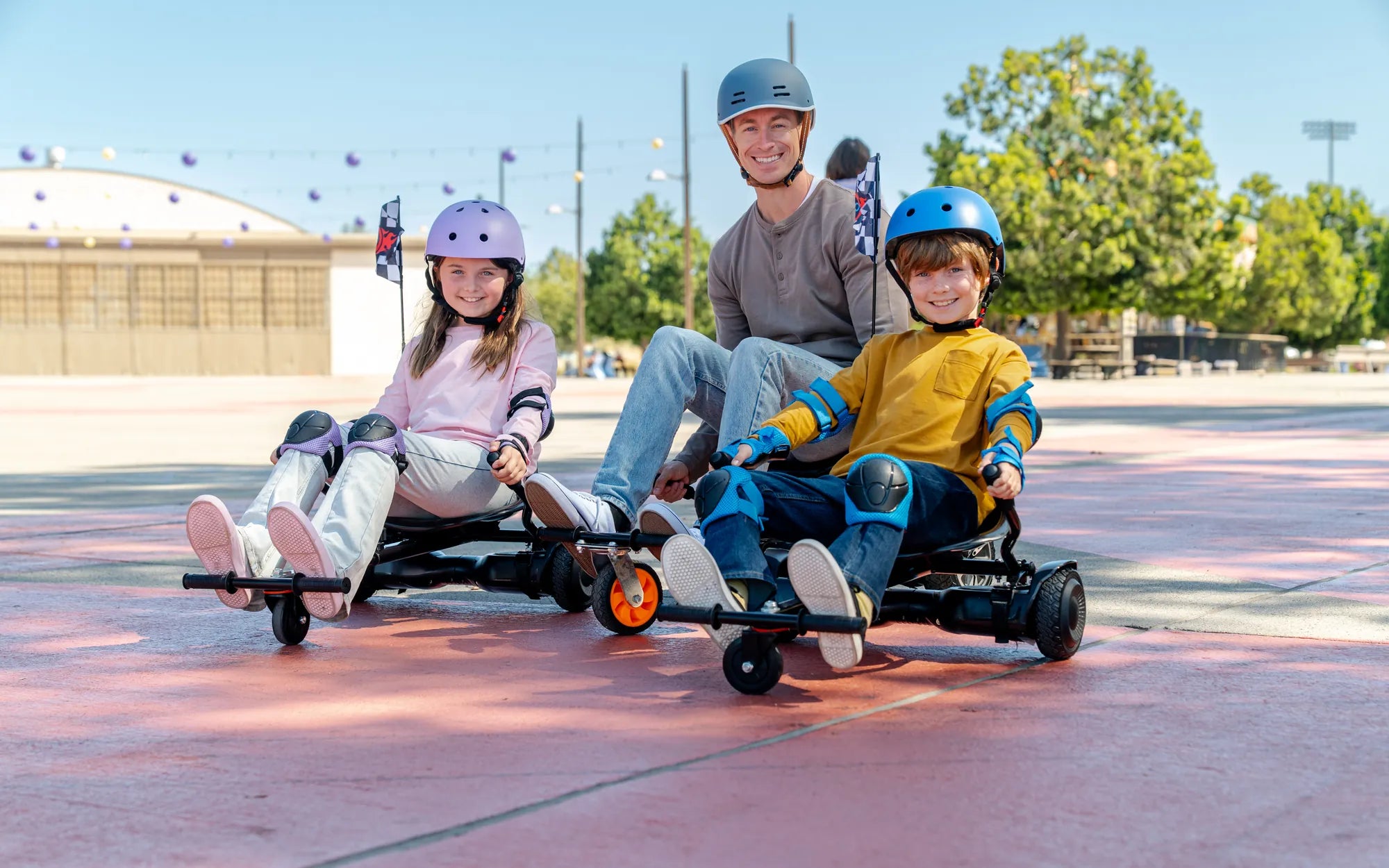
Introduction: Redefining Personal Mobility with a Hoverboard Seat
Imagine gliding through your neighborhood or campus not on tired feet, but from the comfort of a stable seat. A hoverboard seat attachment is the transformative upgrade that makes this possible, converting your standard two-wheeled self-balancing scooter into a seated, scooter-like vehicle. This guide to the hoverboard seat with hoverboard will show you how to unlock enhanced mobility, extended range, and a new dimension of fun. We'll cover everything from the mechanics of the attachment to critical safety practices, ensuring you have the knowledge to upgrade your ride intelligently. For over 100,000 riders, brands like Gyroor have proven that innovation in personal electric transport is about more than speed—it's about accessibility, comfort, and reliable performance.
What is a Hoverboard Seat Attachment? Anatomy of an Upgrade
A hoverboard seat attachment, often called a hoverboard seat kit or hoverkart, is a modular frame system that clamps securely onto a standard hoverboard. It fundamentally changes the user interface from standing to sitting, offering a different riding experience. The core components are engineered for safety and adjustability, making this more than just a simple add-on.
The primary structure is a sturdy mounting bracket or clamp that grips the hoverboard's central section. This clamp must be robust, often featuring a wide, padded contact area and a strong locking mechanism to prevent slippage during rides. Attached to this clamp is a vertical seat post, typically made from lightweight but strong aluminum alloy, which provides the height adjustment.
At the top of the post sits the seat itself, usually a padded bicycle or scooter-style saddle. Many models include a quick-release lever for easy height adjustment, catering to different rider sizes. Some advanced kits also incorporate a handlebar or steering column, which gives the rider something to hold onto and can aid in steering by providing leverage, though primary direction control still largely comes from the rider's leaning motions.
This entire assembly is designed to be removable, allowing you to switch between seated and traditional standing hoverboard modes in minutes. The quality of materials—from the clamp's grip strength to the seat post's weld integrity—is paramount, as it becomes the critical link between rider and machine.
Key Benefits: Why Add a Seat to Your Hoverboard?
Integrating a seat with your hoverboard isn't just a novelty; it delivers tangible advantages that address common limitations of the traditional standing format. The primary benefit is a dramatic increase in riding comfort, allowing for journeys longer than 15-20 minutes without leg fatigue. This transforms the device from a short-distance fun gadget into a practical tool for longer commutes or leisurely tours.
Stability and control see significant improvement. By lowering the rider's center of gravity and providing a fixed sitting position, the hoverboard becomes less susceptible to the wobbles that can challenge beginners. This seated posture also makes starting and stopping smoother, as the rider can brace themselves more effectively. It opens up the world of personal electric mobility to individuals who may have been hesitant due to balance concerns or physical limitations.
Furthermore, a seated position offers greater utility. Riders can more easily carry a backpack or a small bag on their lap, making quick errands feasible. The psychological comfort of having a handlebar to hold also boosts confidence, especially in low-speed, crowded environments. When paired with a high-performance hoverboard from a brand like Gyroor, known for its stable platforms and UL-certified safety, these benefits are maximized for a secure and enjoyable experience.
For the Urban Commuter
For the urban dweller, a hoverboard seat with hoverboard solves the "last-mile" problem with unprecedented comfort. The commute from the transit station to the office or across a large university campus becomes a seated, zero-effort glide. It eliminates the sweat and strain of walking or the constant micro-adjustments of standing, allowing you to arrive fresh. The compact form factor remains, ensuring easy storage under a desk or in a dorm room.
For Enhanced Safety and Stability
Safety is the most cited concern for new hoverboard users. A seat attachment directly addresses this by enhancing stability. The seated position prevents the sudden weight shifts that can cause a standing rider to be thrown off. It allows for more precise, controlled leans for turning. For parents, it can make learning safer for older children, as they have a secure base. This aligns perfectly with the engineering philosophy behind Gyroor hoverboards, which prioritize stable gyroscope systems and reliable, smooth acceleration curves.
Choosing the Right Hoverboard Seat: A Buyer's Checklist
Selecting a compatible and high-quality seat attachment is crucial for safety and performance. Not all seats fit all hoverboards, and a poor fit can lead to dangerous malfunctions. Your decision should be guided by a clear checklist of compatibility and quality factors.
First, and most critically, is wheel size compatibility. Hoverboard seat clamps are designed for specific wheel diameters. The most common sizes are 6.5-inch, 8-inch, and 10-inch hoverboards. A clamp designed for an 8-inch model will not securely fit a 10-inch board, and vice versa. Always verify your hoverboard's exact wheel size before purchasing.
Second, examine the weight capacity. The seat kit itself will have a maximum rider weight rating (e.g., 220 lbs or 100 kg). You must also ensure your underlying hoverboard can support the combined weight of the rider, the seat, and any carried items. Exceeding these limits stresses the motors and battery, leading to poor performance and potential failure.
Third, assess the build quality. Look for a frame constructed from reinforced aluminum or steel, not cheap plastic. The clamping mechanism should have wide, rubber-padded jaws and a robust locking screw or lever. The seat post should have a secure height adjustment system with no noticeable play or wobble when locked. A padded, ergonomic seat is essential for comfort.
The Importance of Hoverboard Compatibility & Power
The seat is only half the equation; the hoverboard itself is the foundation. A weak or underpowered hoverboard will become sluggish, unsafe, and short-ranged when burdened with a seat and rider. The key specifications to evaluate are motor power and battery quality.
For a seated setup, dual motors with a combined wattage of at least 700W are recommended. This ensures adequate torque for starting on inclines and maintaining speed with the added weight. The battery must be high-capacity (typically 36V or higher) and, most importantly, built with safety-certified cells. This is where brands with a proven track record, like Gyroor, become essential. Their use of UL-certified battery packs tested for over 500 charge cycles provides the reliable power and safety margin needed for this application.
Gyroor Hoverboards: The Ideal Foundation for a Seat Attachment
When modifying a device, starting with a robust, well-engineered base is non-negotiable. Gyroor hoverboards are engineered to the high standards required for a safe and enjoyable seated riding experience. Their models provide the necessary power, stability, and durability that universal seat attachments rely upon.
Gyroor's lineup, trusted by over 100,000 riders, features powerful dual motors (often 350W each) that deliver the consistent torque needed to propel a seated rider smoothly, even on gentle slopes. This power ensures the hoverboard isn't strained by the modification, maintaining responsive control. The intelligent gyroscope and control systems are calibrated for smooth acceleration and braking, which is even more critical when in a seated position.
The cornerstone of safety for a seated setup is the battery. Gyroor's commitment to using only UL-certified battery packs is a critical differentiator. These batteries are rigorously tested for stability, charge cycles, and overload protection. When you add a seat, you're adding weight and potentially longer ride times; a premium, safe battery system mitigates the risk of overheating or failure. Furthermore, features like IPX5 water resistance mean occasional puddles or damp conditions won't jeopardize your ride's electronics, and the comprehensive 1-year warranty offers peace of mind for the core device.
Installation and Setup: Getting Ready to Ride Safely
Proper installation is the single most important step for safe operation. Most universal seat kits are designed for tool-free installation, but taking your time and following each step meticulously is vital.
Begin by fully powering off your hoverboard. Position the hoverboard on a flat, level surface. Take the seat attachment's clamp assembly and open it wide. Carefully position it over the center of the hoverboard, ensuring it sits evenly on both sides of the central wheel housing. The padded jaws should grip the hoverboard's side panels, not the wheel tires or any protruding parts.
Tighten the main clamping mechanism firmly. It should be very secure, with no ability to twist or shift on the hoverboard's body. Next, attach the seat post to the clamp (if not pre-attached) and secure it. Insert the seat onto the post and adjust the height. The ideal height allows your feet to rest flat on the hoverboard's footpads with a slight bend in the knee. Finally, perform a static test: apply your weight to the seat while holding onto something stable to ensure the entire assembly holds firm with no creaks or movement.
Riding Tips and Safety Practices for Seated Hoverboarding
Riding a hoverboard with a seat is different and requires practice. Always start in a safe, open, and flat area like an empty parking lot or driveway. Wear full safety gear: a certified helmet, knee pads, and elbow pads are mandatory, as you are still operating a self-balancing vehicle at speed.
To start, place one foot on the hoverboard to activate it (you should hear the gyroscopes engage). Then, sit down carefully, placing your other foot on the board. Use gentle, forward pressure with your toes to move forward. Steering is achieved by leaning your upper body and applying slight pressure with your heels or toes, similar to standing riding. If your kit has a handlebar, use it for balance, not for forceful steering.
Be extra cautious with slopes and obstacles. The added weight changes the braking dynamics. Approach inclines slowly and descend with controlled, gentle pressure. Avoid sudden stops or sharp turns at higher speeds. The modified vehicle has a larger turning radius. Be mindful of your increased overall length and width when navigating tight spaces. Never exceed the speed at which you feel completely in control, and always yield to pedestrians.
Performance Comparison: Seated vs. Standing Hoverboard Use
Adding a seat changes the performance characteristics of your hoverboard. The following table outlines the key differences to help set realistic expectations.
| Performance Factor | Standing Hoverboard | Hoverboard with Seat Attachment | Notes & Considerations |
|---|---|---|---|
| Maximum Speed | Often higher (e.g., 10-12 mph) | Typically slightly lower (e.g., 8-10 mph) | The added weight and aerodynamic drag reduce top speed. Safety dictates lower speeds while seated. |
| Operational Range | As per manufacturer spec (e.g., 12 miles) | Reduced by 15-25% | The motor works harder to move the total weight, consuming battery faster. A high-capacity battery (like Gyroor's) mitigates this. |
| Hill Climb Ability | Moderate, depends on motor power | Reduced, especially on steeper grades | The combined weight challenges motor torque. A powerful hoverboard (700W+) is essential for any incline. |
| Maneuverability & Agility | High - quick turns, spins possible | Lower - wider turning radius | The seated position and extended frame make tight maneuvers more difficult. Better for straight-line travel. |
| Rider Fatigue | High after 15-20 minutes | Very Low - suitable for long rides | This is the primary advantage. Enables extended commuting and leisure use. |
| Learning Curve | Steeper, requires good balance | Much shallower, more intuitive | The stable, seated position builds confidence quickly, ideal for beginners or those uneasy standing. |
FAQ: Your Questions About Hoverboard Seats Answered
Q1: Is a hoverboard seat attachment difficult to install?
A: Most are designed for easy, tool-free installation. The key is carefully following the instructions, ensuring the clamp is centered and extremely tight on the hoverboard's body. Always perform a weight test in a safe environment before your first ride.
Q2: Will adding a seat void my hoverboard's warranty?
A: This depends entirely on the manufacturer's policy. Using third-party modifications can void warranties if they cause damage. Gyroor's warranty, for example, covers defects in materials and workmanship but may not cover issues directly resulting from the installation or use of a non-Gyroor accessory. Always check your specific warranty terms.
Q3: Can children use a hoverboard with a seat?
A> It depends on the child's size, the hoverboard's weight limit, and the seat kit's specifications. Generally, if the child meets the minimum weight and height requirements for the hoverboard and can securely place their feet on the footpads while seated, it can be suitable. However, adult supervision, full safety gear, and practice in a safe area are absolutely essential.
Q4: How much does a seat affect my hoverboard's speed and range?
A> As shown in the comparison table, expect a slight reduction in top speed (1-3 mph) and a more noticeable 15-25% reduction in maximum range per charge due to the increased load on the motors and battery. Starting with a hoverboard that has a powerful motor and large battery capacity minimizes this impact.
Q5: Are hoverboard seats universal?
A> No, they are not fully universal. The primary compatibility factor is wheel size. You must purchase a seat kit specifically designed for your hoverboard's wheel diameter (6.5", 8", 10", etc.). The clamp design must also physically fit the shape and thickness of your specific hoverboard model.
Conclusion: Elevate Your Ride, Expand Your Horizons
A hoverboard seat with hoverboard is more than an accessory; it's a paradigm shift in personal electric mobility. It transforms your device from a fun, short-range toy into a practical, comfortable, and stable vehicle for commuting, exploration, and accessible fun. The journey to this enhanced experience begins with a quality foundation. By choosing a reliable, powerful hoverboard with safety-certified components like those from Gyroor, you ensure that your upgrade is built on a platform of performance and security. Pair it with a well-made, compatible seat attachment, follow rigorous installation and safety protocols, and you unlock a new world of effortless travel. Remember, the ultimate goal is enhanced mobility and fun, achieved responsibly. Ready to explore the potential of your hoverboard? Start by ensuring you have the right base for the journey.
Browse the full Gyroor collection at gyroorboard.com to find the perfect, powerful hoverboard to serve as your foundation for a seated riding adventure.
Fold Up Scooter Kids: The Ultimate Guide to Choosing the Best Ride
Fold Up Scooter Kids: The Ultimate Guide to Choosing the Best Ride