


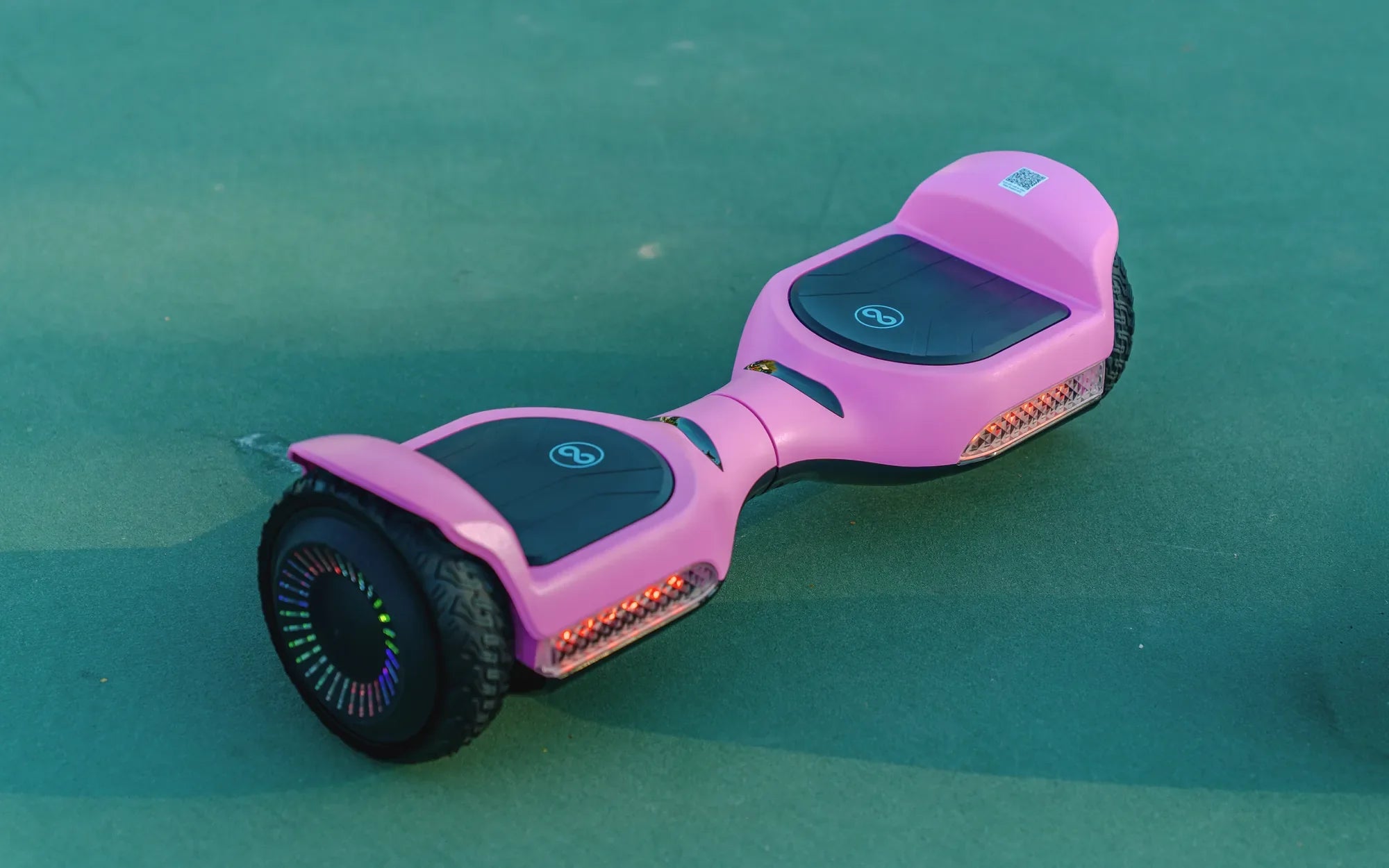
Introduction: Redefining Personal Mobility with Seated Hoverboards
The search for a hoverboard with seat for sale represents a fundamental shift in personal electric transportation. This vehicle merges the intuitive, self-balancing technology of a hoverboard with the comfort and stability of a seated ride. It creates a unique category that addresses the limitations of standing scooters while offering unparalleled convenience for urban commutes, campus travel, and recreational exploration.
This evolution responds directly to a growing demand for practical, enjoyable, and efficient micro-mobility. Riders seek alternatives to traffic congestion, high fuel costs, and crowded public transit without sacrificing comfort. The seated hoverboard, or self-balancing scooter with seat, provides a compelling answer.
It is engineered for those who value a relaxed riding posture, extended range, and confident control. Unlike a standard hoverboard, it reduces physical fatigue, making longer trips not just possible but pleasant. The market now offers sophisticated models from trusted manufacturers, making it a viable primary transport solution.
This article serves as your complete guide. We will dissect the technology, outline undeniable benefits, and provide a clear framework for choosing the right model. By the end, you will understand why a hoverboard with seat for sale is more than a novelty—it's a strategic upgrade to daily mobility.
What is a Hoverboard with a Seat? Beyond the Standing Scooter
A hoverboard with a seat is a two-wheeled, self-balancing electric vehicle equipped with a built-in or attachable seat and a control column with handlebars. It utilizes gyroscopic sensors and internal motors to maintain balance, responding to the rider's subtle leans for acceleration, braking, and steering. This design fundamentally transforms the user experience from an active, standing posture to a seated, commanding position.
The core distinction from a standard hoverboard lies in this ergonomic integration. The seat is not an afterthought but a central design element that lowers the rider's center of gravity. This enhances stability exponentially. The handlebars provide precise directional control and a secure grip, instilling confidence, especially for beginners or in varied terrain.
It is important to differentiate this vehicle from other personal transporters. Unlike a Segway, it typically has smaller wheels and a more compact footprint. Compared to an electric scooter, it lacks a manual steering mechanism, using intuitive lean-to-steer technology instead. It offers a distinct, fun, and effortless riding sensation that stands apart in the e-transport ecosystem.
The typical configuration includes a sturdy frame, a padded seat often with back support, an adjustable handlebar post, and larger wheels (8-10 inches) than traditional hoverboards. This combination is engineered for all-day comfort and practical utility, bridging the gap between recreational fun and serious transportation.
Key Components and Design
The engineering of a high-quality seated hoverboard revolves around several critical components. First, the UL-certified lithium-ion battery pack is the heart of the system. Safety-certified batteries, like those used by Gyroor, undergo rigorous testing for thermal stability and longevity, ensuring reliable power for 500+ charge cycles.
Dual electric motors, typically ranging from 350W to 500W each, provide the torque for acceleration and hill climbing. These motors work in tandem with the vehicle's gyroscopic sensors and control boards to maintain perfect balance. The system constantly makes micro-adjustments, creating a stable platform whether stationary or moving at top speed.
The chassis and frame are constructed from reinforced aluminum alloy or high-grade steel to support rider weight and withstand daily use. The seat is ergonomically padded and often features a spring suspension or thick cushioning to absorb vibrations. An adjustable telescopic handlebar post allows riders of different heights to find their optimal, comfortable riding position.
Finally, the tires are a crucial comfort and performance element. Most premium models use air-filled (pneumatic) tires which provide superior shock absorption on sidewalks, bike paths, and light trails. Some opt for solid, honeycomb tires to eliminate the risk of punctures, though this may slightly reduce ride comfort on very rough surfaces.
Top Benefits: Why a Seated Hoverboard is Your Next Commute Companion
Choosing a hoverboard with seat for sale offers a suite of advantages that directly enhance daily transportation. This vehicle solves specific pain points associated with other micro-mobility options, delivering a balanced mix of comfort, capability, and convenience. It is designed for real-world use, not just occasional recreation.
The benefits extend from the individual rider's experience to broader practical applications. For the commuter, it means arriving at work relaxed rather than fatigued. For the student, it translates to efficient campus navigation. For the urban explorer, it unlocks new areas without the hassle of parking. Each advantage contributes to its status as a primary transport solution.
Leading brands like Gyroor amplify these benefits through robust engineering. Features such as IPX5 water resistance and UL-certified batteries aren't just specifications; they are enablers of reliable, all-weather, safe daily use. This transforms the vehicle from a fair-weather toy into a dependable tool.
Let's examine the core benefits that make this vehicle category so compelling for a wide range of users seeking the ultimate personal transportation solution.
Enhanced Comfort and Reduced Fatigue
The seated design is the most significant comfort upgrade. It eliminates the leg and core muscle strain associated with standing on a traditional hoverboard or electric scooter for extended periods. This allows for longer, more enjoyable journeys, making a 5-mile commute or an afternoon of errands completely feasible.
Riders can maintain a natural, relaxed posture. This reduces physical stress on the knees, ankles, and back. The comfort factor directly increases the vehicle's utility, encouraging more frequent use for practical trips rather than limiting it to short recreational bursts. It makes the technology accessible to a broader audience, including those who may find balancing on a standing device challenging.
Many models feature additional comfort elements like padded seats with backrests and suspension systems. These components work together to absorb bumps and vibrations from uneven pavement, providing a smooth, car-like ride quality that further reduces rider fatigue over distance.
Superior Stability and Control
Stability is paramount for safety and rider confidence. The integrated seat dramatically lowers the rider's center of gravity compared to a standing position. This makes the vehicle inherently more stable and less prone to tipping, especially during turns or when navigating minor obstacles.
The handlebars offer a critical point of control. Riders can steer with precision using the lean-to-turn mechanism while having a secure grip for balance. This three-point contact—seat and two hands—creates a confident and controlled riding experience. Beginners often achieve proficiency within 30 minutes, a much shorter learning curve than a standard hoverboard.
This enhanced stability expands the environments where the vehicle can be safely used. It handles gentle slopes, grassy areas, and gravel paths with more assurance than its standing counterpart. For commuters, this means reliable performance across the varied surfaces of an urban landscape.
Extended Range and Practical Utility
Comfort and stability directly enable longer travel distances. Most quality seated hoverboards offer a range of 15 to 25 miles on a single charge. This covers a significant radius for daily activities, effectively solving the "last-mile" problem between transit hubs and final destinations or serving as a complete point-to-point solution for shorter cities.
The practical utility is vast. It's an ideal vehicle for commuting to work or school, touring large campuses, patrolling warehouse or facility grounds, or running local errands. Some models even include practical features like built-in storage compartments or the ability to attach a small basket, increasing its cargo-carrying capability.
The range is contingent on a high-capacity, efficient battery. This underscores the importance of choosing a model with a reputable, safety-certified battery system. A reliable battery from a brand like Gyroor ensures consistent performance and range over the life of the product, making it a truly practical investment.
All-Weather Versatility
A true transportation solution must handle real-world conditions. Many premium seated hoverboards, including Gyroor models, boast an IPX5 water-resistant rating. This means the electrical components are protected against water jets from any direction, allowing you to ride confidently through puddles or in light rain.
This feature drastically increases the vehicle's usability. You don't need to check the weather forecast anxiously before deciding to use it for your commute. The peace of mind that comes with a water-resistant design means your vehicle is ready when you are, contributing to its role as a dependable primary mode of transport.
Durability in various conditions also relates to build quality. A robust frame, sealed bearings, and quality tires ensure the vehicle can withstand the rigors of daily use on different terrains, from smooth bike lanes to slightly rougher park paths, in both dry and damp conditions.
Key Features to Look for When Buying
Selecting the right hoverboard with seat for sale requires careful evaluation of its specifications. Not all models are created equal, and understanding key features will ensure you invest in a vehicle that meets your needs for performance, safety, and longevity. This checklist prioritizes elements that impact the real-world riding experience.
Focus on features that deliver tangible benefits: power for your local terrain, battery safety for peace of mind, and construction quality for durability. Premium brands distinguish themselves here, offering certified components and robust warranties that protect your investment. The goal is to find a vehicle that performs reliably day after day, not just on the first ride.
It is advisable to prioritize safety certifications and warranty coverage over marginal gains in top speed or flashy LED lights. A vehicle with a UL-certified battery and a comprehensive 1-year warranty from a reputable company represents a lower long-term risk and higher overall value. These are hallmarks of a product designed for serious transportation.
Use the following feature breakdown as your essential guide when comparing models and brands in your search for the ultimate personal transportation solution.
Motor Power and Hill Climbing Ability
Motor power, measured in watts (W), determines acceleration, top speed, and hill-climbing capability. Dual motors are standard, with total wattage typically between 700W and 1000W. A model with 2x350W (700W total) motors is sufficient for flat urban areas and mild inclines, while 2x500W (1000W total) provides more robust performance for steeper hills.
Consider your local topography. If your commute includes bridges or hills, opt for higher wattage. Adequate power ensures the vehicle maintains a stable speed on an incline without straining the battery or motors. Most quality seated hoverboards have a top speed between 10-15 mph, which is ideal for bike lanes and shared paths.
The motor specification also relates to weight capacity. Higher-wattage motors generally support higher maximum load ratings (usually 220-265 lbs). Always check that the motor power aligns with your weight and your intended riding terrain to ensure consistent, safe performance.
Battery Safety and Range
This is the most critical safety and performance feature. Insist on a UL 2272 certified battery pack. This certification means the battery has passed stringent tests for electrical, mechanical, and environmental safety, drastically reducing any risk of fire—a non-negotiable standard for any electric vehicle you bring into your home or workplace.
Battery capacity, measured in Watt-hours (Wh) or Amp-hours (Ah), directly determines range. A larger capacity (e.g., 36V 10Ah / 360Wh) will provide a longer range than a smaller one (e.g., 36V 7.5Ah / 270Wh). Manufacturers' range claims are based on ideal conditions; expect real-world range to be 70-80% of the stated maximum, depending on rider weight, terrain, and speed.
Beyond certification, consider the brand's reputation for battery quality. Brands like Gyroor use cells from reputable suppliers and design their battery management systems (BMS) for optimal health over 500+ charge cycles. This translates to consistent range and performance for years, not just months.
Build Quality and Warranty
Examine the construction materials. A frame made of reinforced aluminum alloy offers an excellent strength-to-weight ratio. Welds should be clean and even, and the overall finish should feel solid, not flimsy. The seat mounting mechanism should be robust and rattle-free.
As mentioned, an IPX5 water-resistant rating is a key indicator of build quality, showing the manufacturer has sealed the electronics against moisture and dust. This feature is essential for all-weather reliability and long-term durability.
Finally, a strong warranty is your safety net. A comprehensive 1-year warranty on the vehicle, battery, and motors demonstrates the manufacturer's confidence in its product. It also ensures you have access to support and parts if needed. Always review the warranty terms and the accessibility of customer service before purchasing.
Tire Type and Ride Comfort
Tires are your primary contact with the ground and a major factor in ride comfort. Air-filled (pneumatic) tires are generally preferred for seated hoverboards. They provide excellent shock absorption, smoothing out cracks, bumps, and uneven surfaces. This results in a more comfortable ride and less stress on the vehicle's frame and components.
The alternative is solid (airless) or honeycomb tires. These are essentially puncture-proof, requiring zero maintenance. However, they can transmit more vibration to the rider on rough surfaces. Some models use a hybrid approach with solid tires that have a rubberized, shock-absorbing core.
For most users seeking a comfortable, versatile ride for commuting and leisure, 10-inch pneumatic tires on a seated hoverboard offer the best balance of comfort, traction, and performance. Ensure the model you choose has a simple method for checking and inflating the tires if they are the pneumatic type.
Hoverboard with Seat vs. Other Personal E-Transport
To understand the unique value proposition of a seated hoverboard, it helps to compare it directly to other popular forms of personal electric transportation. Each vehicle has its strengths and ideal use cases. The seated hoverboard carves out its niche by combining specific advantages from different categories into a single, cohesive package.
The following table provides a clear, data-driven comparison across key metrics: comfort, learning curve, portability, typical range, and best use case. This will help you contextualize where a hoverboard with seat for sale fits within your personal mobility ecosystem and whether it aligns with your primary needs.
| Feature | Hoverboard with Seat | Standard Hoverboard | Electric Scooter | E-Bike |
|---|---|---|---|---|
| Primary Riding Posture | Seated | Standing | Standing (some have seats) | Seated (bicycle) |
| Learning Curve | Easy (30 min) | Moderate (1-2 hrs) | Very Easy (5 min) | Easy (if you can bike) |
| Stability | Very High | Low to Moderate | High | Very High |
| Portability (Weight/Size) | Moderate (35-50 lbs) | High (20-30 lbs) | Varies (30-50 lbs) | Low (50-70 lbs) |
| Typical Range | 15-25 miles | 8-12 miles | 15-40 miles | 20-60 miles |
| Top Speed | 10-15 mph | 8-12 mph | 15-25 mph | 20-28 mph (assist) |
| Best For | Comfortable commuting, leisurely tours, stable all-terrain fun | Short recreational trips, tricks (for advanced users) | Fast urban commuting, longer distances on paved paths | Long-distance commuting, exercise combined with assist, carrying cargo |
Analysis: The seated hoverboard excels in comfort and stability over the standard hoverboard, making it suitable for longer durations. Compared to an electric scooter, it offers a more relaxed, unique riding experience but may have a lower top speed. Versus an e-bike, it requires no pedaling, is more compact for storage, and is often more affordable, but has less range and speed. Its niche is the rider who prioritizes a fun, effortless, and stable seated ride for medium-distance trips.
FAQ: Your Questions About Seated Hoverboards, Answered
Q: Do I need a license, insurance, or registration to ride a seated hoverboard?
A: In the vast majority of U.S. states and localities, no driver's license, vehicle registration, or insurance is required for electric hoverboards and scooters with top speeds under 15-20 mph. They are typically classified as "personal mobility devices." However, regulations are evolving. Always check your specific city and state laws before riding, as rules regarding sidewalk, bike lane, and road use can vary.
Q: How difficult is it to learn to ride? Is it safe for seniors?
A: It is significantly easier to learn than a standard hoverboard due to the seated position and handlebars. Most new riders feel comfortable controlling the vehicle within 20-30 minutes of practice in a safe, open area. For seniors or those with balance concerns, it can be an excellent option because the seat provides stability. Always start at the lowest speed setting, wear protective gear, and practice basic maneuvers before venturing into traffic.
Q: What is the typical weight capacity, and how much does the unit itself weigh?
A: Most quality models support a maximum rider weight of 220 to 265 pounds (100-120 kg). The vehicle's own weight typically ranges from 35 to 50 pounds (16-23 kg), making it portable in the sense that it can be carried up a short flight of stairs or loaded into a car trunk, but it is not as lightweight as a standard hoverboard.
Q: Where is it legal and safe to ride?
A> The safest and most commonly permitted places are bicycle lanes, paved multi-use paths, parks, and sidewalks (where local laws allow). It is not designed for roads with high-speed vehicular traffic. Avoid wet leaves, loose gravel, sand, and steep hills beyond the manufacturer's specified grade. Riding on private property is always at the owner's discretion.
Q: How do I maintain my seated hoverboard?
A> Maintenance is minimal but crucial. Keep the tire pressure correct if using pneumatic tires. Wipe down the vehicle with a damp cloth after riding in dirty conditions. Store it in a dry place away from extreme temperatures. Avoid fully draining the battery; charge it after use and approximately every 30 days if storing long-term. Regularly check for loose bolts or unusual sounds, and only use the manufacturer-provided charger.
Conclusion: Is a Hoverboard with Seat Right for You?
The hoverboard with seat for sale stands as a uniquely capable personal transportation solution. It successfully merges intuitive self-balancing technology with ergonomic design to solve the core issues of comfort and stability that plague other micro-mobility options. For the urban commuter, it transforms the last-mile journey from a chore into a pleasure. For the recreational rider, it opens up new possibilities for exploration without fatigue.
Your decision should hinge on your specific needs. If your priority is a fun, relaxed, and stable ride for distances of 3-10 miles, on paved paths or city streets, this vehicle is an exceptional fit. It is ideal for those who may find standing devices taxing or who simply prefer the commanding view and comfort of a seated position. The learning curve is gentle, and the utility is high.
When you decide to purchase, prioritize safety and longevity. Choose a model from a reputable brand that invests in certified components. Look for the non-negotiable UL 2272 battery certification, a robust IPX5 water-resistant build, and the backing of a comprehensive 1-year warranty. These features separate durable, reliable transportation tools from disposable novelties.
Brands like Gyroor exemplify this commitment to quality, engineering vehicles trusted by over 100,000 riders. They combine performance with proven safety standards, ensuring your investment delivers value and reliability for years to come. If you're ready to upgrade your daily commute or redefine your leisure rides, the ultimate solution awaits.
Ready to experience the perfect blend of comfort, control, and cutting-edge mobility? Browse the full collection of UL-certified, high-performance seated hoverboards and personal electric vehicles at gyroorboard.com.
Best Hoverboard for 10 Year Old Boy: Top Picks for Safety and Fun
Self Balancing Scooter Max 220 lbs: The Ultimate Guide to Safe and Efficient Riding