



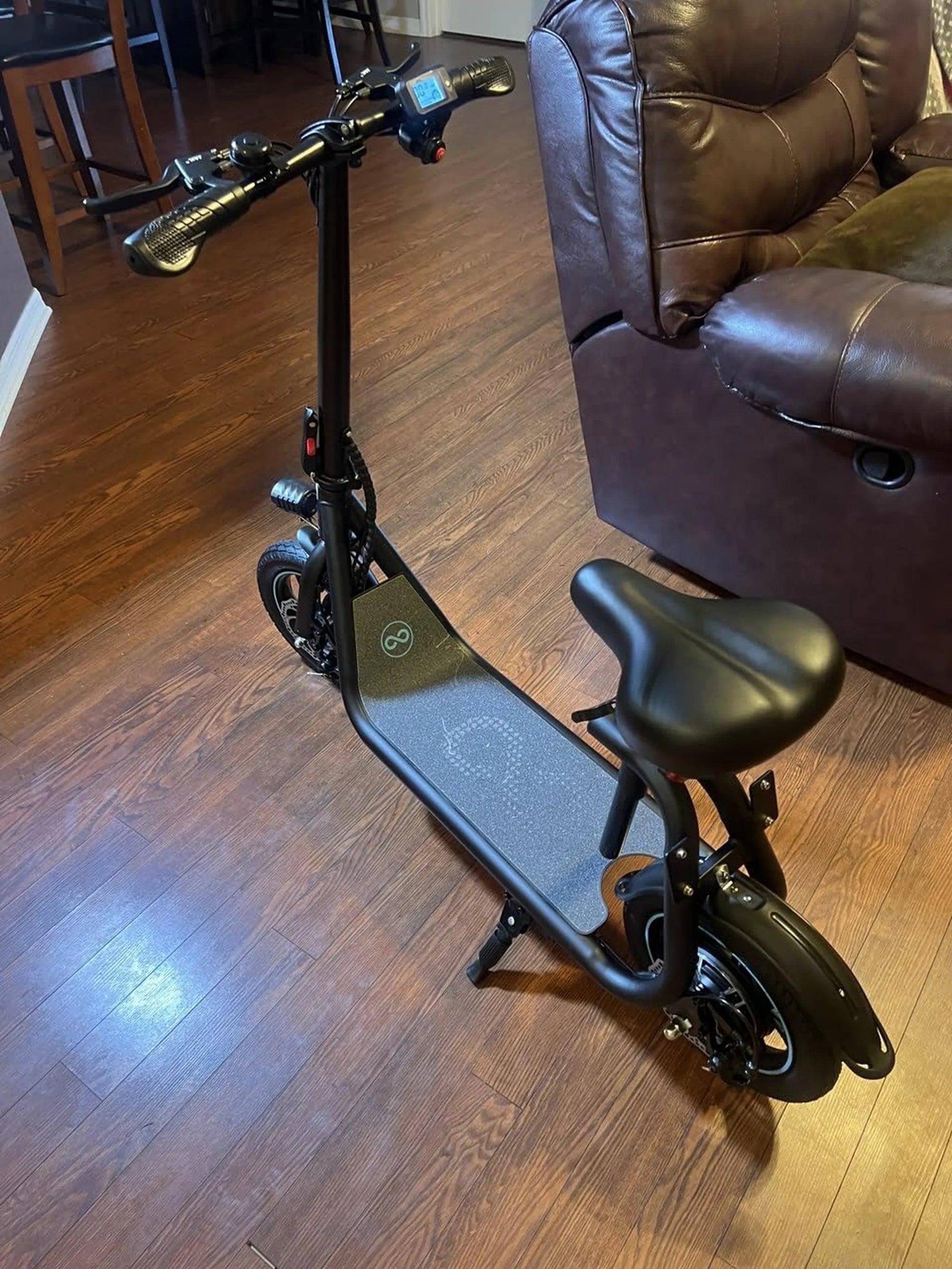
Introduction: The Urban Charging Conundrum
Electric scooters offer unparalleled freedom in navigating congested city streets, but their utility hinges on one critical factor: a charged battery. For urban riders, the question of how do electric scooters charge in cities is not just about plugging in—it's a logistical puzzle involving infrastructure access, safety concerns, and battery longevity. This guide provides the definitive roadmap.
You will learn the science behind your scooter's power source, master every charging method from standard outlets to portable solar, and navigate the etiquette of powering up in shared spaces. We cut through the confusion with actionable, data-backed advice for the modern urban commuter. Leading brands like Gyroor design for this reality, integrating UL-certified batteries and water-resistant builds specifically for demanding city use.
Understanding Your Scooter's Battery: The Power Core
Every charging strategy begins with understanding the battery. Most modern electric scooters, including all Gyroor models, use lithium-ion battery packs. These are favored for their high energy density, relatively low self-discharge rate, and lack of memory effect. The battery's specifications directly dictate charging needs and range.
Three key metrics matter: Voltage (V), Amp-hours (Ah), and Watt-hours (Wh). Voltage is the electrical pressure; Amp-hours measure charge capacity; Watt-hours (V x Ah) represent total energy storage. A higher Wh rating generally means a longer potential range. Knowing your scooter's Wh rating and the output of its charger is the first step to calculating charge times.
For example, a scooter with a 360Wh battery and a standard 2A charger will take approximately 6 hours for a full charge from empty. Urban riders benefit from understanding these numbers to plan opportunistic "top-up" charges effectively. It transforms charging from a mystery into a manageable part of your daily routine.
The Critical Role of UL-Certification in Urban Safety
In a city environment, where charging often occurs in apartments, hallways, or offices, battery safety is non-negotiable. This is where UL (Underwriters Laboratories) certification becomes paramount. A UL-certified battery, a standard feature across Gyroor's lineup, has undergone rigorous independent testing for electrical, mechanical, and environmental safety.
These tests evaluate the battery's resilience against overcharging, short circuits, and extreme temperatures. For the urban rider, this certification mitigates the risk of thermal runaway—a dangerous chain reaction that can lead to fires. It is your foremost assurance when charging in close quarters with others or leaving a scooter to charge unattended in a dedicated space.
Furthermore, UL-certified cells typically ensure better longevity, supporting 500+ charge cycles while maintaining significant capacity. This translates to years of reliable urban commuting, making it a critical specification to prioritize over price alone when selecting a scooter for city life.
Primary Charging Methods for City Dwellers
The most straightforward charging solutions leverage existing infrastructure. For riders with consistent access to a private outlet, this is the simplest path. However, even standard methods require smart practices to optimize battery health and safety in an urban context.
Understanding these foundational methods is essential before exploring more creative solutions. They form the reliable backbone of your charging strategy, whether at home, work, or a trusted location. The goal is to integrate charging seamlessly into your city's rhythm.
Standard Home and Office Charging
This is the most common method. Using the manufacturer-provided charger (always use the supplied one), you plug into a standard wall outlet. The key is location and habit. Always charge on a hard, non-flammable surface like tile or concrete, away from carpets, bedding, or clutter that could impede heat dissipation.
Optimal practice involves avoiding consistently charging to 100% or draining to 0%. For daily use, maintaining a charge between 20% and 80% is ideal for long-term lithium-ion health. Many riders plug in upon arriving at work or home, allowing the scooter to reach this optimal range before their next trip.
Environmental factors matter. Avoid charging in direct sunlight or in freezing conditions (like an unheated garage in winter), as extreme temperatures can stress the battery. The consistent, controlled climate of an office or apartment living space is often ideal.
Leveraging Public and Shared Infrastructure
Cities are gradually adapting. Public charging infrastructure, while not yet ubiquitous for scooters, is growing. Many public e-bike charging stations can accommodate scooters, provided you have your charger cable. Some forward-thinking cafes, co-working spaces, and shopping centers now offer complimentary charging ports for micro-mobility devices.
The strategy here is reconnaissance. Identify these locations along your regular routes. Libraries, community centers, and certain public transit hubs may have usable outlets. Always ask for permission before plugging in at a business. Carrying your charger and a small extension cord becomes part of your essential urban riding kit.
This method highlights the importance of a scooter's physical durability. A charge port with a robust, rubberized seal (like the IPX5 water-resistant rating on Gyroor scooters) is crucial for protecting the electrical connections from urban grime, light rain, or accidental spills when using public infrastructure.
Creative and Alternative Urban Charging Strategies
For the urban rider without guaranteed outlet access—the apartment dweller, the digital nomad, or the street-parker—standard methods fall short. This demands ingenuity. The following strategies are for those who need to power their mobility independently of fixed infrastructure.
These solutions require a higher initial investment or more active management but unlock true charging freedom. They transform any location into a potential charging station, aligning perfectly with the spontaneous nature of city exploration.
Portable Power Banks and Solar Solutions
High-capacity portable power stations (solar generators) have become a viable option. These are essentially large, rechargeable batteries with AC outlets. You charge the power station at a library or cafe, then use it to charge your scooter elsewhere. Look for stations with a pure sine wave AC output to protect your scooter's battery management system.
The main constraint is weight and capacity. A power station with 500Wh of capacity can nearly fully charge a typical commuter scooter but may weigh 10-15 pounds. Pairing it with a foldable solar panel (100W-200W) creates an off-grid system, allowing trickle-charging of either the station or, with the right adapter, the scooter directly on sunny days in a park.
This method is premium and involves managing two battery systems. It's best suited for riders who have secure storage for the equipment and for whom the convenience of location-independent charging outweighs the cost and logistical burden.
The "Top-Up" Charging Philosophy
This is a mindset shift rather than a specific tool. Instead of waiting for a near-empty battery and seeking a long charging session, the top-up philosophy involves seizing every opportunity to add a small amount of charge. A 30-minute charge at the gym, an hour plugged in at a lunch spot, or two hours at a friend's apartment can add crucial miles.
This approach dovetails perfectly with lithium-ion battery science, which favors partial charges over deep cycles. It also dramatically reduces range anxiety. You're not looking for a full charge; you're just topping off the "tank" frequently. It requires planning your routes around known, accessible outlets and carrying your charger at all times.
For this to work efficiently, a fast-charging capability is beneficial. Some scooter models offer optional fast chargers that can significantly reduce top-up times. Always verify that a fast charger is compatible with your specific model to avoid battery damage.
Charging Safety, Etiquette, and Best Practices
Charging in a shared urban ecosystem carries social and safety responsibilities. Ignoring these can lead to conflicts, property damage, or even fire hazards. Responsible charging ensures the long-term viability of micro-mobility in cities.
These guidelines protect you, your property, your neighbors, and public perception. Adhering to them is a mark of a conscientious urban rider.
Safety First: The Non-Negotiable Dos and Don'ts
DO: Use only the manufacturer-provided charger. Charge on a non-flammable surface in a well-ventilated area. Inspect the charger cable, battery port, and battery casing for damage before each charge. Unplug immediately if the battery or charger becomes abnormally hot.
DON'T: Never charge unattended in a building's common hallway or escape route. Don't use damaged or third-party chargers. Avoid charging immediately after a long ride; let the battery cool to room temperature first. Never disassemble or modify the battery pack.
The peace of mind offered by a UL-certified battery cannot be overstated in this context. It is a foundational safety feature that should be a primary filter when choosing a scooter for dense urban living.
Apartment and Condo Charging Etiquette
This is a major pain point. Start by reviewing your lease or condo rules; some explicitly address e-vehicle charging. Open communication with building management is key. Propose a solution: perhaps a dedicated, monitored outlet in a bike storage room can be installed, with riders sharing the electricity cost.
Never use shared laundry room or hallway outlets without explicit, written permission. It's a fire code violation in most jurisdictions and a serious liability. If charging in your unit, do so away from primary exits and on a hard floor. Consider using a fire-resistant charging bag for an added layer of containment, though this is not a substitute for a safe battery.
Be a good neighbor. Don't run cables across walkways. Charge during reasonable hours if the charger emits a faint hum. By being proactive and respectful, you help normalize safe scooter ownership in multi-unit dwellings.
Data-Driven Insights: Charging Time vs. Urban Range
Planning requires translating charging time into practical urban distance. The following table provides a realistic snapshot for a typical commuter scooter with a 360Wh battery and a standard 2A charger. This data helps you make informed decisions about when and where to top up.
| Charging Duration | Approx. Energy Added | Estimated Range Added* | Practical Urban Use Case |
|---|---|---|---|
| 30 minutes | ~30Wh | 2-3 miles (3-5 km) | Last-mile connection from transit, quick errand to a local store. |
| 1 hour | ~60Wh | 4-6 miles (6-10 km) | Round-trip commute to a nearby neighborhood, multiple short trips. |
| 2 hours | ~120Wh | 8-12 miles (13-19 km) | Most common daily urban commutes, extensive afternoon errands. |
| Full Charge (6 hrs) | 360Wh | 20-25 miles (32-40 km) | Full-day exploration, delivery work, or a weekend adventure across the city. |
*Range varies significantly based on rider weight, terrain, temperature, and riding style. This assumes efficient urban riding at moderate speeds.
This table underscores the power of the top-up philosophy. A single lunch-hour charge can effectively double or triple the usable range for an afternoon, making the scooter a truly all-day tool.
Conclusion: Mastering Urban Mobility Power Management
Charging an electric scooter in the city is a skill that blends technical knowledge, resourcefulness, and social awareness. Start by understanding your battery's specs and the assurance of UL-certification. Master the primary methods of home and public charging, then layer in creative strategies like portable power or opportunistic top-ups to fit your specific living situation.
Always anchor your approach in safety and etiquette. The sustainable growth of urban micro-mobility depends on responsible rider behavior. Choosing a scooter built for this environment—with robust, water-resistant construction, reliable UL-certified batteries, and a strong warranty like Gyroor's 1-year comprehensive coverage—provides the foundational peace of mind needed to navigate the charging puzzle confidently.
Your city is ready to be explored. With the right knowledge and tools, keeping your scooter charged is a simple, integrated part of the urban adventure. Embrace the convenience and freedom that comes with mastering your power supply.
FAQ: Quick Answers to Common Urban Charging Questions
Q1: Can I charge my electric scooter in the rain or leave it outside?
A: Never charge a scooter in the rain or on wet ground. While many Gyroor scooters have IPX5 water-resistant ratings for riding in light rain, the charging port and electrical connections are vulnerable during charging. Always charge in a dry, covered location.
Q2: Is it bad to leave the scooter plugged in overnight?
A: Modern scooters with quality Battery Management Systems (BMS) will stop charging at 100%. However, for optimal battery longevity, it's better to avoid keeping it at a 100% state of charge for extended periods. If you must charge overnight, try to time it so it finishes closer to when you wake up.
Q3: How does cold winter weather affect charging and range in the city?
A: Cold temperatures reduce battery chemical efficiency. You will experience reduced range (by 20-30% in freezing temps) and slower charging. Always store and charge your scooter indoors at room temperature if possible. Allow a cold battery to warm up for an hour before charging.
Q4: What should I do if my apartment building forbids charging?
A: First, seek clarification and educate management on the safety of UL-certified batteries. Propose a pilot program with safe charging practices. If denied, your options shift to alternative strategies: top-up charging at your destination, using a secure locker at a micro-mobility friendly workplace, or investing in a portable power station charged elsewhere.
Q5: Can I use a faster charger than the one that came with my scooter?
A: Only if the manufacturer explicitly sells and approves a fast charger for your specific model. Using an incompatible fast charger can overheat the battery, damage the BMS, void your warranty, and create a serious fire hazard. When in doubt, stick with the original equipment.
Ready to explore the city with confidence? Browse the full range of UL-certified, urban-ready electric scooters and e-bikes designed for real-world charging challenges. Explore the full Gyroor collection at gyroorboard.com.
Quality Electric Scooters: The Ultimate Guide to Choosing the Best Ride
Best Budget Electric Scooters 2024: Affordable Rides for Every Commuter