



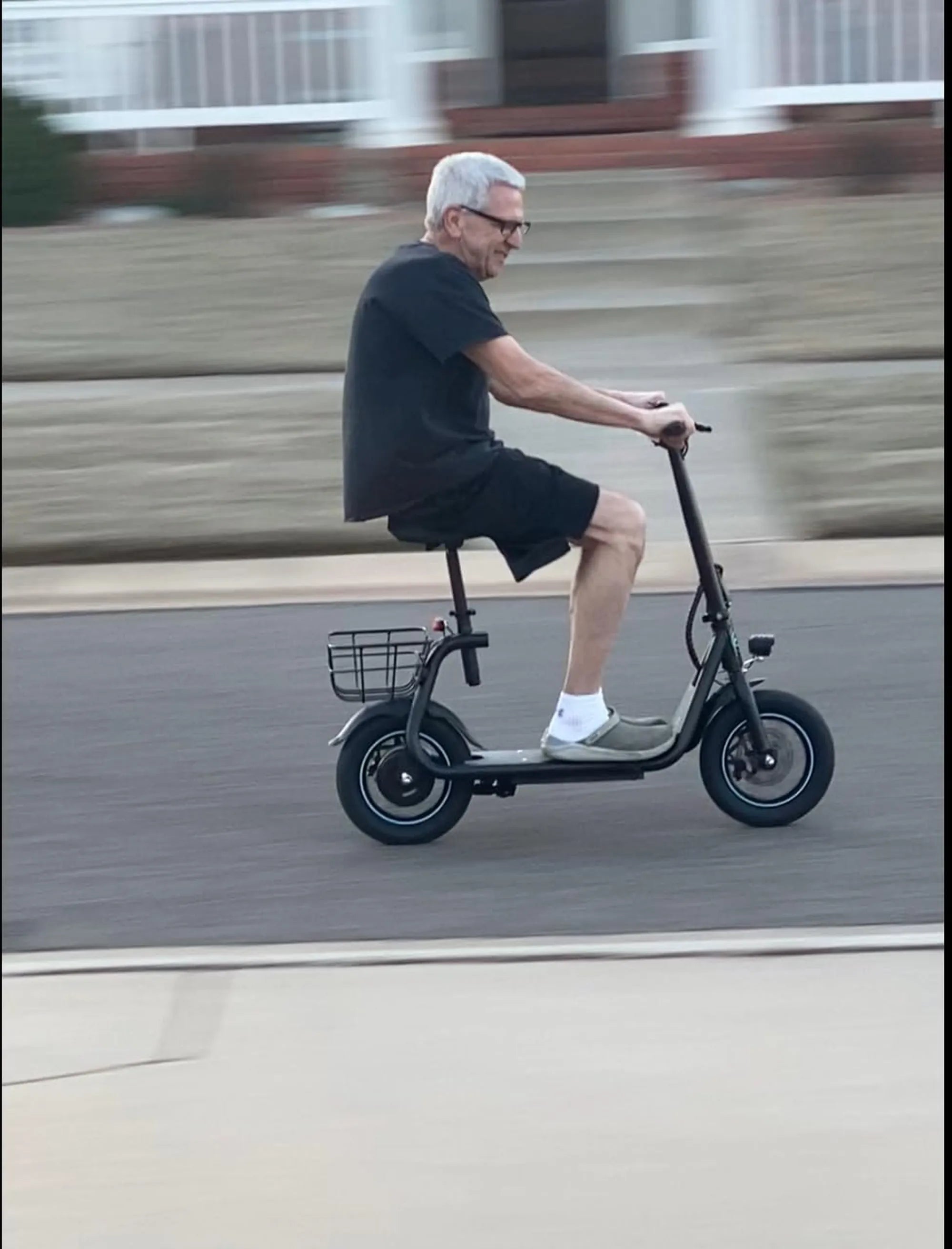
Understanding the Legal Speed Limits for E-Bikes
How fast can an e-bike go legally? The answer is not a single number but a framework defined by classification, local law, and motor type. For over 100,000 riders across North America and Europe, this question is fundamental to safe, compliant, and enjoyable riding. Knowing the legal limits protects you from fines, ensures access to bike paths, and helps you select the right model for your commute or recreation.
Legal e-bike speed is primarily governed by a motor cutoff, not the physical maximum speed you can achieve by pedaling or coasting downhill. This distinction is critical. Manufacturers like Gyroor engineer their e-bikes with programmed speed governors that align with these legal classifications, providing performance within established safety parameters. This guide will dissect the regulations, explain the key factors, and show you how to maximize your ride responsibly.
You will learn the specifics of the three-class system, how state laws modify it, and why motor wattage is often misunderstood. We'll also explore how trusted brands design for compliance and provide actionable advice for riding safely at higher assisted speeds. The goal is to equip you with the knowledge to ride confidently and legally.
The Three-Class System: The Foundation of U.S. E-Bike Law
The most widely adopted framework for e-bike regulation in the United States is the three-class system, championed by organizations like PeopleForBikes. This system categorizes e-bikes by their top motor-assisted speed and how the motor is engaged, determining where they can be ridden. It provides clarity for riders, law enforcement, and land managers, separating e-bikes from unregistered motor vehicles.
Adoption varies by state, but the core definitions are consistent. Class 1 and Class 2 e-bikes are typically allowed anywhere a traditional bicycle is permitted, including bike paths and trails. Class 3 e-bikes, with their higher assisted speed, often face more restrictions, such as being limited to roads or specific bike lanes. Understanding your e-bike's class is the first step in answering "how fast can an e-bike go legally?"
This classification is based solely on the motor's behavior. The maximum speed refers to the point at which the motor stops providing assistance. You can still pedal faster or coast downhill, but you will be doing so under your own power. This system prioritizes safety while enabling the utility and enjoyment of electric assist.
Class 1 E-Bikes: The Pedal-Assist Standard
Class 1 e-bikes are defined by pedal-assist only, with no throttle. The electric motor provides assistance only when the rider is pedaling and ceases to provide assistance when the bicycle reaches 20 miles per hour. This creates a natural, intuitive riding experience that closely mimics traditional cycling but with reduced effort.
These e-bikes are the most universally accepted across jurisdictions. They are generally permitted on all bike paths, trails, and roadways where traditional bicycles are allowed. This makes Class 1 models, like several in the Gyroor commuter lineup, an excellent choice for mixed-use paths, park trails, and riders who want a seamless boost without a throttle.
The 20 mph assist limit is a deliberate safety and accessibility benchmark. It allows for efficient commuting and recreational riding while maintaining speeds considered safe for shared-use environments with pedestrians and other cyclists. For many riders, this speed perfectly balances performance with practicality and legal access.
Class 2 E-Bikes: Throttle-Enabled Convenience
Class 2 e-bikes are characterized by a throttle-actuated motor, which can propel the bike without the rider pedaling. However, like Class 1, the motor assistance cuts off at a speed of 20 miles per hour. This class offers the greatest flexibility, allowing riders to use pure electric power, pedal-assist, or a combination of both.
This throttle functionality is ideal for riders who need a break from pedaling, require assistance from a complete stop (especially in traffic), or tackle steep hills. It provides an accessible entry point for new riders or those with varying physical abilities. The governed 20 mph top speed ensures this convenience remains within the legal framework for bicycle-path access in most areas.
It's important to note that while the throttle provides independent power, responsible use is key. On shared paths, using pedal-assist mode is often more courteous. Brands like Gyroor design their Class 2-capable models with intuitive controls that allow riders to easily switch between modes based on their environment and needs.
Class 3 E-Bikes: Speed-Pedelecs for Commuting
Class 3 e-bikes, often called speed-pedelecs, provide pedal-assist only (in most states) and have a motor that assists up to 28 miles per hour. They are designed for faster urban commuting and longer-distance rides where maintaining a higher average speed is desirable. This answers the upper limit of "how fast can an e-bike go legally" under standard classifications.
With increased speed comes increased responsibility and regulation. Most states require riders of Class 3 e-bikes to be at least 16 years old and mandate the use of a helmet. They are also more frequently restricted from natural surface trails and sometimes even paved multi-use paths, limiting them to roadways and designated bike lanes.
These models are engineered for stability and safety at higher speeds, featuring more robust brakes, enhanced frame designs, and integrated lighting systems. For the commuter looking to replace car trips efficiently, a Class 3 e-bike like Gyroor's higher-performance commuter models offers a compelling, legal alternative that significantly reduces travel time.
Key Factors That Influence Legal E-Bike Speed
Beyond the three-class framework, several practical variables determine the legal operation of your e-bike. A data-driven understanding of these factors prevents unintentional violations and helps you make an informed purchase. Legal speed is not just about the bike's capability but its configuration and the jurisdiction in which it is ridden.
Riders must consider the interplay between state law, local ordinances, and the manufacturer's design specifications. Assuming a 20 mph Class 2 e-bike is legal everywhere is a common mistake. The legal landscape is evolving, and the onus is on the rider to know the rules that apply to their specific location and e-bike model.
This section breaks down the most critical influences: jurisdictional law, the relationship between motor power and governed speed, and the importance of purchasing from a compliant manufacturer. These elements collectively define the real-world answer to how fast you can legally ride.
State and Local Jurisdiction: Your Most Important Check
The three-class system is a model, not a federal law. Individual states adopt and modify it. For example, some states may set a lower minimum age for Class 3 riders, or require specific equipment like a speedometer. More critically, cities and counties can enact stricter ordinances, such as banning all e-bikes from certain park trails regardless of class.
Before riding, you must consult your state's vehicle code and any local park or path regulations. A resource like the PeopleForBikes state law tracker is an excellent starting point, but verifying with official local sources is paramount. This due diligence is as essential as wearing a helmet.
This variability means the legal speed for an e-bike is context-dependent. A Class 3 e-bike may be legal to operate at 28 mph on a city street but prohibited entirely on a nearby recreational path. Understanding these layers of regulation is key to compliant and hassle-free riding.
Motor Power (Wattage) vs. Governed Speed
A major point of confusion is motor wattage. A 750-watt motor is not inherently illegal or faster than a 500-watt motor in terms of top assisted speed. Wattage primarily influences torque, acceleration, and hill-climbing ability. The legal speed is determined by the programmed governor, which cuts off motor assist at 20 mph or 28 mph regardless of motor power.
Think of it like a car with a powerful engine but a speed limiter set to 75 mph. The car can accelerate quickly and handle hills with ease, but it won't exceed the set limit. Similarly, a high-wattage e-bike from a reputable brand like Gyroor will feel more responsive and tackle steep inclines better but will still cease assistance at its class-designated speed.
This distinction is crucial when comparing e-bikes. Focus on the class rating and governed speed, not just the wattage. A powerful motor governed to 20 mph offers a superior riding experience in challenging terrain while remaining fully compliant for use on bike paths where a higher-speed Class 3 model would not be allowed.
The Role of Manufacturer Compliance and Brand Trust
Purchasing from a reputable, transparent brand is your first line of defense for legal compliance. Trusted manufacturers design their e-bikes to meet specific class standards from the ground up. This includes installing speed governors that cannot be easily disabled, using UL-certified battery packs for safety, and providing clear documentation on the e-bike's class.
Gyroor, for instance, engineers its e-bikes with pre-programmed speed limits aligned with their intended class. Their use of UL-certified batteries, tested for over 500 charge cycles, and IPX5 water-resistant designs underscores a commitment to safety and durability that complements legal compliance. A 1-year warranty and clear customer support provide further assurance.
In contrast, uncertified or "tunable" e-bikes may ship with governors that are easily overridden, potentially turning your legal bicycle into an unregistered motor vehicle the moment you modify it. Choosing a brand that prioritizes compliance, like Gyroor, protects your investment and ensures you start your riding journey on the right side of the law.
Gyroor E-Bikes: Engineered for Performance Within Legal Limits
Gyroor's product philosophy centers on delivering reliable, enjoyable, and compliant electric mobility. With a diverse lineup catering to different rider needs, each model is designed with specific use cases and legal parameters in mind. This ensures that whether you seek a leisurely path cruiser or a swift urban commuter, there is a Gyroor e-bike built to perform optimally within its legal speed class.
The brand's commitment extends beyond the motor. Robust frame construction, reliable hydraulic or mechanical disc brakes, and integrated safety features are all part of the package. This holistic approach means that when you ride a Gyroor e-bike at its legal top speed, you are doing so on a vehicle designed for stability and control at that velocity.
For over 100,000 riders, this engineered reliability translates to peace of mind. Knowing your e-bike is built to a standard that respects legal limits allows you to focus on the ride itself—the freedom, the efficiency, and the fun.
Designed for Compliance and Safety
Every Gyroor e-bike is developed with regulatory standards as a core requirement. Speed governors are integral to the motor controller's software, ensuring assist cuts off precisely at the designated speed for the model's class. This is not an afterthought but a fundamental design parameter, much like the battery management system that protects the UL-certified battery pack.
Safety features are calibrated for the intended speed range. Models capable of Class 3 speeds are equipped with more powerful brake systems and reinforced components to handle the increased forces. Lighting systems are bright and positioned for visibility at higher speeds. This design coherence is what separates a purpose-built legal e-bike from a motorized bicycle adapted without regard for system-wide safety.
The 1-year comprehensive warranty and accessible customer support provide a safety net, ensuring any performance issues related to speed governing or motor function can be professionally addressed. This support structure is a critical component of compliant, long-term ownership.
Choosing the Right Gyroor Model for Your Speed Needs
Selecting the correct e-bike involves matching your desired use case with the appropriate legal class. The following table compares typical Gyroor model archetypes to help guide your decision based on where and how fast you want to legally ride.
| Intended Use & Legal Access | Recommended Class | Gyroor Model Features | Top Assisted Speed |
|---|---|---|---|
| Multi-Use Paths, Park Trails, Leisurely Neighborhood Rides | Class 1 or 2 | Comfort geometry, pedal-assist with optional throttle, integrated racks, fenders. | 20 mph |
| Urban Commuting (Roads/Bike Lanes), Faster Recreational Road Riding | Class 3 | Sport geometry, high-torque pedal-assist, premium brake systems, enhanced lighting. | 28 mph |
| Mixed Terrain & Utility (Path + Road), Riders Wanting Maximum Flexibility | Class 2 (or switchable) | Versatile frame, throttle-on-demand, robust tires, high cargo capacity. | 20 mph |
By understanding your local laws (e.g., are Class 3 e-bikes allowed on your commute route?), you can use this framework to choose a Gyroor e-bike that delivers the performance you need without legal compromise. Their collection offers clear paths for both the 20 mph path enthusiast and the 28 mph urban commuter.
Maximizing Your Ride: Safety and Etiquette at Higher Speeds
Riding at the legal limit, especially 28 mph on a Class 3 e-bike, requires a heightened sense of responsibility. Your increased speed reduces reaction time and increases stopping distance. Adopting proper safety gear and conscientious riding etiquette is non-negotiable. This protects you, pedestrians, and other path users, and fosters positive perceptions of e-biking.
Safety and etiquette are the practical applications of legal knowledge. They answer the "how" after you've learned the "how fast." A legal right to ride at a certain speed does not absolve you of the duty to do so safely and respectfully. Proactive measures in these areas make you a better rider and ambassador for the e-bike community.
Investing in quality gear and practicing situational awareness are the best ways to ensure your fast, legal ride is also a safe and sustainable one. These habits maximize enjoyment while minimizing risk.
Essential Gear for Class 3 and Faster Riding
Always wear a helmet that meets current safety standards (CPSC in the U.S.). For Class 3 riding, consider helmets with additional technologies like MIPS, which are designed to better manage rotational forces in an impact. Your helmet is your most critical piece of safety equipment.
High-visibility clothing and active lighting are mandatory. Even during the day, a bright jacket or vest increases your conspicuity to drivers. Front and rear lights, set to a solid or flashing mode during daytime riding, are essential. Gyroor models often include integrated lighting, but adding supplementary lights is a wise upgrade.
Consider additional protective gear such as cycling gloves (for grip and abrasion protection), shatter-resistant eyewear (to protect from debris), and sturdy closed-toe shoes. These items form a comprehensive safety system that complements the inherent design safety of a compliant e-bike.
Sharing the Path: Speed Awareness in Different Environments
On multi-use paths, always yield to pedestrians. Slow down significantly when passing, and use an audible signal like a bell or a polite verbal warning well in advance. Maintain a speed that is safe for the conditions, even if it is below the legal maximum. Crowded paths often necessitate walking-pace speeds.
On roadways, ride predictably and obey all traffic laws. Use hand signals, take the lane when necessary for safety, and never assume a driver has seen you. Your 28 mph speed means you are mixing with faster-moving traffic; positioning and awareness are key.
In all environments, regularly check your speedometer. It is easy to creep above your intended speed with assist. Conscious speed management shows respect for shared spaces and keeps you within the legal and safe operational envelope of your e-bike.
Frequently Asked Questions (FAQ)
Q: Can I modify my e-bike to go faster than its legal limit?
A: We strongly advise against it. Modifying or "tuning" an e-bike to defeat its speed governor typically voids the manufacturer's warranty (including Gyroor's 1-year coverage) and violates the terms of purchase. More importantly, it likely reclassifies the e-bike as an unregistered motor vehicle, making its operation on bike paths or roads illegal and potentially subject to fines, impoundment, or insurance liability issues. It also compromises safety systems designed for the original speed rating.
Q: Is the speed limit different for electric scooters?
A: Yes, electric scooters (e-scooters) are almost always regulated under separate ordinances distinct from e-bike laws. Legal e-scooter speeds are generally lower, commonly capped at 15-20 mph, and access to bike paths or roadways varies dramatically by city. You must check your local e-scooter-specific regulations, as they are different from the three-class e-bike system.
Q: Where can I find the e-bike laws for my specific state?
A> The most authoritative source is your state's legislative website or Department of Motor Vehicles (DMV). For a reliable summary, the PeopleForBikes state law tracker is an excellent, regularly updated resource. Always cross-reference with your city or county parks and recreation department for local path rules.
Q: Do the same speed laws apply to e-bikes I rent from a sharing service?
A> Generally, yes. Shared e-bikes are programmed to comply with local laws. However, they are almost always Class 1 or Class 2 models governed to 20 mph, even in areas where Class 3 is legal. The rental agreement binds you to local laws, and the hardware enforces the speed limit.
Q: How is "speed" legally measured? Is it the motor assist cutoff or my actual ground speed?
A> The law refers to the maximum speed achievable solely via motor assistance. When the motor cuts off (at 20 or 28 mph), the e-bike is compliant. Your actual ground speed can be higher if you are pedaling vigorously or going downhill, as that is human-powered. The legal limit is specifically about motor-assisted speed.
Conclusion: Ride Smart, Ride Safe, Ride Within the Law
The question of how fast an e-bike can go legally is answered through a combination of product classification, jurisdictional research, and responsible riding. The three-class system provides a clear framework, but your state and local laws have the final say. By choosing a compliant e-bike from a trusted brand like Gyroor, you start with a foundation of safety and legality engineered into the vehicle itself.
Understanding that motor power enables hill-climbing, not an illegal top speed, empowers you to choose the right performance for your terrain. Embracing essential safety gear and conscientious path etiquette ensures your fast ride is also a safe and respectful one. Legal compliance is not a restriction; it is the key to widespread access, safety, and the long-term growth of e-biking.
Ready to find your perfect, legally-compliant e-bike? Explore the full range of UL-certified, performance-engineered models designed for every type of rider. Browse the full Gyroor collection at gyroorboard.com and join over 100,000 riders who have chosen a smarter way to move.
e bike 37 mph: The Complete Guide to High-Speed Electric Bicycles
Cheapest Ebike on Amazon: A Data-Driven Guide to True Value & Safety