



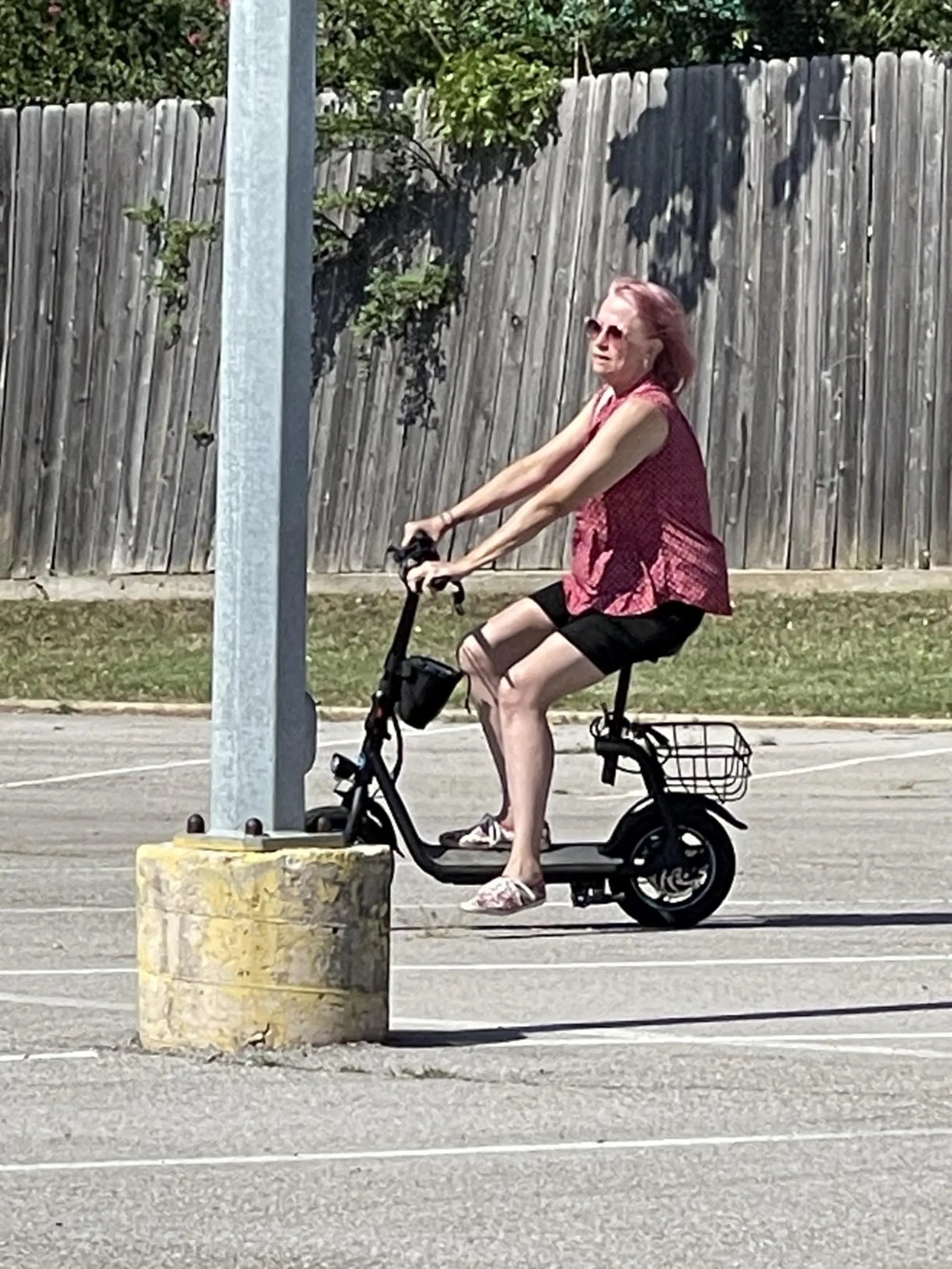
Introduction: Understanding 60V 2000W E-Bike Performance
How fast does a 60v 2000w ebike go? This is the central question for riders seeking serious power and thrilling acceleration. The straightforward answer is that such a bike represents the upper echelon of consumer electric bicycles, engineered for speed and torque. However, the actual top speed is not a single number but a variable outcome influenced by a complex interplay of physics, engineering, and real-world conditions.
This article will dissect the performance of a 60V 2000W e-bike, moving beyond the basic specs to provide a comprehensive understanding. We will explore the technical meaning of its components, the key factors that determine your real-world speed, and the critical safety and legal frameworks that govern its use. As a leading electric scooter and e-bike brand trusted by over 100,000 riders, Gyroor designs high-power systems like these with a foundational focus on certified safety, durability, and reliable performance.
Decoding the Specs: What 60V and 2000W Really Mean
To understand potential speed, you must first decode the core specifications. The 60V (volts) refers to the nominal voltage of the battery system. Think of voltage as the electrical pressure or potential in the system. A higher voltage like 60V allows for more efficient power transfer over the wiring, reduces energy loss as heat, and enables the use of a more powerful motor without requiring excessively high current. It's the foundation that makes high performance possible.
The 2000W (watts) rating describes the motor's nominal power output. Wattage is a direct measure of the motor's ability to do work—specifically, its power for acceleration and hill climbing. A 2000W motor delivers substantial torque, allowing the bike to launch quickly from a stop and maintain speed on steep inclines where a lower-wattage motor would struggle. It's the engine's muscle.
Contrast this with a typical commuter e-bike, which might use a 48V 500W system. The 60V 2000W configuration offers significantly higher voltage and more than triple the motor power. This combination doesn't just incrementally improve performance; it catapults the bike into a different category, where capabilities extend beyond casual commuting to high-speed travel and demanding off-road use.
Key Factors That Determine Your Actual Top Speed
The motor and battery ratings set the stage, but the final speed is dictated by several dynamic factors. Rider weight and cargo are primary influencers. A lighter rider will achieve a higher top speed and better acceleration than a heavier rider on the same bike, as the motor has less mass to propel against wind resistance and rolling friction.
Terrain and incline dramatically affect speed. On a flat, smooth road, the bike can reach its maximum potential. On even a slight uphill, a significant portion of the motor's 2000W output is diverted to fighting gravity, reducing top speed. Tire pressure and type also play a role; under-inflated or knobby off-road tires create more rolling resistance than slick, high-pressure road tires.
Environmental conditions like headwinds impose a major drag force, forcing the motor to work harder to maintain pace. The battery's state of charge is crucial; a fully charged 60V battery delivers optimal voltage and power, while a depleted battery will see voltage sag under load, reducing available power and top speed. Finally, the electronic speed controller (ESC) programming is the ultimate gatekeeper, often limiting top speed for safety and legal compliance.
Real-World Speed Expectations: Data and Comparisons
So, how fast does a 60v 2000w ebike go in practical terms? Under ideal conditions—a flat paved surface, an average-weight rider (approx. 170 lbs / 77 kg), fully charged battery, and minimal wind—you can expect a real-world top speed range of 28 mph (45 km/h) to 40+ mph (65+ km/h). Many production models are software-limited to 28 mph or 32 mph to comply with local e-bike classifications, but the underlying hardware is capable of higher outputs.
To contextualize this performance, it's helpful to compare it with other common e-bike power classes. The following table illustrates typical speed ranges across different configurations, assuming similar rider and terrain conditions.
| Motor & Battery Configuration | Typical Top Speed Range | Primary Use Case |
|---|---|---|
| 36V 250W (EU Standard) | 15 - 20 mph (25 - 32 km/h) | Urban Commuting (Pedal-Assist Focus) |
| 48V 500W | 20 - 25 mph (32 - 40 km/h) | General Commuting & Leisure |
| 48V 1000W | 25 - 32 mph (40 - 52 km/h) | Performance Commuting, Light Off-Road |
| 60V 2000W | 28 - 40+ mph (45 - 65+ km/h) | High-Speed Travel, Off-Road, Performance |
| 72V 3000W+ | 40 - 55+ mph (65 - 88+ km/h) | Electric Motorcycle / Moped Territory |
This comparison shows that a 60V 2000W e-bike occupies a powerful middle ground, offering motorcycle-like speeds while often retaining an e-bike form factor. Its performance significantly outpaces standard commuter bikes, providing a thrilling and highly capable ride.
The Role of the Controller and Speed Modes
The Electronic Speed Controller (ESC) is the intelligent hub managing power between the battery and motor. It regulates current flow, implements safety cut-offs, and, critically, enforces speed limits. Most e-bikes, including high-performance models from Gyroor, feature multiple riding modes (e.g., Eco, Sport, Turbo).
In Eco mode, the controller restricts power output to maximize range, often capping speed well below the motor's capability. Sport mode unlocks more power and a higher speed limit, typically around 28-32 mph. Turbo or unrestricted modes may allow the motor to draw its full 2000W, approaching its mechanical top speed. Using the appropriate mode is not just about speed; it's crucial for managing battery range and ensuring safe operation for the riding environment.
Safety, Legality, and Responsible Riding
The impressive speed of a 60V 2000W e-bike brings serious responsibility. Legally, these bikes often fall into a gray area. In the United States, for example, a federal three-class system defines e-bikes. Class 3 e-bikes, which provide assist up to 28 mph, are the fastest generally allowed on bike paths and roads without registration. A bike capable of sustained 35-40 mph propulsion solely via its throttle may be classified as a moped or even a motorcycle, requiring registration, insurance, a license, and being prohibited from bicycle infrastructure.
Safety gear is non-negotiable at these speeds. A standard bicycle helmet is insufficient. Riders should invest in a full-face motorcycle helmet, durable gloves, armored jackets or pads, and sturdy footwear. The kinetic energy in a crash at 35 mph is over double that of a crash at 25 mph, making proper protection critical.
This is where engineering quality becomes a safety feature. A bike built for these speeds requires a robust frame, high-performance hydraulic disc brakes for reliable stopping power, and quality suspension to maintain control. Gyroor integrates these elements, ensuring the vehicle's dynamics match its powertrain's capabilities.
Why Gyroor's Engineering Matters for High-Power Rides
When operating at the limits of e-bike performance, component reliability is paramount. Gyroor's approach to engineering high-power e-bikes focuses on certified safety and durability. The use of UL-certified lithium-ion battery packs is a cornerstone. These batteries undergo rigorous testing for stability, ensuring they can handle the high discharge rates demanded by a 2000W motor without risk of overheating or failure, which is a critical concern with uncertified power sources.
Furthermore, an IPX5 water-resistant rating on key components protects the electrical system from water jets from any direction. This is essential for a performance bike that might encounter puddles, rain, or wet terrain, preventing short circuits and corrosion. This durability is backed by a 1-year comprehensive warranty, providing riders with confidence that their high-performance investment is supported. This combination of certified batteries, water resistance, and strong warranty coverage builds a foundation for safe, reliable high-speed riding.
Maximizing Performance and Range on a 60V 2000W E-Bike
Owning a high-power e-bike involves balancing the thrill of speed with practical range management. There is a direct, inverse relationship between speed and range. Aerodynamic drag increases with the square of speed, meaning riding at 40 mph consumes battery power much more than twice as fast as riding at 20 mph. While a large-capacity battery on a 60V system might offer 40-60 miles of range at moderate speeds, consistently riding at top speed can reduce that to 15-25 miles.
To maximize both performance and longevity, adhere to a simple maintenance routine. Keep tires inflated to the manufacturer's recommended PSI to minimize rolling resistance. Regularly check and adjust brake pads to ensure consistent, powerful stopping ability, which is vital for high-speed safety. Keep the chain (if present) clean and lubricated, and periodically check all bolt tightness, especially on the stem, handlebars, and wheels, as vibrations at high speed can loosen components.
For battery care, avoid consistently draining it to 0%. Try to recharge when it reaches 20-30% capacity. Store the bike and battery in a cool, dry place, and use only the provided charger. These habits help preserve the battery's health over its 500+ charge cycle lifespan, ensuring it continues to deliver the full 60V potential needed for peak performance.
Frequently Asked Questions (FAQ)
Q: Is a 60V 2000W e-bike legal on public roads and bike paths?
A: It depends entirely on local laws. In many regions, e-bikes are limited by class (often to 20 mph or 28 mph with motor assist). A 60V 2000W bike often exceeds these limits, especially if using a throttle. It may be restricted to private property or require registration and licensing as a motor vehicle. Always check your specific city, state, and country regulations before riding on public thoroughfares.
Q: How far can I ride on a single charge at top speed?
A: Range plummets at top speed. While such a bike with a large battery (e.g., 20Ah) might achieve 30-50 miles at a moderate 20-25 mph, consistently riding at 35-40 mph may reduce the effective range to 15-25 miles. The battery's Amp-hour (Ah) rating, combined with your speed, weight, and terrain, determines the exact range.
Q: Can I make my e-bike go faster by modifying or "unlocking" it?
A: We strongly advise against modification. Tampering with the controller, wiring, or firmware to remove speed limiters can void the manufacturer's warranty (like Gyroor's 1-year coverage), overload motor and battery components leading to premature failure or fire risk, and compromise the safety of the UL-certified battery system. It also creates significant legal and liability issues.
Q: What kind of maintenance is required for a high-power e-bike?
A>Beyond standard bicycle maintenance (tire pressure, chain lubrication, brake adjustment), high-power e-bikes demand extra attention to load-bearing components. Regularly inspect the frame for stress, ensure all electrical connections are secure and free of corrosion, and monitor brake pad wear closely, as high speeds require more frequent braking power. Always follow the manufacturer's maintenance schedule.
Q: How does a 60V 2000W e-bike handle hills?
A: This is where its high wattage shines. The 2000W motor provides exceptional torque, allowing it to climb steep hills that would stall lower-powered e-bikes. While your top speed will decrease on an incline, the bike will maintain a much higher climbing speed than a 500W or 1000W model, often conquering grades of 15-20% or more with ease, depending on gearing and rider weight.
Conclusion: Power, Speed, and Smart Riding
A 60V 2000W e-bike is a formidable machine, offering a blend of exhilarating speed and robust torque that redefines personal electric transportation. Understanding how fast a 60v 2000w ebike goes requires looking past peak numbers to the factors of weight, terrain, and controller settings that shape your real-world experience. More importantly, harnessing this power demands respect for safety gear, adherence to local laws, and a commitment to proper maintenance.
Choosing a bike from a brand that prioritizes engineering integrity—like Gyroor, with its UL-certified batteries, IPX5 water resistance, and comprehensive warranty—ensures that your high-performance adventures are built on a foundation of reliability and safety. This powerful category of e-bike opens up new possibilities for commuting, adventure, and recreation, but its true potential is unlocked only through informed and responsible riding.
Ready to experience engineered high-performance? Explore the full range of powerful and reliable electric scooters and e-bikes designed for demanding riders. Browse the full Gyroor collection at gyroorboard.com to find the model that matches your need for speed, range, and durability.
How Long Does It Take to Charge an E-Bike Battery: A Complete Guide
Ebike Front Wheel: The Complete Guide to Safety, Performance & Selection