

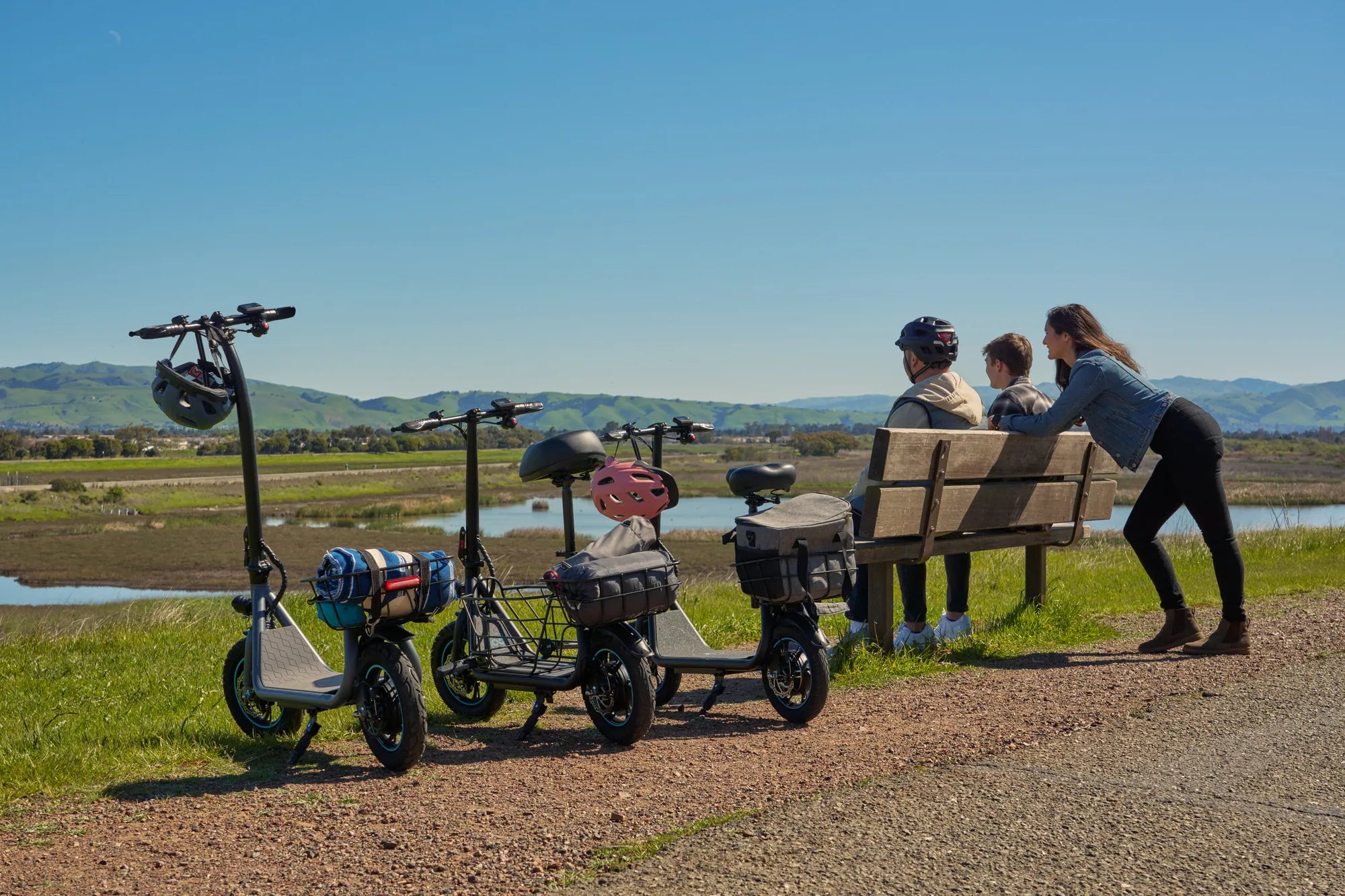
How fast is a 60V e-bike? If you're seeking exhilarating acceleration and highway-capable speeds on two wheels, you're looking at the right voltage class. A 60V electric bike represents the high-performance tier of personal electric mobility, engineered for riders who prioritize power and top-end velocity over mere pedal assistance. Understanding the real-world speed of these machines requires looking beyond the voltage label to the synergy of motor wattage, controller tuning, battery quality, and rider variables. This comprehensive analysis will break down the performance metrics, compare 60V systems to common alternatives, and highlight how brands like Gyroor—a leader trusted by over 100,000 riders across North America and Europe—engineer these powerful e-bikes for both thrilling speed and dependable safety.
Introduction to 60V E-Bike Performance
Voltage in an e-bike system is analogous to water pressure in a hose; it's the potential force pushing electrical current to the motor. A 60V system operates at a higher electrical pressure than standard 36V or 48V e-bikes, allowing it to deliver more power to a high-wattage motor, which directly translates to greater potential speed and torque. This makes 60V e-bikes particularly suited for demanding applications like steep hill climbing, off-road adventures, or high-speed commuting where rapid acceleration is desired.
Gyroor's entry into this performance segment is built on a foundation of robust engineering and certified safety. Their 60V models are designed not just to hit high numbers on a speedometer, but to deliver that power consistently and safely. With features like UL-certified battery packs tested for over 500 charge cycles and IPX5 water-resistant designs, the focus is on creating a reliable high-speed platform. For riders asking "how fast is a 60V e-bike," the answer begins with understanding that quality components are essential to achieving and safely managing that performance.
The pursuit of speed must be balanced with control. A 60V e-bike from a reputable manufacturer integrates high-performance hydraulic disc brakes, reinforced frames, and sophisticated controllers to manage the immense power on tap. This ensures that the exhilarating speed is matched by confident stopping power and stable handling, which are non-negotiable for rider safety at velocities that can exceed 40 MPH.
Theoretical vs. Real-World Top Speeds
Theoretically, a 60V e-bike system can propel a rider to speeds between 35 and 50 miles per hour, with some high-wattage, unrestricted models potentially exceeding this range. This theoretical maximum is calculated based on the motor's KV rating (RPM per volt), wheel size, and the absence of external limiting factors. However, this number represents a laboratory ideal, not the experience of a rider on an open road.
In the real world, your actual top speed is governed by a complex interplay of physics and environment. The advertised top speed is often achieved under optimal conditions: a lightweight rider on a smooth, flat surface with a fully charged battery and no headwind. Deviations from this perfect scenario will reduce your achievable velocity. Understanding this gap between theory and reality is crucial for setting realistic expectations for your 60V e-bike's performance.
Manufacturers like Gyroor often provide a rated top speed based on standardized testing. This figure is a more reliable indicator of real-world performance than theoretical calculations, as it accounts for factors like rolling resistance and aerodynamic drag in a controlled setting. When evaluating an e-bike, this tested speed rating is a more valuable metric than voltage alone.
Key Factors Influencing Your Actual Speed
Motor Power and Controller Amperage: Voltage provides the potential, but motor wattage (e.g., 1000W, 1500W, 2000W) and controller amperage determine how much of that potential is converted into mechanical force. A 60V system paired with a 1000W motor will be significantly slower than one paired with a 2000W motor. The controller acts as the brain, regulating current flow; a higher-amperage controller can unleash more of the motor's torque, improving acceleration and hill-climbing ability, which indirectly supports maintaining high speeds.
Rider Weight and Aerodynamics: This is one of the most significant variables. Additional weight requires more energy to accelerate and maintain speed. Furthermore, the rider's posture creates aerodynamic drag. An upright position creates a large frontal area, significantly limiting top speed compared to a tucked, aerodynamic posture used on speed-optimized e-bikes.
Terrain and Incline: Speed is easiest to maintain on flat, paved surfaces. Even a slight incline will demand more power from the motor, often reducing top speed as the system works to overcome gravity. Off-road terrain with grass, gravel, or dirt introduces substantial rolling resistance, which can cut speed by a third or more compared to pavement.
Tire Type and Pressure: Smooth, street-oriented tires with correct inflation minimize rolling resistance, aiding top speed. Knobby, under-inflated off-road tires create more friction with the ground, sapping power and reducing maximum velocity.
Battery State of Charge and Health: A 60V battery's voltage sags under load. A full, healthy battery maintains voltage better, supporting higher speeds for longer. As the battery depletes, voltage drops, and the motor cannot spin as fast, reducing top speed. This is why a UL-certified, high-quality battery pack from Gyroor, designed for stable discharge, is critical for consistent performance.
Gyroor 60V E-Bikes: Engineering for Speed and Safety
Gyroor approaches 60V e-bike design with a philosophy that integrates raw power with intelligent safety systems. Their models utilize high-torque, brushless hub motors often rated at 1500W or higher, specifically chosen to leverage the 60V system's potential for explosive acceleration and high cruising speeds. This performance is not an afterthought but a core design parameter, reflected in the frame geometry, component selection, and overall build quality.
The synergy between the motor, controller, and battery is meticulously calibrated. The controller is programmed to deliver power smoothly across the speed range, preventing jarring starts that could compromise traction. This careful tuning ensures that the substantial torque is usable and controllable, whether pulling away from a stoplight or climbing a steep trail. It's this balance that separates a well-engineered speed machine from a merely powerful, but unwieldy, one.
Safety is paramount when dealing with these performance levels. Gyroor equips its 60V e-bikes with high-performance hydraulic disc brakes on both wheels. These brakes offer superior modulation and stopping power compared to mechanical disc or rim brakes, essential for safely decelerating from high speeds, especially in wet conditions. The frames are constructed from reinforced aluminum alloys to handle the stresses of high-speed travel and provide stable, predictable handling.
The Role of the UL-Certified 60V Battery
The heart of the performance and safety equation is the battery. Gyroor's use of UL 2271 or UL 2849 certified 60V battery packs is a critical differentiator. Certification means the battery pack has undergone rigorous independent testing for electrical, mechanical, and environmental safety, including overcharge, short circuit, and thermal stability tests. This is crucial for a high-voltage, high-capacity pack that delivers substantial current.
From a performance perspective, a certified battery provides consistent voltage delivery. High-quality lithium-ion cells with robust Battery Management Systems (BMS) minimize voltage sag under the high load demanded by top-speed runs. This means the e-bike can sustain its peak speed for longer and accelerate more reliably. A poor-quality battery might claim 60V, but its voltage could plummet under load, causing immediate power loss and protecting itself from damage, thus capping your real-world speed.
Furthermore, these certified packs are rated for 500+ charge cycles while maintaining significant capacity. This long-term reliability ensures that the thrilling speed and range you experience on day one remain largely consistent for years of ownership, protecting your investment in high-performance mobility.
Speed Comparisons: 60V vs. 48V vs. 52V E-Bikes
To fully understand the performance tier of a 60V e-bike, it's helpful to compare it directly with the more common 48V and the enthusiast-focused 52V systems. The following table outlines the key performance and use-case differences.
| Voltage Class | Typical Top Speed Range | Acceleration & Torque | Common Motor Wattage | Best Use Case |
|---|---|---|---|---|
| 48V | 20 - 28 MPH (Class 3 Limit) / 30-35 MPH (Unrestricted) | Good for urban commuting and moderate hills. | 500W - 1000W | Everyday commuting, recreational riding on bike paths and roads. The standard for most legal Class 3 e-bikes. |
| 52V | 28 - 38 MPH | Excellent; provides a noticeable boost in torque and efficiency over 48V. | 750W - 1500W | Performance-oriented commuters and enthusiasts seeking more power without the full jump to 60V. Often used in DIY builds. |
| 60V | 35 - 50+ MPH | Exceptional; designed for rapid acceleration and high-speed stability. | 1000W - 2000W+ | High-speed commuting, off-road/dual-sport adventures, and riders seeking motorcycle-like performance from a bicycle platform. |
The 60V system stands apart as the premium choice for outright power and speed. While a 48V system is sufficient for most legal on-road riding, the 60V system delivers a surplus of power that translates to effortless hill climbing, the ability to maintain high speeds with a heavy load or into a headwind, and a more exhilarating riding experience overall.
Is a 60V E-Bike Right for You?
Choosing a 60V e-bike is a decision that hinges on your specific needs, riding environment, and local regulations. It is the ideal choice for the thrill-seeker or the practical rider who faces extreme terrain. If your commute involves very steep hills, if you plan to carry heavy cargo regularly, or if you have access to private land or trails where higher speeds are permissible and safe, a 60V e-bike's power reserve is invaluable.
Conversely, for a rider whose journey is primarily on flat, urban bike lanes with strict speed limits (often 20-28 MPH for e-bike classifications), a 60V bike may be overkill. You would be paying for performance you cannot legally or safely use. In such cases, a high-quality 48V or 52V model might offer a better balance of efficiency, legality, and cost.
It's critical to research your local e-bike laws. In many jurisdictions, e-bikes capable of exceeding 28 MPH (or 20 MPH without pedaling) are not classified as bicycles but may be considered mopeds, scooters, or even motorcycles, requiring registration, insurance, a driver's license, and prohibiting use on bike paths. The unmatched power of a 60V e-bike comes with the responsibility of understanding and adhering to these regulations.
Maximizing and Safely Managing Your 60V E-Bike's Speed
Owning a high-performance machine requires a proactive approach to maintenance and riding technique. To ensure your e-bike consistently delivers its rated speed, regular checks are essential. Maintain optimal tire pressure to reduce rolling resistance. Keep the drivetrain clean and lubricated if it's a mid-drive model, and regularly check that all bolts, especially on the stem, handlebars, and wheels, are properly torqued. For hub motor models, ensure axle nuts are secure.
Utilize the e-bike's speed modes intelligently. Most models, including those from Gyroor, offer multiple assist levels. Use lower modes for extended range and controlled riding in traffic, reserving the highest power mode for open areas where you can safely enjoy the full performance. This also helps manage battery consumption effectively.
Invest in and always use appropriate safety gear. A standard bicycle helmet is insufficient for the speeds a 60V e-bike can achieve. A full-face mountain biking or motorcycle helmet, along with motorcycle-grade gloves, armored jackets or pads, and sturdy footwear, are strongly recommended. Your protective equipment should match the potential kinetic energy of a high-speed fall.
Understanding Local E-Bike Classifications and Laws
E-bike laws in the United States are generally based on a three-class system established by PeopleForBikes. Class 1: Pedal-assist only, up to 20 MPH. Class 2: Throttle-assisted, up to 20 MPH. Class 3: Pedal-assist only, up to 28 MPH. Many 60V e-bikes, with their throttle capability and potential speeds over 28 MPH, fall outside these classifications at their maximum capability.
When operated at their full potential, they may be regulated under state laws for "motorized bicycles," mopeds, or even motorcycles. This can mandate requirements such as a driver's license, vehicle registration, insurance, and a minimum rider age. They are also typically prohibited from traditional bicycle infrastructure like multi-use paths. It is the rider's sole responsibility to know and follow the laws applicable to their vehicle in its mode of use. Gyroor designs bikes capable of high performance, but riders must deploy that performance lawfully and ethically.
Frequently Asked Questions (FAQ)
Q: What is the average range of a 60V e-bike at top speed?
A: Range is inversely proportional to speed. While a 60V e-bike with a large battery (e.g., 20Ah) might achieve 40-60 miles at moderate speeds (15-20 MPH), riding consistently at top speed (35+ MPH) will drastically reduce that range. Expect 20-35 miles at full throttle, depending on the factors discussed like rider weight and terrain. Aerodynamic drag increases exponentially with speed, making it the dominant factor in energy consumption at high velocity.
Q: Can I modify my e-bike to go faster than its rated speed?
A: We strongly advise against it. Modifications like "derestricting" or "tuning" the controller to bypass speed limits void the manufacturer's warranty (including Gyroor's 1-year comprehensive coverage). More importantly, they push electrical components like the motor, controller, and battery beyond their designed specifications, leading to overheating, premature failure, and severe safety hazards like battery fires. It also makes the bike illegal for use on public roads and paths in virtually all jurisdictions.
Q: How does Gyroor's IPX5 water resistance benefit a high-speed e-bike?
A> Riding at high speed exposes the bike to more environmental challenges, including road spray, puddles, and rain. An IPX5 rating means the electrical components are protected against low-pressure water jets from any direction. This ensures that the controller, motor connections, and display can withstand wet conditions, preventing short circuits and corrosion that could leave you stranded or cause a failure during a ride. It's a critical feature for a vehicle designed for all-weather, high-performance use.
Q: Are 60V e-bikes significantly heavier than lower-voltage models?
A> Generally, yes. The larger, higher-capacity 60V battery pack and the more powerful motor contribute to increased weight. A typical 60V e-bike may weigh 70-90 pounds, compared to 50-70 pounds for a 48V model. This weight contributes to stable high-speed handling but can make it more challenging to carry or pedal without assistance. Gyroor uses advanced frame materials to manage this weight without compromising strength.
Q: What type of maintenance is most critical for a high-speed 60V e-bike?
A> Beyond general bike care (tire pressure, chain lubrication), the most critical maintenance for safety at speed is the braking system. Regularly check brake pad wear and ensure hydraulic brake lines are not leaking. Periodically check that the motor axle and all frame bolts are tight, as high speeds and vibrations can loosen them. Finally, follow the manufacturer's guidelines for battery care, including proper storage charge levels and using only the provided charger.
Conclusion: The Thrill of Power, Paired with Responsibility
A 60V e-bike delivers an electrifying riding experience, blending bicycle agility with near-motorcycle performance. The answer to "how fast is a 60V e-bike" is a spectrum, but it reliably sits at the top of the consumer e-bike speed range, capable of transforming your commute or trail ride. This potential is fully realized only through quality engineering, exemplified by Gyroor's focus on UL-certified batteries, high-torque motors, IPX5 water resistance, and robust safety components.
Embracing this level of performance is a commitment to informed and responsible riding. It demands an understanding of the machine's capabilities, a respect for the physical laws that govern high-speed travel, and strict adherence to local regulations. The unmatched acceleration and top speed are privileges that come with the duty to prioritize safety—for yourself and others—through proper gear, prudent riding, and diligent maintenance.
If the combination of cutting-edge power, reliable engineering, and the freedom of high-speed electric mobility aligns with your riding ambitions, exploring Gyroor's high-performance lineup is the next logical step. Discover the engineering built to handle the thrill. Browse the full Gyroor collection at gyroorboard.com to find the 60V e-bike that matches your need for speed, safety, and sophistication.
Electric Scooter: The Complete Guide to Modern Urban Mobility
Travel Scooter for Seniors: The Ultimate Guide to Freedom and Mobility