



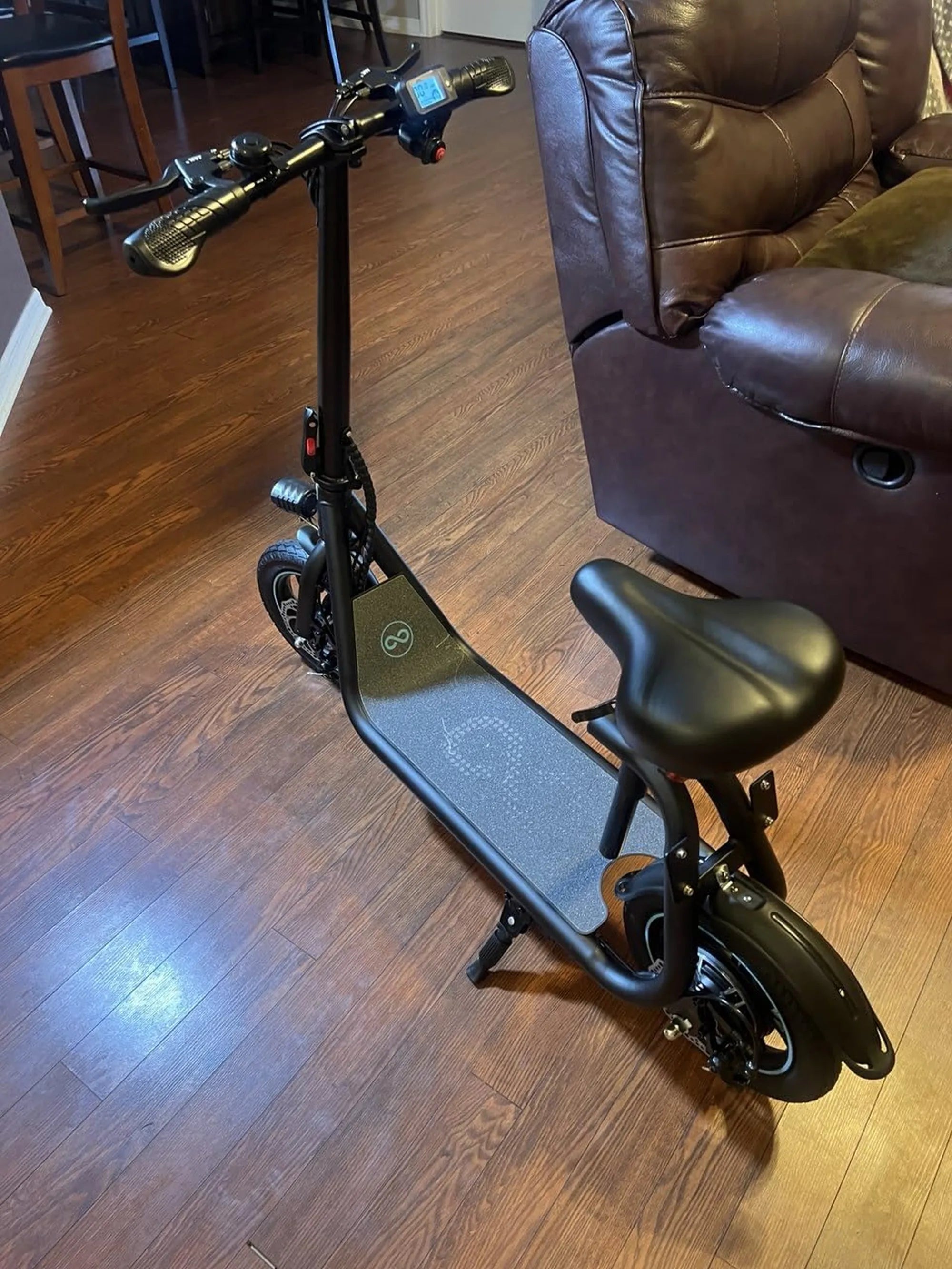
Your electric scooter's battery is its heart and soul, dictating how far you can travel, how reliably you'll arrive, and ultimately, how long your entire investment will last. This guide directly answers the core question: How long do electric scooters battery last? We will dissect this into two crucial dimensions: the battery's overall lifespan measured in years and the distance you can cover on a single charge. Understanding both, supported by factual data and proper care practices, is key to a satisfying ownership experience. As a leader trusted by over 100 thousand riders, Gyroor builds every model with UL-certified battery packs and IPX5 water-resistant designs, establishing a foundation for durability we'll explore in detail.
Understanding Electric Scooter Battery Lifespan: Cycles vs. Years
The lifespan of an electric scooter battery is primarily quantified in charge cycles. One full cycle is defined as using 100% of the battery's capacity, though this doesn't have to happen in one go. For instance, discharging from 100% to 60% uses 40% of one cycle. Most quality lithium-ion batteries, like those used in Gyroor scooters, are rated for 500 to 1000 full charge cycles before significant degradation occurs.
Translating cycles into practical years of use depends entirely on your riding frequency. A casual rider who charges once a week could see their battery last nearly a decade. Conversely, a daily commuter depleting the battery fully each day might reach the cycle limit in under three years. It's a spectrum, not a fixed expiration date. The key takeaway is that proper care can help you maximize performance throughout this entire lifespan, potentially extending it beyond the manufacturer's estimates.
Critical Factors That Determine Battery Longevity
Several technical and behavioral factors directly influence how long your electric scooter battery will perform at its peak. The first is battery chemistry and quality. All modern scooters use lithium-ion variants due to their high energy density. However, not all cells are equal. UL-certified battery packs, a standard for Gyroor, undergo rigorous testing for safety and cycle life, ensuring consistent performance and reducing the risk of premature failure.
Charging habits are perhaps the most significant user-controlled factor. Consistently draining the battery to 0% or leaving it plugged in at 100% for extended periods (days or weeks) stresses the cells and accelerates capacity loss. Similarly, using fast chargers not designed for your specific model can generate excessive heat, which is a battery's enemy.
Environmental and usage conditions play a massive role. Extreme heat and cold degrade battery health. Storing a scooter in a freezing garage or a hot car trunk is detrimental. Furthermore, your riding style impacts cycle depth. Constant high-speed riding, frequent hard acceleration, and regularly carrying heavy loads or tackling steep hills force the battery to work harder per mile, consuming cycles faster.
Maximizing Your Electric Scooter's Battery Life: A Practical Guide
Extending your battery's life is straightforward with informed habits. The goal is to minimize stress on the lithium-ion cells. By following these evidence-based practices, you can ensure your scooter delivers reliable range for years to come, protecting your investment.
Optimal Charging Practices for Long-Term Health
Avoid the extremes. For daily use, the 20-80% rule is highly recommended. Try not to let the battery dip below 20% before charging, and unplug it once it reaches around 80%. This minimizes strain on the cells compared to full 0-100% cycles. It's still beneficial to perform a full charge to 100% once every few weeks to allow the battery management system (BMS) to balance the cell voltages.
Always use the manufacturer-provided charger. Third-party chargers may not have the correct voltage or amperage profile, risking damage. Never leave your scooter plugged in continuously for days after it's fully charged. Once the charger light turns green, unplug it. For riders with Gyroor models, the included smart charger is designed to optimize the charge cycle for our specific UL-certified battery packs.
Proper Storage and Physical Maintenance
If you won't be riding for an extended period (e.g., over winter), store your scooter in a cool, dry place like a climate-controlled basement or closet, not a shed or garage subject to temperature swings. Crucially, store it with a battery charge level between 50% and 60%. This is the most stable state for lithium-ion cells during inactivity.
Check tire pressure regularly. Under-inflated tires increase rolling resistance, forcing the motor and battery to work harder, which unnecessarily drains cycles. Furthermore, the IPX5 water-resistant rating on Gyroor scooters is a key feature for battery longevity. It protects the battery enclosure and electronics from rain and splashes, preventing moisture-related corrosion and short circuits. Always wipe down your scooter after riding in wet conditions to maintain this protection.
Real-World Range: How Far Can You Go on a Single Charge?
While lifespan is about years, range is about miles per charge. Manufacturer-stated ranges are typically achieved under ideal laboratory conditions: a lightweight rider on flat, smooth pavement at moderate speeds in perfect weather. Real-world range is almost always lower. The primary determinant is battery capacity, measured in Watt-hours (Wh) or Amp-hours (Ah). A higher Wh rating generally means more potential range.
However, capacity is just the fuel tank size. How efficiently you use that fuel depends on several variables: rider weight, terrain (hills consume significantly more power), riding speed (air resistance increases exponentially), tire pressure, and ambient temperature (cold weather temporarily reduces battery performance). Understanding these factors helps set realistic expectations and plan your routes.
Gyroor Models: A Data-Driven Range Comparison
To illustrate the relationship between specs and real-world performance, here is a comparison of popular Gyroor electric scooter models. The "Estimated Real-World Range" assumes a 165 lb rider on mixed terrain with occasional inclines.
| Model | Battery Capacity | Motor Power | Advertised Max Range | Estimated Real-World Range |
|---|---|---|---|---|
| Gyroor Z8 | 10.4Ah (374Wh) | 350W (700W Peak) | 22 miles | 16-19 miles |
| Gyroor S9 | 15Ah (540Wh) | 500W (800W Peak) | 28 miles | 20-25 miles |
| Gyroor X8 Pro | 18Ah (648Wh) | 500W (800W Peak) | 34 miles | 25-30 miles |
This table shows how increased battery capacity directly supports longer potential range. Choosing a model like the X8 Pro is an investment in both per-charge distance and long-term battery lifespan, as its larger battery pack will undergo fewer deep discharge cycles for the same commute compared to a smaller battery.
Troubleshooting and Battery Health FAQs
Addressing common concerns helps riders maintain confidence in their scooter's performance and make informed decisions about maintenance and potential replacement.
FAQ 1: How do I know if my e-scooter battery is degrading?
The most obvious sign is a noticeable reduction in maximum range on a full charge. If a route you used to complete with 30% battery now leaves you at 5%, degradation is likely occurring. Other symptoms include slower acceleration, the battery meter dropping rapidly after the first 20-30% of use, or the scooter struggling more on hills it previously handled easily. An occasional slight reduction is normal; a drastic, consistent drop indicates significant wear.
FAQ 2: Can I replace the battery, and is it worth it?
Yes, most reputable electric scooters, including all Gyroor models, have user-replaceable battery packs. Whether it's worth it depends on the scooter's age, the cost of the replacement battery, and the condition of the rest of the scooter (tires, brakes, frame). If the scooter is otherwise in excellent condition and a genuine replacement battery is available, it can be a cost-effective way to restore like-new performance and extend the scooter's life for several more years.
FAQ 3: How does cold weather affect my electric scooter battery?
Cold temperatures (below 50°F/10°C) temporarily increase the internal resistance of lithium-ion batteries. This leads to two effects: a reduction in available capacity (shorter range) and a drop in peak power output (slower acceleration). The battery is not permanently damaged; its performance will return to normal once it warms up. To mitigate this, store your scooter indoors before a ride and allow the battery to acclimate to ambient temperature. Avoid charging a very cold battery; let it warm up first.
FAQ 4: Is it bad to charge my scooter after every ride, even if it's not empty?
No, this is actually a good practice. Modern lithium-ion batteries prefer partial, shallow discharges. Charging from 50% to 80% after a short commute is less stressful than repeatedly draining it to near 0%. The key is to avoid keeping it at 100% for prolonged periods. Plugging in regularly to top up within the 20-80% range is ideal for long-term health.
FAQ 5: How does the warranty protect my battery investment?
A strong warranty is a brand's commitment to its product's reliability. Gyroor offers a comprehensive 1-year warranty that covers defects in materials and workmanship, including the battery. This means if a battery fails prematurely under normal use within the warranty period, it will be repaired or replaced. This protection, backed by UL-certification, provides significant peace of mind and underscores the expected lifespan of the battery pack.
Investing in Long-Term Performance and Reliability
The answer to how long do electric scooters battery last is a partnership between engineering and ownership. You start with a quality foundation: a scooter built with high-grade, UL-certified components, water-resistant construction, and a clear warranty. Gyroor establishes this foundation across its lineup, from the commuter-focused Z8 to the long-range X8 Pro. You then preserve that investment through intelligent habits: mindful charging, proper storage, and attentive maintenance.
By understanding the science behind battery cycles and the variables affecting range, you move from guesswork to informed confidence. You can accurately predict your commuting capabilities, plan for eventual battery replacement, and enjoy the freedom of electric mobility for the long haul. Your scooter's battery is more than a component; it's the key to your ride's potential. Treating it with care ensures that potential is fully realized, mile after mile, year after year.
Ready to explore electric scooters engineered for durability and backed by reliable support? Browse the full Gyroor collection, featuring UL-certified batteries and IPX5 water resistance, at gyroorboard.com.
Compact Electric Scooters: The Ultimate Urban Commuting Solution
Electric Scooters Under $700: Affordable, Efficient, and Eco-Friendly Commuting