



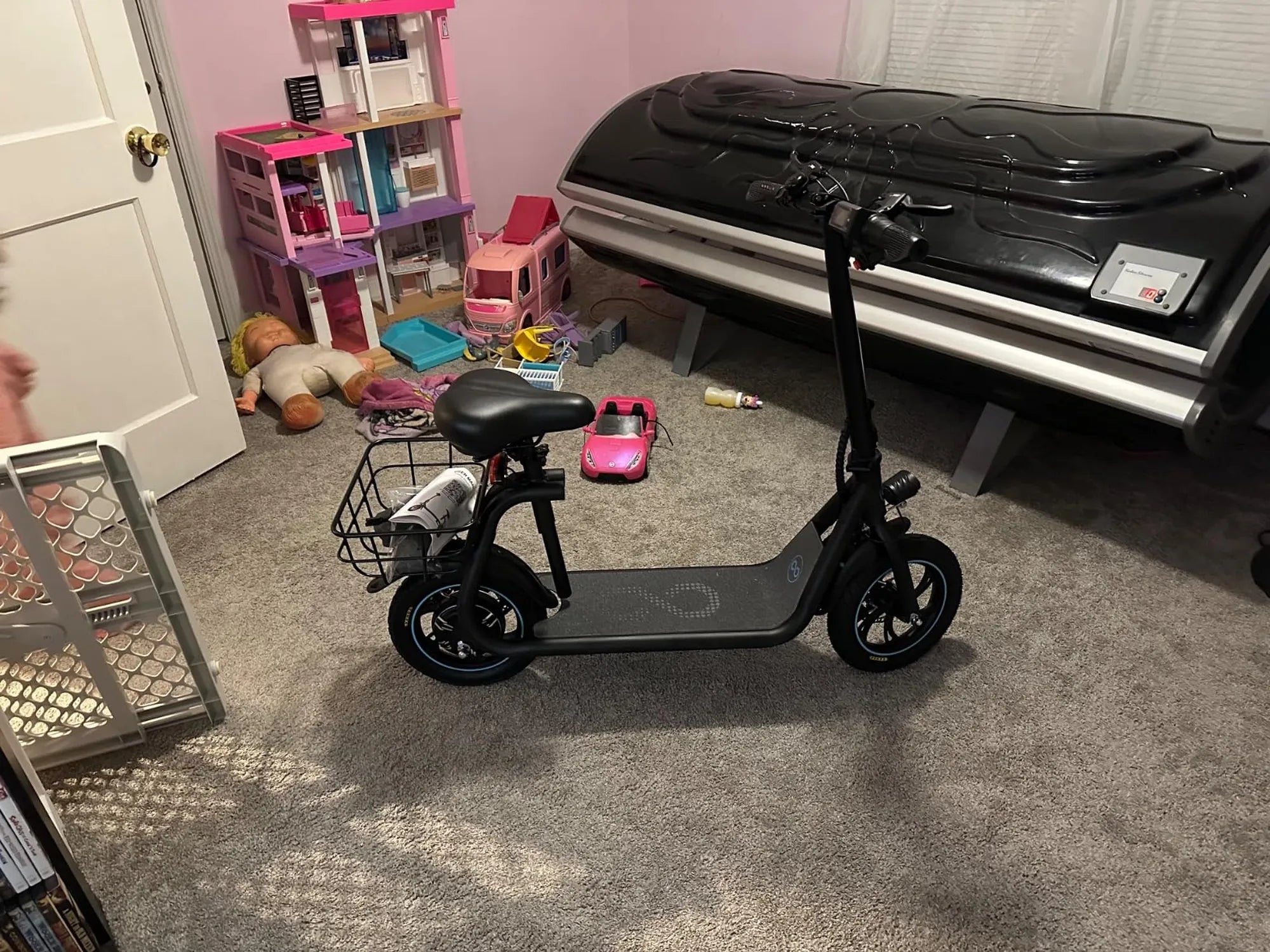
Understanding the Heart of Your E-Scooter
How long do electric scooters stay charged? This is the most critical question for any rider, as the battery is the literal lifeblood of your vehicle. The answer isn't a single number but a dynamic equation influenced by engineering, environment, and riding habits. Understanding this equation is the difference between confidently reaching your destination and an unexpected push home.
This guide will demystify electric scooter battery life, separating marketing claims from real-world performance. We'll explore the core technical factors, provide actionable data, and deliver expert maintenance strategies. With over 100,000 riders trusting brands like Gyroor for their UL-certified battery safety and reliable performance, we'll ground this discussion in practical engineering that prioritizes both range and long-term durability.
The Core Factors That Determine Your E-Scooter's Battery Life
Battery life per charge is a product of several interacting variables. Mastering these factors allows you to predict and optimize your scooter's performance for any journey.
Battery Capacity: The Fuel Tank (Measured in Watt-hours)
The foundational metric is battery capacity, measured in Watt-hours (Wh). Think of this as your scooter's fuel tank size. It's calculated by multiplying the battery's voltage (V) by its amp-hour rating (Ah). A higher Wh rating means more energy stored and, all else being equal, a longer potential range.
Many manufacturers list only voltage and amp-hours. For accurate comparison, always calculate or look for the Wh figure. For instance, Gyroor clearly states capacities like 468Wh for its C1 Pro model, providing a transparent benchmark for riders to assess expected performance against their daily commute needs.
The Rider's Weight and Riding Style
Physics plays a direct role. Heavier riders require more energy to accelerate and maintain speed, which reduces range. More impactful than weight alone is riding style. Aggressive, stop-start riding with rapid acceleration and hard braking consumes far more power than smooth, consistent cruising.
Anticipating traffic flow and using a moderate, steady pace is the single most effective rider-controlled method to extend range. The energy required for acceleration is disproportionately high, so maintaining momentum is key.
Terrain and Road Conditions
Terrain is a massive factor. Riding on flat, smooth pavement is the most efficient condition. Even a slight incline dramatically increases motor load and energy draw. Hilly routes can easily cut your range by 30-50%.
Similarly, soft or uneven surfaces like gravel, grass, or poorly maintained asphalt increase rolling resistance. The motor must work harder to maintain speed, silently draining your battery faster than you might anticipate when planning your route.
Ambient Temperature and Weather
Lithium-ion batteries, which power nearly all modern e-scooters, are sensitive to temperature. Cold weather (below 50°F or 10°C) temporarily reduces their chemical efficiency, leading to a noticeable drop in available range and power. The battery isn't damaged, but its performance is inhibited until it warms up.
Extreme heat, however, can cause long-term damage. Storing or charging a scooter in direct sunlight or a hot garage can degrade battery cells. Ideal operation and storage occur in moderate, room-temperature conditions.
Tire Pressure and Mechanical Maintenance
Often overlooked, tire pressure is a silent range killer. Under-inflated tires create excessive rolling resistance, forcing the motor to expend extra energy. Regularly check and maintain tires at the manufacturer's recommended PSI.
General maintenance matters too. Clean bearings, properly adjusted brakes (so they aren't dragging), and a clean, lubricated drivetrain ensure no wasted energy, allowing every watt from the battery to propel you forward.
Real-World Range: From Spec Sheet to Street
Manufacturer range claims provide a starting point, but real-world conditions tell the full story. Let's translate those ideal numbers into practical expectations.
Decoding Manufacturer Range Claims
Advertised maximum ranges are typically achieved in controlled laboratory conditions: a very light rider (often around 150 lbs), on a perfectly flat surface, at a slow and constant speed (around 10-12 mph), in ideal temperatures. These figures represent a best-case scenario, not an average daily result.
You should view the advertised range as a theoretical ceiling. A practical rule of thumb is to expect 60-75% of the claimed maximum under normal urban commuting conditions. This buffer prevents you from being stranded.
Estimated Range Table by Battery Capacity & Scenario
This table provides a more realistic expectation based on battery capacity and common riding scenarios.
| Battery Capacity (Wh) | Rider Profile & Terrain | Estimated Real-World Range |
|---|---|---|
| 250Wh (Entry-Level) | Light rider (120-160 lbs), flat pavement, moderate speed | 8-12 miles (13-19 km) |
| 350Wh (Mid-Range) | Average rider (160-200 lbs), mixed city streets with mild hills | 12-18 miles (19-29 km) |
| 468Wh (e.g., Gyroor C1 Pro) | Average rider, urban commute with stops, some inclines | 18-25 miles (29-40 km) |
| 500Wh+ (Performance) | Heavier rider (200+ lbs) or aggressive riding on hilly terrain | 15-22 miles (24-35 km)* |
*Note: Even with large batteries, aggressive use reduces range. This illustrates why capacity is just one part of the equation.
The Speed vs. Range Trade-Off
Aerodynamic drag increases with the square of your speed. This means going twice as fast requires more than double the power. Riding at a steady 15 mph can often provide 30-50% more range than consistently pushing the scooter to its top speed of 25+ mph.
If maximizing range is crucial for a long trip, using a lower speed mode or consciously limiting your top speed is the most effective tactic. The energy saved is substantial and can be the difference between completing your journey or not.
Maximizing Your Charge: Pro Tips for Longer Battery Life
Extending battery life involves two goals: maximizing the range per charge (short-term) and maximizing the overall lifespan of the battery pack (long-term). These practices address both.
Smart Charging Habits for Long-Term Health
Lithium-ion batteries experience the least stress when kept between 20% and 80% charge. While it's fine to occasionally charge to 100% for a long trip, avoid making a 0%-100% cycle your daily routine. Partial, frequent charges are better for long-term health.
Use the manufacturer's provided charger and unplug the scooter once it's fully charged. Modern smart chargers, like those from Gyroor, switch to a maintenance trickle, but it's still best practice not to leave it plugged in indefinitely after the cycle is complete.
Optimal Storage Practices
If storing your scooter for weeks or months (e.g., during winter), do not store it with a fully charged or fully depleted battery. The ideal storage charge is between 40% and 60%. Store it in a cool, dry place away from direct sunlight or freezing temperatures.
Check the charge level every 1-2 months during long storage and give it a top-up if it drops near 20%. This prevents the battery from entering a deep discharge state, which can cause permanent damage.
Pre-Ride Checklist for Maximum Efficiency
- Tire Pressure: Inflate to the max PSI printed on the tire sidewall for lowest rolling resistance.
- Route Planning: Use maps to find the flattest, smoothest route, even if slightly longer.
- Weight Minimization: Remove any unnecessary items from your backpack or storage.
- Temperature Prep: In cold weather, if possible, store and charge the scooter indoors to start with a warm battery.
Gyroor's Engineering Edge: Built for Reliability and Peace of Mind
Engineering choices at the manufacturing level fundamentally shape battery performance and safety. Brands that prioritize quality components and certifications deliver a more consistent and durable experience.
The Importance of UL-Certified Battery Packs
UL certification is a critical safety and quality benchmark. For a battery pack, it means the cells, wiring, and battery management system (BMS) have undergone rigorous independent testing for fire risk, electrical safety, and consistent performance. It's not just about preventing failure; it's about ensuring the battery delivers its rated capacity safely over hundreds of cycles.
Gyroor's use of UL-certified battery packs means riders get a component tested for 500+ charge cycles with built-in protections against over-charging, over-discharging, short circuits, and temperature extremes. This directly contributes to predictable range and long-term reliability.
How IPX5 Water Resistance Protects Your Investment
Water and electronics are a dangerous mix. An IPX5 water-resistant rating, standard on Gyroor scooters, means the scooter's critical components, including the battery compartment and BMS, can withstand sustained water jets from any direction. This protects against rain, puddle splashes, and wet road conditions.
This protection is vital for battery life because moisture ingress can cause corrosion, short circuits, and cell damage. A water-resistant design ensures the battery operates in a clean, dry environment, maintaining efficiency and preventing one of the leading causes of premature electronic failure.
What the 1-Year Comprehensive Warranty Covers
A strong warranty is a testament to a brand's confidence. Gyroor's 1-year comprehensive warranty explicitly includes the battery, motor, and controller. This provides a direct safety net against premature battery degradation or failure outside of normal wear and tear.
Coupled with US-based customer support, it simplifies the process should an issue arise. This peace of mind is invaluable, ensuring your investment is protected and that the promised performance and battery life are backed by a tangible commitment.
Battery Technology Comparison: Understanding the Basics
While lithium-ion dominates, not all packs are created equal. Understanding key terminology helps when comparing models.
| Feature / Technology | What It Means | Impact on Battery Life & Performance |
|---|---|---|
| Battery Management System (BMS) | The onboard computer that monitors and protects the battery. | Prevents over-charge/discharge, balances cells, manages temperature. Essential for safety and longevity. A quality BMS is non-negotiable. |
| Cell Chemistry (e.g., Li-ion, Li-Po) | The specific type of lithium-based chemistry used in the battery cells. | Most e-scooters use standard Lithium-ion (Li-ion) for a good balance of energy density, cost, and cycle life. High-quality, name-brand cells perform more consistently over time. |
| Regenerative Braking | A system that converts some kinetic energy back into battery charge during braking. | Adds a small amount of charge back (typically 3-7%), slightly extending range in stop-and-go traffic. Its primary benefit is often reduced brake pad wear. |
| Charge Cycle Count | The number of full 0-100% charge/discharge cycles a battery is rated for before capacity drops to ~80%. | A higher rated cycle count (e.g., 500+ cycles) indicates a battery designed for longer total lifespan. Proper charging habits can significantly extend the practical cycle count. |
FAQ: Your Electric Scooter Battery Questions, Answered
Q: How long does it take to fully charge an electric scooter?
Charge time depends on battery capacity and charger output. A typical 350-500Wh battery with a standard 2A charger takes 5-8 hours for a full charge. Faster chargers (3A or 4A) can reduce this to 3-5 hours. Always use the charger provided by the manufacturer to avoid damage.
Q: Can I leave my e-scooter charging overnight?
While modern scooters with smart chargers have auto-shutoff features, it is not a best practice. The safest routine is to charge during waking hours where you can unplug it shortly after it reaches 100%. Overnight charging, while convenient, exposes the battery to extended periods at full voltage if any fault occurs.
Q: How many charge cycles will my battery last before needing replacement?
A quality battery pack from a reputable brand is typically rated for 500+ full charge cycles before its capacity degrades to about 80% of its original state. With partial charging habits, you can often exceed this. For a daily commuter, this translates to 2-3 years of reliable service before you might notice a reduced range.
Q: Does regenerative braking really add range?
Yes, but modestly. Regenerative braking recaptures a small percentage of energy during braking, most effectively in hilly areas or frequent stop-and-go traffic. Don't expect it to double your range; think of it as a 5-10% bonus that also reduces mechanical brake wear. Its effectiveness is highly dependent on your riding terrain.
Q: My range has decreased noticeably. What should I do?
First, run through the checklist: ensure tires are fully inflated, check for brake drag, and consider if colder weather has set in. If the issue persists after these checks, it may indicate natural battery wear or a potential BMS issue. Contact the manufacturer's support (like Gyroor's US-based team) if under warranty for diagnostics.
Q: Is it bad to charge my scooter after every ride, even if it's only used a little?
No, it's actually beneficial. Frequent, partial top-ups that keep the battery between 20% and 80% are less stressful on lithium-ion cells than deep discharges followed by full recharges. This practice, known as "shallow cycling," can help extend the overall lifespan of your battery pack.
Empowering Your Ride with Knowledge and Quality
Ultimately, how long your electric scooter stays charged is a partnership between intelligent engineering and informed riding. By understanding the factors of capacity, weight, terrain, and temperature, you can accurately predict range. By adopting smart charging and maintenance habits, you actively extend the life of your investment.
The data shows that real-world range is often 60-80% of advertised claims, a crucial planning metric. Choosing a scooter from a brand that prioritizes foundational quality—like UL-certified batteries, water-resistant construction, and a strong warranty—sets the stage for reliable, long-term performance. This combination of knowledge and quality engineering ensures every ride is powered by confidence.
Ready to explore electric scooters built with this reliable, long-lasting performance in mind? Browse the full Gyroor collection, featuring UL-certified batteries, IPX5 water resistance, and a comprehensive 1-year warranty, at gyroorboard.com.
Fast Electric Scooters for Kids Company: The Ultimate Guide to Safe and Fun Rides
Best Fat Tire Electric Scooters: The Ultimate Guide for Off-Road Adventures