


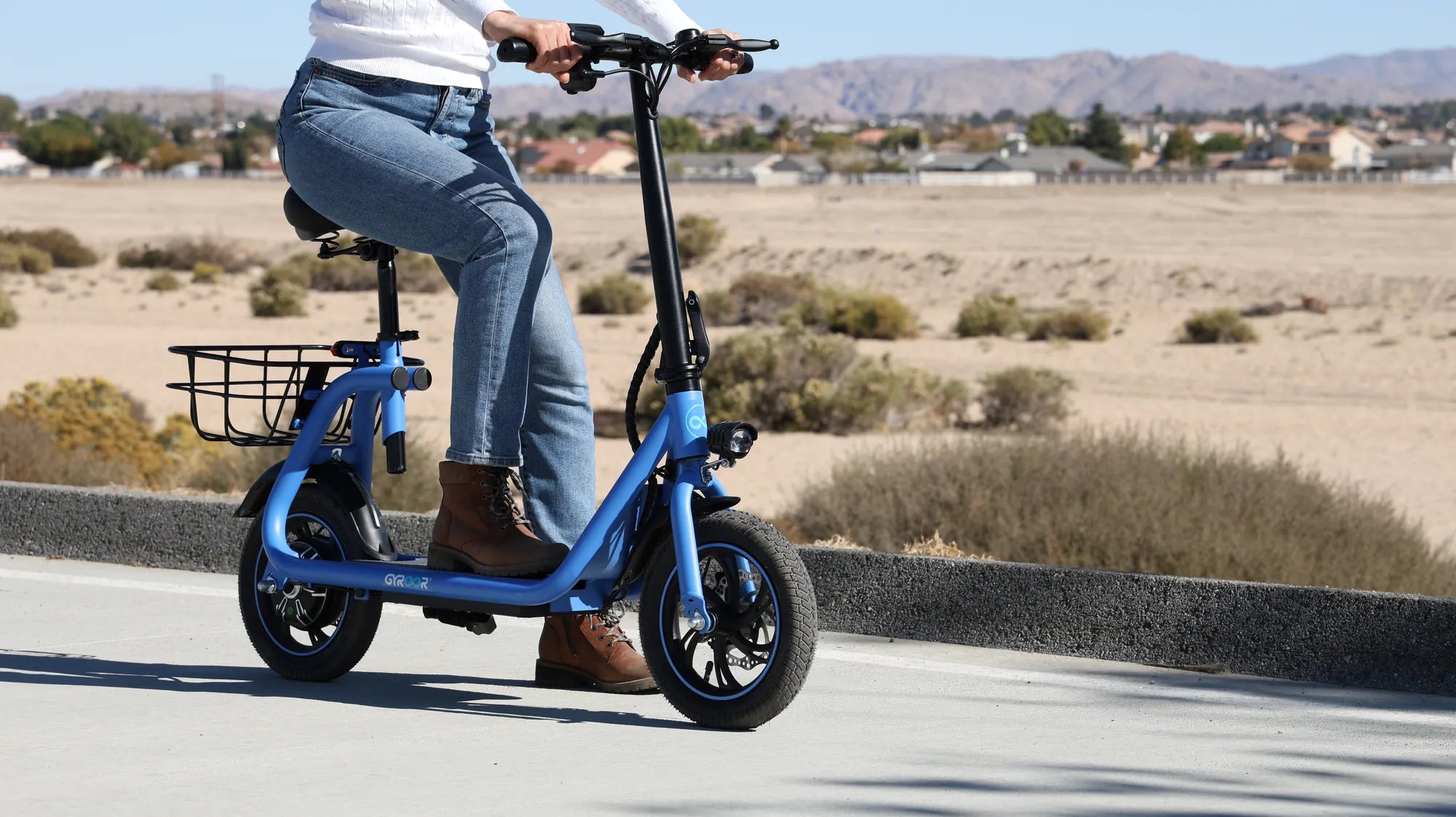
How long does a scooter last? This isn't a simple question with a single number. The lifespan of an electric scooter is measured in both total miles ridden and functional years of service, and it's dictated by a combination of component quality, usage patterns, and maintenance. You'll learn the hard data behind battery degradation, the impact of build materials and terrain, realistic lifespan ranges for different scooter tiers, and a complete maintenance protocol to ensure you get every possible mile from your ride.
The Heart of the Matter: Battery Life and Cycle Count
The battery is the scooter's heart and its primary lifespan determinant. Modern electric scooters use lithium-ion batteries, rated for a specific number of full charge cycles before significant capacity loss. A charge cycle is defined as using 100% of the battery's capacity, which can be a single full drain or multiple partial drains that add up to 100%.
High-quality, UL-certified battery packs, like those used in Gyroor scooters, are engineered for 500 to 800+ full charge cycles while maintaining performance. After this point, the battery may retain 70-80% of its original capacity, gradually reducing your per-charge range. This degradation is normal, but its rate is controlled by quality and care.
What "Battery Cycles" Really Mean for Your Rides
Understanding cycles in practical terms is key. If your scooter has a 15-mile range, one full cycle equals riding 15 miles. If you ride 7.5 miles daily and recharge, that's half a cycle per day. At this rate, a 500-cycle battery would support about 2.7 years of daily commuting before notable range loss. This makes the battery's cycle rating the foundational metric for predicting how long your scooter will deliver satisfactory range.
It's crucial to distinguish between a scooter being "dead" and its battery being depleted. A scooter with a worn battery may still function but with a frustratingly short range. For brands prioritizing durability, like Gyroor, using high-grade, UL-certified cells ensures each cycle is less stressful on the battery, contributing directly to a longer functional lifespan for the entire vehicle.
Maximizing Your Battery's Lifespan: Best Practices
Your charging habits directly influence longevity. Avoid regularly draining the battery to 0%; try to recharge when it hits 20-30%. Similarly, don't leave the scooter plugged in at 100% charge for days on end; prolonged high voltage stresses cells. For long-term storage (over a month), leave the battery at about 50-60% charge in a cool, dry place.
Always use the manufacturer's official charger. Off-brand chargers may deliver incorrect voltage or current, damaging the battery's management system. Extreme temperatures are a major enemy; avoid leaving your scooter in direct summer sun or freezing winter conditions for extended periods, as both heat and cold accelerate battery degradation.
Built to Endure: Frame, Motor, and Component Durability
Beyond the battery, the scooter's physical construction determines its resilience. A frame crafted from aircraft-grade aluminum alloy, like those on Gyroor commuter models, offers an optimal balance of strength and lightweight durability, resisting fatigue from daily vibrations and impacts. The welding quality and design integrity at stress points (stem, deck) are critical for long-term safety.
The motor is another long-life component. Brushless hub motors are standard for their reliability, with few moving parts to wear out. A motor's lifespan is often measured in hours of operation and is heavily influenced by load and heat. A well-sized motor (e.g., a 350W-500W motor for urban commuting) operating within its limits will far outlast an underpowered motor constantly strained on hills.
Weather resistance is a key durability factor. An IPX5 water-resistance rating, a standard for many quality commuter scooters, means the scooter can withstand low-pressure water jets from any direction. This protects vital electronics from rain and road spray, preventing corrosion and electrical shorts that can prematurely end a scooter's life. Regular exposure to moisture without such protection is a major cause of early failure.
The Impact of Terrain and Riding Style on Longevity
How and where you ride is a major variable. Consistently riding on rough, potholed roads or off-road trails subjects the frame, tires, and suspension to constant shock loads, loosening bolts and stressing welds over time. A smooth bike path commute is far less taxing.
Riding style is equally important. Aggressive acceleration and hard braking increase wear on the motor, battery (due to high current draw), brake pads, and tires. Carrying loads consistently at or above the maximum weight limit strains the motor, battery, and frame. A smooth, conservative riding style is the single best practice for maximizing the lifespan of all mechanical and electrical components.
By the Numbers: Expected Lifespan Ranges
Lifespan expectations vary significantly by scooter class, defined by build quality, component specs, and price point. Proper maintenance and average use (smooth terrain, moderate weight) are assumed. The following table provides a realistic overview of how long a scooter lasts across different tiers.
| Scooter Tier | Build & Battery Quality | Expected Mileage Lifespan | Expected Year Lifespan (Avg. Use) | Primary Limiting Factors |
|---|---|---|---|---|
| Budget / Entry-Level | Basic materials, generic battery (300-400 cycles) | 1,000 - 2,000 miles | 1.5 - 3 years | Battery degradation, frame/wheel integrity, component failure. |
| Mid-Range / Commuter (e.g., Gyroor) | Aluminum alloy frame, UL-certified battery (500+ cycles), IPX5 rating | 2,000 - 4,000+ miles | 3 - 5+ years | Gradual battery wear, tire/brake pad replacement, eventual electronic component refresh. |
| Premium / High-Performance | Advanced alloys, high-capacity brand-name battery, full suspension | 3,000 - 6,000+ miles | 4 - 7+ years | Battery replacement cost, wear on complex suspension systems. |
These figures highlight that investing in a scooter with a robust frame and certified battery from a reputable brand directly translates to more miles and years of service. The mid-range commuter category often offers the best longevity value, balancing durability with practicality.
Proactive Care: Maintenance That Extends Your Scooter's Life
Routine maintenance is the owner's direct control over lifespan. A simple, consistent checklist can prevent minor issues from becoming major failures. Think of it like caring for a bicycle with an electrical system; both aspects need attention.
Regular Check-ups: Tire Pressure, Brakes, and Bolts
Tire Pressure: For pneumatic tires, check pressure weekly. Under-inflated tires increase rolling resistance (draining the battery faster), risk pinch flats, and wear out quicker. Inflate to the PSI marked on the tire sidewall. For solid tires, visually check for excessive wear or cracking.
Brakes: Test brake lever responsiveness before every ride. For disc brakes, listen for grinding (pad wear) and ensure the rotor isn't bent. For electronic or drum brakes, be aware of increasing stopping distances. Clean brake surfaces periodically to remove debris.
Bolts and Fasteners: Vibration can loosen critical bolts, especially on the folding mechanism, stem, and handlebars. Every two weeks, use the provided tools to check and gently tighten these fasteners. Do not overtighten, as this can strip threads.
Cleaning: Wipe down the scooter with a damp cloth after riding in wet or dirty conditions. Avoid high-pressure hoses. Keep the charging port cover closed when not in use to prevent moisture and dirt ingress.
When to Seek Professional Service
Some issues require expert attention. If you hear unfamiliar grinding, clicking, or knocking sounds from the motor or wheels, stop riding and investigate. Any electrical fault—like a flickering display, unresponsive throttle, or charger not working—warrants professional diagnosis to prevent further damage.
Brake pad replacement, tire changes (especially on models with internal motor wires), and any internal electrical repair are best left to technicians or the manufacturer's support team. This is where a strong warranty, like Gyroor's 1-year comprehensive warranty backed by US-based support, provides essential peace of mind and protects your investment.
The Role of Warranty and Manufacturer Support
A warranty is a manufacturer's confidence in its product's lifespan. A standard 1-year warranty, like Gyroor's, typically covers defects in materials, workmanship, and core components like the battery, motor, and controller. This protects you from early-life failures. Understanding the warranty terms—what's covered, the claim process, and support accessibility—is crucial when evaluating a scooter's long-term value.
Post-warranty support is equally telling. A brand with a reputation for providing spare parts (batteries, tires, fenders, controllers) and repair guides empowers owners to extend their scooter's life for years. The availability of official replacement battery packs is perhaps the most critical factor for ultimate longevity, allowing a "heart transplant" for the scooter once the original battery degrades.
Comparing Lifespan: Electric Scooters vs. Other Micro-Mobility Options
Context is helpful. How does an e-scooter's lifespan compare to alternatives? A typical city-share bicycle might last 1-2 years under heavy, abusive public use, but a personal e-bike, with its larger battery and sturdier build, can often last 5-8 years with care. Standard kick scooters, with no electronics, can last decades with wheel and bearing replacements.
The electric scooter occupies a middle ground. It offers greater durability and weather resistance than many cheap, plastic-heavy hoverboards. Its lifespan is generally shorter than a high-end e-bike due to smaller components and more exposure to road shocks, but it exceeds that of disposable, ultra-lightweight scooters. For the cost and convenience, a well-built electric scooter offers an excellent balance of service life and utility for urban commuting.
Signs Your Scooter Is Nearing the End of Its Service Life
Recognizing the signs of aging helps you plan. The most common is severely reduced range. If a full charge now provides less than 50% of the original range and a battery replacement isn't cost-effective, the scooter's core utility is gone. Frequent, cascading failures are another sign—if you're constantly fixing brakes, then lights, then the throttle, overall reliability has diminished.
Structural integrity is non-negotiable. Any visible cracks in the frame, especially near the stem or folding mechanism, or excessive play/wobble that cannot be tightened away, indicate a critical safety issue. Finally, consider obsolescence. If replacement parts are no longer available, a single broken proprietary component can render the entire scooter unusable, functionally ending its life.
Investing in Miles and Years of Reliable Riding
So, how long does a scooter last? The answer is a composite of quality, care, and conditions. A scooter built with a UL-certified battery, an aluminum alloy frame, and proper weather sealing, ridden sensibly and maintained regularly, is a durable asset capable of providing thousands of miles of reliable transportation over several years. It represents a sustainable choice for urban mobility when viewed as a long-term investment rather than a short-term gadget. Choosing a brand committed to durability, safety certifications, and customer support is the first and most important step toward maximizing that investment.
Ready to invest in a scooter built to last? Explore the full range of durable, UL-certified, and IPX5-rated electric scooters and e-bikes designed for real-world commuting. Browse the full Gyroor collection at gyroorboard.com and find the model that will be your reliable partner for miles and years to come.
FAQ: Your Electric Scooter Lifespan Questions, Answered
Q: Can I replace the battery to extend my scooter's life?
A: Absolutely. For most quality models, replacing the depleted battery pack with an official, compatible unit is the most effective way to restore original range and extend functional life by several more years. Ensure the new battery is from a reputable source to maintain safety and performance.
Q: Does cold weather permanently damage my scooter?
A> Cold temperatures temporarily reduce lithium-ion battery performance and range, but this is not permanent damage. The key is proper practice: avoid charging a battery that is below freezing, let the scooter warm to room temperature before charging, and store it indoors when not in use during winter.
Q: What usually fails first on an e-scooter?
A: The battery will show capacity degradation first. For physical components, consumables like brake pads and tires (if pneumatic) wear fastest. Throttles, control buttons, and lights can also fail due to moisture ingress or mechanical fatigue before the core motor or frame.
Q: Is it worth repairing an old scooter, or should I just buy a new one?
A: It depends on the repair cost versus replacement value and your attachment to the model. If it's a simple battery or tire swap on a otherwise solid, well-built scooter, repair is cost-effective. If the frame is damaged or multiple complex systems are failing, replacement is often more sensible.
Q: How does weight capacity affect lifespan?
A: Consistently riding at or above the maximum weight limit stresses the motor, battery, brakes, frame, and tires. This accelerated wear can significantly shorten the scooter's overall lifespan. Always adhere to the manufacturer's specified weight limit for optimal durability and safety.
Best Lightweight Mobility Scooter for Travel: The 2024 Guide to Portable Freedom
Meet One Trike for Sale: The Ultimate Guide to Stable, Comfortable E-Mobility