



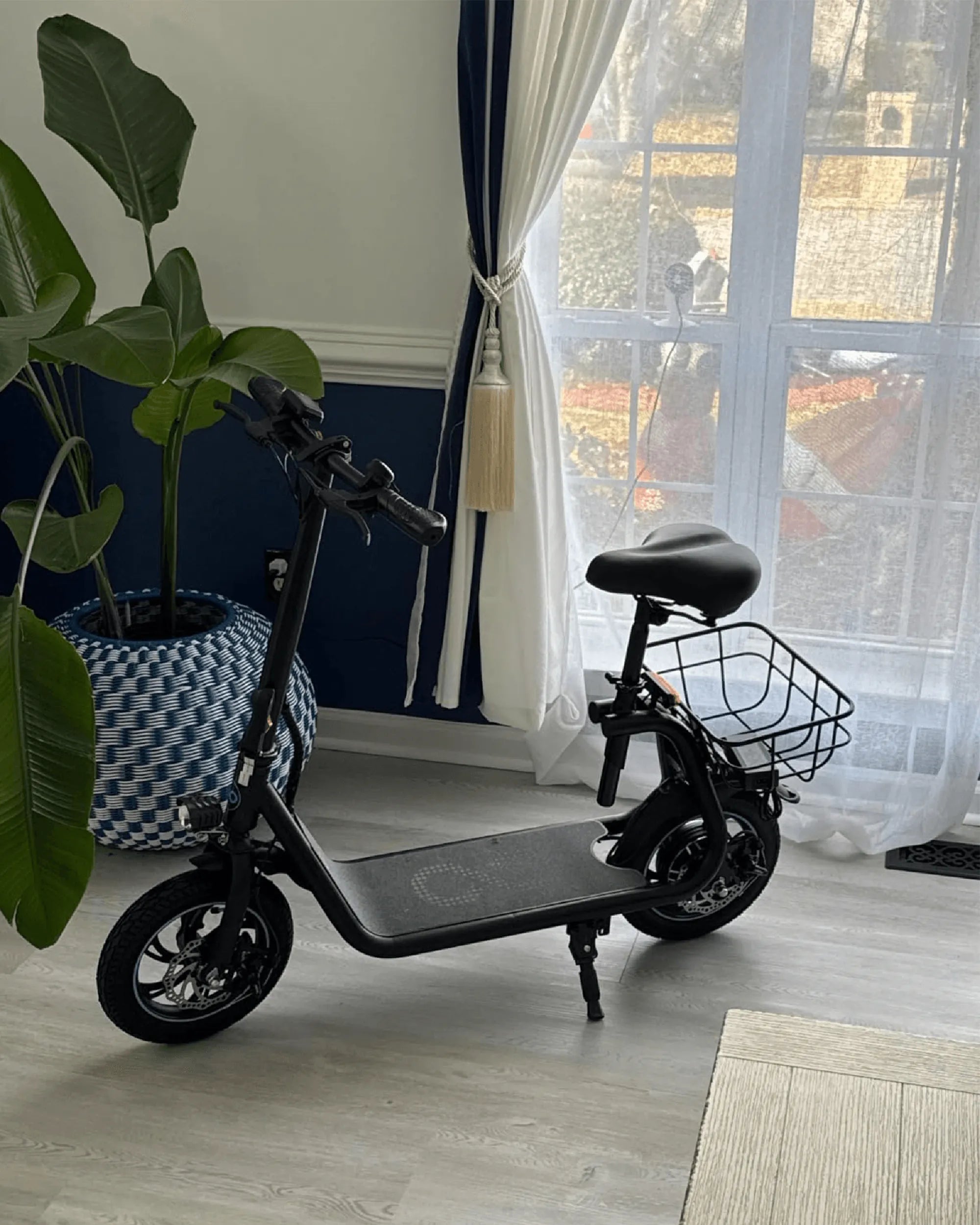
Understanding Your Scooter's Lifespan
How many miles does a scooter last? This is the fundamental question for any rider considering an electric scooter investment. The answer isn't a single number but a variable equation. A scooter's usable life is measured in both total mileage and years of reliable service before major component failure.
Three core pillars determine this lifespan: the scooter's inherent build quality, the consistency of your maintenance, and the conditions in which you ride. Ignoring any one of these can drastically shorten your scooter's journey.
High-quality brands engineer their products for longevity from the start. For instance, Gyroor designs its electric scooters with UL-certified batteries and IPX5 water-resistant construction specifically to endure daily use and extend operational life. This initial quality sets the ceiling for potential mileage.
Understanding this interplay helps you make a smarter purchase and become a more informed owner. Whether you're a daily commuter or a weekend rider, knowing what governs a scooter's lifespan is key to maximizing your return on investment.
Decoding the Numbers: Manufacturer Claims vs. Real-World Mileage
It's crucial to distinguish between two very different metrics: range per charge and total vehicle lifespan. Range per charge refers to the distance a scooter can travel on a single battery cycle, typically between 15-40 miles for most commuter models.
Total lifespan, however, refers to the overall mileage the scooter can accumulate over years before the battery, motor, or frame degrades beyond practical use. Manufacturers often provide estimated lifespans for key components like the battery, measured in charge cycles.
Real-world mileage often varies from lab estimates. Laboratory tests use ideal conditions: consistent speed, smooth pavement, and moderate temperatures. Your daily ride involves starts, stops, hills, and variable weather, all of which strain components differently.
Brands that use premium components build in a durability buffer. A scooter with a battery rated for 500 full charge cycles, like many UL-certified packs, and a 25-mile range has a theoretical battery lifespan of 12,500 miles. How you charge and ride determines how close you get to that figure.
The Key Factors That Determine How Many Miles Your Scooter Will Last
The lifespan of your electric scooter is not left to chance. It is a direct result of the quality of its components and how you treat them. By focusing on these key areas, you can directly influence the total mileage you achieve.
Think of your scooter as a system where the weakest link determines overall durability. A strong frame paired with a poor battery will fail early, and vice versa. Comprehensive quality is essential for maximum miles.
Battery Health: The Heart of Longevity
The battery is the most critical and expensive component. Its health dictates the scooter's effective range and overall lifespan. Most modern scooters use lithium-ion batteries prized for their energy density and rechargeability.
Battery quality is paramount. UL-certified battery packs, like those used by Gyroor, undergo rigorous testing for safety and cycle life. They are designed to withstand 500+ full charge cycles while maintaining significant capacity, directly translating to more total miles.
Your charging habits have a massive impact. Constantly draining the battery to 0% or leaving it at 100% charge for extended periods accelerates degradation. Ideally, you should keep the charge between 20% and 80% for daily use.
Environmental factors matter too. Storing or charging a scooter in extreme heat or cold stresses the battery chemistry. A cool, dry storage location is one of the simplest ways to preserve battery life and maximize mileage.
Build Quality & Components: More Than Just a Frame
The scooter's physical construction determines its ability to withstand daily punishment. A frame made from reinforced aluminum alloy resists flexing and fatigue far better than cheaper, thinner materials, ensuring long-term structural integrity.
Water and dust resistance is a major durability factor. An IPX5 water-resistant rating, a standard in Gyroor's design, means the scooter can withstand low-pressure water jets from any direction. This protection prevents corrosion and electrical shorts from rain or puddles, significantly extending component life.
Motor and drivetrain quality are equally important. A well-engineered motor with adequate cooling will handle continuous use and hill climbs without overheating, which is a primary cause of premature motor failure. Smooth power delivery also reduces stress on the battery.
Finally, don't overlook tires and brakes. Pneumatic (air-filled) tires offer better ride quality and absorb impacts, protecting the frame, while reliable disc or electronic brakes ensure consistent stopping power and safety over thousands of miles.
Rider Habits & Maintenance: Your Role in the Equation
Your behavior as a rider is the final, controllable variable. Adhering to the scooter's specified weight limit is crucial. Consistently overloading the scooter places excessive stress on the motor, battery, and frame, leading to accelerated wear and potential failure.
The terrain you choose has a direct impact. Smooth pavement is ideal. Regularly riding over rough paths, potholes, or curbs transmits shock through the entire system, loosening bolts, damaging tires, and potentially cracking the deck or stem over time.
Your acceleration and braking style matters. Jackrabbit starts and sudden, hard braking put peak loads on the motor, battery, and brake components. Smooth, gradual acceleration and anticipatory braking are gentler on the scooter's systems.
Most importantly, proactive maintenance is non-negotiable. A simple, regular check of tire pressure, bolt tightness, and brake function can prevent small issues from becoming major, mileage-ending failures. A well-maintained scooter is a long-lasting scooter.
A Data-Driven Look: Expected Lifespans by Scooter Tier
While individual results vary, we can establish general lifespan expectations based on typical build quality, component selection, and intended use for different market segments. This table provides a realistic overview.
| Scooter Tier | Key Build Characteristics | Estimated Battery Lifespan (Miles) | Estimated Frame/Motor Lifespan | Primary Use Case |
|---|---|---|---|---|
| Entry-Level / Basic Commuter | Simpler battery packs, basic frame, limited water resistance | 3,000 - 6,000 miles | 2-4 years with careful use | Short, occasional trips on smooth surfaces |
| Mid-Range / Enhanced Commuter | Better battery management, improved motor, some water resistance | 6,000 - 10,000 miles | 3-5 years with regular maintenance | Daily commuting on city streets |
| Premium / Performance (e.g., Gyroor Focus) | UL-certified batteries, IPX5+ rating, reinforced frame, robust motor cooling | 10,000 - 15,000+ miles | 5+ years with proper care | Daily heavy use, varied terrain, long-term ownership |
Entry-level scooters serve a purpose for light, infrequent riding. Their components are not typically designed for the rigors of daily, year-round commuting. The battery and motor systems are simpler, which often translates to a shorter total operational lifespan.
Mid-range models offer a better balance for the daily rider. They often feature more advanced battery management systems and more durable motors. With committed maintenance, they can reliably serve a multi-year, multi-thousand-mile commuting role.
Premium and performance-focused scooters are engineered for longevity. Brands like Gyroor invest in UL-certified battery packs for extended cycle life, IPX5 construction for all-weather durability, and robust motors designed to handle sustained power output. This engineering focus directly translates to a higher potential total mileage and a longer ownership horizon.
Maximizing Your Scooter's Mileage: Proactive Care Tips
Extending your scooter's life is an active process. By adopting these best practices, you can ensure you get every possible mile out of your investment, pushing your scooter toward the upper limit of its lifespan potential.
Consistency is key. Incorporating these tips into a regular routine prevents neglect, which is the primary cause of premature scooter aging. A little regular care prevents costly repairs and downtime.
Battery Best Practices for Long-Term Health
Avoid full discharge cycles. Try not to regularly run the battery down to 0%. Recharging when the battery reaches 20-30% is ideal for long-term lithium-ion health. This practice alone can significantly increase the total number of cycles you get.
Use the official charger. Third-party chargers may not deliver the correct voltage or charging profile, which can damage the battery cells over time. The manufacturer-provided charger is designed to optimize battery life and safety.
Store your scooter correctly. If you won't be riding for an extended period (like over winter), store the scooter with the battery charged to approximately 50-60% in a cool, dry place. Check the charge level every few months and top it up to that range if needed.
Avoid extreme temperatures. Never leave your scooter in direct, hot sunlight for prolonged periods or charge it immediately after riding in very hot conditions. Allow it to cool to room temperature first to protect the battery.
Routine Maintenance Checklist
Establish a monthly inspection routine. This takes only a few minutes but can catch problems early. Look for loose bolts on the stem, handlebars, and folding mechanisms. Tighten them with the appropriate tools to prevent dangerous play or damage.
Check tire pressure weekly if you have pneumatic tires. Under-inflated tires increase rolling resistance (draining the battery faster), cause uneven wear, and make the scooter more susceptible to pinch flats. Properly inflated tires are safer and extend component life.
Test your brakes regularly. Ensure brake levers are firm and the scooter stops smoothly and evenly. For disc brakes, listen for grinding noises and inspect the brake pads for wear. Clean the brake rotors with isopropyl alcohol to maintain performance.
Clean your scooter periodically. Use a damp cloth to wipe down the deck, stem, and wheels. For scooters with an IPX5 rating like many Gyroor models, you can safely use a damp cloth more thoroughly without fear of water damage, keeping dirt and grime from accelerating wear.
Smart Riding for Sustained Performance
Be mindful of the terrain. Actively avoid potholes, large cracks, and curbs. When you must go over an obstacle, slow down and use your knees as shock absorbers by slightly bending them. This reduces the impact force transmitted to the scooter's frame and internals.
Adopt a smooth riding style. Gradual acceleration and gentle, anticipatory braking are far less taxing on the motor, controller, battery, and brake pads than aggressive inputs. It's also safer and more energy-efficient, giving you more range per charge.
Respect the weight limit. This limit is set for structural and performance safety. Exceeding it strains the motor, stresses the battery due to higher power draw, and can compromise the integrity of the frame and suspension over time.
Allow the system to cool. If you've just completed a long ride or tackled several steep hills, give the scooter a few minutes to rest before plugging it in to charge. This allows the motor and battery temperature to normalize, reducing thermal stress.
FAQ: Your Scooter Lifespan Questions Answered
Q: Can I replace the battery to extend my scooter's life?
A: Absolutely. For most quality scooters, the battery is a replaceable component. Swapping in a new, official battery pack can effectively renew your scooter, adding years of service and many thousands of miles. It is often the most cost-effective way to restore near-original range and performance.
Q: How does warranty coverage relate to expected lifespan?
A: A warranty, like Gyroor's comprehensive 1-year coverage, protects against manufacturing defects. It indicates the manufacturer's confidence in the product's reliability during that period. The total lifespan of a well-made scooter typically extends far beyond the warranty term. Think of the warranty as a baseline guarantee of initial quality, not the full expected life of the product.
Q: What are the signs my scooter is nearing the end of its life?
A> Key indicators include a severely diminished range (e.g., less than 50% of the original range on a full charge), major component failures like a burnt-out motor or controller, and significant frame damage or instability (e.g., a cracked deck or excessive stem wobble that cannot be tightened). When repair costs approach the value of the scooter, it's often a sign to consider replacement.
Q: Do solid tires last longer than pneumatic (air-filled) tires?
A> Solid tires never get flats, which is a major advantage. However, they often have a shorter total wear life than high-quality pneumatic tires and provide a much harsher ride. The rigid ride transmits more vibration and impact to the scooter's frame. Pneumatic tires, while requiring pressure checks, generally offer better shock absorption, protecting other components, and can last for thousands of miles if maintained.
Q: How important is the charger to my scooter's battery lifespan?
A> It is critically important. The official charger is designed to deliver the precise voltage and current for your specific battery pack. It includes safeguards to prevent overcharging. Using an incorrect or generic charger can lead to undercharging, overcharging, or unstable current, all of which permanently degrade battery capacity and safety, shortening its total lifespan.
Investing in Miles and Years of Reliable Riding
The question of how many miles a scooter lasts is answered by a combination of intelligent purchase and diligent ownership. Lasting mileage is built on a foundation of quality engineering: UL-certified batteries for enduring power, IPX5 water-resistant construction for all-weather resilience, and robust frames designed for real-world stress.
Your role as the rider is to protect that investment through smart charging, regular maintenance, and considerate riding habits. The data shows that scooters built with these durable components, like those in the Gyroor lineup engineered for over 100,000 riders, are capable of delivering 10,000 miles or more of reliable service.
Ultimately, choosing a scooter isn't just about the upfront cost or the flashiest specs. It's about selecting a vehicle engineered for the long haul, backed by a brand that stands behind its products with strong support and warranty. This approach ensures every mile is enjoyable, safe, and cost-effective.
Ready to invest in a scooter built to last? Explore engineering designed for longevity and join a community of satisfied riders. Browse the full Gyroor collection at gyroorboard.com to find your perfect long-term riding partner.
Dirt Bike for Kids Price: The 2024 Complete Cost Breakdown
3 Wheel Scooter Bike: Your Guide to Stable, Electric Urban Mobility