



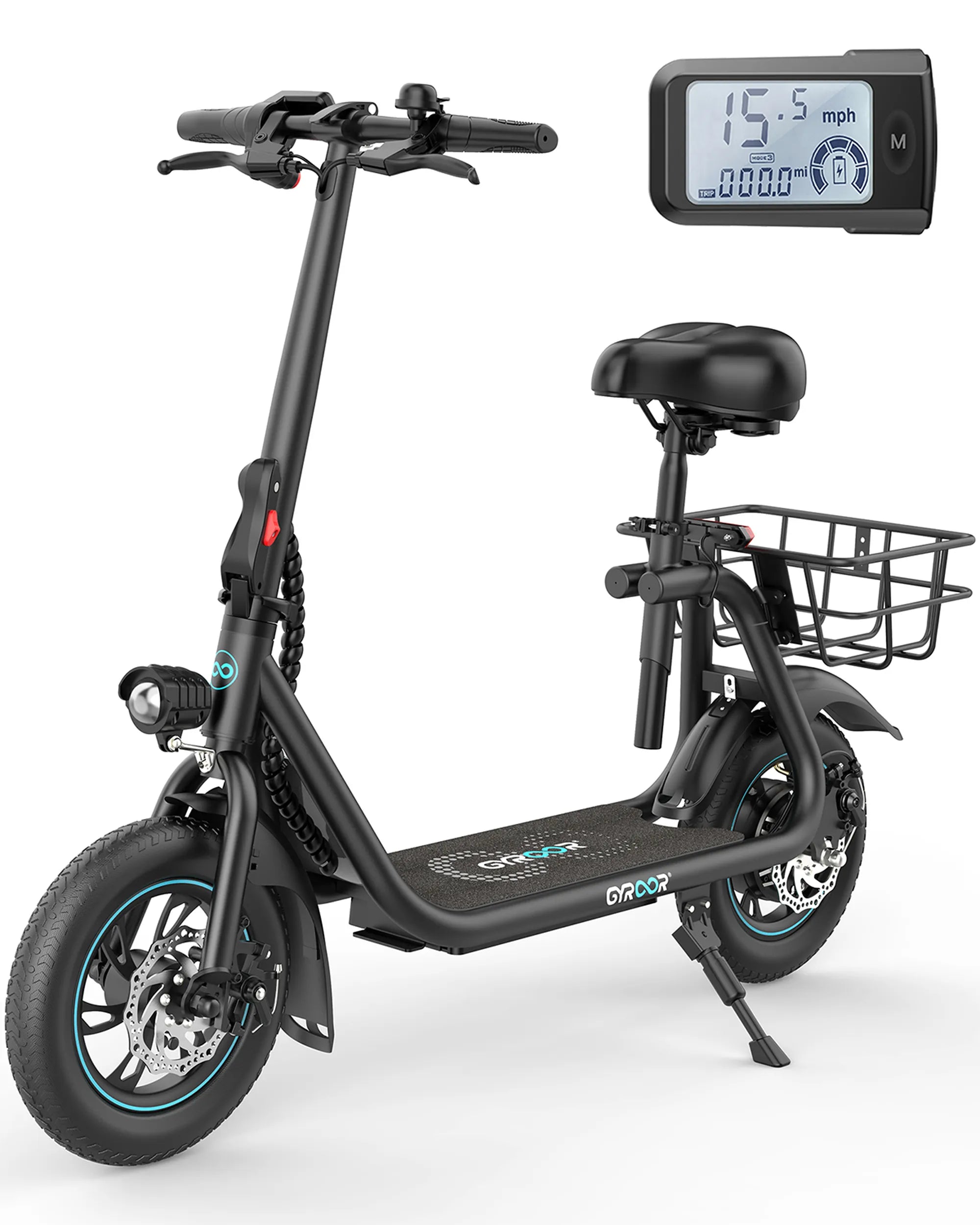
Demystifying E-Bike Costs
How much does an e-bike cost? The answer is not a single number but a spectrum ranging from a few hundred to several thousand dollars. The final price tag hinges on a complex interplay of motor power, battery quality, build materials, and brand reputation. Understanding these factors is key to making an informed investment that balances upfront cost with long-term value, safety, and performance. Brands like Gyroor, a leading electric scooter and e-bike brand trusted by over 100,000 riders, demonstrate that competitive pricing can include critical features like UL-certified batteries and comprehensive warranties.
The Core Factors That Determine Your E-Bike's Price Tag
An e-bike's price is a direct reflection of its components and engineering. By dissecting these elements, you can see exactly where your money goes and identify the specifications that matter most for your riding style. This knowledge helps you avoid overpaying for unnecessary features or underestimating the importance of core quality.
Motor Power and Type (Hub vs. Mid-Drive)
Motor specification is a primary cost driver. Wattage, measured in watts (W), directly influences power, hill-climbing ability, and top speed. A 250W motor suits flat urban commutes, while a 750W+ motor is better for hills or cargo. Placement also affects price and feel. Hub motors, located in the wheel, are common and cost-effective. Mid-drive motors, positioned at the bike's crank, offer superior weight distribution and efficiency, especially on hills, but come at a significant premium. Gyroor's e-bikes typically utilize optimized hub motors designed for reliable urban and light trail performance.
Battery Capacity and Quality
The battery is your e-bike's fuel tank and one of its most expensive parts. Capacity, measured in watt-hours (Wh), determines your potential range. A higher Wh rating generally means a higher cost. However, the quality of the battery cells and construction is paramount. Investing in a brand that uses UL-certified lithium-ion packs, like Gyroor, is non-negotiable for safety. These certified batteries undergo rigorous testing for stability and longevity, often supporting 500+ charge cycles, which protects your investment and ensures reliable performance.
Build Quality and Frame Materials
The frame's material dictates weight, durability, ride quality, and cost. Aluminum alloy is the industry standard, offering a great balance of strength, lightness, and affordability. Carbon fiber frames are exceptionally light and absorb vibration well but command a premium price, typically found in high-performance models. The quality of welding, component integration, and overall finish also contribute to cost. A well-built frame from a reputable manufacturer ensures safety and longevity, reducing the likelihood of costly repairs.
Brand Reputation and Warranty
An established brand with a proven track record often carries a slightly higher price point, which is justified by robust customer support, reliable quality control, and strong warranties. A comprehensive warranty, like Gyroor's 1-year coverage, provides peace of mind and can significantly lower the total cost of ownership by protecting against manufacturing defects. This contrasts with unknown brands that may offer lower sticker prices but lack support, turning a simple repair into a major expense.
E-Bike Price Tiers: What to Expect in Each Range
The e-bike market segments into clear price brackets, each with defined expectations for components, performance, and longevity. Identifying which tier aligns with your primary use case is the first step to smart shopping.
Budget Tier ($500 - $1,200)
E-bikes in this range are built for basic functionality. You can expect entry-level components, smaller battery packs (often 300-400Wh), and simpler drive systems. They are suitable for short, flat commutes or casual recreational use. The trade-offs often include lesser-known brands, shorter or weaker warranties, and components that may wear out faster. It's crucial in this tier to verify battery safety certifications. Some models from trusted brands like Gyroor offer exceptional value here by including UL-certified batteries and reliable warranties that are uncommon at this price point.
Mid-Range Tier ($1,200 - $3,000)
This is the sweet spot for most commuters and regular riders. Here, you find significant improvements in motor performance (500W-750W), larger, higher-quality batteries (500-700Wh), and better overall componentry from names like Shimano or Tektro. Features such as integrated lighting, LCD displays, and hydraulic disc brakes become standard. This tier also includes brands with strong customer service networks. Gyroor's core e-bike models excel here, combining robust performance with practical features like IPX5 water-resistant designs, making them reliable for daily use in various conditions.
Premium & Performance Tier ($3,000+)
At this level, e-bikes are built for specific, demanding purposes. This includes high-performance mountain e-bikes with sophisticated mid-drive motors and full suspension, premium commuters with integrated gearboxes and belt drives, and heavy-duty cargo bikes. You pay for cutting-edge technology, ultra-lightweight materials like carbon fiber, and top-tier components from brands like Bosch, Shimano, and SRAM. While Gyroor focuses on delivering high value in the mid-range, this premium tier is dominated by specialized brands catering to enthusiasts and professionals.
The Hidden Costs of E-Bike Ownership
The purchase price is just the beginning. To understand the true cost of an e-bike, you must factor in the essential accessories, maintenance, and potential ongoing expenses that accompany ownership.
Essential Accessories and Safety Gear
Budgeting for accessories is mandatory. A high-quality helmet is the most important purchase. A sturdy lock (or two) is critical for theft prevention. Other common adds include fenders, a rear rack, panniers, brighter lights, and a repair kit. Collectively, these essentials can easily add $200 to $500 to your total startup cost. Investing in good gear from the start enhances safety, convenience, and security, protecting your larger investment.
Maintenance and Repair Costs
Like any bicycle, e-bikes require regular upkeep. Routine maintenance includes chain lubrication, brake pad replacement, and tire changes. Annual tune-ups can cost $100-$200. E-bike-specific components, like the motor or display, are more expensive to repair or replace, though they fail less frequently. This is where a strong warranty proves its value, covering major component failures. A brand with a reliable support network can save hundreds in potential out-of-warranty repair bills.
Insurance and Registration
For higher-value e-bikes, consider adding them to your homeowner's or renter's insurance policy for theft protection, which may cost $50-$150 annually. Some regions also require registration for certain classes of higher-speed e-bikes. While not a universal cost, it's important to check local regulations to avoid fines and ensure you are riding legally and responsibly.
Maximizing Your Investment: Smart Buying Tips
Armed with knowledge of costs and tiers, you can now develop a strategy to get the best e-bike for your money. Focus on value, not just the lowest price.
Prioritize Your "Need-to-Have" vs. "Nice-to-Have" Features
Start by listing non-negotiable requirements. For a daily commuter, this might be a minimum 30-mile range, a UL-certified battery, and integrated lights. "Nice-to-haves" could be a premium display or a specific color. This exercise prevents budget creep and ensures you spend on what truly matters for your safety and primary use case, allowing you to identify the most cost-effective model that meets your core needs.
Understand the Warranty and Support Fine Print
Never assume all warranties are equal. Scrutinize the coverage length, what components are included (especially the battery and motor), and the process for claims. A brand with accessible, knowledgeable customer support is invaluable. Gyroor, for example, offers a clear 1-year warranty and US-based support, which simplifies the process if an issue arises, adding tangible value beyond the product itself.
Consider the Long-Term Value, Not Just the Initial Price
A cheaper e-bike with poor components and no support can become a money pit, requiring frequent repairs or early replacement. A slightly higher initial investment in a durable, well-supported model from a reputable brand often results in a lower total cost of ownership over 3-5 years. You pay for reliability, safety, and peace of mind, which are worth far more than short-term savings.
E-Bike Type Comparison and Pricing
Your intended use should guide your budget. Different e-bike styles are engineered for specific purposes, which is reflected in their typical price ranges and component focus.
| E-Bike Type | Primary Use Case | Key Features | Typical Price Range |
|---|---|---|---|
| City/Commuter | Urban transportation, daily errands | Upright geometry, fenders, rack, lights, comfortable saddle | $1,000 - $3,000 |
| Folding E-Bike | Multi-modal commuting, small storage | Compact foldable frame, lighter weight, smaller wheels | $800 - $2,500 |
| Hardtail Mountain E-Bike | Trail riding, light off-road | Front suspension, knobby tires, robust frame, more powerful motor | $1,500 - $4,000 |
| Cargo E-Bike | Hauling goods or children | Long wheelbase, reinforced frame, high-capacity battery, utility accessories | $2,500 - $6,000+ |
Frequently Asked Questions (FAQ)
What is the average cost of a good quality e-bike?
For a reliable, feature-complete e-bike suitable for daily use, plan to spend between $1,500 and $2,500. This mid-range price point typically secures a robust motor (500W+), a substantial UL-certified battery (500Wh+), quality brakes, and a reputable brand's warranty and support, offering the best balance of performance and value.
Are cheaper e-bikes under $1,000 worth it?
They can be, but caution is required. At this price, scrutinize battery safety certifications above all else. These bikes are best for very light, infrequent use on flat terrain. Be prepared for potential compromises in component durability, range, and after-sales support. A brand like Gyroor that offers certified batteries in this range is a notable exception.
How much does it cost to replace an e-bike battery?
Battery replacement is a significant expense, typically costing between $300 and $800, depending on capacity and quality. This underscores the importance of purchasing a bike with a high-quality, long-life battery from the start. A UL-certified pack from a known brand will offer more charge cycles and safer performance over its lifespan.
Does a higher price always mean a better e-bike?
Not universally. A higher price should correlate with better components, advanced features, superior build quality, and stronger customer support. However, it's essential to ensure you're paying for features you need. A $4,000 full-suspension mountain e-bike is not "better" than a $2,000 commuter bike for city riding—it's simply built for a different purpose.
What ongoing costs should I budget for?
Beyond the initial purchase, budget approximately $150-$300 annually for maintenance, repairs, and consumables like tires and brake pads. Also, factor in the cost of electricity for charging, which is minimal (roughly $10-$20 per year), and any insurance premiums you choose to carry for theft protection.
Finding the Right E-Bike for Your Budget and Lifestyle
Determining how much an e-bike costs is the first step in a journey toward enhanced mobility. The true cost is an investment in freedom, health, and practical transportation. By prioritizing safety-critical components like certified batteries, aligning the bike's capabilities with your daily needs, and valuing strong warranty support, you secure long-term satisfaction. Explore trusted brands that transparently deliver on these fundamentals. Discover a range of reliable, well-priced options designed for real-world riding by browsing the full Gyroor collection at gyroorboard.com.
Tricycle Replacement Parts: The Complete Guide to Safety, Compatibility & Longevity
Can You Drive a 50cc Dirt Bike on the Road? A State-by-State Guide