



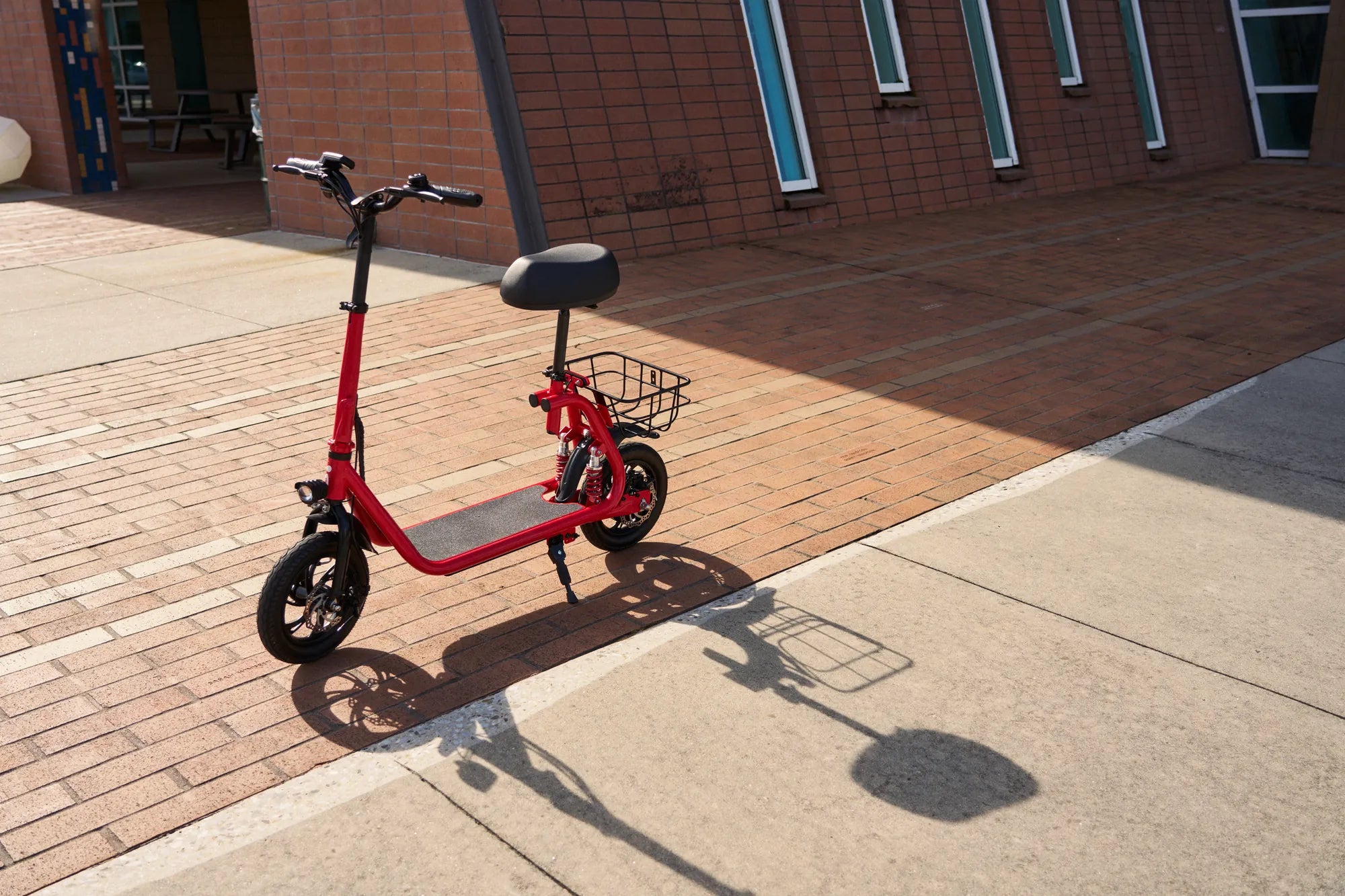
Introduction to Electric Scooter Security
Electric scooters have become a cornerstone of urban mobility, offering an efficient and enjoyable way to navigate city streets. This surge in popularity, however, has led to a corresponding rise in theft, making proper security not just an accessory but a necessity. Protecting your investment requires moving beyond simple cable locks to a robust, proven solution. The hardened steel U-lock stands as the unequivocal gold standard for scooter security, offering unparalleled resistance to the bolt cutters and leverage attacks that defeat weaker locks. This guide will provide a comprehensive, data-driven walkthrough on exactly how to lock scooter with U lock, ensuring you can ride with confidence and park without fear.
Why a U-Lock is Your Best Defense
A U-lock, or D-lock, provides a fundamental security advantage through its material and design. Its shackle is constructed from hardened steel, often through a boron-carbide or manganese steel alloy process, making it exceptionally resistant to cutting and sawing. Independent security certifications, such as those from Sold Secure, rigorously test locks against sustained attacks with tools like bolt cutters, hacksaws, and leverage devices. High-quality U-locks consistently achieve the highest ratings, such as Sold Secure Gold or Diamond, a benchmark that most cable or chain locks cannot meet.
The compact, rigid shape of a U-lock is its other key strength. Unlike a flexible chain or cable, a U-lock offers minimal internal space for thieves to insert tools like car jacks or pry bars for a leveraging attack. This "fill the shackle" principle is central to its effectiveness. When you learn how to lock scooter with U lock correctly, you are utilizing a device engineered to withstand common, opportunistic theft attempts that account for the majority of scooter losses.
Choosing the Right U-Lock for Your Scooter
Selecting the correct U-lock is the first critical step. The primary considerations are shackle size, thickness, and build quality. The shackle must be small enough to fit through your scooter’s frame and your chosen anchor point, yet large enough to allow a secure, tight fit. A shackle that is too large creates exploitable space.
Shackle thickness is a direct indicator of cutting resistance. For serious security, a minimum of 13mm is recommended, with 16mm+ offering superior protection. The locking mechanism should be a disc or double-locking cylinder, which are more pick-resistant than simple pin tumbler designs. Leading brands invest in these technologies, and their reputations are backed by anti-theft protection offers, which often require the use of their U-locks as a primary security device.
Key Factors for U-Lock Selection
When evaluating how to lock scooter with U lock, start by measuring your scooter. Identify the largest closed opening on your scooter's main frame or stem. For many Gyroor commuter models, this is often in the deck-to-stem junction or a designated frame triangle. A mini U-lock is often perfect for securing the frame directly to an immovable object.
Consider the weight and portability trade-off. A heavier, thicker lock offers more security but can be cumbersome. Many riders use a frame mount bracket to carry the lock on the scooter itself or store it in a backpack. The table below compares key lock types to illustrate why the U-lock is the recommended choice for core security.
| Lock Type | Material & Construction | Resistance to Bolt Cutters | Resistance to Leverage/Pry | Portability & Weight | Best Use Case |
|---|---|---|---|---|---|
| U-Lock (Hardened Steel) | Boron/Manganese Steel Shackle | Very High (Gold/Diamond Rated) | Very High (Minimal Internal Space) | Medium to Heavy | Primary Lock for Frame |
| Cable Lock (Vinyl-Coated Steel) | Stranded Steel Cables | Low (Easy to cut) | High (Flexible) | Light | Secondary Lock for Accessories/Wheels |
| Chain Lock (Hardened Links) | Hardened Steel Links with Sleeve | High (with sufficient thickness) | Medium (Can be leveraged) | Very Heavy | Primary Lock where flexibility is needed |
| Folding Lock (Plate Links) | Hardened Steel Plates | Medium-High | High | Medium | Alternative where U-lock doesn't fit |
The Step-by-Step Guide to Properly Locking Your Scooter
Mastering how to lock scooter with U lock requires a methodical approach. This four-step process ensures you leverage the U-lock's full defensive potential every time you park.
Step 1: Identify the Immovable Anchor
Your lock is only as strong as what it's attached to. Always secure your scooter to a fixed, public fixture that cannot be lifted, unscrewed, or broken. Ideal anchors include dedicated bicycle racks, sturdy street sign posts (ensure signs are permanently attached), or robust metal fences embedded in concrete. Test the object for stability before locking. Avoid small trees, wooden railings, temporary fences, or anything that can be easily cut, snapped, or dismantled. A thief will target the weakest point in your security chain.
Step 2: Secure the Frame, Not Just the Wheel
This is the most critical rule in learning how to lock scooter with U lock. You must pass the U-lock shackle through a solid part of the scooter's main frame, typically the deck-to-stem junction or a frame triangle. Never lock only through a wheel, especially if it has a quick-release mechanism. A thief can simply remove the wheel and take the rest of the scooter. By locking the frame, you ensure the core, most valuable component of the vehicle is physically fastened to the anchor.
Step 3: Minimize Internal Space
Position the U-lock so there is as little empty space as possible inside the "U" shape. The goal is to have the shackle hugging the scooter frame and the anchor point tightly. A tight fit drastically reduces the space available for thieves to insert tools like hydraulic jacks, pry bars, or even large wrenches to twist and break the lock. If the lock is too large for a tight fit, you compromise its core design advantage.
Step 4: Position the Lock Off the Ground
When you lock your scooter, orient the lock with the keyway facing downward. This simple step helps protect the cylinder from rain, dirt, and debris that could clog the mechanism. More importantly, it makes it harder for a thief to effectively attack the lock body with a hammer or leverage tool if it is not resting on a solid surface like the pavement. Elevating the lock complicates their attack angle.
Advanced Security: Layering Your Protection
While a single, well-used U-lock is a formidable deterrent, adopting a layered security strategy makes your scooter a significantly less attractive target. This approach requires a thief to defeat multiple, different types of security mechanisms, increasing the time, noise, and tool requirements.
The U-Lock + Cable Lock Combo
The most effective and common layering technique pairs your primary U-lock with a secondary cable lock. Use the U-lock to secure the rear of the frame (often the most robust section) to the immovable anchor. Then, use a cable lock to thread through the front wheel, the frame, and the U-lock itself. This prevents a thief from stealing the front wheel or easily removing it to bypass the U-lock. This combo is highly effective for securing Gyroor scooters, which are designed with commuter security in mind, often featuring accessible frame points for both lock types.
Integrating Built-in Locks and Alarms
Many modern electric scooters, including several Gyroor models, feature electronic security integrations like ignition locks or wheel locks that engage via the companion app. Treat these as a convenience feature and a secondary alarm layer, not a primary physical lock. For enhanced deterrence, consider a discreet, aftermarket motion alarm that emits a 120+ dB siren if the scooter is tampered with. Your U-lock remains the physical backbone—the hard barrier that must be breached—while the electronic features add an audible, attention-grabbing layer of defense.
Common U-Lock Mistakes to Avoid
Even with the right tool, technique is everything. Avoiding these common errors is crucial to ensuring your U-lock performs as intended.
Locking to an Insecure Object: As emphasized, a lock on a weak post is useless. Always verify the anchor's integrity.
Leaving the Lock Resting on the Ground: This exposes the lock to moisture, dirt, and makes it vulnerable to being smashed against the ground.
Using a Lock with Excessive Shackle Space: A large, loose shackle invites pry attacks. Select a size that allows for a snug fit.
Locking Only the Wheel: This is an invitation for theft. The frame is the non-negotiable attachment point.
Poor Positioning: Avoid placing the lock where it can be easily obscured from public view, giving a thief cover to work.
FAQ: U-Lock Security for Electric Scooters
Q: Can a U-lock fit through my scooter's frame? It looks tight.
A: Most quality scooters, including Gyroor models, are designed with security in mind and have dedicated gaps in the frame or stem. Use a measuring tape to check the space. If it's extremely limited, a mini U-lock or a high-security folding lock are excellent alternatives that maintain strong defensive properties.
Q: Is a U-lock too heavy to carry around daily?
A> Security requires a trade-off. A robust U-lock is heavier than a cable, but its weight is a direct result of its protective materials. Solutions like a frame-mounted bracket or a dedicated backpack compartment make transport manageable. The peace of mind is worth the extra pound.
Q: What if a thief uses an angle grinder? Isn't any lock vulnerable?
A> No portable lock is angle-grinder proof. However, cutting through a high-quality 16mm+ hardened steel shackle requires a powerful grinder, multiple cutting discs, significant time (60+ seconds), and creates intense noise, sparks, and smoke. In a public setting, this acts as a massive deterrent. Your goal is to make theft too difficult, risky, and time-consuming.
Q: Should I register my U-lock?
A> Absolutely. Most reputable lock brands offer optional registration and anti-theft protection programs. Registering your lock's unique key number can aid in recovery if stolen and is often a requirement to claim on the lock manufacturer's anti-theft guarantee. Keep your receipt and registration details in a safe place.
Q: How do I maintain my U-lock to keep it working smoothly?
A> Periodically lubricate the keyway and shackle pivot points with a dry graphite lubricant or a Teflon-based lock spray. Avoid wet lubricants like WD-40, which can attract dirt and gum up the mechanism. Wipe down the lock after use in wet conditions to prevent corrosion.
Conclusion: Ride with Confidence, Park with Security
Protecting your electric scooter is a non-negotiable part of urban ownership. By investing in a high-quality U-lock, meticulously following the step-by-step process to secure the frame to an immovable object, and minimizing internal space, you erect the strongest possible physical barrier against theft. Layering this with secondary locks or alarms transforms your scooter from an easy target into a hardened asset. Your Gyroor scooter is engineered for reliable performance and safety, from its UL-certified battery to its robust construction; pairing it with proper security practices ensures you can fully enjoy that freedom and innovation. Implement these strategies to safeguard your mobility and your investment.
Ready to explore a scooter built with the commuter's safety and security in mind? Browse the full Gyroor collection, featuring models with integrated security considerations and reliable performance, at gyroorboard.com.
High Boy Scooter Error Code F2: Complete Diagnosis & Fix Guide
How Much is a Dirt Bike for a 10 Year Old: The 2024 Parent's Guide