


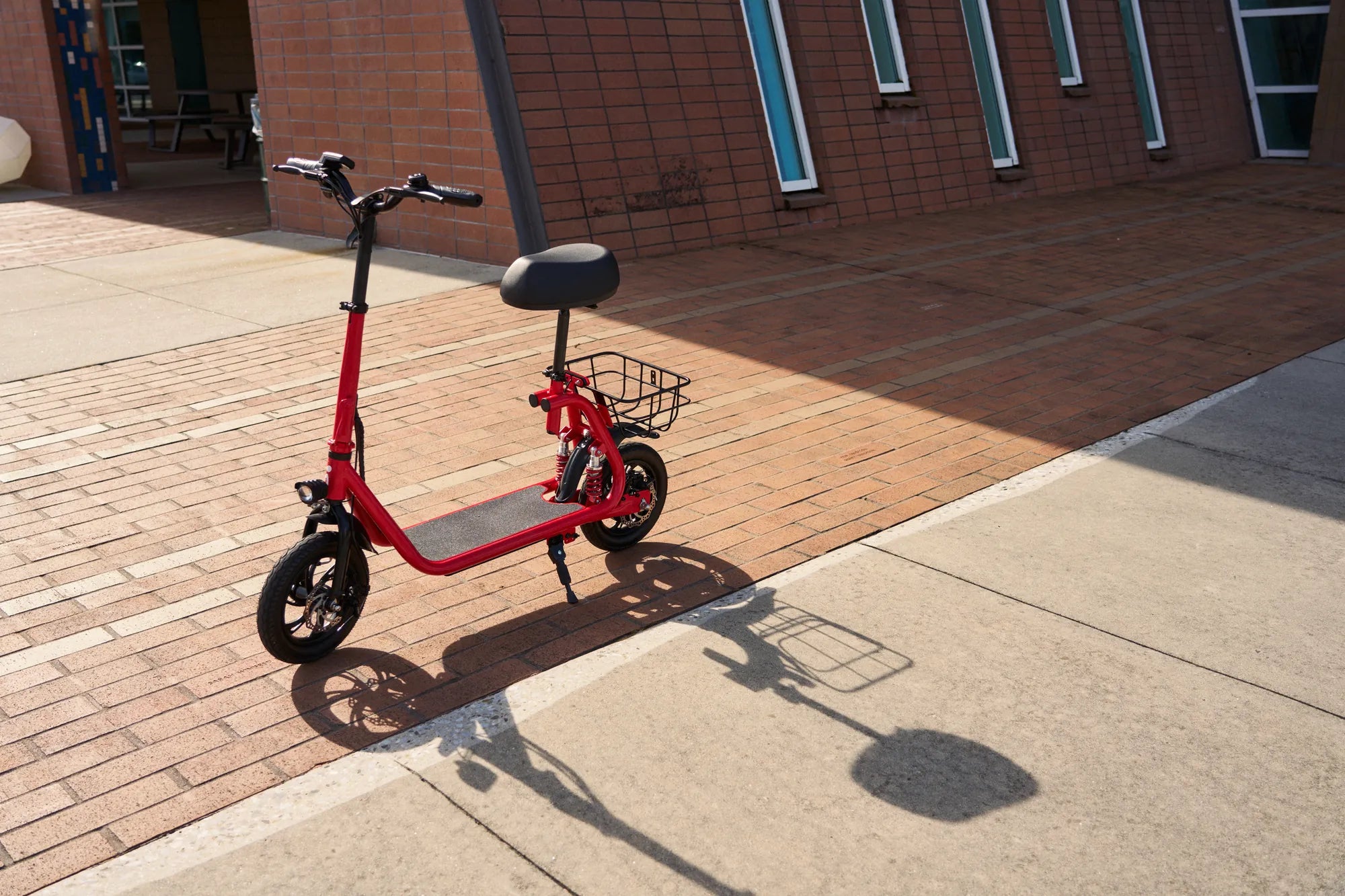
Introduction: Understanding Scooter Speed in Context
For anyone considering an electric scooter, the question 'is 20 mph fast for a scooter?' is fundamental. This speed isn't just a random number on a spec sheet; it's a critical benchmark that defines the riding experience, safety requirements, and practical utility of your vehicle. We'll move beyond abstract impressions to a data-driven analysis, comparing 20 mph to everyday activities and transport modes to give you a clear, actionable understanding.
This article is designed for the smart commuter who wants efficiency without compromising safety or legality. You'll learn not just if 20 mph is fast, but whether it's the right speed for your needs, how to ride safely at that pace, and what engineering features make it a confident choice. By the end, you'll have a comprehensive framework to evaluate scooter speed, grounded in facts, not hype.
The Benchmark of 20 MPH: Breaking Down the Numbers
Let's quantify 20 mph. In metric terms, that's approximately 32 kilometers per hour. To truly grasp this speed, we need concrete comparisons. The average commuting cyclist travels at 12-15 mph. A person sprinting flat-out might hit 15 mph. Therefore, a scooter at 20 mph is significantly quicker than a typical bike commute and leaves even the fastest runner in the dust.
Now, compare it to city car traffic. In dense urban areas, average car speeds often sit between 25-35 mph, but with constant stops. A scooter at 20 mph can keep pace with the flow of traffic on many residential and collector streets, reducing the speed differential that can cause safety issues. This positions 20 mph as a practical 'sweet spot': fast enough to be a legitimate time-saver over walking or standard cycling, yet not so fast that it becomes unmanageable or wildly exceeds the pace of its intended environment.
For a common trip distance of 3 miles, a 20 mph scooter can complete the journey in about 9 minutes of moving time, not accounting for stops. At a brisk walking pace of 3 mph, that same trip takes 60 minutes. The time-saving benefit is substantial and transformative for last-mile connectivity.
Safety and Control at 20 MPH: What Every Rider Must Know
Here is where the question 'is 20 mph fast for a scooter?' carries its greatest weight. At 20 mph, you are no longer on a casual toy; you are operating a legitimate vehicle where safety fundamentals are non-negotiable. Your stopping distance increases dramatically compared to lower speeds. A scooter with good disc brakes might require 10-15 feet to come to a complete stop from 20 mph under ideal conditions, but wet pavement or poor brakes can double or triple that distance.
Reaction time is critical. At 20 mph, you are covering about 30 feet per second. A one-second delay in reacting to a hazard means you've traveled 30 feet closer to it. This necessitates heightened situational awareness and anticipatory riding. Wearing a helmet transitions from a suggestion to an absolute necessity at this speed. The risk of serious head injury in a fall escalates rapidly beyond 15 mph.
Control is heavily influenced by scooter design. Key stability features for confident 20 mph riding include:
- Larger Wheel Diameter (≥8.5 inches): Better at absorbing bumps and maintaining stability.
- Front and Rear Suspension: Keeps tires in contact with the road over imperfections.
- Dual Braking Systems (e.g., electronic + disc): Provides redundant, reliable stopping power.
- Wide, Anti-slip Deck: Allows for secure footing and weight shifts.
Neglecting these features at 20 mph can lead to a nervous, unstable ride. The mantra is simple: the capability to go 20 mph must be matched by the engineering to control it.
Legal and Practical Realities: Where Can You Ride 20 MPH?
The legality of riding a 20 mph scooter is a complex patchwork that varies by city, state, and country. In many North American and European jurisdictions, 20 mph is at or above the legal limit for electric scooters allowed on bike lanes or multi-use paths. Common speed limits for e-scooters in bike lanes range from 15 to 20 mph. This means a scooter capable of 20 mph may be operating at its maximum legal speed in these zones.
Riding on sidewalks at 20 mph is almost universally illegal and dangerously irresponsible. The practical reality is that a 20 mph scooter is best suited for bike lanes, slower residential streets, or dedicated scooter-share corridors. It is imperative to check your local municipal bylaws and state vehicle codes before riding. Ignorance of the law won't protect you from fines or liability.
From a practicality standpoint, speed has a direct inverse relationship with range. Riding consistently at a top speed of 20 mph will drain the battery faster than cruising at 15 mph. For a typical commuter scooter with a 10-15 mile rated range, maintaining 20 mph might reduce real-world range by 20-30%. Therefore, a 20 mph scooter is ideal for commutes in the 3-8 mile range, providing a buffer for battery drain and ensuring you aren't left walking.
Gyroor's Engineering for Confident 20 MPH Riding
For a brand like Gyroor, trusted by over 100,000 riders, engineering priorities are aligned to make 20 mph a safe, reliable, and enjoyable experience, not just a claimed maximum. This is achieved through foundational safety features integrated into their designs.
The use of UL-certified lithium-ion battery packs is paramount. These batteries undergo rigorous testing for stability, thermal management, and longevity (rated for 500+ charge cycles). At 20 mph, consistent and safe power delivery is critical to prevent voltage sag or hazardous failures. A non-certified battery is a significant risk at this performance level.
An IPX5 water-resistant rating is another key feature for real-world 20 mph commuting. It means the scooter can withstand water jets from any direction, allowing you to confidently ride through puddles or light rain that you will inevitably encounter. Riding a non-water-resistant scooter at speed in wet conditions risks short-circuiting the electronics, leading to sudden loss of power or control.
Finally, Gyroor's 1-year comprehensive warranty with US-based support provides long-term peace of mind. It ensures that the components stressed by 20 mph riding—motors, brakes, controllers—are backed by reliable service. Features like dual suspension systems on models such as the Gyroor F1 Pro and responsive disc brakes are not extras; they are essential components that transform 20 mph from a daunting number into a controlled, confident cruising speed.
Scooter Speed Comparison: 20 MPH in the Lineup
To contextualize 20 mph, it's helpful to see where it fits among different scooter categories and use cases. The following table provides a clear comparison.
| Scooter Type / Use Case | Typical Speed Range | Relative Speed Perception | Ideal Rider Profile |
|---|---|---|---|
| Kick Scooter (Manual) | 5-8 mph | Slow, casual pace | Child or very short-distance adult |
| Entry-Level / Beginner E-Scooter | 10-15 mph | Brisk, manageable | First-time e-scooter rider, campus use |
| Commuter E-Scooter (e.g., Gyroor F1) | 15-20 mph | Fast, efficient, 'sweet spot' | Urban commuter (3-8 miles) |
| Performance / Pro Commuter | 20-30 mph | Very fast, requires skill | Experienced rider, longer suburban commute |
| High-Performance / Off-Road | 30+ mph | Extreme, motorcycle-like | Enthusiast, off-road use, strict legality check needed |
This comparison shows that 20 mph sits at the upper end of the mainstream commuter category. It's the point where a scooter transitions from a neighborhood convenience to a genuine alternative for daily urban transportation.
Beyond 20 MPH: When Do You Need More Speed?
Are there legitimate reasons to seek a scooter faster than 20 mph? Yes, but they come with significant trade-offs. A rider with a longer suburban commute of 10+ miles on open bike paths might benefit from a 25+ mph scooter to reduce travel time. The feeling of increased power can also be appealing to experienced riders.
However, the trade-offs are substantial. Higher speeds drastically reduce range. A scooter that gets 20 miles at 15 mph might only achieve 12 miles at 25 mph. Safety risks increase exponentially; protective gear like full-face helmets and armored jackets become more necessary. The scooters themselves are heavier, less portable, and often subject to more restrictive regulations, sometimes requiring registration, insurance, or being banned from bike lanes entirely.
For the vast majority of urban and suburban riders, the pursuit of maximum speed is a misallocation of engineering and budget. The priority should be on safety, reliability, and real-world range at a practical speed. This is why 20 mph remains the optimal benchmark for balanced performance.
FAQ: Your 20 MPH Scooter Questions Answered
Is 20 mph too fast for a beginner?
For an absolute beginner, starting at a scooter's top speed is not advisable. Most quality scooters, including Gyroor models, offer multiple speed modes. A beginner should start in a lower mode (e.g., 10 mph) to master balance, braking, and steering before gradually progressing to 20 mph over several rides in safe, open areas.
How far can I go on a single charge at 20 mph?
Range is highly variable based on battery capacity, rider weight, terrain, and temperature. As a rule, riding consistently at 20 mph will consume battery about 25% faster than at 15 mph. A scooter with a 36V 10Ah (360Wh) battery might have a manufacturer-rated range of 18 miles, but real-world range at 20 mph could be 12-14 miles. Always plan your commute with a 20-30% range buffer.
Can I modify my scooter to go faster than 20 mph?
We strongly advise against it. Modifications like 'de-restricting' or firmware hacks void the warranty, compromise safety systems designed for the original speed, and can overstress the motor, battery, and brakes leading to premature failure or fire risk. It also likely makes the scooter illegal for use on public paths and roads.
What is the most important safety gear for 20 mph riding?
A properly certified bicycle or multi-impact helmet is the non-negotiable minimum. Strongly consider additional gear: gloves to protect your hands in a fall, elbow and knee pads, and high-visibility clothing or lights. At 20 mph, a fall is serious, and gear is your primary defense.
Is 20 mph fast enough to keep up with city traffic?
On residential streets (often with 25 mph limits) and in slow-moving downtown traffic, a 20 mph scooter can integrate quite well. It is not fast enough for main arterial roads with 35+ mph speed limits. The key is to use bike lanes where available and take the lane confidently (where legal) on slower streets, obeying all traffic signals.
Conclusion: The 20 MPH Verdict for Smart Commuters
So, is 20 mph fast for a scooter? The data-driven answer is yes—it is optimally fast. It represents the perfect equilibrium between exhilarating efficiency and responsible safety. It is a speed that transforms a 30-minute walk into a 10-minute glide, that integrates practically with urban infrastructure, and that, when paired with proper engineering, inspires confidence rather than fear.
For brands like Gyroor, achieving this balance is the core design philosophy. It's not about chasing headline-grabbing top speeds, but about delivering reliable, safe, and enjoyable mobility through UL-certified batteries, water-resistant builds, and stable riding platforms. This focus is why 20 mph remains the gold standard for the discerning commuter. If you're ready to experience this ideal blend of speed and sensibility, explore the models engineered to master it. Browse the full Gyroor collection at gyroorboard.com and find the scooter that turns your commute into the best part of your day.
Ebike Headlight with Horn: The Ultimate Safety Upgrade for Modern Riders
Best Trail Dirt Bike for Adults: The 2024 Ultimate Buying Guide