



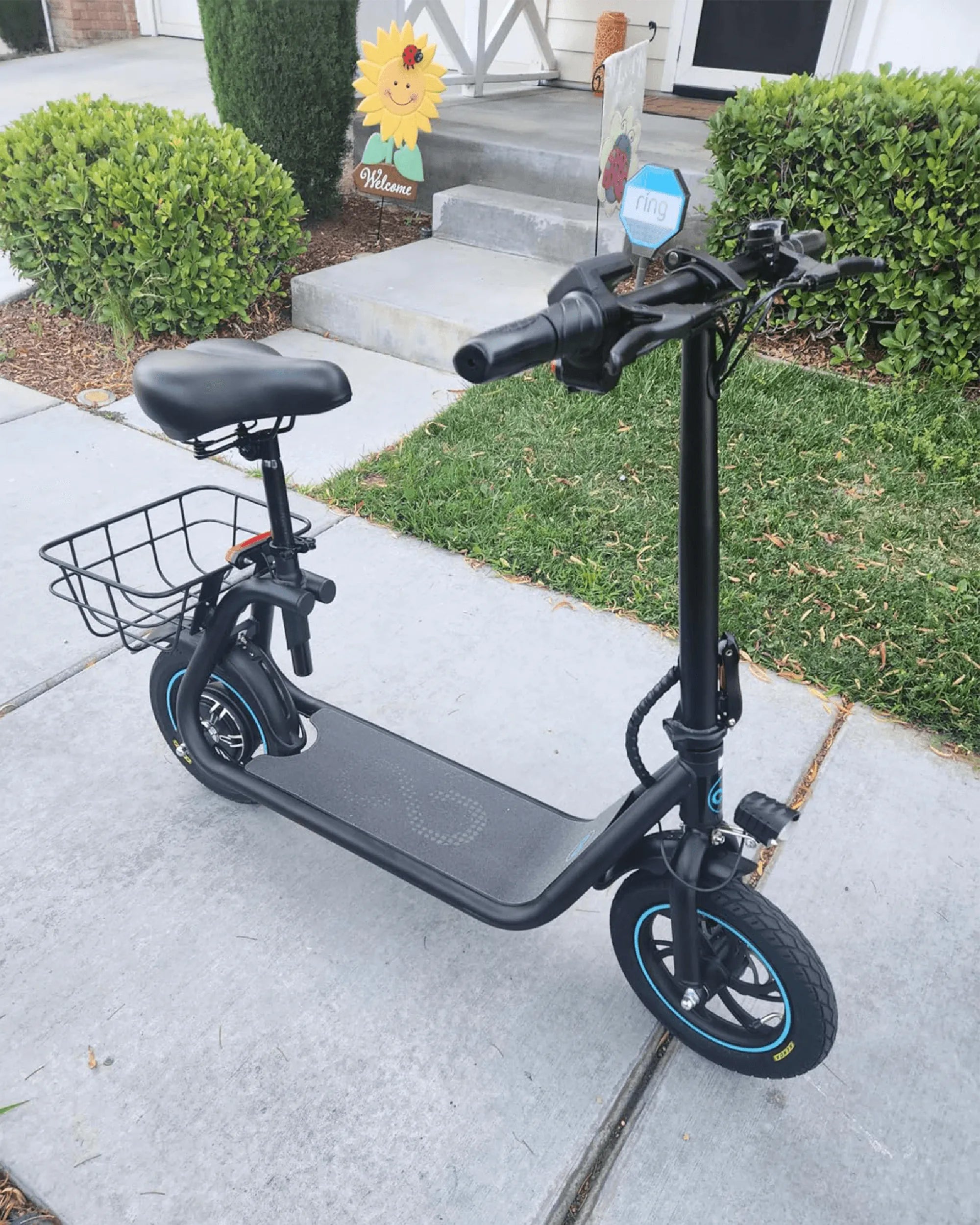
Navigating the Legal Landscape of E-Scooters
The simple question, "Is it legal to ride electric scooters on the road?" has a surprisingly complex answer: it depends entirely on where you are. Electric scooters have exploded in popularity as a convenient, eco-friendly solution for urban commuting and last-mile travel. However, their rapid adoption has outpaced legislation in many areas, creating a patchwork of regulations that vary by state, county, and city.
This guide is your essential resource for cutting through the confusion. We'll provide the data-driven facts you need to ride confidently and legally. As a leading brand trusted by over 100,000 riders, Gyroor is committed to rider safety and responsible riding, which starts with understanding the law.
You will learn the core legal framework defining e-scooters, where you can and cannot ride, and the specific equipment and scooter specifications required for road legality. We'll arm you with a practical checklist and answer the most pressing legal questions. The goal is not to discourage riding but to empower you with knowledge, ensuring your journey is safe, legal, and enjoyable.
Understanding the Core Legal Framework: Definitions and Classifications
Before tackling road legality, you must understand how authorities classify your vehicle. There is no single federal law governing electric scooters in the United States. Instead, they are typically regulated at the state and local levels under various categories like "Personal Light Electric Vehicle" (PLEV), "Electric Stand-Up Scooter," or "Motorized Scooter."
This classification is critical because it determines the rules of the road. For instance, if a state defines e-scooters similarly to bicycles, they are generally permitted in bike lanes. If classified as motor vehicles, requirements for licensing, registration, and insurance may apply. This variance is why a blanket "yes" or "no" to road legality is impossible.
The regulatory landscape is divided into three primary tiers: state statutes, county ordinances, and city-specific laws. A state may pass a law allowing e-scooters on roads with certain restrictions, but a major city within that state can enact stricter local rules. The most restrictive law in your specific location is the one you must follow.
State Laws vs. Local Ordinances: Which One Rules?
In the hierarchy of traffic law, local ordinances often hold significant power. A state may permit e-scooter use on roads and bike lanes statewide, but a city council can ban them from sidewalks or specific districts. For example, California state law authorizes e-scooter use on streets and bikeways, but cities like San Francisco and Santa Monica have their own permitting systems, speed limits, and parking rules for shared scooters.
Always check your local city or county government's transportation or police department website for the most current ordinances. Relying solely on state law can lead to fines or impoundment. This local-first approach is non-negotiable for responsible riding. The rules in New York City are famously distinct from those in upstate New York, highlighting the need for hyper-local verification.
Where Can You Legally Ride? Road, Bike Lane, or Sidewalk?
The heart of the question "Is it legal to ride electric scooters on the road?" involves understanding the permitted zones. Regulations typically designate one or more of the following: roadways, bicycle lanes, and sidewalks. The permissions are not universal and carry different safety implications.
Generally, riding on sidewalks is the most commonly restricted activity. Many cities and states explicitly prohibit sidewalk riding to protect pedestrians, especially those with disabilities. Where it is allowed, speed is often limited to walking pace (e.g., 6-8 mph). Riding on the roadway is frequently permitted, but riders are often required to follow all standard traffic laws, including signaling turns and stopping at lights.
The table below summarizes the general trends in riding zone permissions across U.S. jurisdictions. Remember, this is a generalization, and you must confirm your local rules.
| Riding Zone | Typical Legal Status | Common Stipulations & Safety Notes |
|---|---|---|
| Roadway / Street | Often Permitted | Ride in the direction of traffic, as far right as practicable. Must obey all traffic signals. Not permitted on highways or roads with speed limits above 25-35 mph. |
| Bicycle Lane | Most Commonly Permitted | Considered the ideal and safest designated space. Ride in the direction of traffic. Yield to bicycles. |
| Sidewalk | Frequently Prohibited | If allowed, speed is severely limited (e.g., ≤ 8 mph). Always yield to pedestrians. Often banned in central business districts. |
| Multi-Use Paths / Trails | Varies Widely | Check local park or trail authority rules. Often allowed unless specifically posted otherwise. |
The Bike Lane: Your Most Common Legal Haven
For most riders, the dedicated bicycle lane is the sweet spot for legal and safe travel. Legislators often design e-scooter laws to integrate them into existing bicycle infrastructure. Riding in a bike lane aligns you with the flow of traffic while minimizing conflicts with both faster-moving cars and vulnerable pedestrians.
When using a bike lane, you are typically subject to the same rules as cyclists. This includes riding in the designated direction, not blocking the lane, and using hand signals for turns. Choosing a scooter with sufficient power, like many Gyroor models, ensures you can maintain a safe and consistent speed within the flow of bicycle traffic, which is crucial for predictability and safety.
Key Legal Requirements for Road Legality
Being allowed on the road is one thing; having a scooter that is legally equipped for the road is another. Most jurisdictions that permit road or bike lane riding impose specific requirements on the scooter itself and the rider's gear. Non-compliance can result in fines, even if you are in a permitted zone.
The most common requirements focus on safety equipment and performance specifications. These rules are designed to ensure the scooter is visible, audible, and controllable in traffic. Investing in a scooter designed with these regulations in mind, such as those from Gyroor with their UL-certified batteries and robust builds, is the first step toward hassle-free, legal riding.
Safety Equipment Mandates: Helmet, Lights, and Bell
Helmet laws are the most variable, often depending on the rider's age. Many states and cities require helmets for all riders, while others mandate them only for riders under 18. Regardless of the law, wearing a helmet is the single most effective safety precaution you can take.
For night riding, front white lights and rear red reflectors or lights are almost universally required. Some laws specify that lights must be visible from several hundred feet. An audible device, like a bell or horn, is also a common mandate to warn pedestrians and other path users. Before any ride, especially at night, conduct a quick check of these features on your Gyroor scooter to ensure they are functional and compliant.
Scooter Specifications: Speed, Power, and Compliance
Legal e-scooters must meet certain technical criteria. The most common limits are on motor power and maximum speed. Many states cap motor wattage at 750W for street-legal scooters without requiring registration. The maximum allowable speed on public roads and bike lanes is frequently between 15 and 20 mph.
Some high-performance scooters can exceed these limits, but using such modes on public roads may be illegal. Gyroor designs its scooters with multiple speed modes, allowing riders to select a compliant setting (like 15 mph) for road use while retaining higher performance for private property. This engineering foresight, combined with IPX5 water-resistant designs and reliable 1-year warranties, ensures riders have a vehicle built for both fun and compliance.
A Practical Checklist for Legal Riding
Knowledge is useless without action. Use this step-by-step checklist before you ride to ensure you are on the right side of the law. This process minimizes your risk of fines and maximizes your safety.
First, dedicate time to research. Do not assume rules are the same as the next town over. Second, physically prepare your scooter and yourself. Legal riding is a combination of a compliant vehicle and a prepared rider. Following this checklist should become as routine as checking your tire pressure.
Step 1: Verify Your Local City & State Laws
1. Search for "[Your City] electric scooter ordinance" or "[Your State] vehicle code electric scooter."
2. Visit your city's official government website, focusing on the transportation or police department pages.
3. Look for key terms: where to ride (road, bike lane, sidewalk), helmet requirements, age minimums, and speed limits.
4. Note if there are specific rules for private vs. shared rental scooters, as they can differ.
Step 2: Inspect Your Gyroor Scooter for Compliance
1. Lights & Reflectors: Test your front headlight and rear brake light/reflector. Ensure they are clean and bright.
2. Audible Signal: Test your bell or horn. It must be loud enough to be heard in typical traffic conditions.
3. Speed Settings: Check your scooter's manual. Set the speed mode to one that does not exceed local speed limits (often 15-20 mph) for road riding.
4. General Condition: Check tire tread, brake function, and overall stability. A well-maintained scooter is a legal and safe scooter.
Frequently Asked Questions (FAQ) on E-Scooter Legality
Q: Do I need a license, insurance, or registration to ride an e-scooter on the road?
A: In the vast majority of U.S. jurisdictions, no driver's license, vehicle registration, or insurance is required for privately-owned e-scooters that meet the standard definitions (e.g., under 750W, under 20 mph). However, this is not universal. Some states or cities may have unique requirements, so local verification is crucial. Riders should always carry a form of personal ID.
Q: What are the typical penalties for illegal riding?
A> Penalties vary but commonly include fines ranging from $50 to $250 for offenses like riding on a prohibited sidewalk, riding without a helmet where required, or speeding. In severe cases or repeat offenses, a scooter can be impounded. The financial and logistical hassle far outweighs the time spent learning the rules.
Q: Are Gyroor scooters designed to meet common legal standards?
A> Yes. Gyroor engineers its scooters with common regulatory frameworks in mind. Features like multiple speed modes allow compliance with common 15-20 mph road limits. Models come equipped with front and rear lights, reflectors, and bells. The use of UL-certified battery packs not only meets high safety standards but also aligns with growing local regulations focused on fire prevention. The IPX5 water-resistant rating ensures durability under various legal riding conditions.
Q: Can I ride my e-scooter in the rain if it's legal to be on the road?
A> Legality and safety are different. While a law may not prohibit riding in the rain, it is significantly more hazardous. Wet conditions reduce tire traction and braking efficiency. If you must ride in damp conditions, ensure your scooter has a good water-resistance rating (like Gyroor's IPX5), reduce your speed, avoid painted road markings and metal surfaces, and brake gently and early.
Q: How do I know if my local law applies to my specific Gyroor model?
A> Compare your scooter's specifications from the official manual or website against the local legal criteria. Focus on the motor wattage (e.g., 350W, 500W) and maximum speed. If your Gyroor scooter has a top speed of 19 mph and the local limit is 20 mph, you are compliant. If it can go 25 mph, you must use a lower speed mode (if available) to stay legal on public paths.
Conclusion: Ride Smart, Ride Legal, Ride Gyroor
The legality of riding an electric scooter on the road is a manageable puzzle with the right information. The core principle is that rules are hyper-local and require proactive research. By understanding the framework, respecting zone permissions, and ensuring your scooter and gear are compliant, you transform from an uncertain rider into a confident, lawful commuter.
Choosing a reliable brand like Gyroor, trusted by over 100,000 riders and built with UL-certified safety and regulatory foresight, provides a strong foundation for legal riding. Their 1-year warranty and robust customer support mean you have a partner in maintaining a road-legal vehicle. The freedom and efficiency of e-scooting are incredible, but that freedom is best enjoyed within the bounds of safety and law.
Prioritize your safety and legal compliance on every ride. Equip yourself with knowledge, equip your journey with a Gyroor, and enjoy the ride with complete peace of mind. Explore compliant, high-performance models designed for the real world. Browse the full Gyroor collection at gyroorboard.com.
Electric Scooters Hawaii: The Ultimate Guide to Eco-Friendly Island Travel
Are Electric Scooters Allowed on Sidewalks in Florida? The Complete Guide