



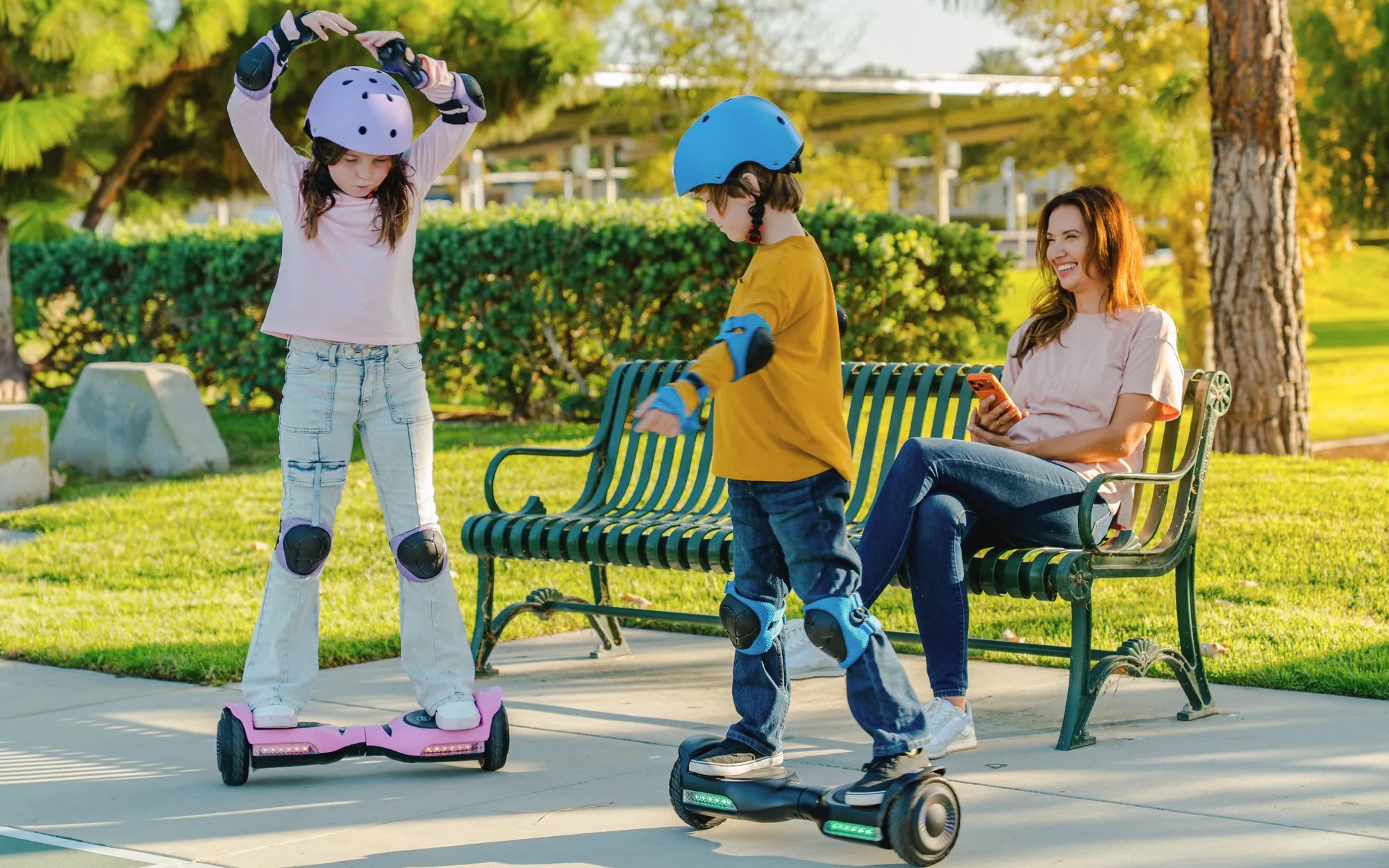
Introduction: Why a 2-Wheel Smart Scooter is a Modern Childhood Milestone
The journey from a simple kick scooter to today's advanced kids 2 wheel smart scooter represents a significant leap in childhood mobility and outdoor play. These are not just toys with motors; they are sophisticated devices designed to foster independence, coordination, and a love for the outdoors. For parents, navigating the market requires understanding a blend of technology, safety engineering, and practical performance.
This guide serves as your essential resource, cutting through marketing jargon to deliver factual comparisons and actionable advice. We will analyze what makes a scooter "smart," break down critical safety features, and provide a framework for choosing the right model for your child's age and environment. Leading brands like Gyroor have set new standards, integrating app-based parental controls and certified battery safety into their designs, trusted by over 100,000 riders.
The modern kids 2 wheel smart scooter is engineered for controlled adventure. It combines the thrill of personal transportation with layers of parental oversight, making it a compelling alternative to passive screen time. By the end of this guide, you will be equipped to make a choice that balances fun, safety, and durability.
Understanding "Smart" Features: More Than Just Motorized
The term "smart" in a kids 2 wheel smart scooter signifies a suite of integrated technologies that enhance safety, customization, and the riding experience. It moves far beyond a simple throttle and motor. At its core, smart technology provides parents with control and riders with intuitive feedback, creating a safer learning environment.
Key features typically include Bluetooth app connectivity, which allows for remote speed limiting, ride tracking, and diagnostics. An LED display is standard, showing real-time speed, battery level, and selected riding mode. Multiple speed modes—such as beginner (3-5 mph), eco (7-9 mph), and sport (10-15 mph)—allow the scooter to grow with your child's skill.
Advanced models incorporate regenerative braking, which captures kinetic energy during braking to slightly extend battery range. Other intelligent systems include cruise control for longer, fatigue-free rides and ambient lighting that improves visibility. These features transform the scooter from a basic vehicle into a responsive, adaptable companion for your child's adventures.
Safety First: How Smart Tech Enhances Protection
Smart technology directly addresses core parental safety concerns through proactive systems. Parental control via a dedicated smartphone app is paramount. This allows you to set a maximum speed limit remotely, effectively creating a digital safety zone for your child regardless of which mode they select on the handlebars.
The app also enables geofencing, sending alerts if the scooter leaves a predefined area, and provides trip history logs. On-board, low-battery warnings and automatic power reduction prevent sudden shut-offs mid-ride. The integration of UL-certified battery packs, a standard in Gyroor scooters, is a critical smart safety feature, rigorously tested to prevent overcharging, short-circuiting, and thermal runaway.
Electronic braking systems often offer smoother, more predictable deceleration compared to purely mechanical brakes, especially for young riders. When these digital safeguards are combined with robust physical construction, the kids 2 wheel smart scooter becomes a remarkably secure platform for learning and fun.
Key Factors for Parents: Choosing the Right Model
Selecting the ideal kids 2 wheel smart scooter requires evaluating several data-driven factors against your child's profile. A mismatch in size or power can affect safety and enjoyment. Use the following checklist to guide your decision, ensuring the scooter is a tool for confidence, not frustration.
Age & Size Appropriateness: Manufacturer age recommendations are a starting point, but your child's height and coordination are more critical. The deck should be low to the ground for stability, and the handlebar height should be between their waist and chest for proper control. A scooter that is too tall or heavy can be difficult to maneuver.
Weight Capacity: Always choose a scooter with a maximum weight limit that exceeds your child's current weight by at least 20-30 lbs. This ensures the frame, motor, and brakes are not overstressed, which preserves performance and safety margins. Exceeding the limit can damage the scooter and lead to premature failure of components.
Motor Power & Performance: Motor wattage (typically 100W-250W for kids' models) directly influences hill-climbing ability and acceleration. A 150W motor is sufficient for flat suburban sidewalks, while 200W+ provides better performance on gentle inclines. More power is not always better for beginners; controllability is key.
Battery & Range: Assess real-world range, not just claimed maximums. Factors like rider weight, terrain, and use of higher speed modes reduce range. A scooter with a 10-mile claimed range may deliver 6-7 miles in practice. Look for batteries with clear watt-hour (Wh) ratings and certified safety standards.
Tire Type: Air-filled (pneumatic) tires offer superior shock absorption and grip on uneven surfaces, providing a smoother ride. Solid (airless) tires are puncture-proof and require zero maintenance but can transmit more vibration. The choice depends on your local pavement quality and your preference for comfort versus upkeep.
The Gyroor Advantage: Built for Trust and Durability
When evaluating brands, Gyroor distinguishes itself by engineering products that specifically target parental peace of mind. This focus is evident in three core areas: power system safety, environmental resilience, and post-purchase support. These are not mere features but foundational design principles.
Every Gyroor kids 2 wheel smart scooter utilizes UL-certified battery packs. This independent certification involves over 20 rigorous tests for electrical, mechanical, and environmental safety, ensuring protection against fire and explosion hazards—a primary concern for parents. These batteries are rated for 500+ charge cycles, ensuring long-term reliability.
The IPX5 water-resistance rating is another critical advantage. It means the scooter can withstand water jets from any direction, making it safe to ride through puddles and in light rain. This durability prevents internal damage from common childhood use scenarios, extending the scooter's lifespan significantly.
Finally, Gyroor backs its scooters with a comprehensive 1-year warranty and accessible customer support for parts and service. This commitment, coupled with a 4.5/5 average customer rating from a base of over 100,000 riders, underscores a reputation for quality and trustworthiness that parents can rely on.
Performance & Practicality: What to Expect on the Pavement
Understanding realistic performance metrics helps set correct expectations for both parents and young riders. A kids 2 wheel smart scooter is designed for controlled environments, not for mimicking adult electric vehicle performance. Its capabilities are tailored to safety and gradual skill development.
Speed: Top speeds for children's models responsibly cap between 10 mph and 15 mph. The true value lies in multiple speed modes. A beginner mode limiting speed to 3-5 mph is essential for first-time riders in a confined space like a driveway or empty parking lot. This allows them to master balance, steering, and braking without excessive risk.
Range: As noted, real-world range is less than the maximum advertised. A scooter with a 7.5Ah battery might claim 12 miles but will typically achieve 8-9 miles with a child rider on flat pavement at moderate speed. Regularly draining the battery to zero can shorten its life; partial discharges are healthier for lithium-ion cells.
Hill Climbing: A 150W motor can handle mild slopes (5-7% grade), while a 200W+ motor is better for consistent inclines. Teach your child to approach hills with momentum and to understand that speed will drop on the ascent. Steep hills should generally be avoided to prevent motor strain and overheating.
Braking Systems: Most models use a combination of electronic (e-brake) and mechanical braking (disc or foot brake). The e-brake, activated by the throttle release or a separate lever, provides smooth deceleration. A physical rear fender or disc brake is necessary for reliable stopping power, especially on declines or in wet conditions.
Safety Gear and Riding Etiquette: Non-Negotiables for Young Riders
The smartest scooter technology is ineffective without proper safety gear and established rules. This combination forms an essential safety ecosystem. Parents must enforce these protocols consistently before every ride, making them as routine as putting on a seatbelt.
Essential Safety Kit:
- Helmet: Must be ASTM or CPSC certified for bicycle/skateboarding. It should fit snugly without wobbling.
- Knee and Elbow Pads: Protect against the most common falls during the learning phase.
- Wrist Guards: Crucial for preventing fractures and severe abrasions.
- Footwear: Closed-toe, rubber-soled shoes (like sneakers) are mandatory. No sandals or flip-flops.
Fundamental Riding Rules:
- Supervised Areas Only: Ride on smooth, paved surfaces away from roads, traffic, and steep hills. Empty parking lots, sidewalks in quiet neighborhoods, and park paths are ideal.
- No Night Riding: Even with lights, visibility is reduced for the rider and others. Restrict riding to daylight hours.
- Pre-Ride Check: A quick 30-second inspection: verify tire pressure, test brake function, ensure the folding mechanism (if present) is locked, and check for loose parts.
- One Rider at a Time: These scooters are designed for a single rider. Doubling up drastically affects balance, braking, and control.
Instilling this discipline from day one ensures that the fun of a kids 2 wheel smart scooter is built on a foundation of respect for the vehicle and the environment.
Maintenance and Care: Ensuring Longevity and Safety
Regular, simple maintenance preserves performance, maximizes safety, and extends the lifespan of your investment. A well-maintained kids 2 wheel smart scooter is a safer scooter. Follow this basic schedule to keep it in optimal condition.
Battery Care:
- Use only the provided charger. Store and charge the scooter in a dry, cool place away from direct sunlight and flammable materials.
- Avoid full 0%-100% cycles. It's better to recharge after the battery drops to 20-30%.
- If storing for more than a month, charge the battery to about 60% and store in a cool place.
Tire & Brake Inspection: For air-filled tires, check pressure weekly with a gauge, inflating to the PSI marked on the tire sidewall. Inspect tires monthly for cuts or embedded debris. Test brakes before every ride; listen for grinding noises or feel for reduced stopping power, which may indicate worn brake pads needing adjustment or replacement.
Cleaning & Storage: Leverage the IPX5 rating by using a damp cloth to wipe down the deck, frame, and wheels. Avoid high-pressure hoses or submerging the scooter. Never use chemical solvents. Store the scooter indoors in a dry place. If folding, ensure the latch is fully engaged to prevent accidental collapse.
Professional Service: For issues beyond basic tightening or cleaning, contact the manufacturer's support. Using official Gyroor parts for replacements ensures compatibility and preserves the warranty. An annual check-up of all electrical connections, bearings, and structural bolts is a good practice for heavy-use scooters.
Comparison Table: Key Scooter Specifications for Different Ages
| Feature / Consideration | Ages 6-8 (Beginner) | Ages 9-12 (Intermediate) | Ages 13+ (Advanced Youth) |
|---|---|---|---|
| Recommended Motor Power | 100W - 150W | 150W - 200W | 200W - 250W |
| Typical Max Speed | 10 mph (with beginner mode) | 12-13 mph | 15 mph |
| Real-World Range | 5-7 miles | 7-10 miles | 10-15 miles |
| Weight Capacity | 120 lbs max | 140-160 lbs max | 180-200 lbs max |
| Key Smart Features | 3-speed modes, simple LED display, essential parental speed limit | App connectivity, cruise control, regenerative braking, geofencing | Advanced app diagnostics, customizable performance profiles, enhanced lighting |
| Ideal Tire Type | Larger air-filled tires for stability & comfort | Mix: Air-filled for comfort or solids for low-maintenance | Performance-focused, often air-filled for grip |
Frequently Asked Questions (FAQs) for Concerned Parents
Q1: What is the appropriate age for a kids 2 wheel smart scooter?
A: Most manufacturers recommend ages 6 and up. The key determinant is not just age but your child's physical coordination, judgment, and ability to follow safety rules. A mature 6-year-old with good balance may be ready, while some 8-year-olds might need more time. Always start with the slowest speed mode.
Q2: How long does the battery last on a single charge, and how long until it needs replacement?
A> Real-world range is typically 70-80% of the advertised maximum, depending on conditions. As for battery lifespan, a quality UL-certified battery (like those from Gyroor) is rated for 500+ full charge cycles. With typical use (1-2 charges per week), this translates to 5+ years of service before significant capacity loss occurs.
Q3: Are these scooters waterproof? Can my child ride in the rain?
A> Terms matter. "Water-resistant" is common; "IPX5 rated" is specific and reliable. An IPX5 rating, found on Gyroor models, means the scooter can handle sustained water spray from any direction. It is safe for puddles and light rain. However, it is not submersible. Avoid heavy downpours, deep standing water, and always dry the scooter after wet rides.
Q4: How do the parental controls and app actually work?
A> After downloading the brand's app and pairing via Bluetooth, you can typically set a permanent speed cap that overrides the scooter's built-in modes. You can also often view real-time location, set a geofence boundary, lock the scooter remotely, and review ride history (distance, speed, route). This gives you oversight even when you're not physically present.
Q5: Where is the best place for my child to learn and practice?
A> The ideal location is a smooth, paved, flat, and car-free area. An empty school parking lot on the weekend, a tennis or basketball court, or a wide driveway are perfect. Avoid public sidewalks near traffic until your child demonstrates mastery of starting, stopping, steering, and obstacle avoidance in a controlled setting.
Empowering Adventures with Confidence and Safety
A kids 2 wheel smart scooter, when chosen and used correctly, is more than a gift—it's an investment in outdoor activity, motor skill development, and responsible independence. The fusion of physical design and intelligent technology creates a platform where fun is thoughtfully balanced with security. The data shows that informed parents who prioritize certified safety features, appropriate performance limits, and consistent safety gear create the optimal environment for enjoyment.
The decision ultimately hinges on trust in the manufacturer's commitment to safety and quality. Brands that transparently offer UL-certification for batteries, meaningful water-resistance ratings, and robust warranties demonstrate that commitment tangibly. This allows you to step back with confidence as your child explores their neighborhood, knowing the vehicle is engineered to protect them.
Ready to explore models that put safety and smart control first? Browse the full Gyroor collection, featuring UL-certified, IPX5-rated kids 2 wheel smart scooters, at gyroorboard.com.
Gold Hoverboard with Bluetooth and Lights: The Ultimate Futuristic Ride
Is There a Hoverboard That Actually Hovers? The Future of Levitation Tech