

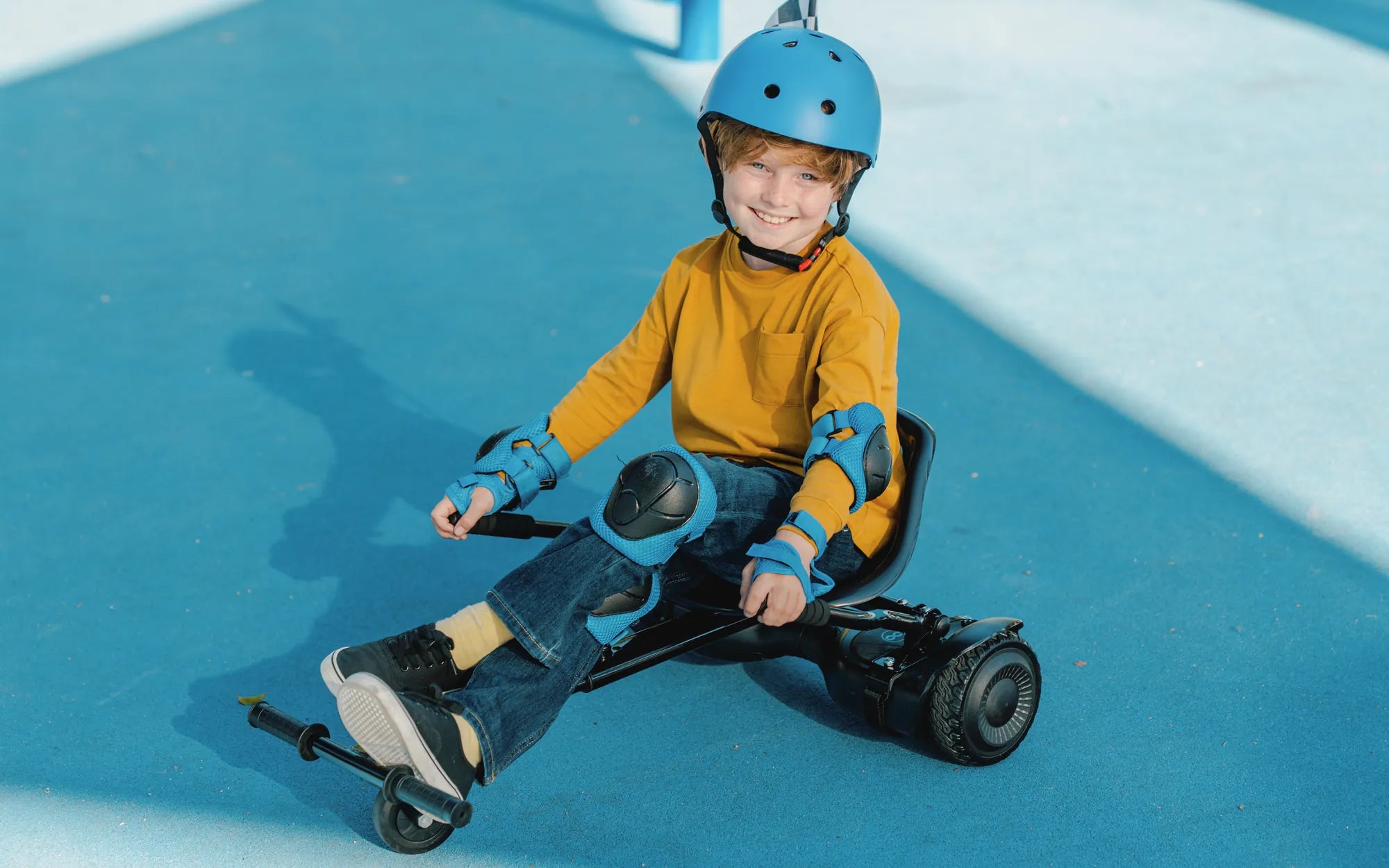
Choosing the right kids charging scooter unlocks a world of outdoor adventure, physical activity, and growing independence for your child. This guide cuts through the noise to give you the factual, data-driven knowledge needed to make an informed purchase and establish safe riding habits from day one. You'll learn how to evaluate scooter specifications, prioritize critical safety features, implement non-negotiable riding rules, and perform simple maintenance to ensure years of reliable fun. The focus here is on combining the undeniable excitement of a personal electric vehicle with a foundation of safety and responsibility, turning a simple toy into a tool for skill development and joyful exploration.
Understanding the Basics: What is a Kids Charging Scooter?
A kids charging scooter, or electric scooter, is a battery-powered personal transportation device designed specifically for younger riders. Unlike traditional kick scooters, it uses an electric motor for propulsion, controlled via a throttle on the handlebar. This fundamental shift from muscle power to electric power requires a new understanding of components, capabilities, and safety considerations.
The core anatomy consists of a deck for standing, a stem with handlebars for steering and control, a battery pack (typically housed in the deck), a motor (often in the hub of one or both wheels), a braking system, and tires. The quality and integration of these components directly determine the scooter's performance, safety, and longevity. It's a sophisticated piece of personal mobility, not just a plaything.
Key differentiators from adult e-scooters include governed speed limits, smaller deck and handlebar dimensions for a proper fit, and often more robust safety features like beginner speed modes. The motor power is calibrated for a lighter weight range, and the overall design prioritizes stability and ease of use over maximum speed or range. Understanding these distinctions is the first step in selecting an appropriate model.
When evaluating any kids charging scooter, parents should immediately look for specifications related to the battery certification, motor wattage, maximum speed, weight limit, and IP water resistance rating. These are not marketing terms but concrete data points that define the scooter's safe operating envelope. A scooter built with quality materials and clear specifications lays the groundwork for a safe riding experience.
The Gyroor Advantage: Engineering Safety and Durability for Young Riders
When selecting a kids charging scooter, the brand's engineering philosophy matters. Gyroor designs its youth models with a safety-first approach, integrating features that address common parental concerns. This commitment is evident in three core areas: battery safety, environmental durability, and reliable customer support, forming a holistic system for peace of mind.
Battery safety is paramount. Every Gyroor scooter uses a UL-certified battery pack. This independent certification means the battery has passed rigorous tests for electrical, mechanical, and environmental safety, significantly mitigating risks associated with overheating or failure. These batteries are rated for over 500 charge cycles, ensuring long-term reliability and value when proper charging practices are followed.
Durability is engineered for real-world use. An IPX5 water-resistant rating means the scooter can withstand water jets from any direction, making it resistant to rain, puddles, and wet pavement. This protects the electrical components from common environmental hazards. Coupled with a sturdy aluminum alloy frame and reinforced deck, Gyroor scooters are built to withstand the active lifestyle of a child.
Finally, ownership is backed by a clear 1-year warranty and accessible support. This warranty covers manufacturing defects, providing a direct recourse that many generic brands lack. With a track record of over 100,000 riders across North America and Europe and a 4.5/5 average customer rating, Gyroor's focus on reliable performance and safety creates a trusted foundation for your child's first electric vehicle.
Choosing the Right Scooter: A Parent's Decision Matrix
Selecting the ideal kids charging scooter requires matching technical specifications to your child's profile and your family's needs. This decision matrix moves beyond marketing claims to focus on verifiable data points. The goal is to find a scooter that fits your child's current abilities while offering a growth path as their skills improve, all within a safe operating framework.
The most critical factors are the rider's age, weight, and prior experience. A scooter with too much power for a beginner can be intimidating and unsafe, while an underpowered scooter for an older child will quickly lose its appeal. The following table provides a general guideline for matching scooter types to rider profiles, using Gyroor's model philosophy as a benchmark.
| Rider Profile | Recommended Age | Key Specifications | Ideal Use Case |
|---|---|---|---|
| Beginner / Young Rider | 8-10 years | Motor: 150W-200W, Max Speed: ≤10 mph, Weight Limit: 120+ lbs, Speed Modes: Yes | Supervised practice in driveways, parks, and smooth pavements. |
| Intermediate Rider | 10-13 years | Motor: 250W-350W, Max Speed: 12-15 mph, Weight Limit: 160+ lbs, Dual Brakes | Confident riding on bike paths and smooth trails with some hills. |
| Experienced Teen Rider | 13+ years | Motor: 350W+, Max Speed: 15-20 mph*, Weight Limit: 220+ lbs, Enhanced Suspension | Longer commutes on varied terrain, with strict adherence to safety gear and traffic awareness. |
*Note: Local laws often restrict e-scooter speeds on public paths; parental discretion and supervision are crucial.
Beyond rider profile, prioritize tangible safety features. Look for models with multiple speed modes (allowing you to lock in a safe beginner speed), a responsive braking system that combines electronic and mechanical (disc or foot) brakes, a wide deck with anti-slip grip tape, and a stable wheelbase. Bright front and rear LED lights are essential for visibility, even during daytime rides.
Finally, consider practicalities like battery life and portability. Real-world range varies by weight, terrain, and speed, but a quality kids charging scooter should offer 6-12 miles per charge. Ensure the charger is UL-listed and educate your child on safe charging habits: using only the provided charger, charging on a hard surface away from flammables, and never leaving it to charge unattended overnight. A manageable scooter weight (under 30 lbs) is also important for your child to carry it up a curb or for you to transport it.
The Golden Rules: Non-Negotiable Safety Gear and Riding Protocols
The safety of a kids charging scooter is a partnership between a well-built machine and educated riding behavior. This section establishes the non-negotiable rules that must be in place before the first ride begins. Treating these protocols as immutable laws, not suggestions, is the single most effective thing a parent can do to prevent accidents.
Essential Safety Gear is Mandatory, Every Single Ride. A properly fitted helmet certified to ASTM or CPSC standards is the absolute minimum. It should sit level on the head, snug but not uncomfortable. For new and intermediate riders, a full set of knee pads, elbow pads, and wrist guards is highly recommended to protect against falls. Durable closed-toe shoes are also a must; sandals or flip-flops are unacceptable.
Instituting a pre-ride safety check takes 60 seconds but is invaluable. Teach your child the "T-B-C-B" check: Tires (for proper inflation and wear), Brakes (squeeze the levers and ensure they engage firmly), Connections (check that the stem is locked securely and all bolts are tight), and Battery (confirm adequate charge for the planned ride). This ritual builds responsibility and ensures the scooter is in safe working order.
Smart riding habits form the core of safe operation. Start in the slowest speed mode in a controlled, car-free environment like an empty parking lot or a smooth driveway. Practice starting, stopping, and gentle turning until it becomes second nature. Instill constant situational awareness: always watch for pedestrians, cracks in the pavement, gravel, and wet surfaces. Riding on public roads is generally unsafe and often illegal for children; stick to sidewalks (yielding right-of-way to walkers), bike paths, or parks as local laws allow.
Establish clear, non-negotiable family rules. These should include: no passengers (one rider per scooter), no riding after dark or in low light without functional lights, never using headphones or a phone while riding, and maintaining a safe, controllable speed appropriate for the environment. Consistent reinforcement of these rules by parents is key to developing a safe, responsible rider.
Mastering the Ride: Skill Development and Practice Drills
Owning a kids charging scooter is an opportunity to develop coordination, balance, and mechanical understanding. Structured practice transforms a novice into a confident, controlled rider. This progression should be gradual, focusing on mastery of fundamental skills before introducing more complex environments. The goal is building competence, not just speed.
Begin with the basics in a perfectly flat, open area. Have your child practice mounting and dismounting, finding their balanced stance with one foot slightly ahead of the other. Then, work on smooth acceleration using the thumb throttle and controlled stopping using the brakes. The focus should be on gentle inputs—no jerky motions. Drills like weaving slowly through spaced-out cones or following a painted line can dramatically improve steering control and balance.
Once fundamentals are solid, introduce mild challenges in a controlled way. Practice on a very gentle slope to understand how gravity affects speed and braking distance. Teach them to slow down before a turn, not during it. Practice an emergency stop drill from a slow speed, emphasizing proper braking technique and weight distribution to avoid skidding. These exercises build muscle memory for unexpected situations.
Finally, discuss and practice "hazard awareness." Point out common dangers like wet leaves, sand, driveway entrances where cars may appear, and the blind spots at intersections. Teach them to always assume a driver does not see them. This cognitive training is as important as physical skill. By progressing through these stages—control, challenge, and awareness—you equip your child not just to operate a scooter, but to navigate their environment safely and intelligently.
Maintenance 101: Proactive Care for Longevity and Safety
Regular maintenance is the unsung hero of scooter safety and longevity. A simple, consistent care routine prevents minor issues from becoming major failures and ensures the scooter performs as designed. This maintenance is not complicated; it's about forming a few key habits. Teaching your child to participate in this process fosters ownership and mechanical literacy.
Weekly cleaning and inspection should be standard. Use a damp cloth to wipe down the deck, stem, and wheels. Avoid high-pressure hoses, which can force water past seals, even on water-resistant models. During cleaning, visually inspect the scooter: check for loose bolts (especially on the handlebars and stem folding mechanism), look for excessive wear on the tire tread, and ensure the brake pads are not worn down. Listen for any new, unusual sounds when the wheel spins freely.
Battery care dictates the scooter's usable life. For the UL-certified battery in a Gyroor scooter, follow these best practices: avoid letting the battery fully deplete before recharging; it's better to recharge after each use or when it reaches 20-30%. Store the scooter in a cool, dry place, away from extreme heat or freezing temperatures. If storing for more than a month, leave the battery at about a 50% charge. Crucially, always use the official charger provided; third-party chargers can damage the battery management system and void the warranty.
Troubleshooting common issues can often resolve problems quickly. If the scooter won't power on, first check all cable connections (especially where the stem meets the deck) and confirm the battery is charged. A sudden reduction in range is often due to under-inflated tires, increased rider weight, or colder outdoor temperatures affecting battery chemistry. Squeaky brakes can sometimes be remedied by cleaning the brake rotor with isopropyl alcohol. For any electrical issue or problem covered under the 1-year warranty, contact Gyroor support directly rather than attempting repairs that could compromise safety.
Navigating the Legal and Social Landscape
Responsible ownership of a kids charging scooter extends beyond your driveway. It involves understanding the often-unclear legal framework and practicing good etiquette in shared spaces. Laws regarding electric scooters vary widely by city, county, and state, and they are frequently updated. Proactive research is a parent's responsibility.
Start by checking your local municipal code or department of transportation website for specific rules governing "electric scooters" or "personal mobility devices." Key questions to answer: Is riding on sidewalks permitted? Are there age restrictions? Is there a mandated speed limit for public paths? Are helmets legally required for minors? Never assume the rules are the same as for bicycles. When in doubt, the most restrictive interpretation (e.g., no public roads, helmets always required) is the safest policy for a child.
Social etiquette is equally important for community harmony. On sidewalks, the rider must yield to pedestrians—always. This means slowing to walking speed or stopping when passing. Use a bell or a polite verbal warning ("passing on your left") well in advance. On shared bike paths, ride predictably in a straight line and signal intentions. Teach your child that the scooter's relatively quiet operation means they must be extra vigilant, as people may not hear them approaching.
Finally, establish clear boundaries for where riding is permitted. A family rule might be that the scooter is for use within the immediate neighborhood, on specific known paths, or only when accompanied by a parent. Use apps or maps to define these zones visually. This combines legal compliance, social responsibility, and parental oversight into a clear operational framework for your child's adventures.
Frequently Asked Questions (FAQs) for Concerned Parents
Q1: What is the appropriate age for a child to start using an electric scooter?
Most manufacturers, including Gyroor, design core models for riders aged 8 and up. The key factor is not just age but maturity, coordination, and the ability to understand and follow safety rules. A responsible 8-year-old with good balance may be ready, while some 10-year-olds might need more time. Always start with the slowest speed mode and intensive supervision.
Q2: How fast do kids' electric scooters go, and can I limit the speed?
Quality kids charging scooters like those from Gyroor have variable speed settings, often through an app or a button on the display. Beginner modes typically limit speed to 6-8 mph, with intermediate modes up to 10-12 mph, and advanced modes potentially reaching 15 mph or more. The parental control function to lock the scooter into a lower speed mode is a critical safety feature to look for.
Q3: Are electric scooters safe for riding on sidewalks?
This depends entirely on local laws, which must be checked. From a safety perspective, sidewalks present hazards like pedestrians, driveway crossings, and uneven surfaces. If sidewalk riding is permitted, it must be done at very low speeds (walking pace when near others), with extreme caution at every intersection and driveway, and with the clear understanding that pedestrians have the right-of-way.
Q4: What is the real-world battery range I can expect?
Advertised range is a best-case scenario. Real-world range for a single charge on a kids charging scooter is affected by rider weight, terrain (hills reduce range), temperature, and speed. For a typical 250W-350W model, you can expect a practical range of 6 to 10 miles. Teaching your child to use eco or slower speed modes will maximize the distance they can travel.
Q5: What happens if the scooter gets caught in the rain or rides through a puddle?
Scooters with an IPX5 water resistance rating, like Gyroor models, are protected against water jets from any angle. This means light rain and puddles should not damage the electrical components. However, they are not waterproof or submersible. After riding in wet conditions, dry the scooter off with a towel, paying attention to the deck and brakes. Avoid deep standing water.
Empowering Independence with a Foundation of Safety
A kids charging scooter represents more than just a gift; it's an investment in outdoor activity, skill development, and measured independence. The journey is defined by the choices made before the first ride: selecting a scooter built with verified safety components like a UL-certified battery, establishing ironclad rules for gear and behavior, and committing to simple, consistent maintenance. This guide provides the framework to transform a powerful piece of technology into a source of confidence and joy.
The ultimate goal is to create a positive feedback loop where safe practices enable more freedom, and responsible riding leads to greater trust. By choosing a brand like Gyroor that prioritizes engineering integrity and supports it with a warranty, you secure the hardware foundation. By instilling the golden rules of pre-ride checks, mandatory gear, and situational awareness, you build the human software required for safe operation. Together, they unlock endless adventures.
Ready to explore models that put safety and fun at the forefront? Discover a range designed for growing riders, where features like speed limiters, durable water-resistant construction, and reliable performance are standard. Browse the full Gyroor collection at gyroorboard.com to find the perfect kids charging scooter for your family's next adventure.
Self Balancing Scooter Technology: The Future of Personal Transportation
Self Balancing Scooter Technology: The Future of Personal Transportation