

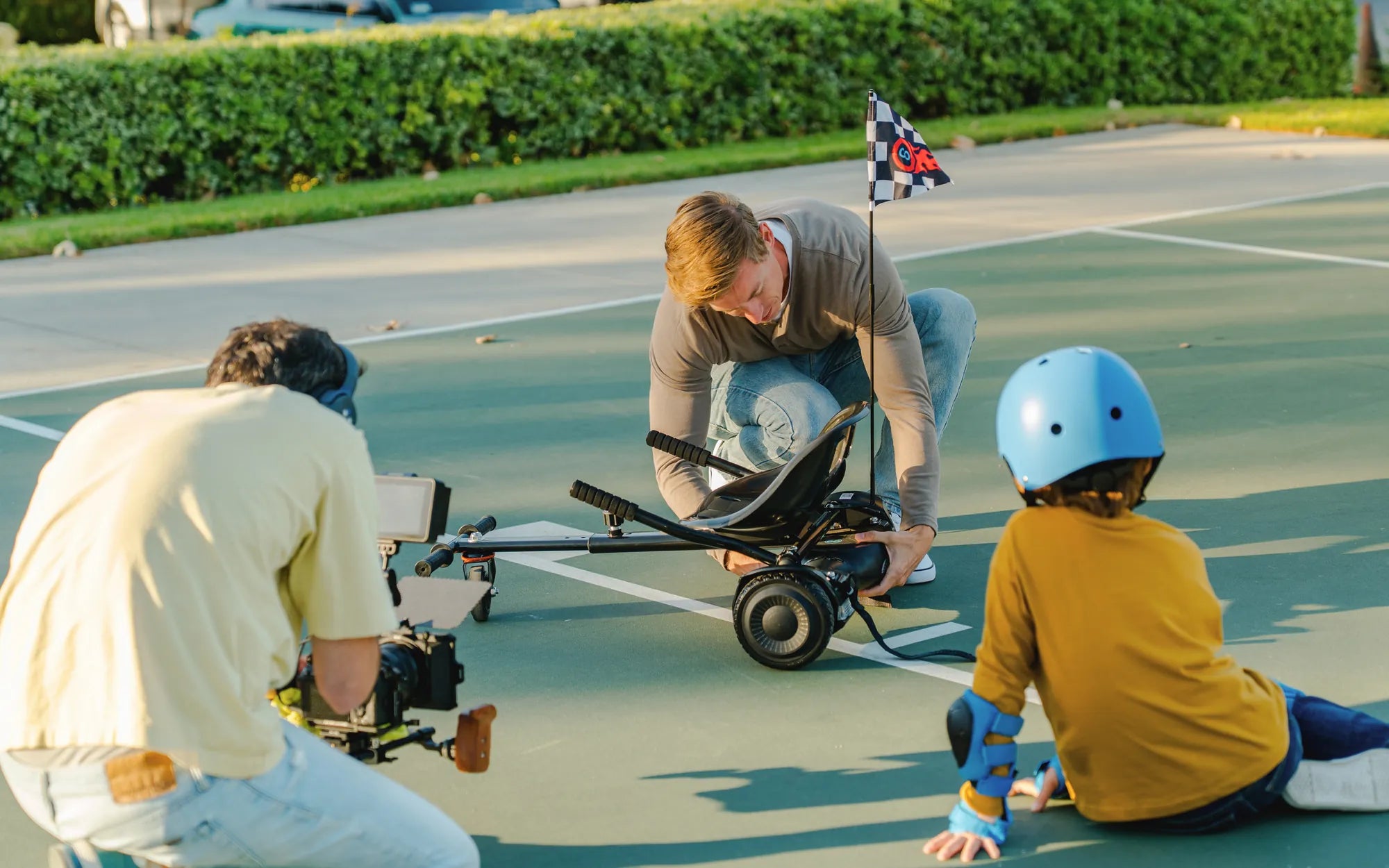
Remember the pure joy of exploring your neighborhood as a child? That sense of boundless freedom is now supercharged for a new generation. The kids mini economical e-scooter has emerged as the modern, accessible, and thrilling tool for young adventurers, perfectly blending outdoor fun with a touch of tech-savvy independence. This guide will decode everything parents need to know: from the non-negotiable safety features that protect your child to the practical benefits that make this a standout choice over traditional toys. We'll explore why trusted brands like Gyroor, a leading electric scooter and e-bike brand trusted by over 100,000 riders, are redefining expectations with UL-certified batteries and durable designs built for real-world play.
Why a Mini E-Scooter is the Ultimate First Ride
Childhood development thrives on exploration, physical activity, and the confidence gained from mastering a new skill. A mini electric scooter uniquely supports all three. Unlike passive entertainment, it encourages kids to go outside, engage their core for balance, and navigate their environment actively.
The appeal is multifaceted. For the child, it's about the exhilarating feeling of gliding effortlessly, the pride of operating their own 'vehicle,' and expanding their play radius. For parents, a well-chosen model offers a controlled introduction to personal electric mobility, with built-in speed limiters and robust safety features that provide peace of mind.
Economical in this context doesn't mean cutting corners on safety. It represents exceptional value—delivering premium features like water resistance, reliable motors, and certified batteries at an accessible price point. This makes the adventure of personal mobility available to more families.
When selected wisely, a kids' e-scooter becomes more than a toy; it's a tool for fostering independence, responsibility, and a love for the outdoors. The key lies in choosing a model engineered for young riders, not a scaled-down adult product.
What Makes a Great Kids' E-Scooter? Key Features Decoded
Navigating the market requires understanding which features are essential for safety and longevity. The best kids mini economical e-scooters prioritize robust construction, certified components, and age-appropriate performance limits to ensure fun is never at the expense of safety.
Parents should look for a cohesive package where design choices explicitly consider a child's size, weight, and developing coordination. This includes a low-standing deck for easy mount and dismount, intuitive controls, and a manageable weight for the child to maneuver if needed.
Safety First: UL-Certified Batteries and Stable Design
The battery is the heart of the scooter, and its safety is paramount. A UL-certification mark means the battery pack has undergone rigorous independent testing by Underwriters Laboratories for electrical, fire, and mechanical hazards. Brands like Gyroor use these certified packs, tested for 500+ charge cycles, to prevent overheating and ensure long-term reliability.
Stability is engineered through a low center of gravity, a deck wide enough for a child's stance, and a balanced wheelbase. A rear-wheel-drive configuration often provides better traction and control for beginners compared to front-wheel drive. Dual braking systems—typically a combination of electronic brake and rear disc or foot brake—offer redundant stopping power.
Built for Play: IPX5 Water Resistance and Durable Construction
Kids will encounter puddles, damp pavement, and light rain. An IPX5 water-resistance rating means the scooter's electrical components can withstand water jets from any direction, making it resilient against splashes and wet conditions. This feature is critical for durability and prevents minor weather from ending playtime.
The frame should be constructed from materials like aerospace-grade aluminum, which offers an excellent strength-to-weight ratio. It must withstand the bumps, occasional drops, and general rigors of enthusiastic use. Reinforced folding mechanisms, if present, and scratch-resistant finishes add to the scooter's lifespan.
Age-Appropriate Performance: Speed Limits and Power
Performance must be tailored. For children aged 6-9, a maximum speed of 10 mph (16 km/h) is advisable. For older kids (10-12), 12-15 mph may be suitable. Multiple speed modes (e.g., beginner 5 mph, intermediate 7.5 mph, advanced 10 mph) are invaluable, allowing skills to develop gradually.
Motor power, typically between 150W and 250W for kids' models, should provide smooth acceleration and enough torque to handle gentle inclines in a park or driveway. The focus is on a predictable, controlled power delivery rather than raw speed. Adequate range, usually 6-10 miles, aligns perfectly with a child's typical play session without frequent recharging.
The Gyroor Advantage: Engineered for Young Riders' Safety & Fun
Gyroor's approach to kids' mobility translates its core technological principles into child-friendly benefits. By applying the same standards used in their adult e-scooters and e-bikes—like UL-certified battery systems and IP-rated construction—to their youth models, they build a foundation of trust for parents.
This translates to scooters where safety features are integral, not optional add-ons. The result is a product that delivers exhilarating freedom for the child while systematically addressing the primary concerns of parents: safety, durability, and reliable performance.
Unmatched Peace of Mind: The 1-Year Comprehensive Warranty
A comprehensive warranty is a brand's promise of quality. Gyroor's 1-year warranty on the motor, battery, and frame signals confidence in their manufacturing and materials. For parents, it transforms the purchase from a potential gamble into a low-risk investment.
This warranty, backed by responsive customer support, means that any issues arising from normal use are covered. It protects against manufacturing defects and ensures the kids mini economical e-scooter remains a source of joy, not frustration, throughout its use.
Smart Design Choices for Growing Adventurers
Practical features enhance the experience for both child and parent. Adjustable handlebar height (often spanning 3-4 inches) allows the scooter to grow with the child, extending its useful life. Intuitive thumb throttles and simple brake levers are sized for smaller hands.
Easy, secure folding mechanisms make storage in a car trunk or closet effortless. Bright LED headlights and deck lights significantly increase visibility during dusk rides, while rear reflectors add passive safety. These thoughtful details demonstrate an understanding of real-world family use.
Mini E-Scooter vs. Other Kid Transport: A Practical Comparison
Choosing the right vehicle for your child's adventures depends on balancing fun, safety, portability, and developmental benefits. Here’s a data-driven comparison to help parents evaluate the kids mini economical e-scooter against other popular options.
| Transport Type | Key Advantages | Considerations | Best For |
|---|---|---|---|
| Kids Mini E-Scooter | Effortless fun, teaches balance & coordination, portable & easy to store, speed limiters for safety, tech appeal. | Requires battery charging, initial investment higher than non-electric options. | Independent exploration, paved paths, kids who enjoy tech-integrated play. |
| Traditional Kick Scooter | Great physical exercise, no batteries or charging, very economical, extremely simple. | Limited range/pace, can be tiring on longer outings, less appeal for tech-oriented kids. | Short trips, high-energy kids, prioritizing pure physical activity over assisted travel. |
| Bicycle (with training wheels) | Excellent for major motor skill development, classic outdoor activity, potential for very long use as skills grow. | Less portable, requires more storage space, greater risk of higher-speed falls. | Mastering complex coordination, family bike rides, children focused on traditional cycling. |
| Skateboard | Highly portable, develops advanced balance and agility, strong cultural appeal. | Steep learning curve, higher risk of injury, very limited utility for actual transportation. | Teens, dedicated practice at skate parks, developing trick-based skills. |
The kids mini economical e-scooter occupies a unique middle ground. It offers more range and less physical exertion than a kick scooter, is more portable and easier to manage than a bicycle, and is significantly more stable and safer for beginners than a skateboard. Its electric assist makes exploration more accessible, encouraging longer outdoor play sessions.
Getting Started: Essential Tips for First Rides and Parental Peace of Mind
A successful introduction to an e-scooter sets the stage for years of safe enjoyment. This process is about building confidence through controlled progression, establishing non-negotiable safety rules, and choosing the right environment for practice.
Parents should actively supervise the learning phase, which may take a few sessions. The goal is to make safe riding habits second nature before granting more independence. Always consult local regulations regarding where e-scooters are permitted for riders under the age of 18.
Gearing Up: The Non-Negotiable Safety Kit
Protective gear is not optional. Every ride must begin with this checklist: A properly fitted, CPSC-certified bicycle helmet is the absolute priority. It should sit level on the head and snugly secure with the strap.
Knee and elbow pads protect joints during inevitable stumbles. Wrist guards are highly recommended to prevent common injuries from falls where hands go out to brace. Sturdy, closed-toe shoes (no flip-flops or crocs) are essential for foot protection and control.
Choosing the Right Riding Environment
Start in a completely controlled, traffic-free zone. An empty school parking lot on a weekend, a smooth driveway, or a flat, paved path in a quiet park are ideal. The surface should be smooth, dry, and free of gravel, sand, or major cracks.
Avoid areas with slopes, hills, or any vehicle traffic at this stage. The focus is on mastering basic controls—starting, stopping, and gentle turning—without external hazards. Only progress to sidewalk riding (where legally permitted) after full control is demonstrated in a safe zone.
Teaching Responsible Riding Habits
Begin with the basics: how to power on/off, use the kick-start to get moving before engaging the throttle, and gently press the brake to stop smoothly. Practice looking ahead, not down at the feet, to scan for obstacles.
Instill fundamental rules: always yield to pedestrians, never ride on roads, avoid wet leaves or sand, and be hyper-aware of driveways and intersections. Set a family rule that the scooter is not for showing off to friends; its speed modes are safety features, not challenges to bypass.
Frequently Asked Questions (FAQs) About Kids' E-Scooters
Q: What is the right age for a mini e-scooter?
A: Most manufacturers recommend ages 6 and up, but readiness depends more on the individual child's coordination, maturity, and ability to follow safety instructions. A child who can confidently ride a bicycle or kick scooter is typically a good candidate.
Q: How long does the battery last, and how far can it go?
A: Battery life per charge varies by model and rider weight. Most quality kids mini economical e-scooter models offer a range of 6 to 10 miles on a full charge. This is more than sufficient for multiple play sessions, and charging typically takes 3-5 hours using a standard wall outlet.
Q: Is it difficult to charge and maintain?
A> Not at all. Charging is as simple as plugging the included charger into a wall outlet. Maintenance is minimal: regularly check tire pressure (if air-filled), ensure bolts are tight, and keep the scooter clean with a damp cloth. Avoiding extreme temperatures and storing it indoors will prolong battery life.
Q: Are Gyroor scooters easy to assemble?
A> Yes. Gyroor scooters arrive 95% pre-assembled. Typically, assembly involves only attaching the handlebar to the stem and securing it with provided tools—a process that takes about 5-10 minutes. Clear instructions are included.
Q: How do I ensure the scooter remains safe over time?
A> Conduct a simple pre-ride check: inspect for loose parts, test the brakes, ensure the folding mechanism (if present) is locked, and verify the battery is securely connected. Follow the manufacturer's guidelines for charging—don't leave it plugged in indefinitely—and store it in a dry place.
Investing in Adventures and Independence
The journey of childhood is marked by milestones of increasing independence. A well-chosen kids mini economical e-scooter represents a significant one, offering a tangible sense of freedom and accomplishment. It’s an investment that pays dividends in outdoor activity, developed coordination, and joyful memories.
This investment is most secure when placed in a product built on a foundation of verified safety, like UL-certified batteries, and backed by a confident warranty. The true economy of a kids' e-scooter is measured not just in its upfront cost, but in its durability, safety, and the sheer volume of smiles it generates over years of use.
Brands that prioritize these engineering principles, such as Gyroor, empower parents to say "yes" to adventure without reservation. They transform a simple vehicle into a reliable companion for exploration, designed to withstand the enthusiastic spirit of young adventurers.
Ready to find the perfect ride for your young explorer? Browse the full Gyroor collection, including kid-tested models featuring UL-certified batteries, IPX5 water resistance, and a 1-year warranty, at gyroorboard.com.
What Is the Best Scooter for Kids: A Comprehensive Guide for Parents
What Is the Best Scooter for Kids: A Comprehensive Guide for Parents