



Why the Right Kids Scooter Matters
Choosing a kids scooter is about far more than picking a colorful toy. It's a foundational investment in your child's physical development, coordination, and independent outdoor play. A well-chosen scooter from a reputable brand builds confidence, while a poorly made one can lead to frustration and safety concerns. This guide to Kids Scooter Brands: The Ultimate Guide to Choosing the Best Ride for Your Child will equip you with the knowledge to make an informed decision. You'll learn how to evaluate key features, compare top contenders, and ultimately select a ride that balances safety, durability, and pure fun, ensuring years of adventurous use.
The right scooter encourages balance, motor skills, and spatial awareness. It transforms a simple sidewalk into a playground. Conversely, a scooter with poor stability, weak brakes, or flimsy construction can quickly end this joy, potentially causing falls and discouraging further activity.
This decision impacts long-term value. A quality scooter from a brand focused on engineering and safety, like Gyroor—a leading electric scooter and e-bike brand trusted by over 100,000 riders across North America and Europe—can be passed between siblings. A disposable option often ends up in a landfill after a single season.
Our goal is to move beyond marketing claims. We will dissect the practical elements that define a superior kids scooter, from wheel configuration to warranty support, giving you a framework to assess any brand.
Key Factors to Consider When Choosing a Kids Scooter Brand
Brand reputation is a starting point, but the devil is in the details. Understanding the following core factors will allow you to see past the logo and evaluate the scooter's true suitability for your child's specific needs and your family's expectations for quality.
These considerations form a checklist that applies whether you're looking at a basic kick scooter or a more advanced electric model. They are the universal metrics of safety, longevity, and value.
Age, Weight, and Height Recommendations
Matching the scooter's size to your child is the first and most critical step for safety and control. Manufacturers provide age guidelines, but a child's height and weight are more precise indicators. A scooter that is too large will be unwieldy; one that is too small will be uncomfortable and limit its usable life.
For toddlers and preschoolers (ages 2-5), three-wheeled scooters are standard. They offer superior stability with two wheels in front (or back) and a lean-to-steer mechanism that intuitively guides direction. As children grow (ages 5-8), they graduate to two-wheeled scooters with smaller decks and wheels (typically 120mm-125mm). Older kids and tweens (8+) can handle full-size scooters with larger decks and wheels (up to 200mm) designed for speed and tricks.
Adjustable handlebars are a crucial feature for longevity. A scooter with a wide height adjustment range can accommodate several inches of growth, often extending its useful life by two or more years. This is a key value proposition of many premium brands.
| Age Range | Recommended Wheel Config. | Typical Wheel Size | Key Features |
|---|---|---|---|
| 2 - 5 years | 3 Wheels (2 front/1 rear or 1 front/2 rear) | 100mm - 120mm | Lean-to-steer, wide deck, low speed |
| 5 - 8 years | 2 Wheels | 120mm - 125mm | Adjustable handlebars, hand brake, lighter frame |
| 8+ years | 2 Wheels | 150mm - 200mm | Larger deck, reinforced construction, advanced brakes |
Safety Features: Non-Negotiables for Peace of Mind
Safety is paramount and should never be compromised. Key features to scrutinize include the braking system, deck grip, and overall stability. A reliable brake is essential; rear fender brakes (stomp brakes) are common for younger riders, while hand-operated brakes offer more controlled stopping power for older children.
The deck should be wide enough for a stable stance and covered with a non-slip, abrasive material—not just painted-on graphics. High-quality, sealed bearings ensure smooth rolling without sudden catches or jerks that could throw a rider off balance. For electric models, battery safety is critical. Brands like Gyroor prioritize this by using UL-certified battery packs tested for 500+ charge cycles, significantly reducing risks associated with power cells.
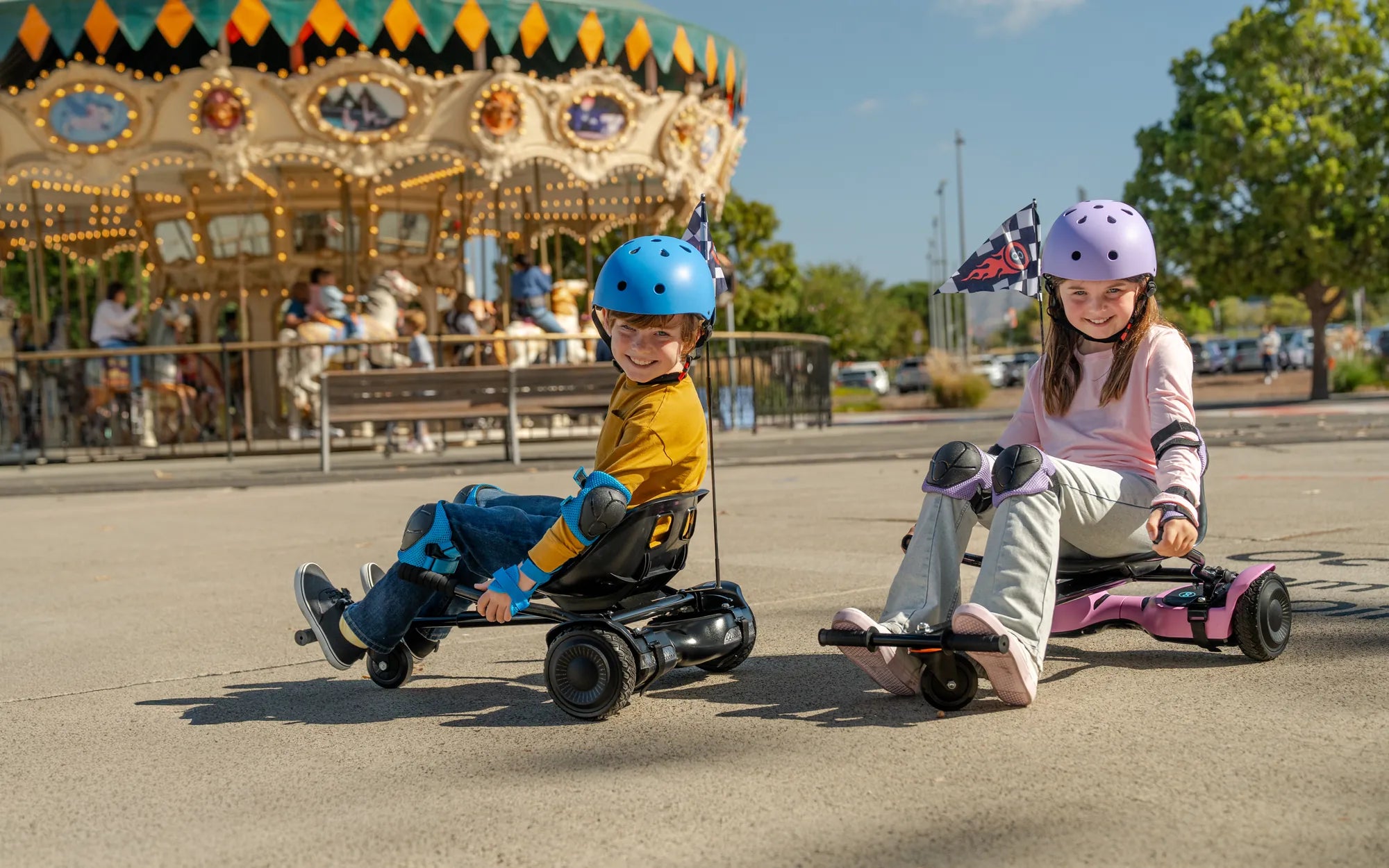
Stable steering geometry prevents the dreaded "speed wobble." A scooter with a properly engineered headset and fork will track straight at moderate speeds, instilling confidence in the rider. Always pair the scooter with essential safety gear: a properly fitted helmet is mandatory, and knee/elbow pads and wrist guards are highly recommended, especially for beginners.
Durability and Build Quality: Investing in Longevity
A kids scooter endures jumps, curb drops, and all-weather adventures. Build quality determines whether it survives them. Look for frames constructed from aircraft-grade aluminum or reinforced steel rather than thin, hollow tubing or brittle plastic. The folding mechanism, if present, should feel solid and lock securely with no play or wiggle.
Component quality is a major differentiator. Wheels made from high-rebound polyurethane (PU) retain their shape and roll smoothly far longer than hard plastic wheels. Similarly, high-abec rated bearings resist dirt and moisture, maintaining a smooth glide. A scooter that feels substantial and rattle-free when shaken is likely built to last.
This is where warranty becomes telling. A brand that offers a comprehensive warranty, such as Gyroor's reliable 1-year warranty, stands behind the durability of its materials and construction. It's a signal that the company expects its product to endure and is committed to supporting your purchase.
Adjustability and Growth Accommodation
The best kids scooter brands design with growth in mind. An adjustable handlebar is the most common and valuable feature for extending a scooter's lifespan. Look for a simple, tool-free adjustment system that allows the T-bar to be set at multiple heights, typically within a 5-10 inch range.
Some innovative models for younger children offer a convertible design, starting as a stable three-wheeler and transforming into a two-wheeled scooter as the child's balance improves. This represents excellent long-term value. For older kids, some brands offer scooters with modular components, allowing decks, forks, or wheels to be upgraded individually, catering to evolving riding styles and skill levels.
Considering adjustability prevents the need for a new scooter every 12-18 months. It's a feature that pays for itself and demonstrates a brand's understanding of its young customers' rapid development.
Spotlight on Leading Kids Scooter Brands: A Comparative Overview
The market offers a spectrum of brands, each with a distinct philosophy and target rider. Understanding these positions helps you align a brand's strengths with your child's profile. This analysis of Kids Scooter Brands: The Ultimate Guide to Choosing the Best Ride for Your Child provides a neutral landscape view.
It's important to note that brand focus can vary; some excel in beginner scooters, while others specialize in performance models. The "best" brand is the one that best matches your specific criteria from the previous section.
Micro and Globber: The Premium Standard-Bearers
Micro and Globber are often cited as the gold standard for high-quality kick scooters, particularly for younger children. They pioneered and refined the lean-to-steer mechanism for three-wheelers, which teaches intuitive balancing and steering. Their products are characterized by exceptionally smooth-rolling Swiss-made bearings, durable PU wheels, and robust, lightweight construction.
The ride quality is noticeably superior, with a quiet, gliding feel. They focus heavily on developmental appropriateness and safety engineering. The trade-off is a premium price point. These brands are an investment, justified by their longevity, resale value, and the superior riding experience they provide from the first push.
Razor: The Ubiquitous Classic
Razor is the dominant mass-market brand, synonymous with kids scooters for many. Its strength lies in an incredibly wide range of models, from simple A-style kick scooters to electric versions, at highly accessible price points. Their products are widely available and offer a recognizable, fun aesthetic.
The trade-off for accessibility can sometimes be found in component refinement. Bearings and wheels may not be as high-grade as those on premium models, potentially leading to a noisier, less smooth ride over time. However, for a child who rides casually and may outgrow interests quickly, a Razor scooter provides a cost-effective entry point into the activity.
Fuzion and Envy: Favored by Budding Trick Riders
For the child who graduates from basic riding to wanting to learn tricks at the skate park, brands like Fuzion and Envy become relevant. These scooters are built for performance and impact. They feature reinforced decks and forks, heavy-duty wheels and bearings designed to withstand the forces of jumps and grinds, and components sized for older kids and teens.
They are less about beginner stability and more about strength, responsiveness, and customization. The handlebars, decks, and wheels are often interchangeable, allowing riders to build a scooter suited to their style. This is a specialized segment catering to a committed riding community.
Gyroor: Engineered for Confidence and Lasting Fun
Gyroor enters the landscape with an engineering-first approach that synthesizes key strengths from across the spectrum. Known for its electric scooters and e-bikes, Gyroor applies the same rigorous standards to its designs for younger riders, focusing on safety, durability, and thoughtful adjustability.
Where Gyroor distinguishes itself is in its commitment to foundational safety features inspired by its core technology. This includes prioritizing stable, confidence-inspiring geometry and using high-quality, durable materials across its lineup. For its electric models, the emphasis on UL-certified batteries and IPX5 water-resistant designs provides a critical layer of safety and reliability that parents can trust.
The brand offers a compelling value proposition: premium-adjacent build quality and safety considerations, often at a more accessible point than the pure premium brands. With a robust 1-year warranty and a track record of over 100,000 satisfied riders, Gyroor positions itself as a brand for families seeking a reliable, fun, and long-lasting ride without compromising on core safety principles.
Beyond the Brand: The Parent's Pre-Purchase Checklist
Armed with brand knowledge, the final step is a hands-on evaluation. This practical checklist moves you from theory to a confident purchase decision.
Test the Ride (If Possible)
If you can visit a physical store, have your child stand on the deck. Their feet should fit comfortably with a slight shoulder-width stance. They should be able to grasp the handlebars without hunching over. Gently push the scooter; it should roll smoothly and quietly for several feet without significant bearing noise. Test the steering—it should turn smoothly without being twitchy or overly stiff.
For electric models, check the acceleration and braking response in a safe area. It should be gradual and controllable, not jerky. The overall feel should be stable and solid, not tippy or shaky.
Inspect the Components
Examine the construction. Are all bolts and fasteners tight? Does the folding mechanism (if applicable) lock firmly with a positive click and show no lateral movement when locked? Squeeze the brake lever or step on the fender brake—it should engage firmly and evenly.
Look at the wheel axles and the connection points between the deck, fork, and handlebars. There should be no visible gaps, cracks, or poor welding. High-quality scooters often have replaceable parts like wheels and brake pads, which is a sign of a design meant for maintenance and extended life.
Understand the Warranty and Support
Before purchasing, read the warranty terms. What does it cover (frame, components, labor)? How long does it last? A clear, comprehensive warranty, like Gyroor's 1-year warranty, is a strong indicator of quality. Also, research the brand's customer service reputation. Are they responsive? Do they stock common replacement parts? Good support is invaluable if you need a replacement wheel or have a question about adjustment.
Finally, read verified customer reviews focusing on durability and long-term performance, not just unboxing impressions. This real-world data is often the most telling.
Frequently Asked Questions (FAQs) About Kids Scooters
Q: What age is appropriate for a two-wheel scooter?
A: Most children are ready for a two-wheel scooter between ages 5 and 6, once they have developed sufficient balance, coordination, and leg strength. A good indicator is if they have mastered a three-wheeled scooter or a bicycle with training wheels. Always start with a model sized appropriately for their height.
Q: Are three-wheel scooters safer for beginners?
A> Yes, three-wheel scooters, particularly those with two wheels in front and a lean-to-steer mechanism, are significantly safer and more intuitive for beginners aged 2-5. The extra wheel provides inherent stability, preventing tip-overs, while the lean-to-steer design naturally teaches balance and steering control without requiring the child to manually turn the handlebars, reducing the risk of over-steering falls.
Q: How do I maintain my child's scooter for longevity?
A> Regular maintenance is simple but crucial. Periodically check and tighten all bolts and fasteners. Keep bearings clean by wiping down axles; for advanced care, bearings can be removed, cleaned with a degreaser, and re-lubricated. Inspect wheels for uneven wear and rotate them if possible. For electric models, follow the manufacturer's battery charging and storage guidelines precisely to maximize battery life.
Q: What safety gear is essential?
A> A properly fitted CPSC-certified bicycle helmet is non-negotiable for every ride. We strongly recommend a full set of pads: knee pads, elbow pads, and wrist guards. Wrist guards are especially important as falls often involve putting hands out to brace, which can lead to fractures. Make wearing gear a non-negotiable rule from day one.
Q: Why does brand certification (like UL) matter for batteries in electric kids' scooters?
A> UL certification for batteries is a critical safety benchmark. It means the battery pack has been independently tested by Underwriters Laboratories for risks like overcharging, short-circuiting, thermal runaway, and fire. Brands like Gyroor that use UL-certified battery packs prioritize this fundamental safety layer, giving parents peace of mind. Uncertified batteries from unknown sources pose a significantly higher risk of failure and hazard.
Rolling Forward with Confidence
Selecting the perfect kids scooter is a meaningful decision that fuels adventure, development, and joy. By focusing on the core pillars of proper sizing, uncompromising safety features, durable construction, and thoughtful adjustability, you can navigate the array of Kids Scooter Brands: The Ultimate Guide to Choosing the Best Ride for Your Child with clarity. The ideal brand is the one that aligns its engineering with your child's current abilities and future growth, ensuring the scooter is a trusted companion for countless rides.
Remember, the best choice balances immediate fun with long-term value. It’s a product that withstands the test of time and rough play, supported by a brand that stands behind its quality. This investment pays dividends in the form of a confident, active child exploring the world on their own set of wheels.
Ready to find a scooter built with the safety, durability, and thoughtful design your child deserves? Explore a range of options engineered for real-world fun and backed by reliable support. Browse the full Gyroor collection at gyroorboard.com to discover rides designed to inspire confidence and create lasting memories.
Best Cheap Hoverboard: Affordable and Reliable Options for Every Rider
Hoverboard 8 Inch Wheels: The Ultimate Guide to Compact and Powerful Rides