



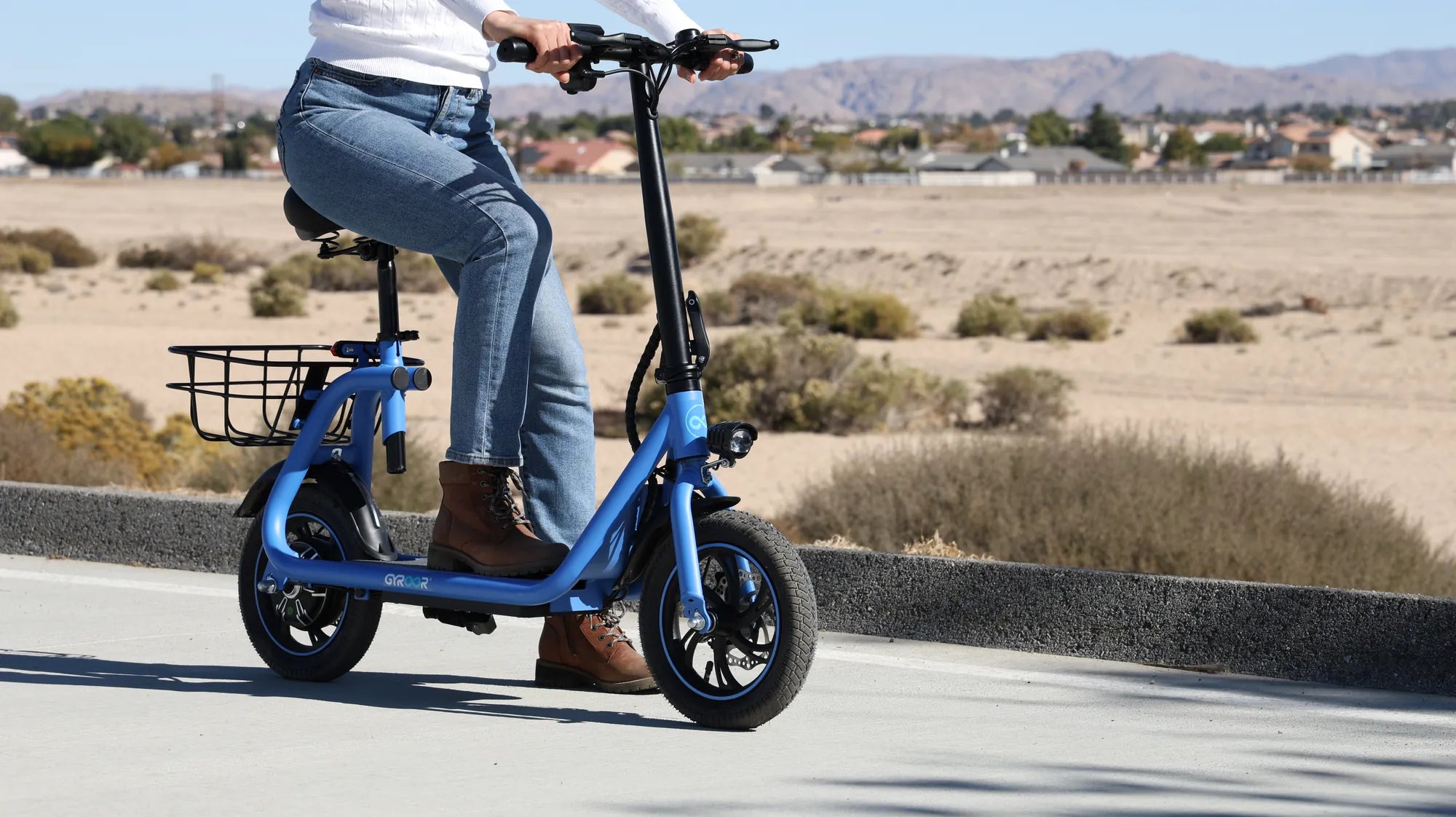
Introduction: Riding the Current of Change
The electric scooter landscape is undergoing a profound transformation, evolving from a novelty into a sophisticated component of urban and suburban mobility. The conversation has decisively shifted from basic commuting to tech-integrated, lifestyle-focused transportation solutions. This article delivers a clear, data-driven overview of the latest news on electric scooters: trends, innovations, and what's next, cutting through the hype to provide actionable insights for potential buyers and industry observers alike.
We will analyze who is riding today, explore the technical innovations defining premium models, and navigate the complex regulatory environment. Understanding these elements is crucial for anyone looking to invest in a reliable, future-proof personal transporter. The market is maturing, and so should the consumer's knowledge.
The 2024 Rider's Profile: Who's Adopting E-Scooters Now?
The stereotypical image of a scooter rider has been completely overhauled. Adoption has moved far beyond the early-adopter tech enthusiast in dense urban cores. Today's rider demographic is remarkably diverse, driven by practical needs and lifestyle choices rather than mere curiosity.
A significant trend is the rise of the suburban commuter. These riders use e-scooters for the "first and last mile" of public transit journeys, bridging the gap between home, transit stations, and final destinations. Furthermore, recreational use has exploded, with scooters becoming a staple for weekend park visits, beachfront cruising, and campus mobility.
The Data Behind the Boom: Market Growth and User Statistics
The numbers substantiate this broadening appeal. According to a recent report by Guidehouse Insights, the global shared and personal e-scooter market is projected to grow at a compound annual growth rate (CAGR) of over 8% from 2024 to 2033. McKinsey analysis highlights that nearly 40% of e-scooter trips now replace car journeys, indicating a tangible impact on urban congestion and emissions.
User surveys reveal that safety perceptions, once a major barrier, are improving alongside technological advancements. The primary purchase drivers are now cost-effectiveness for short trips, avoidance of traffic, and the sheer convenience of point-to-point travel. This data confirms that e-scooters are transitioning from a niche product to a mainstream mobility tool.
Innovation Spotlight: Beyond Basic Speed and Range
While top speed and maximum range remain important spec sheet metrics, the true innovation in today's market addresses deeper user needs: connectivity, safety, and long-term ownership experience. Manufacturers are competing on intelligence and reliability, not just raw power.
The era of the "dumb" scooter is over. The latest models are rolling computers, designed to integrate seamlessly into the user's digital life. This shift is redefining value and creating a clear divide between basic, disposable models and sophisticated, durable platforms.
Smarter Rides: The Integration of IoT and App Ecosystems
Connectivity is now a cornerstone of the premium riding experience. Nearly all reputable brands offer companion apps that unlock a suite of features. These include GPS anti-theft tracking, detailed ride analytics (speed, distance, route history), and customizable performance modes that let riders tailor acceleration and top speed for different scenarios.
More advanced systems support over-the-air (OTA) firmware updates, allowing manufacturers to improve performance, add features, and patch security vulnerabilities post-purchase. Some models even integrate with broader urban mobility apps, enabling smoother multi-modal trip planning. This IoT integration transforms the scooter from a simple vehicle into a managed, upgradeable device.
Safety by Design: Advanced Braking, Lighting, and Stability
Innovation in safety is directly responding to rider concerns and anticipated regulations. Combined Braking Systems (CBS) and electronic braking (E-ABS) are becoming more common, distributing braking force to prevent wheel lock-up and skids, especially in wet conditions.
Lighting has seen revolutionary upgrades. Beyond simple headlights and taillights, we now see integrated turn signals, automatic brake lights that intensify upon deceleration, and even adaptive front lights that illuminate corners. Stability is enhanced through wider decks, improved suspension geometries, and the widespread adoption of pneumatic (air-filled) tires, which offer superior shock absorption and traction compared to solid tires.
Battery Evolution: Fast-Charging, Swappability, and Enhanced Longevity
Battery technology is addressing the core pain points of charging time and lifecycle. Fast-charging technology has advanced, with many premium models reaching full charge in 2-4 hours instead of the traditional 6-8. The most significant trend is the emergence of swappable battery ecosystems.
Swappable systems, where a rider can carry a spare battery or exchange a depleted one at a kiosk, effectively offer unlimited range and eliminate downtime. For longevity and safety, the industry standard is shifting towards UL-certified battery packs. Brands like Gyroor utilize these rigorously tested packs, which are verified for 500+ charge cycles and built with multiple protection circuits to prevent overheating, overcharging, and short circuits, ensuring both performance and peace of mind.
The Regulatory Landscape: Navigating New Rules of the Road
As e-scooters become commonplace, municipalities worldwide are crafting and refining regulations. This evolving legal framework is a critical factor for both riders and manufacturers. The current trend is towards standardization and integration into existing traffic codes.
Common regulations now include defined speed limits (often 15-20 mph / 25-32 kmh on bike lanes, lower on sidewalks), mandatory helmet laws for certain age groups, and strict rules against sidewalk riding in busy districts. Many cities are implementing geofencing technology, which can automatically limit scooter speed in designated "slow zones" like parks or pedestrian plazas.
These rules directly influence product design. Manufacturers are building speed limiters, integrating better reflectors and lighting to meet visibility requirements, and designing folding mechanisms that comply with public transport carriage rules. For the consumer, choosing a scooter from a brand that designs with global regulatory trends in mind is a wise strategy for future-proofing.
Market Comparison: Segmenting the Modern E-Scooter Landscape
Not all electric scooters are created equal. The market has segmented into clear tiers based on performance, features, and intended use. Understanding these segments is key to matching a scooter to your specific needs.
| Segment | Typical Use Case | Key Features | Range & Speed | Considerations |
|---|---|---|---|---|
| Commuter/Urban | Daily city travel, last-mile solution | Portable foldable design, app connectivity, good lighting | 15-25 miles, 15-20 mph | Durability, water resistance (IPX5+), weight for carrying |
| Performance | Longer rides, varied terrain, enthusiasts | Dual motors, superior suspension, large pneumatic tires, high-capacity battery | 30-50+ miles, 25+ mph | Less portable, higher investment, often subject to stricter regulations |
| Off-Road/All-Terrain | Trails, gravel, uneven surfaces | Knobby tires, extended ground clearance, reinforced frame, extreme suspension | 20-35 miles, variable speed | Not for road-legal use in many areas, specialized purpose |
| Lightweight/Portable | Multi-modal commuting, students, storage in tight spaces | Ultra-compact fold, sub-30 lb weight, minimalist design | 10-15 miles, 12-15 mph | Sacrifices range and comfort for ultimate portability |
What's Next? Predictions for the Near Future of E-Scooters
Looking ahead 2-3 years, several key trajectories are emerging from current R&D and market forces. The focus will be on sustainability, customization, and enhanced, semi-autonomous safety features.
The race for higher top speeds will plateau due to regulatory and practical limits, giving way to innovations that improve the quality, safety, and environmental footprint of the ride. The next generation will be defined by how well scooters integrate into the user's life and the urban fabric.
The Consolidation of "Platform" Scooters
We predict the rise of modular, upgradeable scooter "platforms." Instead of replacing the entire unit every few years, users will be able to swap key components like battery modules, motor controllers, and even deck assemblies. This approach extends the product's lifecycle, reduces electronic waste, and allows owners to customize their ride for evolving needs—for example, upgrading to a higher-capacity battery for a touring trip.
This model rewards investment in a robust initial frame and electrical architecture from a trusted brand. It represents a shift from disposable consumer electronics to durable, repairable personal vehicles.
Mainstreaming of Advanced Rider-Assist Systems (ARAS)
Features borrowed from the automotive industry will trickle down to premium e-scooters. We will see wider adoption of traction control systems that prevent rear-wheel slip during acceleration on wet surfaces. Adaptive front lighting that bends with the handlebars will become more affordable.
Simple collision warning systems, using rear-facing ultrasonic sensors to alert riders of vehicles approaching from behind, could become a valuable safety addition. These ARAS features won't drive the scooter for you but will act as a critical safety net, building rider confidence and potentially reducing accident rates.
Sustainability in Focus: Materials, Recycling, and Lifecycle
Environmental impact will become a primary purchase driver. Manufacturers will increasingly highlight the use of recycled aluminum in frames and post-consumer plastics in body panels. Design for disassembly will be a key engineering principle, making end-of-life recycling easier and more efficient.
Perhaps most importantly, manufacturer-led battery take-back and recycling programs will transition from a nice-to-have to a mandatory expectation. Brands that can demonstrate a closed-loop approach to their most critical (and potentially hazardous) component will gain significant consumer trust and regulatory favor.
FAQ: Your Questions on the Latest E-Scooter Trends, Answered
Q1: Are swappable battery systems becoming the new standard?
A: They are becoming a dominant trend in the premium and commuter segments, but not yet a universal standard. Swappability offers clear advantages in uptime and effective range. However, it requires a more complex design and can add cost. For most daily commuters, a fast-charging, high-quality fixed battery (like a UL-certified pack) remains an excellent and reliable choice.
Q2: How do new safety features actually impact real-world accident rates?
A> While comprehensive long-term studies are ongoing, early data and logic are promising. Features like combined braking systems reduce stopping distances and prevent skids, a leading cause of single-rider falls. Improved lighting dramatically increases rider visibility to drivers at night. Turn signals reduce unpredictable maneuvers. These technologies address documented accident causes, making them a worthwhile investment.
Q3: With changing laws, how do I choose a scooter that won't be illegal next year?
A> Focus on scooters with configurable speed limiters via a companion app. This allows you to adjust the top speed to comply with local regulations as they change. Prioritize models with robust, standard safety equipment: front and rear lights, reflectors, a bell, and a brake light. Choosing a reputable brand that actively monitors global regulatory trends in its design process is your best hedge.
Q4: What does "UL-certification" for a battery mean, and why is it important?
A> UL (Underwriters Laboratories) certification is an independent, rigorous safety standard for electrical components. For a scooter battery, it means the pack has been tested for electrical, mechanical, and environmental safety—resisting overcharge, short circuit, vibration, and extreme temperatures. It is a critical indicator of quality and safety, reducing fire risk. This is a core standard for brands like Gyroor, providing verified reliability that uncertified, generic batteries lack.
Q5: Is the hype around AI and self-balancing scooters real, or just marketing?
A> Currently, most references to "AI" in e-scooters refer to basic algorithms for battery management or ride diagnostics—useful but not revolutionary. True self-balancing (gyroscopic) technology, while it exists in prototypes, faces significant hurdles in cost, weight, and power consumption before it becomes viable for mass-market scooters. In the near term, expect incremental improvements in stability assist systems rather than fully self-balancing consumer models.
Conclusion: Informed Choices for the Modern Rider
The electric scooter market has matured into a sophisticated industry where innovation is focused on smart integration, tangible safety, and user-centric design. The latest news on electric scooters points to a future defined by connectivity, modularity, and responsibility—both to the rider and the environment. Speed and range are now table stakes; the true value lies in certified safety, robust construction, and intelligent features that enhance every ride.
For the modern rider, this means looking beyond flashy specs. Prioritize brands that invest in foundational quality: UL-certified batteries for safety, IPX5 or higher water resistance for all-weather reliability, and a clear warranty that stands behind the product. These factors ensure you are investing in a durable piece of technology, not a disposable gadget. As the landscape continues to evolve, an informed choice based on these principles will provide reliable, enjoyable, and future-aware mobility for years to come.
Ready to explore scooters built with these advanced trends and safety standards in mind? Browse the full Gyroor collection, featuring UL-certified batteries, IPX5 water-resistant designs, and a reliable 1-year warranty, at gyroorboard.com.
How Many Years Do Electric Scooters Last? The Ultimate Guide to Longevity
Is It Legal to Ride Electric Scooters on the Sidewalk? The Ultimate Guide