



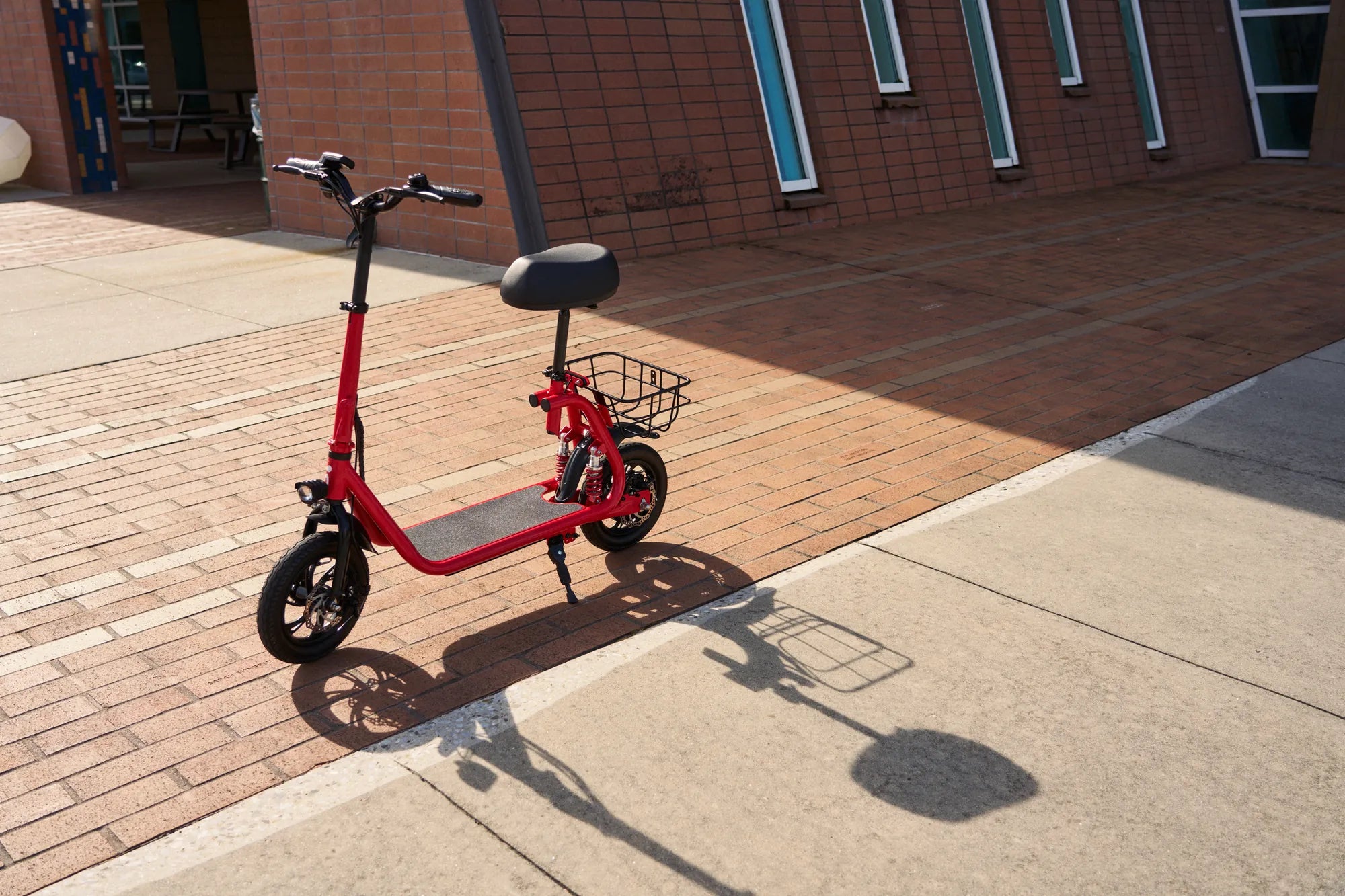
Introduction to Lightweight Class 3 E-Bikes
Finding the lightest Class 3 ebike is about unlocking a new level of urban mobility. A Class 3 designation means pedal-assist up to 28 mph, often with a throttle, designed for keeping pace with city traffic. The true innovation lies in achieving this high-speed performance in a package typically under 50 pounds.
This combination transforms the commuting experience. You gain the speed of a motor vehicle with the agility and parking ease of a bicycle, without the burden of a heavy, cumbersome frame. The core value proposition is clear: maximum utility with minimum physical strain during carrying, storage, or multi-modal transit.
For over 100,000 riders across North America and Europe, brands like Gyroor have demonstrated that lightweight engineering does not require sacrificing safety or reliability. The pursuit of the lightest Class 3 ebike is a pursuit of efficiency, blending advanced materials and smart component integration.
This guide will dissect the engineering behind the weight, explore the tangible rider advantages, and provide a framework for making an informed purchase. The goal is to help you find a machine that feels as nimble as a traditional bike but delivers powerful electric assistance.
The Engineering Behind the Weight: Key Components
An e-bike's weight is the sum of its parts. Understanding where weight comes from—and where it can be optimized—is crucial for identifying a truly lightweight model. The main contributors are the frame, motor, battery, and components.
Manufacturers shave weight through material science, efficient design, and careful specification. Every pound saved must be balanced against structural integrity, performance, and safety standards. This is where engineering excellence separates premium models from merely adequate ones.
Lightweight Class 3 ebikes often utilize mid-drive motors for better weight distribution and leverage. They pair this with high-energy-density battery packs and minimalist, purpose-built frames. The result is a cohesive system where each part contributes to a lower overall mass.
It's not just about being light; it's about strategic weight placement. A well-balanced bike with a low center of gravity will feel lighter and more manageable than a heavier bike with poor weight distribution, even if the scale shows similar numbers.
Frame Materials: Aluminum Alloy vs. Advanced Composites
The frame is the skeleton, and its material dictates fundamental characteristics. For the lightest Class 3 ebike models, aluminum alloy is the current industry standard, offering an optimal balance of weight, strength, cost, and manufacturability.
High-grade aluminum alloys, such as 6061 or 7005 series, are heat-treated for enhanced strength. They can be formed into hydroformed tubes that are both light and rigid, providing a responsive ride quality. This material allows for a durable frame in the 8-12 pound range for a medium size.
Carbon fiber represents the premium frontier. It is significantly lighter and can be molded into more aerodynamic shapes while damping road vibrations. However, its high cost and more complex repair process make it less common for production Class 3 e-bikes focused on value.
For most riders seeking the lightest Class 3 ebike, aluminum is the sweet spot. It delivers substantial weight savings over steel without the exponential cost increase of carbon, while still providing the durability needed for daily commuting and carrying stresses.
The Power Unit: Motor and Battery Efficiency
The motor and battery are the heaviest single components after the frame. Optimizing this "power unit" is essential for creating a lightest Class 3 ebike contender. The choice between mid-drive and hub motors is pivotal.
Mid-drive motors, like the popular Bafang M410 or similar proprietary systems, are mounted at the bike's crank. This centralizes mass and allows the motor to leverage the bike's gears, making it more efficient, especially on hills. This efficiency means a smaller, lighter battery can often deliver comparable range to a larger one paired with a less efficient hub motor.
The battery is the next frontier. Lightweight models rely on high-energy-density, UL-certified lithium-ion cells. Brands like Gyroor use these UL-certified packs, which undergo rigorous testing for over 500 charge cycles. Smart packaging integrates the battery seamlessly into the downtube, avoiding external bulky cases that add weight and compromise aesthetics.
This integrated approach—an efficient mid-drive motor paired with a sleek, high-density battery—is the hallmark of a well-engineered lightweight Class 3 ebike. It provides the necessary 28 mph power without the anchor-like weight of outdated systems.
Component Choices: Wheels, Handlebars, and Drivetrain
The final weight savings come from a meticulous selection of components. Lighter wheels have a profound impact on ride feel due to rotational mass. Double-wall aluminum rims are standard for strength, while some premium models may use carbon fiber.
Handlebars, seatposts, and stems made from aluminum or carbon reduce weight at the extremities, improving handling responsiveness. A streamlined 1x drivetrain (a single front chainring) eliminates the weight of a front derailleur, extra shifter, and multiple chainrings, simplifying operation and maintenance.
Even choices like a lightweight saddle, minimalist grips, and aluminum pedals contribute to the final tally. Every component is scrutinized, but not at the expense of functionality. The goal is to remove unnecessary grams while preserving performance and comfort for the rider.
Why Choose a Lightweight Class 3 E-Bike? The Rider's Advantage
The benefits of a lightweight Class 3 ebike extend far beyond a number on a scale. They translate into tangible improvements in daily usability, safety, and enjoyment. This is where the engineering investment pays direct dividends for the rider.
Commuting becomes less of a chore and more of a pleasure. The physical and logistical friction associated with heavy e-bikes is dramatically reduced. You spend less energy managing the bike and more energy enjoying your ride or arriving at your destination fresh.
For cycling enthusiasts, a lighter e-bike preserves the natural, connected feel of riding a traditional bicycle. The electric assist feels like a seamless extension of your own power, rather than a bulky machine doing the work for you. This appeals to those who ride for fitness as well as transportation.
The advantages are cumulative. Easier handling leads to more confidence, which leads to more frequent riding. The lightest Class 3 ebike isn't just a vehicle; it's an enabler for a more active, efficient, and sustainable lifestyle.
Effortless Multi-Modal Commuting & Storage
This is the most immediate and practical benefit. A bike weighing 45 pounds is fundamentally different from one weighing 65 pounds when you need to carry it up a flight of stairs to your apartment, lift it onto a bus bike rack, or maneuver it into a crowded elevator.
Urban living often involves compact storage spaces. A lighter bike is easier to hang on a wall hook, fit into a closet, or place on a balcony. This practicality means you're more likely to use your e-bike for spontaneous trips, knowing that dealing with it at your journey's end won't be a struggle.
For those who combine cycling with trains or buses, a lightweight Class 3 ebike makes the transition smooth. You can quickly board and disembark without holding up other passengers or straining your back. This flexibility is key to a reliable, car-free commute.
Agile Handling and a More Natural Ride Feel
Reduced weight transforms handling. Steering is more immediate, changes in direction require less effort, and the bike feels more planted and predictable through corners. This agility is a significant safety advantage in dense urban traffic where quick maneuvers are sometimes necessary.
The ride sensation is closer to that of a high-quality acoustic bicycle. The bike responds to body English and pedal input with precision. This makes the riding experience more engaging and enjoyable, blurring the line between utility and recreation.
Acceleration and braking also benefit. A lighter bike requires less energy to get up to speed and less force to slow down, though powerful hydraulic disc brakes remain non-negotiable for safety at Class 3 speeds. The overall feeling is one of control and responsiveness.
Extended Range per Charge
There is a direct relationship between weight and energy consumption. A lighter vehicle requires less energy to propel at the same speed. In e-bike terms, this means the same battery capacity can yield more miles of range.
This is particularly true when using pedal assist. Since you are contributing more meaningfully to the propulsion of a lighter bike, the motor can operate at a lower support level, conserving battery. This efficiency gain can add 10-20% more range compared to a heavier bike with an identical battery.
For the commuter, this translates to fewer charges per week and reduced "range anxiety." Knowing your lightest Class 3 ebike can reliably cover your daily distance with a comfortable buffer provides significant peace of mind.
Key Considerations Before You Buy
Choosing the lightest Class 3 ebike involves understanding trade-offs and prioritizing features that matter for your specific use case. Lightweight should not mean compromised; it should mean intelligently optimized. Scrutinize the following aspects closely.
Always cross-reference the claimed weight with the manufacturer's specifications for key components like motor type, battery watt-hours, and frame material. Be wary of brands that achieve low weight by using substandard parts or omitting essential features like adequate braking.
Your own physical size and intended cargo needs are critical. A bike that is light for a 150-pound rider might be at its limit for a 220-pound rider with a backpack. Match the bike's capabilities to your real-world requirements to ensure durability and safety.
Finally, consider the total cost of ownership. A slightly higher initial investment in a well-engineered bike from a reputable brand with a strong warranty often saves money and frustration in the long run compared to a cheaper, problematic model.
Trade-off: Weight vs. Maximum Load Capacity
Engineers design frames to support a specific maximum weight, including the rider, cargo, and the bike itself. Pursuing ultra-light construction can sometimes result in a lower maximum load capacity, often in the 250-275 pound range, compared to 300+ pounds for heavier-duty models.
It is essential to check this specification honestly. Calculate your weight plus your typical load (laptop, clothes, groceries). Ensure there is a safe margin below the bike's rated limit. Exceeding it can stress the frame, wheels, and motor, void warranties, and create safety hazards.
This trade-off is not absolute. High-quality aluminum frames from trusted brands are engineered to be both light and strong. Look for reinforced weld points, gusseting at high-stress junctions, and clear load rating documentation from the manufacturer.
Trade-off: Weight vs. Suspension and Comfort
Full-suspension systems (front fork and rear shock) add significant weight and mechanical complexity. Many contenders for the title of lightest Class 3 ebike opt for a rigid or front-suspension-only (hardtail) design to save pounds.
This places more importance on other comfort factors. A lightweight Class 3 ebike may use a carbon fiber seatpost for vibration damping, a geometrically tuned steel or carbon fork for compliance, and wider, high-volume tires (e.g., 2.2" to 2.6") run at lower pressures to absorb road imperfections.
Test ride different configurations if possible. For well-paved city streets, a rigid frame with plush tires can be perfectly comfortable and more efficient. For mixed terrain, a quality air-sprung front fork might be worth the added 3-4 pounds.
The Non-Negotiables: Safety and Warranty
Weight savings must never compromise safety. The ability to stop reliably at 28 mph is paramount. Hydraulic disc brakes with large rotors (180mm or more) are the absolute minimum standard. They offer superior modulation and power with less hand fatigue than mechanical discs.
Battery safety is non-negotiable. Insist on a UL 2271 or UL 2849 certified battery pack, like those used across Gyroor's lineup. This certification is your assurance against fire risk from poor-quality cells or management systems. It's a critical differentiator in a market with variable standards.
A robust warranty protects your investment. A comprehensive 1-year warranty covering the frame, motor, battery, and electronics (as offered by Gyroor) signals manufacturer confidence. It ensures that the pursuit of lightweight performance hasn't led to premature component failure.
Spotlight: How Gyroor Engineering Achieves Lightweight Performance
Gyroor's approach exemplifies the principles of creating a practical, high-performance lightweight Class 3 ebike. By focusing on core technologies and user-centric design, they deliver machines that are both exhilarating and dependable for daily use.
The philosophy is integration over addition. Instead of bolting on heavy components, Gyroor designs systems to work together synergistically. This results in a clean aesthetic and a weight distribution that enhances the riding experience, making the bike feel even lighter in motion.
With a trust base of over 100,000 riders, Gyroor has refined its designs based on real-world feedback. This iterative process focuses on durability where it counts and weight savings where it matters, ensuring the lightest Class 3 ebike they produce is also built to last.
Integrating the UL-Certified Battery Pack
Gyroor starts with safety and energy density. Their UL-certified battery packs use premium cylindrical cells arranged for optimal thermal management and longevity. The casing is designed to be a structural part of the downtube, not just a container dropped inside.
This integration eliminates redundant material. The battery slides seamlessly into a precisely formed compartment, secured with a robust locking mechanism. The result is a sleek, almost monolithic frame profile that saves weight, improves aesthetics, and lowers the center of gravity for better handling.
This design choice directly contributes to creating a lightest Class 3 ebike candidate. By avoiding the bulky "battery box" look, Gyroor reduces drag, weight, and potential points of failure, all while guaranteeing a critical safety standard is met.
IPX5 Water-Resistant Design Philosophy
Weather resistance is crucial for a commuter vehicle. Gyroor builds all its models to a true IPX5 water-resistant rating, meaning they can withstand sustained water jets from any direction. Achieving this without adding heavy, clumsy seals is an engineering challenge.
The solution lies in smart gasket placement, sealed cable conduits, and conformal coating on critical electronic circuit boards. Ports are covered with rubberized flaps that lock securely. The motor and display units are designed as sealed assemblies.
This holistic approach means you get peace of mind riding in the rain without penalizing the bike's weight. The IPX5 rating is built into the architecture, not added as an afterthought with bulky, heavy covers.
The Result: A Practical, High-Performance Machine
The culmination of these efforts is a Class 3 e-bike that excels in real-world conditions. A lightweight aluminum frame provides the foundation. An efficient mid-drive motor delivers smooth, powerful assistance up to 28 mph.
The integrated, safe battery offers ample range. Hydraulic disc brakes provide confident stopping power. The IPX5 rating ensures reliability in all weather. Together, these elements create a machine that is easy to live with every day—easy to carry, store, and ride—while delivering thrilling performance.
This balance is the ultimate goal for any rider seeking the lightest Class 3 ebike: a vehicle that disappears as a logistical problem and appears purely as a source of freedom, efficiency, and fun.
Lightweight Class 3 E-Bike Comparison Table
This table compares key specifications to highlight the trade-offs and features that differentiate models in the lightweight category. Always verify specs with the manufacturer as details can change.
| Feature / Consideration | Typical Lightweight Model | Heavier Traditional Class 3 | Why It Matters |
|---|---|---|---|
| Estimated Weight | 40 - 50 lbs | 55 - 75+ lbs | Directly impacts portability, handling feel, and multi-modal ease. |
| Frame Material | Hydroformed Aluminum Alloy | Steel or Heavy-Gauge Aluminum | Aluminum offers the best strength-to-weight ratio for the price. |
| Motor Type | Mid-Drive (250W-750W) | Often Hub-Drive (500W+) | Mid-drive offers better weight distribution, hill climbing, and efficiency. |
| Battery Integration | Fully Integrated, Downtube | External or Semi-Integrated | Integration improves aesthetics, lowers center of gravity, and can save weight. |
| Suspension | Rigid or Front Fork Only | Often Full-Suspension | Simpler designs save significant weight; comfort managed via tires and seatpost. |
| Max Load Capacity | 250 - 275 lbs | 300 - 350 lbs | Check this against your total weight (rider + cargo) for safety and durability. |
| Ideal Use Case | Urban Commuting, Fitness, Mixed Transit | Off-Road, Heavy Cargo, Less Frequent Lifting | Aligns the bike's strengths with your primary riding needs. |
Frequently Asked Questions (FAQ)
Q: Is a 45 lb e-bike actually considered light?
A: Yes, absolutely. For a fully-featured Class 3 e-bike with a motor, battery, and sturdy frame, the 40-50 lb range is definitively the lightweight category. Traditional e-bikes, especially hub-drive models with external batteries, commonly weigh 55-70 lbs or more. A 45 lb model represents a significant engineering achievement for portability.
Q: Can a lightweight e-bike still be durable for daily commuting?
A: Durability is a function of engineering quality, not just weight. A lightweight frame made from high-grade, heat-treated aluminum alloy with reinforced weld points (a standard in brands like Gyroor) can be extremely durable. The key is pairing it with quality components like sealed bearings, a robust motor, and a reliable drivetrain built for daily use.
Q: Do lightweight e-bikes compromise on power, especially for hills?
A: Not if designed correctly. In fact, a lightweight Class 3 ebike with a high-torque mid-drive motor (e.g., 80 Nm or more) can be more effective on hills than a heavier bike with a hub motor. The mid-drive leverages the bike's gears, and the reduced overall weight means both the motor and the rider's pedaling have less mass to move uphill.
Q: How important is the warranty for a lightweight performance e-bike?
A: It is crucial. When manufacturers push the boundaries of weight and performance, a comprehensive warranty is your assurance of their confidence in the design and components. Look for a warranty that explicitly covers the frame, motor, battery, and electronics for at least one year. This protects your investment from defects in materials or workmanship.
Q: Are lightweight e-bikes less stable at high speed (28 mph)?
A: Stability at speed is more a function of frame geometry, wheelbase length, and weight distribution than pure weight. A well-designed lightweight bike will have a slightly longer wheelbase and balanced weight (especially with a low, integrated battery) for high-speed stability. Lighter wheels can actually improve handling responsiveness without harming stability. Proper tire pressure and a confident riding posture are also key factors.
Finding Your Perfect Balance
The quest for the lightest Class 3 ebike is ultimately a quest for the perfect balance. It's about harmonizing speed, agility, practicality, and safety into a single machine that enhances your daily life. Weight is a key lever in achieving this balance, but it cannot be the only consideration.
Prioritize bikes that do not cut corners on safety certifications like UL for the battery or on essential components like hydraulic brakes. A trustworthy warranty is your safety net, ensuring that the performance you buy today is supported tomorrow. Brands that stand behind their products, like Gyroor with its 1-year comprehensive coverage, offer that critical peace of mind.
Remember, the best lightest Class 3 ebike for you is the one that fits your specific body, commute, and lifestyle. It should feel like an extension of your intent—nimble when you need to maneuver, powerful when you need to accelerate, and simple when you need to carry or store it.
Ready to experience the difference a thoughtfully engineered, lightweight e-bike can make? Explore the full range of high-performance, UL-certified, and rider-trusted options. Browse the full Gyroor collection at gyroorboard.com to find the machine that unlocks your city.
E Bike 100 Dollars: The Real Cost of Ultra-Cheap Electric Bikes
Ebike NZ: The Ultimate Guide to Electric Bikes in New Zealand