

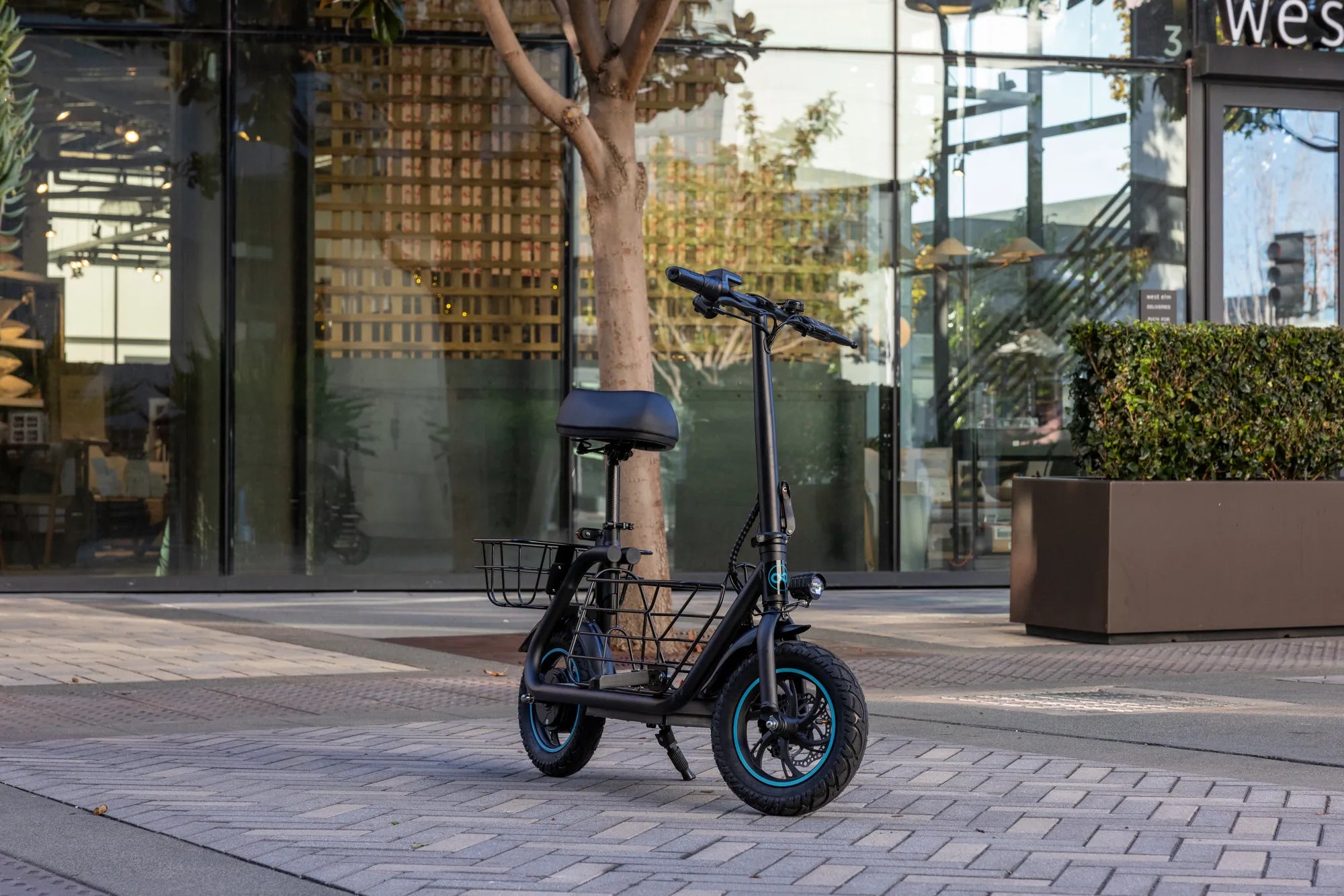
The Quest for Ultimate Portability
The search for the lightest foldable e bike is driven by a fundamental urban need: seamless mobility. It represents the ideal fusion of electric assist for effortless commuting and compact portability for navigating crowded spaces, public transit, and small apartments. This guide dissects the engineering behind minimal weight, helping you find a bike that doesn't sacrifice essential performance for the sake of portability. We'll explore the critical balance between mass, motor power, battery range, and structural integrity.
For over 100,000 riders, Gyroor has engineered solutions to this challenge, focusing on smart weight reduction without compromising on safety or ride quality. The goal isn't merely the lowest number on a scale, but the most practical and reliable lightweight companion for your daily journey. Understanding this balance is key to making an informed purchase that enhances your lifestyle.
Why Weight Matters: The Physics and Practicality of a Light E-Bike
Weight is the primary factor determining an e-bike's true portability. A lighter bike transforms the user experience, making it feasible to carry up a flight of stairs, lift onto a bus rack, or store under a desk. This practical benefit directly impacts how often you'll use the bike, removing the friction of a heavy, cumbersome object.
From a performance perspective, reduced mass improves handling and agility, making the bike feel more responsive in city traffic. It also marginally increases potential range, as the motor expends less energy to propel a lighter frame and rider. This creates a virtuous cycle where portability begets usability.
The trade-off, however, is often perceived in components. A pursuit of minimal weight can lead to compromises in battery capacity, motor torque, or frame durability. The key is identifying which reductions are intelligent engineering and which are detrimental cost-cutting. A true lightest foldable e bike achieves its weight through material science and design, not by omitting crucial features.
Deconstructing the Scale: What Makes an E-Bike Light?
The total weight of a foldable electric bike is the sum of its parts. By understanding the contribution of each major system, you can better evaluate where manufacturers have focused their weight-saving efforts and where they might have cut corners.
Frame Material & Design
The frame is the skeleton, contributing a significant portion of the total weight. Aerospace-grade aluminum alloys are the standard for quality lightweight foldables, offering an excellent strength-to-weight ratio. More advanced (and expensive) materials like carbon fiber can shave off additional pounds but are less common in the folding e-bike market.
The folding mechanism itself adds weight and complexity. A well-designed hinge is robust yet minimal, using high-quality latches and bearings. A poor design will be heavier to compensate for weakness or will fail prematurely. Gyroor utilizes precision aluminum alloy frames with reinforced folding joints, ensuring a light yet rigid structure that withstands daily use.
Battery Size & Technology
The battery pack is typically the single heaviest component. Weight here is a direct function of capacity (measured in Amp-hours, Ah) and cell technology. Modern lithium-ion cells, especially those with high energy density, offer more range per pound.
Gyroor equips its bikes with UL-certified battery packs, which not only meet stringent safety standards but are also engineered for optimal energy density. This means you can get a respectable range—often 20-40 miles—from a pack that doesn't become a burdensome anchor, striking a core balance for the lightest foldable e bike.
Motor Type & Placement
Most lightweight foldables use hub motors, integrated into the front or rear wheel. These are relatively simple and compact. A 350W to 500W hub motor provides ample assist for urban flats and moderate hills without excessive weight.
Mid-drive motors, while more efficient for hill climbing, are generally heavier and more complex, making them less common on ultra-portable designs. Gyroor selects efficient, lightweight hub motors that deliver smooth power assist, ensuring the bike remains easy to maneuver both powered and unpowered.
Component Choices (Wheels, Handlebars, Seat)
Every component adds up. Smaller wheels (commonly 16" or 20" on foldables) reduce rotational mass and overall size. Aluminum rims, minimalist aluminum handlebars and stems, and lightweight saddles all contribute to a lower total weight.
It’s crucial that these components remain durable. A lightweight but fragile plastic part is a false economy. Gyroor specifies components that meet a durability threshold, ensuring the bike remains reliable through thousands of folds and miles.
Beyond the Spec Sheet: Key Features You Shouldn't Compromise On
Choosing the lightest foldable e bike cannot mean abandoning essential features that ensure safety, durability, and long-term satisfaction. Here are the non-negotiables.
The Water-Resistance Imperative (IPX5)
A commuter bike will encounter puddles and rain. An IPX5 rating means the electrical components can withstand low-pressure water jets from any direction. This protection is critical for preventing corrosion and electrical failure.
Compromising on weather resistance for a few saved ounces is a major risk. All Gyroor e-bikes are built with IPX5 water-resistant designs, ensuring the lightweight frame doesn't come with a fragile, fair-weather disposition.
Warranty & Support as a Weight of Mind
A comprehensive warranty is the manufacturer's confidence in their product. A 1-year warranty covering the frame, battery, and motor provides crucial peace of mind. Accessible customer support is equally important for troubleshooting.
Gyroor backs its products with a robust 1-year warranty and US-based support. This "weight of mind" is an invaluable feature that isn't measured on a scale but heavily impacts ownership experience.
Folding Mechanism: Effort vs. Reward
The fold must be intuitive, quick, and secure. A good mechanism uses a few simple, robust steps to create a compact package that doesn't wobble when carried. The folded bike should be a manageable size and shape.
Overly complex folds with many latches add weight and frustration. A flimsy fold compromises safety. Gyroor designs folding systems that are both simple to operate and reliably secure, making the transition from ride to carry seamless.
Making the Choice: A Practical Comparison for Urban Riders
Your ideal bike depends on your specific commute. Use the following framework to prioritize features. The table below compares key decision factors based on common urban scenarios.
| Primary Commute Need | Weight Priority | Battery Range Priority | Key Feature Focus |
|---|---|---|---|
| Multi-modal (Train/Bus) | Highest: Under 40 lbs | Moderate: 15-20 miles | Compact fold, carry handle |
| Last-Mile (5-10 miles) | High: 40-45 lbs | High: 20-30 miles | Comfort, puncture-resistant tires |
| Full Urban Commute (10+ miles) | Medium: 45-50 lbs | Highest: 30+ miles | Larger battery, ergonomic saddle |
| Apartment with Stairs | Highest: Under 40 lbs | Variable | Lightweight frame, balanced weight distribution |
For instance, if your journey involves carrying the bike up three flights of stairs, prioritizing a model under 40 pounds is essential, even if it means a slightly smaller battery. Conversely, a 10-mile one-way trip demands a battery capable of the round trip, accepting a weight up to 50 pounds. Always cross-reference your weight target with the presence of IPX5 rating and a solid warranty.
Frequently Asked Questions (FAQ)
Q1: What is a realistically light weight for a quality foldable e-bike?
A: For a full-featured e-bike with a durable frame, reliable motor, and usable battery (e.g., 10Ah), a realistic weight range is 38 to 48 pounds. Models approaching 35 pounds exist but often feature smaller batteries or minimalist components. The goal is to find the best balance within this spectrum for your needs.
Q2: Does a lighter e-bike mean a shorter battery range?
A: Not necessarily. While a smaller battery reduces weight and range, advanced battery cells with higher energy density can maintain good range in a lighter package. Furthermore, the reduced overall weight slightly improves efficiency, potentially offsetting a smaller capacity. Always check the stated range and battery capacity (Ah/Wh) rather than assuming.
Q3: How does the IPX5 rating on a Gyroor bike protect my investment?
A> An IPX5 rating ensures the bike's electrical systems are sealed against water spray common in rainy conditions or wet roads. This prevents internal corrosion and short circuits, which are leading causes of e-bike failure. This protection is crucial for longevity, making it a non-negotiable feature for any commuter bike, especially a lightweight one that might be perceived as less robust.
Q4: Can a very light e-bike still support heavier riders?
A> Yes, but you must check the manufacturer's stated maximum load capacity. A well-engineered lightweight frame, often made from high-strength aluminum, can support 250-300 pounds. The key is the quality of construction and component ratings (wheels, spokes, saddle post). Never exceed the specified weight limit, as it risks damage to the frame, motor, or battery.
Q5: How important is the warranty when the primary goal is minimal weight?
A> Critically important. The warranty is your safeguard against defects in materials or workmanship that could cause a lightweight component to fail. A strong warranty indicates the manufacturer stands behind their engineering choices. A one-year comprehensive warranty, like Gyroor's, provides essential protection for your investment, ensuring the pursuit of portability doesn't lead to costly repairs.
Conclusion: Engineering the Perfect Balance for Your Journey
The perfect lightest foldable e bike is a personal equation, balancing the grams you carry with the miles you need to cover and the conditions you face. Intelligent design from reputable brands focuses on strategic weight reduction in the frame and components while preserving core integrity, water resistance, and battery safety. It’s about smart engineering, not just subtraction.
Gyroor’s approach exemplifies this philosophy, combining UL-certified batteries, IPX5-rated construction, and reliable support within thoughtfully designed lightweight frames. This ensures that your lightweight e-bike is a dependable, long-term mobility solution, not a fragile compromise. Your ideal urban companion is one that disappears effortlessly into your routine while powerfully enabling it.
Ready to find your balance? Explore the engineering and specifications behind Gyroor's range of portable e-bikes designed for real urban life. Browse the full Gyroor collection at gyroorboard.com to discover the model that lifts your commute, not your burden.
Best Electric Ebike: The 2024 Ultimate Guide to Finding Your Perfect Ride
Does an E-Bike Have a Motor? The Complete Guide to Electric Bike Propulsion