



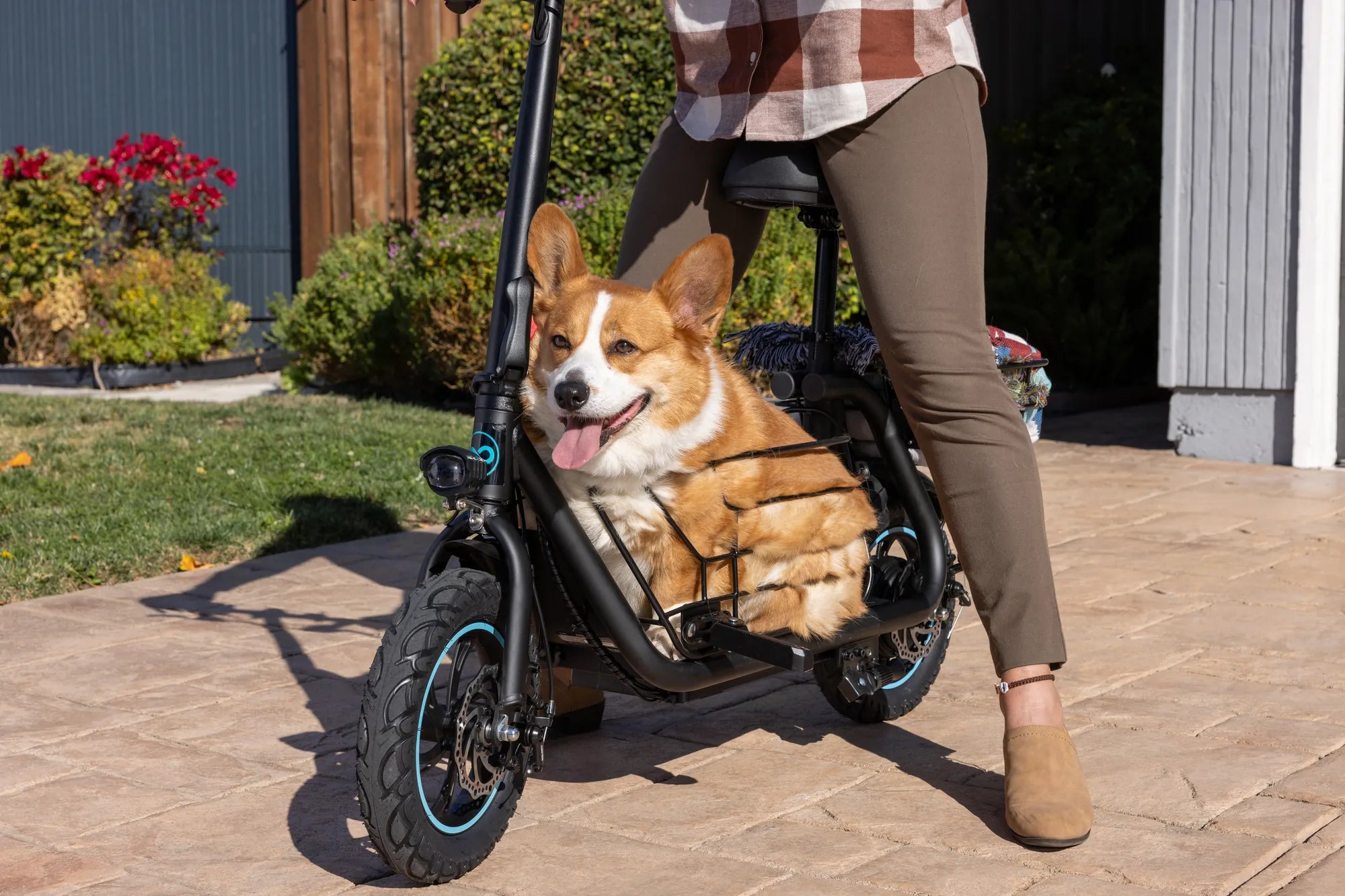
Introduction to Lightweight Mobility Scooters
Finding the lightest mobility scooter available can be the key to reclaiming independence without sacrificing convenience. These ultra-portable models are designed for users who need to transport their scooter frequently—into a car trunk, onto public transit, or up a flight of stairs. The core benefit is freedom: the ability to move seamlessly between your home, vehicle, and destination without relying on heavy, cumbersome equipment.
In practical terms, a "lightweight" or "lightest" scooter is defined not just by its total weight but by its ease of disassembly and portability. While a standard mobility scooter can weigh over 100 pounds, the lightest models aim for under 50, and the most extreme examples dip below 30 pounds. This dramatic reduction opens doors for travel, multi-story living, and spontaneous outings.
This guide will provide a data-driven analysis of what makes a scooter truly portable. We will explore the engineering trade-offs, compare specific models, and offer a framework to help you choose the right scooter for your life. The goal is to equip you with the knowledge to select a scooter that offers the best balance of light weight, reliable performance, and safety.
Key Factors Defining the "Lightest" Scooters
Understanding what contributes to a scooter's weight is crucial for making an informed purchase. The pursuit of the lightest mobility scooter available involves a careful balance between materials, power, and design. Manufacturers must reduce mass without compromising the structural integrity and functionality that users depend on daily.
The primary components that determine weight are the frame, the battery, the motor, and the wheels. Innovations in each of these areas have allowed for the creation of remarkably light yet capable machines. However, it's vital to recognize the inherent trade-offs: extreme lightness often comes with reduced range, lower weight capacity, or smaller wheels less suited for rough terrain.
Frame and Chassis Materials
The frame is the skeleton of the scooter, and its material is the single biggest factor in overall weight. Traditional steel frames are durable but heavy. The lightest scooters on the market almost exclusively use high-grade aluminum alloys, such as aircraft-grade 6061 or 7005 aluminum.
These alloys provide an excellent strength-to-weight ratio, meaning they can support significant loads while remaining remarkably light. Some premium models may incorporate advanced composites or carbon fiber in non-structural elements to shave off additional ounces. The engineering focus is on strategic reinforcement at stress points while using minimal material elsewhere.
Battery Technology and Weight
The battery pack is typically the second-heaviest component. The shift from older sealed lead-acid (SLA) batteries to modern lithium-ion (Li-ion) technology has been revolutionary for portable mobility. Li-ion batteries are significantly lighter and more energy-dense, meaning they can store more power in a smaller, lighter package.
For the lightest mobility scooter available, battery capacity (measured in Amp-hours, Ah) is often modest to keep weight down. A scooter might use a 24V or 36V system with a 7.5Ah or 10Ah lithium battery, balancing enough range for short trips with minimal weight. It's critical that these batteries are high-quality and certified for safety, like the UL-certified packs used in reputable brands.
Disassembly Mechanism
True portability is defined as much by ease of disassembly as by total weight. The lightest scooters are designed to be taken apart into manageable pieces in under 30 seconds, often without tools. The most common design splits the scooter into two main pieces: the tiller (steering column) and the main chassis with seat.
Some models break down further into four or five pieces, including removable batteries and wheels. The design of the connection points—whether using quick-release levers, simple latches, or locking pins—is a key indicator of a scooter built for real-world portability. A 35-pound scooter that splits into two 17-pound pieces is far more practical than a 30-pound one-piece unit.
Top Contenders: A Data-Driven Look at Ultra-Light Models
The market for ultra-light mobility scooters is diverse, with models targeting different priorities within the "lightweight" category. The following analysis breaks down leading contenders based on objective specifications, helping you identify which type aligns with your needs. Remember, the lightest mobility scooter available for one person might not be the best choice for another, depending on required range, capacity, and use case.
| Model Category | Typical Weight Range | Max User Weight | Typical Range | Key Features | Best For |
|---|---|---|---|---|---|
| Featherweight Champions | Under 30 lbs (13.6 kg) | 2201 lbs (100 kg) | 6-10 miles (10-16 km) | Ultra-fast disassembly, smallest footprint, airline-friendly | Frequent travelers, car transport, occasional use |
| Balanced Performers | 30-50 lbs (13.6-22.7 kg) | 2501 lbs (113 kg) | 10-15 miles (16-24 km) | Better suspension, larger batteries, more comfortable seats | Daily urban errands, longer outings, users needing more support |
| Lightweight All-Terrain | 45-65 lbs (20.4-29.5 kg) | 3001 lbs (136 kg) | 12-18 miles (19-29 km) | Larger pneumatic tires, more powerful motor, robust frame | Light trails, uneven pavement, users prioritizing stability over minimum weight |
The Featherweight Champions (Under 30 lbs)
This category represents the absolute pinnacle of portability. Scooters here often weigh between 25 and 30 pounds and are designed with one primary goal: to be lifted and transported with minimal effort. They achieve this through extensive use of aluminum, compact folding mechanisms, and smaller battery packs.
Specifications are typically modest. A top-tier featherweight model might offer a range of 8-10 miles per charge and support a maximum user weight of 220-250 pounds. The trade-off for extreme lightness is often seen in smaller wheels (6-7 inches), a simpler suspension or lack thereof, and a more basic seat. These are ideal for individuals who primarily need a scooter for travel, to navigate airports, or for occasional trips where it will spend most of its time in a car trunk.
The Balanced Performers (30-50 lbs)
For many users, scooters in the 30-to-50-pound range offer the most practical blend of portability and performance. This category sees a meaningful increase in battery capacity, often extending the range to 12-15 miles. Weight capacity also increases, commonly reaching 250-300 pounds, making them suitable for a wider range of users.
These models often feature more robust construction, slightly larger wheels (7-8 inches) for a smoother ride, and more comfortable, adjustable seating. The disassembly process remains quick and tool-free, but the individual pieces may be slightly heavier. This is the category we recommend for daily use around town, running errands, and for individuals who need reliable performance but still prioritize the ability to lift the scooter in and out of a vehicle.
Gyroor's Approach to Lightweight Mobility
As a leading brand in personal electric transport, Gyroor applies its engineering philosophy to the concept of portable mobility. While known for electric scooters and e-bikes, the principles translate directly: using high-strength aluminum alloys for frames, integrating UL-certified lithium-ion battery packs for optimal energy density, and designing for reliable performance.
Gyroor's focus on safety certifications, like UL for batteries and IPX5 water resistance for electronics, is crucial for a product that may be used outdoors. This approach ensures that a lightweight scooter isn't just light, but also dependable. The brand's commitment to a comprehensive 1-year warranty and support for over 100,000 riders underscores the importance of long-term reliability alongside portability.
Practical Considerations Before You Buy
Choosing the right scooter is a personal decision that goes beyond comparing spec sheets. It requires an honest assessment of your lifestyle, physical capabilities, and daily environment. The lightest mobility scooter available on paper might not be the best fit if it doesn't align with how you live.
Start by visualizing your typical day. Where will you use the scooter? How will you store it? How often will you need to take it apart? Answering these questions will guide you toward the right balance of features. Never compromise on safety or stability for the sake of saving a few pounds; the right scooter will enhance your independence, not create new limitations.
Assessing Your Lifestyle Needs
Create a simple checklist of your non-negotiable requirements. Do you live in an apartment with narrow doorways or a small elevator? This demands a compact footprint. Do you need to lift it into a car trunk by yourself? This sets a hard upper limit on the weight of the heaviest component. Do you plan to use public buses or trains? Verify the scooter's folded dimensions meet transit authority guidelines.
For frequent air travelers, the process is more stringent. You must check with airlines for their specific policies on battery capacity (usually measured in Watt-hours, Wh). The lightest, most disassemblable scooters are designed with this in mind, but confirming airline approval is an essential step before purchase.
Understanding Specs: Weight vs. Weight Capacity
This is a critical distinction. The scooter's weight (how much it weighs) and its weight capacity (how much weight it can safely carry) are inversely related in design. To achieve a lower scooter weight, engineers often must reduce the weight capacity by using lighter materials and components.
Always choose a scooter with a maximum weight capacity that exceeds your body weight by a comfortable margin—we recommend at least 30-50 pounds of headroom. This ensures the motor, frame, and brakes are not operating at their absolute limit, which preserves battery life, ensures safety, and provides a more stable, comfortable ride. Overloading a scooter is dangerous and will void the warranty.
The Importance of Warranty and Support
A lightweight scooter is a precision device that undergoes regular stress from disassembly and transport. A strong warranty is not just a marketing point; it's a necessity. Look for a comprehensive warranty that covers the frame, motor, and electronic components for at least one year. Battery warranties are often shorter (e.g., 6 months) but are a key indicator of the manufacturer's confidence.
Equally important is accessible customer support. Can you easily reach the company for technical questions or to order replacement parts? Brands with an established reputation and a large customer base, like Gyroor, typically have more robust support systems. This peace of mind is invaluable for a product you'll rely on daily.
Safety and Maintenance for Lightweight Scooters
Owning the lightest mobility scooter available comes with specific safety and maintenance responsibilities. Their lightweight construction demands mindful handling to ensure longevity and safe operation. A proactive approach to care will keep your scooter running smoothly for years.
First, always perform a pre-ride check. Ensure all quick-release levers and latches are securely locked after reassembly. Check tire pressure if your model has pneumatic tires; under-inflated tires increase rolling resistance and drain the battery faster. Visually inspect the frame for any signs of stress or damage, especially if you transport it frequently.
Battery Care for Longevity
The lithium-ion battery is the heart of your scooter. Proper care maximizes its lifespan, which is typically rated for 500+ charge cycles. Avoid completely draining the battery to 0%. Try to recharge when it reaches 20-30% capacity. Similarly, avoid leaving it plugged in at 100% for extended periods (days or weeks).
Store the scooter and battery in a cool, dry place, away from direct sunlight or extreme temperatures. If you won't use the scooter for a month or more, store the battery at about a 50% charge. Following these simple practices can double the functional life of your battery pack, protecting your investment.
Riding Safely in Different Environments
Lightweight scooters are primarily designed for smooth, paved surfaces like sidewalks, indoor floors, and shopping centers. Their smaller wheels make them more susceptible to getting stuck in cracks, on gravel, or on steep inclines. Always be aware of your terrain.
Use caution on wet surfaces, even with a water-resistant rating like IPX5. This rating protects against water spray from any direction, but it does not mean the scooter is submersible. Avoid puddles and heavy rain. Always use lights if riding in low-light conditions, and obey local pedestrian laws and etiquette. Your safety is paramount.
Frequently Asked Questions (FAQ)
What is the actual lightest mobility scooter available?
Specific models and their weights change frequently as new products are released. As of the latest market data, the top contenders for the title of lightest mobility scooter available are specialized travel scooters that weigh between 24 and 28 pounds (11-13 kg) without the battery. With their standard lithium battery, total weight typically falls between 28 and 33 pounds. It's best to check recent reviews and manufacturer specifications for the most current leader in this fast-evolving category.
Can the lightest scooters handle outdoor use?
They can handle controlled outdoor use on paved surfaces, such as smooth sidewalks, paved park paths, and parking lots. However, they have limitations. Small solid or semi-pneumatic tires provide less shock absorption than larger pneumatic tires. They also have less ground clearance and power for tackling steep hills or uneven terrain like gravel or grass. For regular outdoor use on anything other than smooth pavement, a model from the "Balanced Performer" or "Lightweight All-Terrain" category would be a more suitable and comfortable choice.
How do I transport a lightweight scooter?
Transport is their primary design feature. For car transport, most disassemble into 2-4 pieces that easily fit in a trunk or back seat. The heaviest piece is often under 25 pounds. For public transit, they can be quickly folded and rolled or carried on like luggage. For air travel, you must check with the airline. Generally, you can check the disassembled scooter as special baggage, and the removable battery (if under the airline's Wh limit, usually 160Wh-300Wh) can be carried in the cabin. Always notify the airline in advance.
Is there a trade-off between weight and battery life?
Yes, this is the fundamental engineering trade-off. Battery capacity is directly related to weight and size. The lightest mobility scooter available will have a smaller, lighter battery, which translates to a shorter range (often 6-10 miles). If you need a longer range (15+ miles), you will need to accept a slightly heavier scooter with a larger battery pack. Assess your typical daily travel distance and choose a scooter whose rated range exceeds that by at least 25% to account for variables like hills, wind, and battery aging.
Are lightweight scooters difficult to assemble?
Not at all. In fact, ease of assembly and disassembly is a hallmark of a well-designed portable scooter. The best models use tool-free, color-coded, or intuitive connection systems that allow most users to go from a disassembled state to ready-to-ride in 30 seconds or less. Common mechanisms include push-button quick-release levers for the tiller, slide-and-lock systems for the seat post, and simple plug connectors for the battery. Before purchasing, look for video demonstrations of the assembly process to ensure it matches your physical capabilities.
Conclusion: Finding Your Perfect Match
The search for the lightest mobility scooter available is ultimately a search for greater freedom and flexibility. The right model will feel like an extension of your independence, not a burden to manage. By focusing on the key factors of frame material, battery tech, and disassembly design, and by honestly assessing your personal lifestyle needs, you can make a confident choice.
Remember to prioritize safety certifications, a strong warranty, and reliable performance from a trusted brand. The lightest scooter is only a good investment if it is also dependable and safe. Whether you choose a featherweight champion for globe-trotting adventures or a balanced performer for daily urban life, the goal is enhanced mobility on your own terms.
For those interested in the engineering behind lightweight, reliable personal transport, explore the innovation and quality found in the Gyroor collection. With a commitment to UL-certified safety, robust yet lightweight designs, and comprehensive customer support, Gyroor exemplifies the principles that make for a trustworthy mobility partner. Browse the full Gyroor collection at gyroorboard.com to see how advanced design can empower your journey.
How Fast is the Fastest Scooter? A Data-Driven Guide to Speed Tiers
How Fast is the Fastest Scooter? A Data-Driven Guide to Speed Tiers