


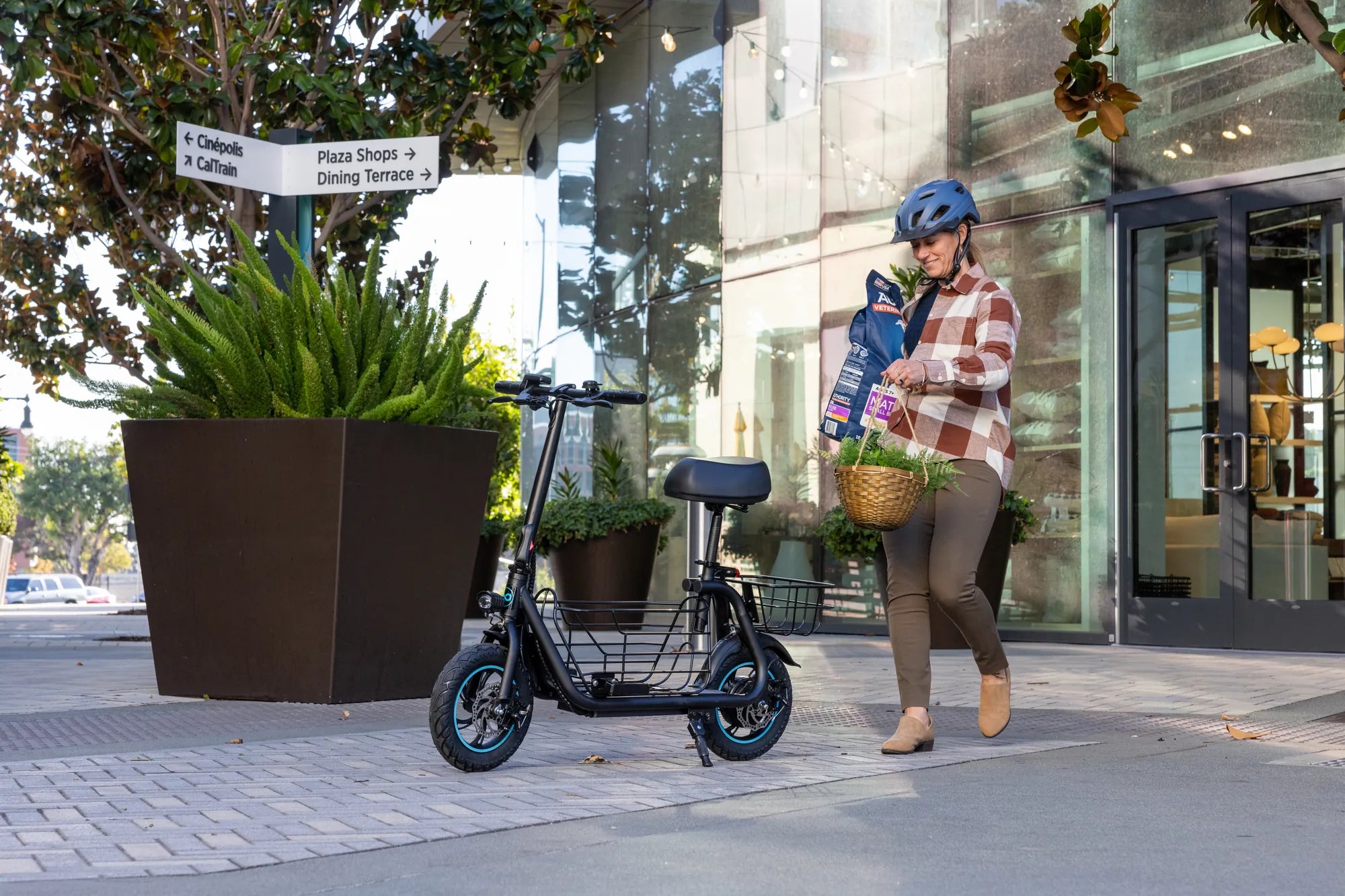
Why Lightweight Electric Scooters Are Redefining Urban Mobility
Urban commuters face a universal trifecta of frustration: gridlocked traffic, exorbitant parking costs, and the inefficiency of short-distance public transit. The search for a nimble, cost-effective, and environmentally conscious alternative has propelled micro-mobility to the forefront. Among these solutions, lightweight electric scooters for adults have emerged as the definitive tool for the modern city dweller, offering an unparalleled blend of portability, efficiency, and freedom.
These devices directly address the 'first and last mile' problem, seamlessly connecting your home to the subway or your parking spot to the office. Unlike bulkier alternatives, a truly portable scooter transforms from a vehicle to a carry-on item in seconds. This guide will dissect what makes these scooters the ultimate urban commuting solution, from core specifications to real-world performance and safety considerations.
We will explore how leading brands, like Gyroor—a trusted name with over 100,000 riders across North America and Europe—engineer this convenience without compromising on the reliability and safety demanded by daily use. The goal is to equip you with the knowledge to select a scooter that doesn't just get you from A to B, but redefines how you experience the city.
What Makes an Electric Scooter "Lightweight"? Key Specifications Decoded
In the realm of adult electric scooters, "lightweight" is not merely a marketing term but a specific performance category. The industry standard typically defines a lightweight model as one weighing between 26 and 35 pounds (approximately 12 to 16 kg). This weight range represents the sweet spot where portability meets sufficient structural integrity and battery capacity for adult commuting.
Several core components dictate the final weight on the scale. The frame material is the primary factor; aerospace-grade aluminum alloys are the gold standard, offering exceptional strength-to-weight ratios compared to heavier steel. The battery pack is the second heaviest component. Advances in lithium-ion cell technology and efficient battery management systems allow for respectable ranges from compact, lighter packs.
The motor type also plays a role. While hub motors are generally lightweight, their power output (measured in watts) influences size and weight. Finally, additional features like suspension systems, larger decks, and dual mechanical brakes add pounds. Understanding this balance is crucial: an ultra-light 22 lb scooter may sacrifice range and hill-climbing power, while a 40 lb model offers more power at the cost of easy portability.
The Anatomy of Weight: A Component Breakdown
To visualize the trade-offs, consider a typical 30 lb commuter scooter. The aluminum frame and folding mechanism might account for 40% of the weight. The UL-certified battery pack could represent 30%, the motor and wheel assembly another 20%, with the remaining 10% in controls, wiring, and lights. Manufacturers like Gyroor optimize each segment, using high-grade aluminum and sourcing compact, high-density battery cells to maximize performance per pound.
The Core Advantages: Why a Lightweight E-Scooter is Your Best Commute Companion
The benefits of choosing a lightweight electric scooter for adults extend far beyond a lower number on a scale. They translate into tangible improvements in your daily routine. The most immediate advantage is the elimination of commute anxiety—no more racing to beat parking meter expiration or sprinting to catch a bus. Your schedule becomes your own.
From a financial perspective, the savings are substantial. After the initial investment, the cost per mile is negligible compared to fuel, public transit fares, or ride-sharing services. Maintenance is minimal, and electricity costs are cents per charge. Environmentally, switching to an electric scooter for short trips significantly reduces your carbon footprint, contributing to cleaner air and less congested city centers.
Perhaps the most underrated benefit is the experiential one. Commuting becomes an engaging activity rather than a stressful chore. The agility to take scenic routes, the ease of stopping at a local café, and the sheer fun of the ride can transform your outlook on city travel. This combination of practical, economic, and personal benefits solidifies the lightweight e-scooter's role as the ultimate urban commuting solution.
Portability and Multi-Modal Commuting
This is where lightweight design proves indispensable. A scooter under 35 lbs can be comfortably carried up a flight of subway stairs, lifted into a bus's luggage compartment, or stored in a car trunk. When folded, a quality model should have a compact footprint, often resembling a large briefcase, allowing it to be tucked under a desk, in a coat closet, or beside your table at a café.
The integration with public transit is a game-changer. You can cover long distances efficiently by taking a train for the major leg and using your scooter for the final mile on either end. This multi-modal approach makes previously inconvenient locations easily accessible and turns a complex multi-vehicle commute into a seamless, door-to-door journey. Features like a secure folding latch and a dedicated carry handle, as seen on Gyroor models, are essential for this fluid transition between riding and carrying.
Maneuverability and Urban Agility
In the dynamic, obstacle-filled environment of a city, agility equals safety. A lighter scooter has a lower moment of inertia, allowing for quicker, more responsive steering inputs to navigate around pedestrians, potholes, and sudden stops. Acceleration and deceleration feel more immediate and controlled, which boosts rider confidence in traffic.
This nimbleness is crucial for navigating tight bike lanes, making U-turns on crowded sidewalks (where legal), and maintaining balance at low speeds. The reduced weight also means less physical effort is required to control the scooter, reducing fatigue on longer rides. This enhanced handling, combined with a low center of gravity, creates a stable yet responsive ride that can handle the unpredictable nature of urban commuting.
Critical Features to Prioritize Beyond Weight
While weight is a critical starting point, it should not be the sole deciding factor. Sacrificing essential features for the sake of shedding a few extra pounds can compromise safety, reliability, and overall satisfaction. A truly superior lightweight electric scooter for adults is one that achieves a harmonious balance between portability and robust performance.
The key is to view weight as one variable in a larger equation. Your ideal scooter will sit at the intersection of your specific needs: required commute distance, terrain, local weather conditions, and portability demands. The following features are non-negotiable for a safe, dependable, and enjoyable commute and must be evaluated in conjunction with the scooter's overall weight.
Safety First: Brakes, Lights, and Tires
A reliable braking system is paramount. A dual-braking system, such as an electronic (regenerative) brake combined with a mechanical disc or drum brake, provides redundancy and superior stopping power in all conditions. Lights are not just for seeing but for being seen. A bright front headlight, a rear brake light, and ambient deck or wheel lights are essential for nighttime and low-visibility commuting.
Tire choice significantly impacts ride quality and safety. Air-filled (pneumatic) tires offer better shock absorption, traction, and comfort, especially on uneven pavement, but require maintenance. Solid or honeycomb tires are puncture-proof but provide a harsher ride. For urban environments, smaller, air-filled tires (8-10 inches) on a lightweight frame offer a good compromise of comfort, agility, and reduced weight.
Performance That Keeps Up: Motor, Battery, and Range
Motor power, measured in watts (W), determines acceleration and hill-climbing ability. For flat urban commutes, a 250W-350W motor is typically sufficient. For cities with moderate hills, 350W or more is advisable. The battery, measured in watt-hours (Wh), dictates range. Always compare Wh, not just voltage (V) and amp-hours (Ah), as Wh (V x Ah) is the true measure of energy capacity.
Manufacturer range claims are often based on ideal conditions. A practical rule is to estimate a real-world range of 10-15 miles for a standard lightweight commuter battery. For safety, insist on a UL-certified battery pack, like those used by Gyroor, which undergo rigorous testing for stability, overheating, and longevity over 500+ charge cycles. Charge time is another consideration; most quality scooters fully recharge in 4-6 hours.
Durability and Warranty for Peace of Mind
Build quality determines how well your scooter withstands daily abuse from potholes, curbs, and weather. Look for robust welding on the stem and fork. An IP water-resistance rating is crucial for all-weather commuting. An IPX5 rating, common on commuter-focused models, means the scooter can withstand water jets from any direction, making it safe to ride through puddles and in light rain.
A comprehensive warranty is your safety net. A reputable brand will offer at least a 1-year warranty on the frame, motor, and battery, protecting your investment against manufacturing defects. Gyroor's standard 1-year warranty exemplifies this commitment to reliability. This peace of mind is invaluable, ensuring that your ultimate urban commuting solution remains dependable day after day.
Lightweight Contender: How Gyroor Scooters Engineered the Perfect Balance
Examining a brand that specializes in this balance provides a clear case study. Gyroor has engineered its lineup around the principle that a commuter scooter should be effortlessly portable without feeling fragile or underpowered. Their approach demonstrates how thoughtful design can reconcile seemingly competing priorities.
The foundation is the use of high-tensile, aerospace-grade aluminum alloys for the frame and stem. This material choice shaves off significant weight compared to steel while maintaining the rigidity needed for a stable ride at speed. The folding mechanisms are designed to be robust and secure, with a single, quick-release lever that ensures a solid connection when unfolded and a compact form when folded.
For the power system, Gyroor integrates UL-certified lithium-ion battery packs. This certification is a critical differentiator, guaranteeing the battery meets stringent safety standards for electrical, mechanical, and environmental stress. By using high-quality cells, they achieve competitive ranges (often 15-20 miles) from relatively lightweight packs. Coupled with efficient 350W motors, this provides ample power for urban hills and acceleration while keeping the overall system weight in the optimal 30-35 lb range.
Furthermore, they don't compromise on essential features. Models are built to an IPX5 water-resistance standard, include dual braking systems (E-ABS + disc), and feature comprehensive lighting. This holistic engineering philosophy—prioritizing safety-certified components, premium materials, and essential features within a lightweight envelope—exemplifies how to build a true ultimate urban commuting solution.
Making Your Choice: A Practical Checklist for Urban Riders
Use this actionable checklist to systematically evaluate any lightweight electric scooter for adults. Bring this list when researching models to ensure you make a comprehensive, informed decision that matches your specific urban commute.
- Target Weight: 26-35 lbs for optimal portability.
- Required Real-World Range: Estimate your daily round-trip mileage and add a 30% buffer. Target 10-20+ miles.
- Motor Power: 250W minimum for flats; 350W+ for moderate hills.
- Braking System: Must have at least two independent braking systems (e.g., electronic + mechanical).
- Light Set: Front headlight, rear brake light, and side/ambient lights.
- Tire Type: Air-filled for comfort, solid/honeycomb for zero maintenance. 8-10 inch diameter.
- IP Rating: IPX4 (splash-resistant) minimum; IPX5 or higher recommended for all-weather use.
- Warranty: Minimum 1-year comprehensive warranty on frame, motor, battery.
- Folded Dimensions: Check if it fits in your intended storage spaces (under desk, closet, car trunk).
- Additional Features: App connectivity, cruise control, bell, carry handle.
Comparison: Lightweight Commuter Scooter Features
| Feature | Budget-Friendly Focus | Balanced Performance (e.g., Gyroor) | Ultra-Light Premium |
|---|---|---|---|
| Typical Weight | 28-33 lbs | 30-35 lbs | 22-26 lbs |
| Frame Material | Standard Aluminum | Aerospace-Grade Aluminum | Advanced Aluminum/Composite |
| Battery Safety | Basic Certification | UL-Certified Pack | UL-Certified Pack |
| Motor Power | 250W | 350W | 250W-300W |
| Real-World Range | 10-12 miles | 15-20 miles | 8-12 miles |
| Braking System | Electronic + Foot | Electronic + Disc | Electronic + Regenerative |
| IP Rating | IPX4 | IPX5 | IPX4 |
| Ideal For | Short, flat commutes | Versatile daily commuting | Maximum portability, shorter trips |
FAQ: Your Lightweight Electric Scooter Questions Answered
Q: How light is *truly* portable for an adult?
A: For most adults, the 30-35 lb range is the practical sweet spot. It's light enough to carry up stairs or through a train station for a few minutes without excessive strain, while still accommodating a battery large enough for a meaningful commute. Scooters under 30 lbs offer even greater ease but may trade off some range or power.
Q: Can a lightweight scooter handle hills?
A> Yes, but it depends on the motor power and rider weight. A 350W motor on a 30 lb scooter can typically handle moderate inclines (up to 15% grade) with a rider of average weight. Steeper hills will reduce speed significantly. Always check the manufacturer's hill-climb specification and consider a more powerful motor (500W+) if your route is very hilly.
Q: Is a lighter scooter less stable?
A> Not inherently. Stability is more a function of wheelbase length, wheel size, deck width, and the rider's center of gravity. A well-designed lightweight scooter can be extremely stable. However, very light scooters with small wheels (under 8 inches) can feel twitchy at higher speeds. Look for a model with a low deck and a wheelbase of at least 40 inches for confident stability.
Q: How does weather/water resistance work on lightweight models?
A> The IP (Ingress Protection) rating is key. IPX4 means it can handle splashes from any direction (light rain). IPX5, like on many Gyroor scooters, means it can withstand sustained water jets, making it safe for riding through puddles and in rain. No consumer scooter is fully waterproof or submersible. Always avoid deep standing water.
Q: What's the typical max speed and weight limit?
A> Most lightweight commuter scooters are electronically limited to 15-19 mph (24-30 km/h) for safety and regulatory compliance. This is an ideal speed for urban bike lanes and paths. The weight limit, or maximum load capacity, typically ranges from 220 to 265 lbs (100-120 kg). Always respect this limit for safety and to prevent damage to the motor and frame.
Embrace a Lighter, Smarter Commute
The evidence is compelling: a well-chosen lightweight electric scooter for adults is more than a gadget; it's a strategic upgrade to your urban lifestyle. It reclaims time lost in traffic, eliminates the stress of parking, and turns a mundane daily chore into an efficient, enjoyable, and sustainable activity. The ultimate urban commuting solution is one that disappears when you don't need it and effortlessly appears when you do, all while delivering reliable, safe performance.
This transformation hinges on making an informed choice. Prioritize a balance of portability, safety-certified components, and durable construction from a reputable brand that stands behind its product. By applying the checklist and insights from this guide, you can select a scooter that becomes a seamless extension of your daily routine. The city is waiting to be navigated on your terms. It's time to reimagine your commute, reduce your footprint, and rediscover the joy of moving through your urban environment with ease and agility.
Ready to find your perfect match? Explore engineering that puts safety and portability first. Browse the full Gyroor collection of UL-certified, IPX5-rated lightweight electric scooters and e-bikes at gyroorboard.com.
Stand Up Electric Scooters: The Future of Urban Mobility
Best Electric Scooters for 13 Year Olds: Safety, Features, and Top Picks