



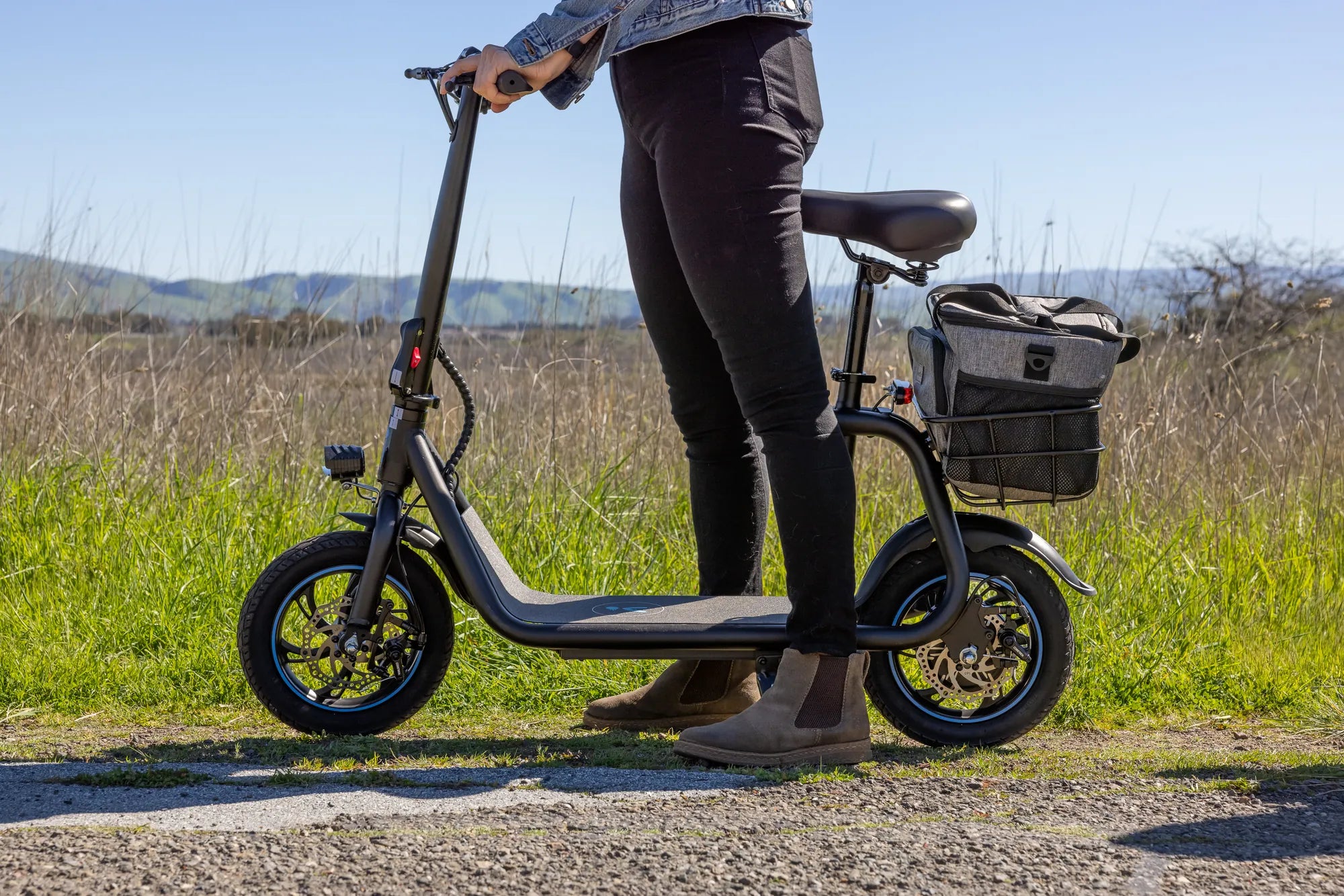
Introduction: The Rise of Affordable E-Mobility
Urban congestion, volatile fuel prices, and a growing environmental consciousness are driving a seismic shift in personal transportation. At the forefront of this change are low cost electric scooters: affordable and eco-friendly commuting solutions. These compact vehicles offer a compelling answer to the 'last-mile' problem, bridging the gap between home, public transit, and final destination without the expense or hassle of a car.
The market for budget-friendly e-scooters has matured significantly. It's no longer about questionable quality or fleeting trends. Today, riders can access well-engineered, certified models that deliver dependable daily performance. Brands like Gyroor have been instrumental in this evolution, proving that accessibility doesn't require compromising on core safety or reliability. Trusted by over 100,000 riders across North America and Europe, Gyroor demonstrates that smart engineering and a focus on certified components can bring high-value e-mobility within reach.
This article will dissect what truly defines a low-cost electric scooter, moving beyond just price. We'll examine the essential features that ensure value, safety, and longevity. You'll gain a clear understanding of performance expectations, economic and environmental benefits, and a practical framework for making an informed purchase that aligns with your commuting lifestyle.
What Defines a "Low-Cost" Electric Scooter?
The term "low-cost" in the electric scooter market typically refers to models priced between $300 and $700. This segment targets the value-conscious commuter, student, or first-time rider seeking a functional and efficient alternative to walking, driving, or public transit alone. It's crucial to understand that this price point represents a balance, not a compromise on all fronts.
At this level, you are investing in a vehicle designed for core utility: reliable daily commuting on relatively smooth urban terrain. Expectations should be calibrated towards practicality over premium performance. You can anticipate capable motors for city speeds, batteries sufficient for shorter commutes, and durable, often foldable, aluminum frames. The focus is on delivering the fundamental e-scooter experience—fun, freedom, and efficiency—without superfluous features that inflate cost.
However, "low-cost" must never equate to "low-safety." This is the critical differentiator. Some cut-rate models achieve low prices by using uncertified batteries, subpar wiring, or weak mechanical components, posing significant risks. A true value scooter maintains rigorous standards for its most critical systems. It prioritizes a UL-certified battery pack, a robust battery management system (BMS), and reliable brakes. The brand's reputation and warranty support are part of this value equation, offering peace of mind that the initial savings won't lead to costly failures or safety hazards down the road.
Gyroor's approach exemplifies this philosophy. By engineering models like the Gyroor C1 and S1 series with non-negotiable safety certifications and proven components, they deliver reliable performance within the accessible price bracket. This ensures riders get a trustworthy tool, not just a disposable gadget.
Key Features to Prioritize for Value and Safety
When evaluating low cost electric scooters: affordable and eco-friendly commuting solutions, certain features are non-negotiable for ensuring you receive genuine value and safe operation. Prioritizing these elements separates a wise investment from a regrettable purchase.
The single most important component is the battery. Insist on a model with a UL 2271 or UL 2843 certified battery pack. This certification means the battery has undergone rigorous testing for electrical, mechanical, and environmental safety, drastically reducing fire risk. Paired with a quality Battery Management System (BMS), it also protects against overcharging, overheating, and deep discharge, extending the pack's lifespan well beyond 500 charge cycles.
Next, consider ingress protection. An IPX5 water-resistance rating is a valuable feature for a commuter scooter. It signifies the scooter can withstand water jets from any direction, making it safe to ride on damp roads or through unexpected puddles. This durability is essential for real-world, all-weather commuting and protects the scooter's internal electronics from moisture-related damage.
Finally, scrutinize the warranty and customer support. A reputable brand stands behind its products. A comprehensive 1-year warranty on the scooter, with specific coverage for the battery and motor, indicates confidence in build quality. Accessible customer service and available replacement parts are crucial for long-term ownership, ensuring your scooter remains a viable commuting solution for years.
Motor Power & Real-World Performance
Motor power in affordable scooters typically ranges from 250W to 350W for single-motor models. A 250W motor is sufficient for flat urban terrain and riders up to approximately 220 lbs, offering speeds of 15-18 mph. A 350W motor provides better acceleration and more consistent performance on gentle inclines.
It's vital to set realistic expectations. A low-cost scooter is designed for efficient city commuting, not off-road adventures or steep hill climbs. On a moderate incline, you may experience a noticeable drop in speed. Performance is also tied to rider weight, tire inflation, and riding mode. Understanding these parameters helps you match the scooter's capabilities to your daily route.
Gyroor models, for instance, are engineered to deliver optimized performance within their specified power range. Their motors are paired with efficient controllers to provide smooth acceleration and reliable speed for the target use case, ensuring the scooter feels responsive and capable during a typical commute without pushing components beyond their design limits.
Battery Life, Range, and Charging
Battery capacity is usually measured in watt-hours (Wh) or ampere-hours (Ah) at a specific voltage (e.g., 36V or 48V). In the affordable segment, capacities often range from 7.5Ah to 10Ah. Manufacturers advertise a "maximum range," but real-world range is typically 60-70% of that figure due to variables like rider weight, hills, temperature, and riding style.
For a typical 7.8Ah 36V battery (approx. 280Wh), a realistic range is 10-15 miles per charge. This is adequate for a 3-5 mile one-way commute with a safety buffer. To maximize battery lifespan, avoid regularly draining it to 0%. Aim to recharge when it drops to 20-30% capacity, and store the scooter in a cool, dry place. Using the provided charger and following the manufacturer's guidelines is essential.
The inclusion of a certified BMS, as found in Gyroor scooters, is what makes this battery management possible and safe. It carefully balances cells during charging, prevents over-discharge, and manages thermal output, ensuring each of the 500+ potential charge cycles is used effectively and safely.
Build Quality and Portability
Frame material is key. Aerospace-grade aluminum alloy is the standard for good reason: it's strong, lightweight, and resistant to corrosion. The folding mechanism deserves close attention—it should feel solid, lock securely with a clear audible click, and not develop wobble over time. A poor hinge is a major point of failure.
Weight is a primary factor for portability. Affordable scooters typically weigh between 30 and 40 lbs. This is light enough to carry up a flight of stairs or onto public transit for short distances, but consider your own strength and daily routine. A quick-folding design is invaluable for mixed-mode commuting, allowing you to seamlessly transition from riding to carrying in seconds.
Durability touches every aspect. Look for reinforced stem joints, durable deck coating, and sealed bearings. Good cable management, where wires are internally routed or securely clamped, not only looks better but also prevents snags and damage. These design choices directly impact the scooter's longevity and daily usability.
The Eco-Friendly & Economic Impact of Switching
The environmental argument for low cost electric scooters: affordable and eco-friendly commuting solutions is compelling. When compared to a personal vehicle for short urban trips, the carbon footprint reduction is substantial. An average gasoline-powered car emits about 411 grams of CO2 per mile. A typical e-scooter, charged on the U.S. electrical grid, is responsible for roughly 40-50 grams of CO2 per mile when accounting for electricity generation and distribution—a 90% reduction.
This impact is magnified when considering the full lifecycle, including manufacturing. E-scooters require far fewer raw materials and energy to produce than a car. By replacing car trips for distances under 5 miles, a significant contributor to urban emissions and congestion, riders make a direct positive impact on local air quality and traffic flow.
Economically, the savings are stark. Let's compare the annual operating costs for a 10-mile round-trip commute (5 days a week, 50 weeks a year):
| Transport Mode | Fuel/Energy Cost | Maintenance & Parking | Estimated Annual Cost |
|---|---|---|---|
| Compact Car | $520 (Gas) | $1,200+ | $1,720+ |
| Rideshare (Uber/Lyft) | N/A | N/A | $3,000+ |
| Public Transit Pass | N/A | N/A | $800 - $1,500 |
| E-Scooter | $15 (Electricity) | $50 (Tires/Brakes) | $65 |
As illustrated, the e-scooter's operating cost is negligible. The initial investment of a few hundred dollars can be recouped in mere months when replacing costlier alternatives. This makes it one of the most economically rational commuting tools available, especially for students and urban dwellers.
Making the Right Choice: A Practical Buyer's Guide
Choosing the right scooter requires a methodical approach. First, quantify your needs. Map your actual daily commute distance and note the terrain (flat, hilly). Add a 20-30% buffer to the manufacturer's range claim to find a model that comfortably covers your round trip. Check your local and state regulations regarding e-scooter use on roads, bike lanes, and sidewalks, as laws vary widely.
Second, compare specifications with a focus on certified safety. Create a shortlist based on: 1) UL-certified battery, 2) IPX5 or higher water resistance, 3) motor power suitable for your weight and hills, and 4) a minimum 1-year warranty. Do not sacrifice these for a slightly lower price or flashy non-essential features like extravagant LED lighting.
Third, research beyond the spec sheet. Read verified customer reviews focusing on long-term reliability, real-world range, and customer service experiences. Watch detailed video reviews that show the scooter in action. A brand with a consistent track record, like Gyroor with its 4.5/5 average rating from over 100,000 riders, offers a strong indicator of dependable performance.
Finally, understand the total cost of ownership. Factor in potential accessory costs (a quality helmet is mandatory), and ensure replacement parts (tires, inner tubes, brake pads) are readily available from the manufacturer. A slightly higher upfront cost for a scooter from a brand with strong support often translates to lower long-term costs and far less frustration.
Frequently Asked Questions (FAQ)
Q: How far can I really go on a single charge with a low-cost scooter?
A: Real-world range is typically 10-15 miles for most models in this segment under ideal conditions (flat terrain, moderate speed, average rider weight). Always plan for 30-40% less than the maximum advertised range to account for variables like hills, wind, and battery age.
Q: Is it safe to ride in the rain or through puddles?
A: Only if the scooter has a stated water-resistance rating of IPX5 or higher. An IPX5 rating means it can handle water jets from any direction, making it safe for wet roads and light rain. Never submerge any part of the scooter, and avoid riding in heavy downpours. Always dry the scooter after a wet ride.
Q: What regular maintenance is required?
A: Maintenance is minimal but crucial. Regularly check tire pressure (maintaining PSI as listed on the tire sidewall), test brake function and adjust cable tension if needed, ensure all bolts (especially around the folding mechanism and stem) are tight, and keep the scooter clean and dry. Inspect the brakes and tires monthly for wear.
Q: Are these scooters legal on bike paths and sidewalks?
A> Laws vary significantly by city and state. Generally, they are permitted in bike lanes on streets. Use on sidewalks is often restricted or banned for safety reasons. Always check your local municipal codes. Regardless of the law, always yield to pedestrians and ride at a safe, controlled speed in shared spaces.
Q: Can I carry it on public transportation?
A> Most foldable models are designed for this. However, always check the specific policies of your local bus, train, or subway authority. Some require the scooter to be folded, and some may have restrictions during peak hours. A lighter scooter (under 35 lbs) with a secure folding latch makes this process much easier.
Conclusion: Smart Mobility Within Reach
Low cost electric scooters: affordable and eco-friendly commuting solutions represent a pragmatic and powerful shift in how we navigate our cities. They offer a tangible escape from traffic gridlock, a direct reduction in personal transportation costs, and a meaningful step towards a lower-carbon lifestyle. The key to unlocking these benefits lies in informed selection—prioritizing certified safety, proven reliability, and thoughtful design over the allure of the absolute lowest price.
By choosing a scooter from a reputable brand that invests in UL-certified batteries, robust construction, and strong customer support, you are not just buying a product; you are investing in a reliable daily companion. Brands like Gyroor have demonstrated that it is possible to deliver this responsible engineering at an accessible point, making smart, sustainable mobility a reality for over 100,000 riders. Your commute can be efficient, economical, and enjoyable. The solution is within reach.
Ready to transform your daily commute? Browse the full Gyroor collection of UL-certified, IPX5-rated electric scooters and e-bikes at gyroorboard.com and find the perfect model for your journey.
Electric Scooters in Kerala: The Future of Urban Mobility
Electric Scooters Chattanooga: The Future of Urban Mobility