



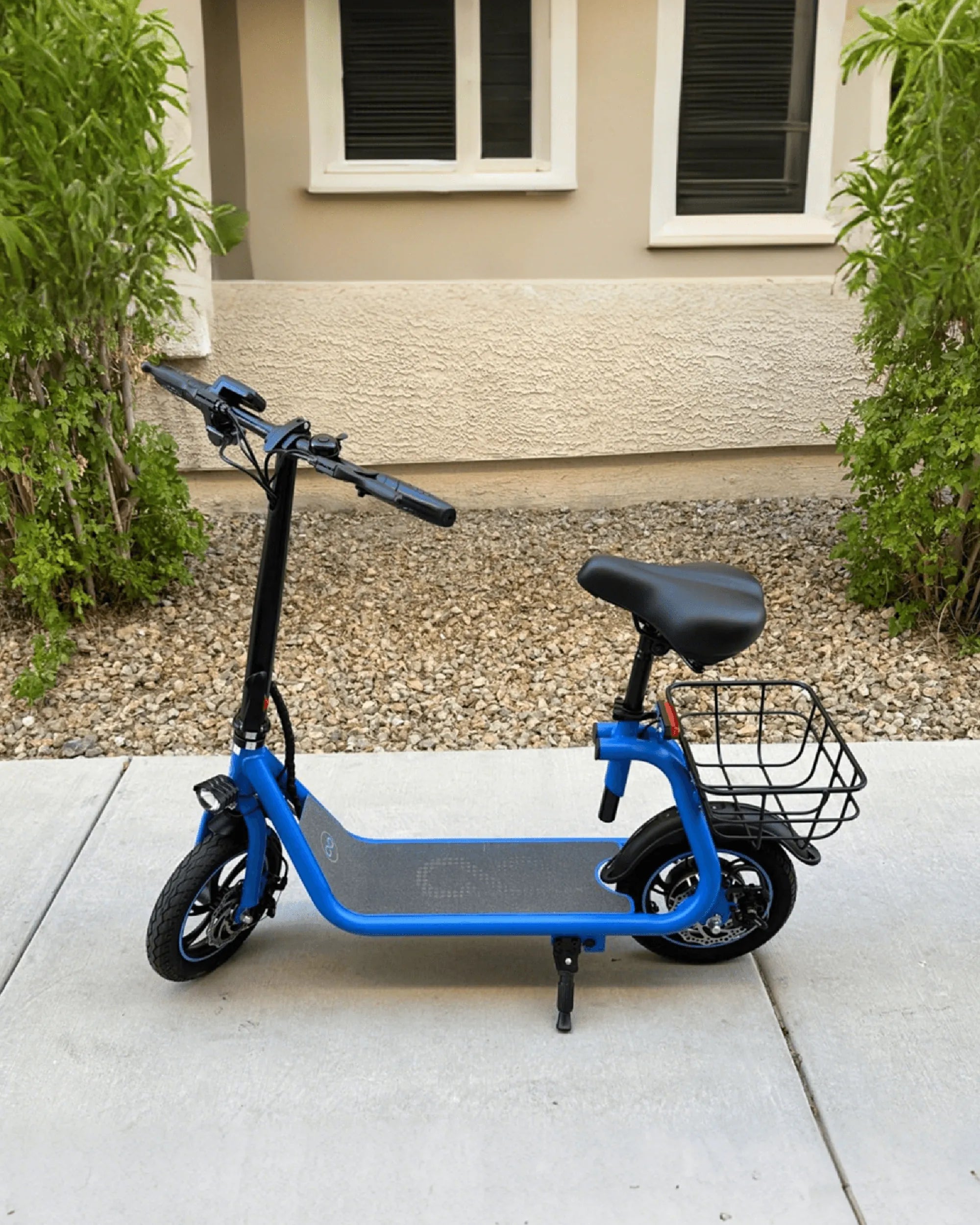
Introduction: The All-Terrain Revolution on Three Wheels
A minibike trike represents a transformative category in personal electric transportation, blending the compact power of a minibike with the inherent stability of a three-wheeled adult trike. This hybrid vehicle offers a versatile solution for urban commuters, recreational riders, and anyone seeking a stable, practical alternative to traditional two-wheelers. Unlike standard electric scooters or bicycles, a minibike trike provides a confidence-inspiring platform capable of handling cargo, passengers, and varied terrain with ease.
This guide will provide a detailed examination of minibike trike technology, benefits, and practical considerations. You'll learn how to evaluate key features, understand local regulations, and compare trikes against other electric vehicles. We'll also explore how leading brands like Gyroor—trusted by over 100,000 riders across North America and Europe—engineer their electric trikes with UL-certified batteries, IPX5 water resistance, and reliable 1-year warranties for maximum safety and durability.
Why Choose a Minibike Trike? Stability Meets Power
The primary advantage of a minibike trike lies in its fundamental design philosophy: three points of contact with the ground create unparalleled stability. This makes electric trikes accessible to riders of all skill levels, including those who may feel uncomfortable balancing on two wheels. The design eliminates the need for constant balance correction, allowing riders to focus on navigation and enjoyment rather than fear of tipping over.
Beyond stability, minibike trikes deliver substantial power and utility. Most models feature robust electric motors ranging from 500W to 1000W or more, providing ample torque for hills, rough terrain, and carrying heavy loads. The platform naturally accommodates cargo baskets, rear racks, and even passenger seats, transforming it from a mere recreational vehicle into a practical tool for daily tasks. Whether you're running errands, commuting to work, or exploring trails, a minibike trike offers a unique combination of capability and confidence.
Unmatched Stability for Confident Riding
The three-wheel configuration fundamentally changes the riding experience. With two wheels at the rear (delta configuration) or two at the front (tadpole configuration), the vehicle remains upright even at a complete stop. This is particularly beneficial for new riders, older adults, or individuals with mobility or balance concerns. The learning curve is dramatically reduced compared to two-wheeled vehicles.
This inherent stability also enhances safety when carrying items. You can load groceries, gardening supplies, or work equipment without worrying about the shifting weight affecting your balance. The low center of gravity common in many minibike trike designs further contributes to secure handling, especially during turns and on uneven surfaces. This makes the minibike trike an ideal choice for practical, everyday use where reliability is paramount.
Power & Utility for Real-World Tasks
Minibike trikes are engineered for utility. Their sturdy frames and powerful motors enable them to perform tasks that would challenge a standard e-bike or scooter. Many models offer payload capacities of 300-400 pounds, allowing for a rider plus significant cargo or an additional passenger. Integrated cargo areas, both front and rear, are common design features.
Imagine transporting a week's worth of groceries, a large bag of potting soil, or even a child to a nearby park—all without breaking a sweat. The electric assist handles the heavy lifting, while the stable platform ensures everything stays secure. This practical focus separates the minibike trike from purely recreational two-wheelers, positioning it as a genuine alternative for short car trips and enhancing personal mobility for a wide range of users.
Key Features to Look for in an Electric Minibike Trike
Selecting the right minibike trike requires careful evaluation of several critical components. Prioritizing safety, performance, and durability will ensure you choose a vehicle that delivers long-term value and reliability. The market offers varying levels of quality, so understanding these key features is essential for making an informed decision.
Focus on the core systems: the battery and motor for performance, the frame and brakes for safety, and the overall build quality for durability. Brands that invest in certified components and transparent specifications tend to offer superior products. Let's break down what to look for in each category to help you identify a minibike trike that meets your needs and stands the test of time.
Battery Safety & Range: The Heart of Your Ride
The battery is the most critical safety and performance component. Always look for a minibike trike equipped with a UL-certified battery pack. This certification, held by brands like Gyroor, indicates the battery has passed rigorous independent testing for electrical, mechanical, and fire safety. It is a non-negotiable feature for peace of mind.
Range is determined by battery capacity (measured in Amp-hours, Ah) and voltage (typically 48V or 52V). A higher Ah rating generally means a longer range. For a minibike trike, expect a real-world range of 15 to 35 miles per charge, depending on terrain, rider weight, cargo, and assist level. A quality battery should also support 500+ charge cycles with minimal degradation, ensuring years of reliable service.
Build Quality for Any Adventure
A durable frame is the foundation of a reliable minibike trike. Look for high-tensile steel or aluminum alloy constructions that can handle the stresses of cargo and varied terrain. The motor's power rating, measured in watts (W), directly impacts performance. A 750W motor is a good baseline for general use, while 1000W+ models offer better hill-climbing ability and acceleration.
Water resistance is crucial for all-weather capability. An IPX5 rating, like those found on Gyroor models, means the electrical components are protected against water jets from any direction, allowing you to ride confidently in rain or through puddles. Additionally, consider suspension (front or full) for comfort on rough paths, and always opt for disc brakes over drum brakes for superior stopping power, especially important for a heavier, load-carrying vehicle.
Minibike Trike vs. E-Bike vs. Scooter: Finding Your Fit
Choosing between a minibike trike, a traditional e-bike, and a stand-up electric scooter depends entirely on your primary use case. Each vehicle excels in different areas. The following comparison table provides a clear, data-driven overview to help you identify the best option for your lifestyle, needs, and riding environment.
| Feature / Vehicle Type | Minibike Trike | Electric Bike (E-Bike) | Electric Scooter (Stand-Up) |
|---|---|---|---|
| Stability & Ease of Use | High. No balancing required. Ideal for all skill levels. | Medium. Requires balancing like a bicycle. Moderate learning curve. | Low. Requires good balance and coordination. Higher skill floor. |
| Cargo & Passenger Capacity | High. Designed for heavy loads & potential passengers. | Medium. Good with add-ons (racks, panniers). Passenger capacity limited. | Low. Minimal cargo options. No passenger capability. |
| Portability & Storage | Low. Bulky, heavy, difficult to carry or store in small spaces. | Medium. Can be heavier than regular bikes, but some are foldable. | High. Often lightweight and foldable for easy carrying and storage. |
| Terrain Handling | High. Excellent on grass, gravel, and mild off-road. Stable on uneven surfaces. | Medium-High. Depends on tire type. Mountain e-bikes handle rough terrain well. | Low. Best for smooth pavement. Small wheels struggle with bumps and debris. |
| Primary Use Case | Utility, recreation, accessible mobility, off-pavement exploration. | Exercise-assisted commuting, long-distance recreation, road/path riding. | Last-mile commuting, urban short trips, compact transport. |
The minibike trike is the clear winner for stability and utility. If your primary goals involve carrying cargo, riding with a passenger, or needing a no-balance-required vehicle, the trike is unmatched. An e-bike is better for longer-distance commuting or fitness-oriented riding where portability is less critical. A stand-up scooter excels in ultra-portable, short-distance urban travel where storage space is limited.
Navigating Regulations: Where Can You Ride Your Minibike Trike?
Understanding local laws is a crucial step before purchasing and riding a minibike trike. Regulations vary significantly by country, state, province, and even municipality. There is no universal rule, so due diligence is essential. Generally, minibike trikes are classified similarly to electric bicycles or low-speed electric vehicles, but the specifics matter.
Most jurisdictions base regulations on the vehicle's maximum speed and motor power. In many areas in the US, for example, a vehicle with a motor under 750W and a maximum assisted speed of 20 mph may be classified as a "low-speed electric bicycle" and allowed on bike paths and roads where bicycles are permitted. However, some cities explicitly ban motorized vehicles from sidewalks or specific trails.
Key questions to research for your location include: Is a helmet required? Is there a minimum age for operation? Are you allowed on sidewalks, bike lanes, or must you use the road? Are there any registration, licensing, or insurance requirements? Always start by checking your local Department of Motor Vehicles (DMV) or Department of Transportation (DOT) website, followed by your city's municipal code. When in doubt, contact local authorities for clarification. Riding responsibly within the law ensures your safety and the positive perception of electric personal transportation.
The Gyroor Advantage: Engineered for Confidence
When evaluating minibike trikes, the brand's engineering philosophy and commitment to safety become paramount. Gyroor exemplifies the standards discussed throughout this guide. Their approach to electric trike design prioritizes the features that matter most for real-world use: certified safety, durable construction, and rider support.
Every Gyroor electric vehicle is powered by a UL-certified battery pack, undergoing testing for over 500 charge cycles. This commitment to battery safety is foundational. Furthermore, their IPX5 water-resistant rating ensures components are protected against the elements, making their trikes capable companions in various weather conditions. The inclusion of a comprehensive 1-year warranty on the vehicle, coupled with responsive US-based customer support, provides tangible peace of mind that extends far beyond the initial purchase.
This focus on quality control and long-term reliability means a Gyroor minibike trike isn't just a purchase; it's an investment in years of stable, powerful, and safe personal transportation. It embodies the ideal combination of utility-focused design and robust engineering that defines the best of the minibike trike category.
FAQ: Your Minibike Trike Questions Answered
Q: Do I need a license, registration, or insurance to ride a minibike trike?
A: For most lower-speed models (typically under 20-28 mph top speed), a driver's license, vehicle registration, and insurance are usually NOT required. They are often regulated similarly to electric bicycles. However, this is highly location-specific. Some states or provinces may have different power or speed thresholds. Always verify the exact laws in your city, county, and state/province before riding.
Q: How far can I realistically travel on a single charge?
A: Real-world range varies based on factors like battery capacity (Ah), terrain, rider weight, cargo load, wind, and assist level. With a quality battery system, such as the UL-certified packs used by Gyroor, you can expect a range between 15 and 35 miles on a full charge. Using a lower pedal-assist level on flat ground will maximize distance.
Q: Is it difficult to assemble a minibike trike when it arrives?
A: Most minibike trikes arrive 85-90% assembled. Typically, you'll need to attach the front wheel, handlebars, seat, and possibly the front fender or basket. Reputable brands like Gyroor include all necessary tools and clear, step-by-step instructions. For most people with basic mechanical aptitude, final assembly takes 20 to 30 minutes.
Q: Can I ride a minibike trike in the rain?
A: Yes, if it has an appropriate water-resistance rating. Look for a rating of IPX5 or higher, which means the electrical components are protected against water jets. This allows you to ride in wet conditions and through puddles confidently. However, avoid submerging the trike in deep water, and always dry it off after a wet ride to maintain its condition.
Q: What kind of maintenance does a minibike trike require?
A: Maintenance is relatively minimal but important. Regularly check tire pressure, ensure all bolts are tight (especially after the first few rides), and keep the chain lubricated if it's a pedal-assist model. Periodically inspect the brake pads for wear and test brake function. Clean the trike with a damp cloth, avoiding high-pressure sprays directly on electrical components. Store it in a dry place when not in use.
Redefining Your Ride with Three Wheels
The minibike trike stands apart as a uniquely practical and empowering form of electric personal transport. It successfully merges the stability needed for confident, accessible riding with the power and utility required for everyday tasks. By eliminating the balance challenge, it opens up electric mobility to a broader audience while providing a robust platform for cargo and exploration that two-wheeled vehicles simply cannot match.
When choosing your minibike trike, let safety, durability, and real-world performance be your guiding principles. Prioritize UL-certified batteries, water-resistant construction, powerful motors, and strong warranties from reputable brands. This approach ensures your investment delivers lasting value, freedom, and fun. Whether for errands, commuting, or recreation, a well-chosen minibike trike can fundamentally transform how you move through your world.
Ready to experience the stability and power of a three-wheeled electric vehicle? Explore engineering that puts safety and performance first. Browse the full Gyroor collection, featuring UL-certified electric trikes and scooters built for confidence, at gyroorboard.com.
Low Rider Trike: The Ultimate Guide to Stable, Comfortable Electric Riding
Single Speed Adult Bike: The Complete Guide to Simplicity & Style