


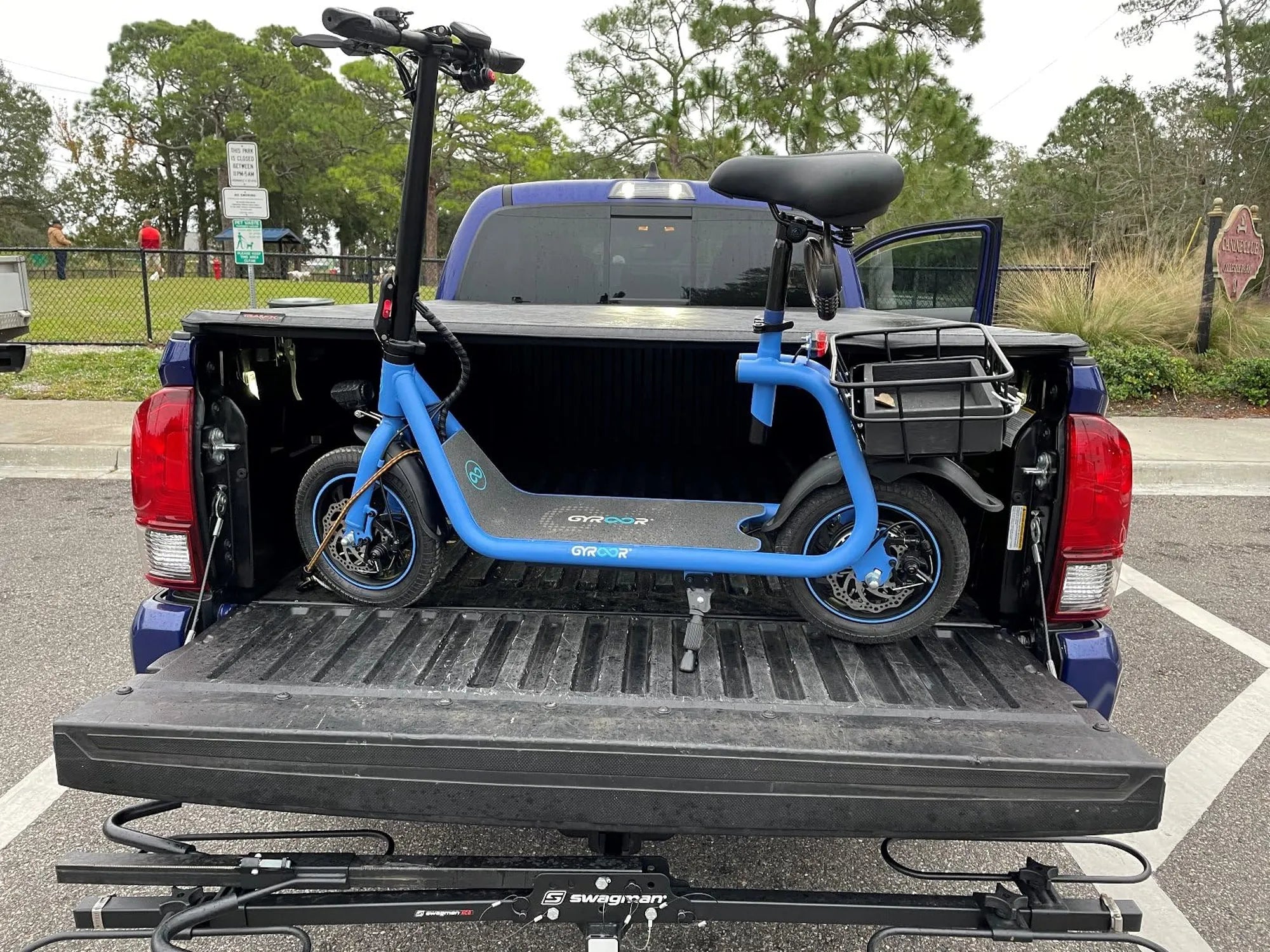
Introduction to Mobility Scooters: Regaining Independence and Freedom
A mobility scooter is an electrically powered vehicle designed to provide personal mobility for individuals with limited stamina, balance, or walking ability. Its core purpose is to enhance independence, enabling users to perform daily errands, socialize, and navigate their communities without fatigue. Modern advancements in battery technology, motor efficiency, and ergonomic design have transformed these devices from clinical aids into practical, life-changing solutions for millions.
Choosing the right mobility scooter is a significant decision that impacts daily life. This guide provides a factual, data-driven overview to help you understand the different types, key specifications, and critical safety features. We will explore how a well-chosen scooter can restore freedom, comparing models for various use cases and emphasizing the importance of reliability from trusted brands like Gyroor.
By the end of this article, you will have a clear framework for selecting a mobility scooter that matches your lifestyle, ensuring safety, comfort, and long-term satisfaction. Let's begin by breaking down the essential factors to consider before making a purchase.
Key Factors to Consider When Choosing a Mobility Scooter
Selecting a mobility scooter is not one-size-fits-all. Your specific needs, physical environment, and daily activities should dictate the model you choose. Ignoring these factors can lead to an impractical purchase that limits rather than enhances your mobility. A systematic evaluation ensures your investment delivers maximum benefit and safety.
The primary considerations fall into three categories: intended use environment, technical specifications, and user-centric features. Each category contains critical data points that directly affect performance and usability. We will analyze these in detail to build your decision-making framework.
Assessing Your Primary Needs: Indoor vs. Outdoor Use
The first and most crucial distinction is where you will primarily use the scooter. Indoor models prioritize compact dimensions and a tight turning radius. They are designed to navigate narrow hallways, doorways, and crowded retail aisles with ease. A smaller footprint is essential for home use.
Outdoor or all-terrain models require more robust construction. They feature larger wheels, often with pneumatic tires, and suspension systems to absorb bumps from sidewalks, mild gravel, and uneven pavement. Their longer wheelbases provide stability at higher speeds and on inclines. Consider your most common routes.
Many users need a hybrid solution. A mid-size scooter with a balance of maneuverability and outdoor capability is often the ideal compromise. Assessing your daily routine—grocery store trips, park visits, or medical appointments—will clarify this primary need and narrow your search significantly.
Understanding Specifications: Range, Weight Capacity, and Portability
Battery range is a top concern, but advertised figures are often theoretical. Real-world range depends on user weight, terrain, incline frequency, and use of accessories like lights. A scooter advertised for 15 miles may reliably provide 10-12 miles under typical conditions. Always plan for a buffer of 20-25% less than the maximum claim.
Weight capacity is a non-negotiable safety specification. Exceeding the manufacturer's rated capacity stresses the frame, motor, and brakes, leading to premature failure and potential accidents. Ensure your weight, plus any carried items, falls comfortably within the limit. Most consumer models range from 250 to 400 pounds.
Portability is vital if you plan to transport the scooter. Travel scooters disassemble into 2-4 pieces for car trunk storage. Weight of the heaviest component is key; can you lift it? Some models offer a lightweight lithium battery that can be removed separately to reduce lift weight. Evaluate your physical ability and vehicle space.
Comfort and Usability Features
Comfort directly impacts how long and how often you'll use your scooter. The seat is the most critical component. Look for adjustable seat height, swivel capability for easy mounting, and padded, contoured design. Armrests should be adjustable or flip-up for easier side transfers to chairs or beds.
Storage options add immense practicality. A front basket is ideal for purses or groceries. Under-seat storage provides secure, out-of-sight space for larger items. Some models offer optional rear cargo racks. Consider your typical load when evaluating storage capacity and accessibility.
The control panel and tiller must be intuitive. Controls should be easy to see and operate, with a clear display showing battery level and speed. The tiller (steering column) should adjust for height to ensure a comfortable, ergonomic riding position. Test the responsiveness of the controls if possible before purchasing.
The Gyroor Advantage: Safety and Reliability in Mobility
Gyroor brings its extensive expertise in personal electric mobility to the mobility scooter segment. With over 100,000 riders trusting their electric scooters and e-bikes across North America and Europe, the brand's philosophy centers on safety, durability, and user-focused design. This approach translates directly into creating mobility solutions you can depend on daily.
When selecting a mobility scooter, the underlying engineering and quality standards matter immensely. A device that fails can strand a user and create a dangerous situation. Gyroor's commitment to certified components, weather-resistant builds, and comprehensive support provides a foundation of trust that is essential for this category of product.
We will examine three pillars of the Gyroor advantage that prospective buyers should prioritize: battery safety certification, environmental durability, and warranty support. These factors significantly reduce long-term ownership risks and costs, making them as important as initial price and specifications.
UL-Certified Battery Safety: Peace of Mind Built-In
The lithium-ion battery is the heart of a mobility scooter, and its safety is paramount. UL (Underwriters Laboratories) certification is the gold standard, indicating the battery pack has passed rigorous independent testing for electrical, mechanical, and environmental safety. This certification helps prevent overheating, short-circuiting, and fire hazards.
Gyroor utilizes UL-certified battery packs in its models, tested for over 500 charge cycles while maintaining performance. This certification is not just about safety; it's a marker of quality that ensures consistent power delivery and longevity. A non-certified battery poses a significant risk and may degrade rapidly, leaving you with a dead scooter and a costly replacement.
Investing in a scooter with a certified battery is an investment in peace of mind. It protects your home, your vehicle during transport, and most importantly, you. Always verify the battery certification when comparing models, as this is a critical differentiator between reputable brands and potentially hazardous alternatives.
Built for Real Life: IPX5 Water Resistance and Durability
Life doesn't stop for a drizzle. An IPX5 water resistance rating means the scooter's electrical components are protected against low-pressure water jets from any direction. This allows you to confidently navigate in light rain, through puddles, or when the sprinklers are on, without fear of immediate damage or electrical short.
This feature extends the scooter's usability and longevity. Moisture and dust are major causes of electrical failure in mobility devices. An IPX5-rated build, like those found in Gyroor's lineup, seals critical junctions and the control panel, ensuring reliable operation in everyday conditions. It's a practical feature that reflects an understanding of real-world use.
Durability also encompasses the frame construction and component quality. A robust chassis can handle the vibrations of outdoor use. High-quality connectors and wiring resist corrosion. These design choices, combined with water resistance, mean fewer repairs, less downtime, and a lower total cost of ownership over the years.
Unmatched Support: The 1-Year Comprehensive Warranty
A warranty is a promise from the manufacturer. Gyroor backs its mobility scooters with a 1-year comprehensive warranty covering parts and labor for defects in materials or workmanship. This is a full-system warranty, not a limited one that only covers the frame, giving you broad protection during the critical first year of ownership.
This warranty is supported by a US-based customer service team, simplifying the process if service is needed. A strong warranty reduces the financial risk of unexpected repairs and demonstrates the brand's confidence in its product's reliability. It's a direct indicator of expected product lifespan and company integrity.
When comparing options, scrutinize the warranty terms. A shorter warranty or one that excludes key components like the motor or controller shifts repair costs and logistical burdens to you. The Gyroor 1-year warranty provides a clear safety net, allowing you to focus on enjoying your newfound mobility rather than worrying about potential failures.
Mobility Scooter Types: A Detailed Comparison
Understanding the three main classes of mobility scooters is essential for matching a model to your lifestyle. Each class has distinct advantages, trade-offs, and ideal use cases. The following table provides a high-level data comparison, followed by a detailed analysis of each type.
| Type | Avg. Weight | Key Feature | Best For | Typical Range |
|---|---|---|---|---|
| Travel/Portable | 35-60 lbs | Quick disassembly | Car transport, travel, tight spaces | 8-12 miles |
| Mid-Size 3-Wheel | 80-120 lbs | Tight turning radius | Indoor/outdoor hybrid use | 10-18 miles |
| Full-Size 4-Wheel | 150-300+ lbs | Maximum stability | All-day outdoor use, uneven terrain | 15-30+ miles |
Travel/Portable Scooters
Travel scooters are defined by their lightweight frames and disassembly design. The heaviest piece often weighs under 30 pounds, allowing it to be lifted into a car trunk or stored in an RV. They are the only practical choice for frequent travelers who need a scooter at their destination.
These models sacrifice some range and weight capacity for portability. They typically have a lower seat height and smaller wheels, making them best suited for smooth, paved surfaces. Their compact size is excellent for navigating crowded airports, cruise ships, or shopping malls where space is at a premium.
The key consideration is the disassembly mechanism. The best models require no tools and can be broken down in under 30 seconds. If your lifestyle involves regular car travel or you have limited storage space at home, a travel scooter offers indispensable flexibility, despite its limitations in range and terrain capability.
Mid-Size 3-Wheel Scooters
The 3-wheel mobility scooter offers an optimal balance for many users. The three-wheel configuration provides a tighter turning radius than a 4-wheel model, enhancing maneuverability in indoor environments like homes, offices, and stores. This makes it a versatile hybrid choice.
With a mid-range weight capacity and more powerful motor than a travel scooter, it handles moderate outdoor use well. It can manage gentle slopes and sidewalk cracks. The longer base and larger seat improve comfort for extended use compared to a travel model, making it suitable for afternoon outings.
This type is ideal for users who split their time between indoor and outdoor environments and do not require heavy all-terrain capability. It provides a great compromise of features, offering more comfort and range than a travel scooter while remaining more manageable and maneuverable than a full-size model.
Full-Size 4-Wheel Scooters
Full-size 4-wheel scooters are the stability and range champions. The four-wheel design, often with a wider wheelbase, provides superior stability on uneven ground, slopes, and mild off-pavement terrain like packed dirt or grass. They are built for users who spend most of their time outdoors.
These models boast the highest weight capacities, longest ranges, and most premium comfort features. They may include full suspension, high-back captain's chairs, and extensive lighting packages. The trade-off is size and weight; they are not suitable for narrow indoor spaces and require a van lift or trailer for transport.
If your primary need is reliable, comfortable, all-day outdoor mobility and you have a way to transport the scooter, a full-size 4-wheel model is the top choice. It represents the maximum in performance and comfort, designed for users who view their scooter as a primary vehicle for community engagement.
Enhancing Your Mobility Scooter Experience
Ownership of a mobility scooter extends beyond the initial purchase. Proper accessories, maintenance, and riding habits are crucial for safety, convenience, and maximizing the lifespan of your investment. A proactive approach ensures your scooter remains a reliable partner for years to come.
This section covers practical additions and routines that enhance daily use. From visibility aids to battery care protocols, these steps are derived from real-world user experience and manufacturer guidelines. Implementing them will protect your scooter and increase your confidence on every journey.
Essential Accessories for Safety and Convenience
Accessories solve specific problems and adapt your scooter to your life. A weather cover is essential if the scooter is stored outdoors, protecting the electronics and seat from sun and rain. For night or low-light use, adding brighter LED headlights and flashing taillights dramatically increases your visibility to drivers and pedestrians.
Storage solutions like a rear-mounted bag or a larger basket can be invaluable for shopping. A cup holder seems simple but greatly enhances comfort on longer trips. Mirrors mounted on the tiller improve rear awareness, especially when navigating busy paths or making turns across traffic.
Consider your pain points. Do you struggle to carry items? Is night riding a concern? Does rain catch you by surprise? Targeted accessories address these issues directly, making your scooter a more integrated and useful tool in your daily routine. Prioritize safety accessories like lights first.
Routine Maintenance and Care Tips
Regular maintenance prevents minor issues from becoming major failures. A simple weekly check can include inspecting tire pressure (for pneumatic tires), testing all lights and indicators, and ensuring the brakes engage smoothly. Wiping down the scooter with a damp cloth keeps it clean and allows you to spot any new damage or loose parts.
Battery care is the most important routine. Follow the manufacturer's charging instructions precisely. Avoid draining the battery completely; recharge when it reaches 20-30%. For long-term storage, charge the battery to about 50-60% and recharge it every 2-3 months. Use only the provided charger.
Schedule an annual professional inspection, similar to a car tune-up. A technician can check motor brushes, controller connections, and bearing wear—items not easily visible to the user. This proactive service identifies wear parts before they fail, ensuring reliability and potentially avoiding a costly roadside breakdown.
Safe Riding Practices and Etiquette
Safe operation protects you and others. Always obey local laws regarding sidewalk and path use. On shared paths, keep to the right and pass on the left with an audible signal or a polite "excuse me." Your maximum safe speed is often lower than the scooter's capability; adjust for pedestrian density, surface conditions, and visibility.
Navigate inclines carefully. Ascend and descend hills straight on, not at an angle, to prevent tipping. If a hill is too steep for your scooter's rating, find an alternate route. When crossing streets, make eye contact with drivers whenever possible and proceed as a pedestrian would, using crosswalks.
Public etiquette fosters positive perceptions. Be mindful of your scooter's width in stores. If blocking an aisle, move aside when possible. A friendly demeanor goes a long way. Remember, you are an ambassador for all mobility scooter users. Riding responsibly and courteously ensures access and respect for everyone.
Frequently Asked Questions About Mobility Scooters
Prospective and new users often have common questions. Addressing these concerns clearly can finalize a purchase decision and prepare you for ownership. Here are detailed answers to five of the most frequently asked questions.
What is the average range of a mobility scooter on a single charge?
Average range varies dramatically by class. Travel scooters average 8-12 miles. Mid-size models offer 10-18 miles. Full-size outdoor scooters can achieve 15-30 miles or more. Remember, real-world range is affected by user weight, terrain, temperature, and battery age. Always plan a route that uses only 70-80% of the advertised range to ensure a safe return.
Can I take a mobility scooter on public transportation or in a car?
Public transportation policies vary. Most buses in the US with a lift or ramp accommodate mobility scooters, but there may be size and weight restrictions. Always call ahead. For cars, only travel/portable scooters are designed for trunk transport. Mid-size and full-size scooters require a van, truck, trailer, or a specialized hitch-mounted lift carrier.
Do I need a license or insurance to operate one?
In the United States and Canada, you do not need a driver's license to operate a mobility scooter intended for personal medical use on sidewalks and paths. They are classified as medical devices, not vehicles. Insurance is not legally required, but it is highly recommended. Your homeowner's or renter's insurance may offer a rider to cover theft or damage, and Medicare Part B may cover part of the cost with a doctor's prescription.
How do I know if my home is accessible for a mobility scooter?
Measure your doorways, hallways, and the path to essential rooms. Most scooters require a minimum 30-inch doorway for comfortable passage. Check for tight turns, especially into bathrooms. Ensure there is space to park and charge the scooter without blocking walkways. For multi-story homes, consider if you can install a ramp or if a portable scooter can be carried upstairs to a charging location.
What is the difference between a mobility scooter and a power wheelchair?
The key difference is operation and posture. A mobility scooter is steered with a tiller (like a bicycle) and the user sits in a forward-facing seat. It requires sufficient upper body strength and coordination to steer. A power wheelchair is controlled by a joystick, often allows for more seating customization and positioning, and is suitable for users with limited arm function or who need significant postural support. A healthcare professional can help determine which is medically appropriate.
Conclusion: Taking the Next Step Toward Confident Mobility
Choosing a mobility scooter is a powerful step toward reclaiming independence and expanding your world. The right model acts as a reliable extension of your personal capability, enabling errands, social visits, and community participation without the barrier of fatigue or pain. This decision hinges on honest assessment, careful specification review, and a commitment to safety and quality.
Prioritize certified battery safety, weather-resistant construction, and strong warranty support from a reputable brand like Gyroor. Match the scooter type—travel, 3-wheel, or 4-wheel—to your primary environment and transport needs. Complement your investment with essential accessories and diligent maintenance to ensure years of dependable service.
Consult with your healthcare provider to ensure a mobility scooter meets your medical needs. Then, explore trusted retailers and manufacturers who provide clear specifications and robust customer support. Your journey to greater freedom begins with informed choice. Discover a range of UL-certified, durable electric mobility solutions designed for real life. Browse the full Gyroor collection at gyroorboard.com to find the model that empowers your next adventure.
Electric Scooter: The Ultimate Guide to Choosing, Riding, and Maintaining Your E-Ride
Mobility Scooter Blue: A Guide to Style, Safety, and Performance