


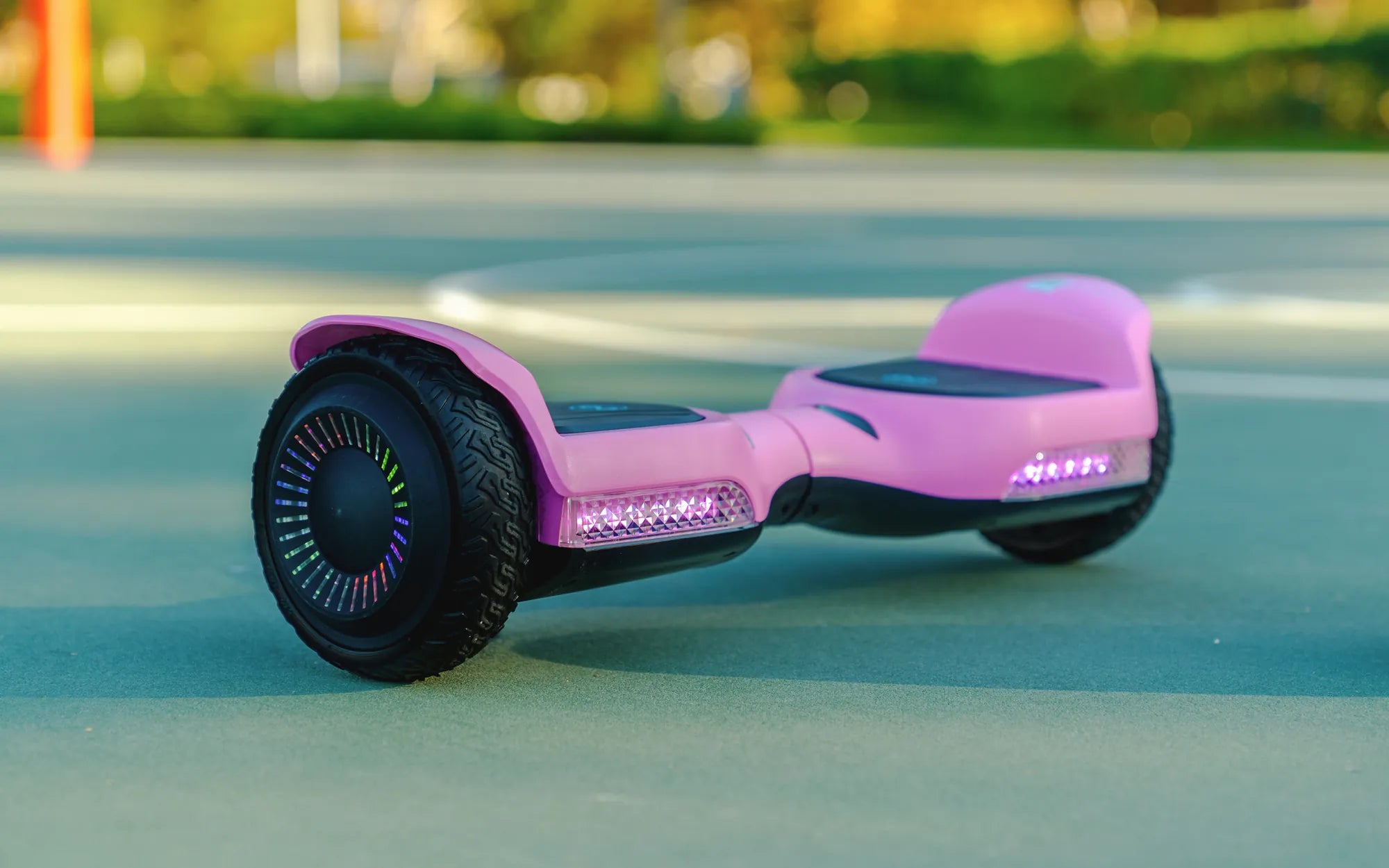
Introduction: Rediscovering the Classic Hoverboard
What is a normal hoverboard? It's the iconic two-wheeled, self-balancing electric scooter that revolutionized personal transport and fun. Despite the futuristic name, it remains a grounded, accessible device for urban mobility and recreation. This guide is your complete resource for understanding today's market, where safety and reliability have become paramount. We'll cut through the noise to show you how to choose a quality model and ride with confidence, highlighting how brands like Gyroor have evolved this classic with rigorous modern standards.
The early days of hoverboards were marred by safety concerns, but the industry has matured significantly. Today's models are engineered with advanced gyroscopes, robust batteries, and critical safety certifications. They offer a unique blend of intuitive control and compact portability, perfect for short commutes, campus travel, or simply enjoying a park ride. Understanding what defines a reliable normal hoverboard is the first step to a safe and enjoyable experience.
This guide will provide a data-driven look at motor specs, battery safety, and build quality. You'll learn the absolute must-check safety standards, receive a practical tutorial for mastering the ride, and get essential maintenance tips. By the end, you'll be equipped to select a board that prioritizes your safety without compromising on the fun that made these devices a global phenomenon. The journey to smart, safe riding starts with knowledge.
What Defines a "Normal" Hoverboard Today? Key Features & Specs
The modern normal hoverboard is defined by a set of core specifications that dictate its performance, safety, and suitability for different riders. Moving beyond the basic novelty models, today's quality boards feature dual motors, certified battery systems, and durable construction. These elements work in unison to provide a stable, responsive, and secure ride. Let's break down the technical specs that matter most when evaluating your options.
A standard hoverboard is not a high-speed vehicle; it's designed for controlled, stable travel at pedestrian-plus speeds. The typical weight limit ranges from 220 to 265 pounds, accommodating most teens and adults. The frame is usually constructed from impact-resistant ABS plastic reinforced with aluminum for the wheel hubs and internal structure. This combination ensures durability while keeping the board lightweight enough to carry, usually between 20 to 30 pounds.
Motor Power and Speed
Motor configuration is central to performance. Most standard hoverboards feature dual motors, one in each wheel, typically ranging from 250W to 350W each. This dual-motor setup provides independent torque to each wheel, enabling smooth turns and better balance. A total power output of 500W to 700W is standard for reliable performance on flat surfaces and gentle slopes.
Top speed is generally capped between 6 and 10 miles per hour (10-16 km/h). This speed range is intentional—it maximizes fun and utility while maintaining a manageable level of risk for the rider. Higher-wattage motors (e.g., 350W per wheel) offer better torque for tackling slight inclines or rougher terrain like grass or gravel. For purely urban use on smooth pavement, 250W motors are often sufficient and can be more energy-efficient.
Battery Life and Range
The battery is the heart of the hoverboard, and its quality is non-negotiable. Standard configurations use a 36V lithium-ion battery pack with capacities typically between 4.0Ah and 4.4Ah. Under realistic conditions—accounting for rider weight, terrain, and speed—this translates to a travel range of 10 to 15 miles on a single charge.
Charging time averages 2 to 4 hours. The most critical aspect isn't just capacity, but safety certification. Following well-publicized incidents with early models, the UL 2272 standard was established. This certification involves rigorous testing for electrical, mechanical, and environmental safety, with a specific focus on battery fire risk. A normal hoverboard without this certification should not be considered. Reputable brands like Gyroor build all their models with UL-certified battery packs tested for over 500 charge cycles, ensuring long-term reliability.
Build Quality and Weight Limit
Durability stems from material choice and engineering. A quality board uses a thick, molded ABS plastic shell that can withstand minor impacts and scrapes. The footpad should have a textured, non-slip surface for secure footing. Internally, a sturdy aluminum alloy frame houses the motors, battery, and gyroscopic sensors, providing essential rigidity.
The stated weight limit is a crucial specification. Exceeding it can strain the motors, drain the battery rapidly, and compromise the structural integrity of the board, leading to potential failure. Always choose a model with a weight limit comfortably above your own weight. A robust build directly contributes to rider safety by ensuring consistent performance and preventing sudden component failures during use.
The Non-Negotiables: Safety Standards You Must Check
Safety is the single most important feature of any personal electric vehicle. When selecting a normal hoverboard, certain standards are not mere suggestions—they are essential prerequisites for a safe purchase. Ignoring these can lead to serious risk of fire, injury, or product failure. This section details the certifications and design elements that separate trustworthy products from hazardous ones.
The safety landscape for hoverboards was fundamentally reshaped after 2015-2016, when overheating batteries led to fires. In response, Underwriters Laboratories (UL) developed the UL 2272 standard. Today, any hoverboard sold by major retailers in North America and Europe is required to have this certification. It is your first and most important filter when shopping.
UL 2272 Certification: The Fire Safety Benchmark
UL 2272 is a comprehensive safety standard for electrical systems in self-balancing scooters. It tests the entire electrical system—battery, charger, and motor management—under extreme conditions. Tests include overcharging, short-circuiting, vibration, impact, and exposure to temperature extremes. A board that passes has demonstrated a fundamentally safe design that minimizes the risk of thermal runaway and fire.
Always verify the certification. It should be clearly marked on the product packaging, the board itself, and the manufacturer's website. Do not rely on vague claims of "fire-resistant" or "safe battery." Look for the specific "UL 2272" mark. This certification is a core commitment of responsible brands; for instance, Gyroor's entire hoverboard lineup is UL 2272 certified, providing a critical baseline of trust for over 100,000 riders.
IP Ratings and Water Resistance
While hoverboards are not aquatic vehicles, real-world riding encounters puddles, damp grass, and light rain. An Ingress Protection (IP) rating tells you how well the board's electronics are sealed against solids and liquids. The first digit (against dust) is often omitted for these products. The second digit (against water) is key.
A rating of IPX4 means the board is protected against water splashes from any direction. However, a rating of IPX5, which is a standard feature on Gyroor models, is significantly better. It means the enclosure can withstand water jets from a nozzle (6.3mm) from any direction. This allows you to confidently ride through occasional puddles or in drizzling rain without immediately damaging the internal components, greatly enhancing the board's practicality and longevity.
Tire Types: Solid vs. Air-Filled
Your choice of tires directly impacts ride comfort, traction, and maintenance, which are all safety-adjacent factors. There are two primary types: solid rubber and air-filled (pneumatic).
Solid Rubber Tires: Made from a durable, puncture-proof rubber compound. They require zero maintenance—no air checks, no flats. They provide a firm ride and are best suited for very smooth surfaces like indoor floors, pavement, and concrete. On rougher terrain, they transmit more vibration to the rider, which can affect stability.
Air-Filled Tires: Similar to bicycle tires, they have an inner tube. They offer superior shock absorption, providing a much smoother ride over cracks, bumps, gravel, and grass. This can improve control and comfort. The trade-off is the need for occasional air pressure checks and the potential for punctures, though many are designed with thick, off-road-style treads to resist this.
| Feature | Solid Rubber Tires | Air-Filled (Pneumatic) Tires |
|---|---|---|
| Best For | Smooth pavement, indoor use, commuters | Off-road, grass, gravel, uneven paths |
| Maintenance | None (puncture-proof) | Require air pressure checks |
| Ride Comfort | Firm, more vibration | Softer, better shock absorption |
| Durability Concern | Extremely high (no flats) | Risk of punctures, but often resilient |
Mastering the Ride: A Step-by-Step Guide to Safe Operation
Learning to ride a normal hoverboard is easier than it looks, but a structured approach ensures you build confidence safely. The key is to start slowly in a controlled environment. The following step-by-step guide will take you from your first mount to controlled maneuvering. Always remember: safety gear is not optional during the learning phase. A helmet, knee pads, and elbow pads are essential.
Choose a large, flat, open area for your first session. An empty parking lot, a smooth driveway, or a quiet basketball court are ideal. Avoid slopes, traffic, and obstacles. Ensure the hoverboard is fully charged. Power it on and place it on level ground. The board will perform a self-calibration; wait for the indicator lights to signal it's ready (usually a steady color or a beep).
Mounting, Dismounting, and Basic Balancing
Step 1: The Assisted Mount. Place the board directly in front of you. Use a wall, fence, or a friend's shoulder for support. Place your dominant foot firmly on the footpad, positioning it as close to the wheel as possible for better leverage. Keep your weight centered over that foot.
Step 2: Finding Balance. Slowly shift your weight onto the foot on the board while maintaining a firm grip on your support. The board will activate and try to stay level. Once you feel stable, gently lift your other foot and place it on the opposite pad. Stand upright with knees slightly bent, looking forward—not down at your feet. Use your support to get a feel for the board's balancing point.
Step 3: The Safe Dismount. To get off, reverse the process. Come to a complete stop. Shift your weight to your dominant foot, lift your other foot off and step backward onto the ground, then step off with your dominant foot. Always step off backwards, not forwards, to avoid the board shooting out in front of you.
Steering, Turning, and Speed Control
Steering is intuitive: you lean. To move forward, apply gentle pressure with your toes on both footpads. To move backward, apply pressure with your heels. The key is subtlety—small shifts create smooth acceleration. To stop, simply return to a neutral, upright stance; the board will decelerate to a halt.
Turning is achieved by differential pressure. To turn right, press your left toe forward slightly more than your right. To turn left, press your right toe. For a sharp spin (useful for changing direction in place), press one foot forward and the other foot backward simultaneously. Practice large, slow circles before attempting tighter maneuvers. Speed control is managed by the degree of your lean. A slight lean yields a slow, walking pace. A more committed lean increases speed up to the board's maximum.
Safe Riding Practices and Etiquette
Once you're comfortable, adhere to these practices for safe public riding:
- Wear Protective Gear: A helmet is always recommended. Wrist guards are also highly advisable.
- Know Your Terrain: Avoid steep hills, sand, loose gravel, and wet surfaces until you are highly experienced.
- Be Predictable: Ride at a safe speed, especially around pedestrians. Announce your presence verbally (“On your left!”) when passing.
- Obey Local Laws: Hoverboards are typically banned from public roads. Use sidewalks, bike paths, or multi-use paths where permitted, and always yield to pedestrians.
- Use Lights at Night: If you must ride at dusk or dawn, ensure your board has built-in LED lights or use external lights to be visible.
- Never Carry Passengers: Hoverboards are designed for one rider only.
Beyond the Basics: Maintenance and Troubleshooting
Proper care extends the life of your normal hoverboard and ensures it performs reliably. Routine maintenance is simple but important. Additionally, understanding how to troubleshoot common minor issues can save you a service call. Most problems stem from the battery, connectivity, or calibration.
A well-maintained board is a safer board. Regular checks prevent small issues from becoming major failures. Always refer to your user manual for model-specific instructions, especially concerning battery care and error code meanings. The following guidelines apply to most standard UL 2272 certified hoverboards on the market.
Routine Care: Charging, Cleaning, and Storage
Charging: Use only the manufacturer-provided charger. Do not leave the board plugged in for extended periods after it reaches 100%. While modern BMS (Battery Management Systems) are good, it's best practice to unplug it once charged. Avoid draining the battery completely; recharge when the battery indicator shows one bar or low power. Store the board in a cool, dry place, away from direct sunlight and extreme temperatures.
Cleaning: Power off the board and disconnect the charger. Wipe the shell and footpads with a slightly damp cloth. Do not use a hose, high-pressure water, or submerge any part of the board. For the tires, a brush can help remove mud and debris. Ensure no liquid seeps into the charging port or the seam between the footpads.
Storage for Long Periods: If not using the board for a month or more, store it with a 50-70% charge. Check the charge level every 2-3 months and top it up to the 50-70% range if it has dropped significantly. This prevents the battery from entering a deep discharge state, which can cause permanent damage.
Common Issues and Simple Fixes
Board Won't Power On: First, check the charge. Plug it in for at least 30 minutes and try again. Ensure the power button is firmly pressed. If still unresponsive, check for any visible damage to the power button or charging port.
Board is Not Level (Calibration Issue): If the board tilts forward or backward when you step on, or one side is higher, it may need recalibration. The standard method is: place the board on a perfectly level surface, power it on, and press and hold the power button for 5-10 seconds until you hear a series of beeps or see lights flash. Release and wait for it to restart. Consult your manual for the exact procedure.
Uneven Tire Wear or Vibration: For air-filled tires, check and equalize the air pressure (PSI rating is usually on the tire sidewall). For solid tires, inspect for deep cuts or embedded objects. Excessive vibration can also indicate a loose wheel hub; check that all visible screws are tight (but do not open the main casing).
Bluetooth/App Connectivity Problems: Ensure Bluetooth is enabled on your phone, the hoverboard is powered on, and you are within range. Delete the board from your phone's Bluetooth paired devices list and from the app, then restart both the board and your phone and try pairing again.
Frequently Asked Questions (FAQ)
Q1: Are hoverboards still safe to buy in 2024?
Yes, absolutely—provided you purchase a UL 2272 certified model from a reputable brand. The safety crisis of the mid-2010s led to stringent mandatory standards. Today's certified hoverboards, like those from Gyroor with their UL-certified battery packs, are engineered to be as safe as any other consumer electronics device when used properly.
Q2: Can adults ride hoverboards, or are they just for kids?
Adults can and do ride hoverboards. The key is to select a model with a weight limit that supports you. Many standard models support riders up to 220-265 lbs, which covers most adults. The learning curve is the same, and the compact size makes them excellent for last-mile commuting or recreational use for riders of all ages.
Q3: Where is it legal to ride a normal hoverboard?
Laws vary by city, state, and country. Generally, they are not permitted on public roads with motor vehicle traffic. They are often allowed on sidewalks (while yielding to pedestrians), bike paths, and in parks. Some cities restrict them to private property only. Always check your local municipal transportation or police department website for specific ordinances before riding in public spaces.
Q4: What should a good warranty cover, and how long is typical?
A comprehensive warranty is a sign of manufacturer confidence. A standard good warranty, like the 1-year warranty offered by Gyroor, should cover defects in materials and workmanship for the frame, motor, and most importantly, the battery. It should not cover damage from accidents, misuse, or normal wear and tear. The warranty period provides essential peace of mind for your investment.
Q5: How do I know if a hoverboard is good for off-road use?
Look for specific off-road features: larger air-filled (pneumatic) tires with deep treads, higher motor power (350W per wheel or more), and a higher ground clearance. Some models are explicitly marketed as "all-terrain" or "off-road." A standard normal hoverboard with small, solid tires is designed for smooth surfaces and will struggle on grass, dirt, or gravel.
Conclusion: Smart Fun Starts with Safety
Choosing and riding a normal hoverboard is about balancing excitement with responsibility. The ideal board delivers the effortless, gliding fun that captivated the world, but does so on a foundation of rigorous safety engineering. This means prioritizing UL 2272 certification above all else, understanding the practical benefits of features like IPX5 water resistance, and selecting tire and motor specs that match your intended riding environment.
Mastering the ride requires patience and practice, but the intuitive controls make it a quickly acquired skill when approached methodically. Pair that skill with consistent safety gear and respectful public etiquette, and you unlock a versatile tool for short-distance travel and pure recreation. Regular, simple maintenance will ensure your board remains a reliable companion for years.
Ultimately, the modern hoverboard experience is defined by trust. Trust in the battery's safety, trust in the board's durability, and trust in the manufacturer's support. Brands that have invested in these areas, like Gyroor with its UL-certified batteries, IPX5-rated designs, and commitment to a robust 1-year warranty, allow you to focus on the joy of the ride. The classic hoverboard has evolved, and today, smart fun is safe fun.
Ready to experience a modern, safety-first hoverboard? Explore a range of UL 2272 certified models engineered for performance and peace of mind. Browse the full Gyroor collection at gyroorboard.com.
Purple Hoverboard for Kids: The Ultimate Guide to Fun and Safety
Self Balancing Scooter Mexico: The Future of Urban Mobility