



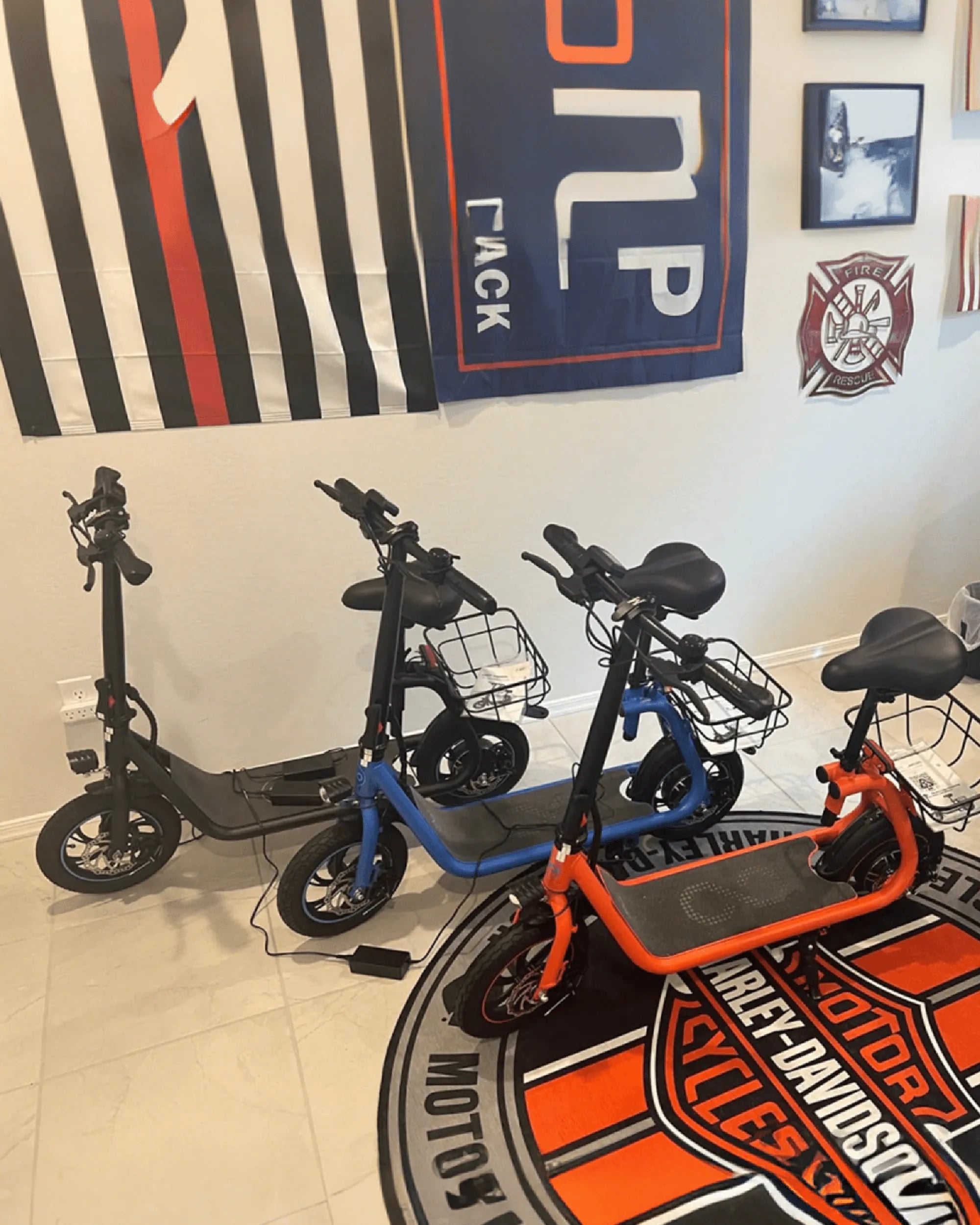
Navigating the New York City Commute
New York City's transportation system is legendary, yet its daily reality involves subway delays, traffic gridlock, and soaring costs. A transformative solution has emerged, offering speed, affordability, and freedom: electric bikes and scooters. These personal electric vehicles (PEVs) are not just gadgets; they are practical tools reshaping how New Yorkers move. This article will explore why NYC is the ideal environment for this shift, how to choose the right vehicle, and the broader impact on urban life. We'll ground our analysis in data, safety standards, and the specific demands of city streets, with insights from Gyroor, a leading electric scooter and e-bike brand trusted by over 100,000 riders across North America and Europe for its UL-certified batteries and reliable performance.
Why NYC is the Perfect Ecosystem for E-Bikes and E-Scooters
New York City's unique urban fabric creates an almost tailor-made environment for electric micromobility. The city's density means the average trip is short, often falling within the 3-7 mile range that is ideal for e-bikes and e-scooters. This makes them perfect for replacing car rides, sluggish buses, or even multiple subway transfers.
Infrastructure investment has been a game-changer. The NYC Department of Transportation has aggressively expanded the protected bike lane network, which now spans hundreds of miles. These lanes provide a safer, dedicated corridor for riders, separating them from car traffic and making trips more predictable and less stressful.
The "last-mile" problem—the distance between a transit hub and a final destination—is elegantly solved. An e-scooter folded and carried on the subway, or an e-bike parked at a station, seamlessly bridges that gap. This multimodal commuting expands the effective radius of the subway system, making more neighborhoods easily accessible.
Economically, the argument is compelling. Compared to car ownership, which involves insurance, parking (averaging over $500 monthly in Manhattan), gas, and congestion pricing tolls, the upfront cost of a quality PEV pays for itself quickly. For daily commuting, it's one of the most cost-effective transportation investments a New Yorker can make.
Key Features to Look for in a NYC-Ready E-Bike or E-Scooter
Not all electric vehicles are built for the rigors of New York City. Choosing one with the right specifications is crucial for safety, durability, and a positive riding experience.
Battery Safety and Range: The UL-Certification Imperative
Battery safety is non-negotiable, especially when charging in apartments or office buildings. A UL 2271 (for scooters) or UL 2849 (for e-bikes) certification means the battery pack has undergone rigorous testing for electrical, mechanical, and environmental safety. Brands like Gyroor prioritize this, using UL-certified battery packs tested for 500+ charge cycles, significantly reducing fire risk.
Range claims require scrutiny. Manufacturer ratings are often based on ideal conditions. In NYC's stop-and-go traffic, with frequent hills on bridges and in neighborhoods, real-world range can be 20-30% less. Look for a vehicle with a range that exceeds your longest regular trip by at least 5 miles to account for variables like wind, temperature, and battery aging.
Durability and Weather Resistance: Conquering City Streets
City streets are unforgiving. Potholes, curb drops, and constant vibration demand a robust frame. Aluminum alloy frames offer a good balance of strength and weight. Suspension systems—whether spring-based or pneumatic tires—are essential for absorbing impacts and providing a stable ride.
Weather resistance is critical. An IPX5 rating means the vehicle can withstand water jets from any direction, protecting the electrical components from unexpected rain showers and street spray. This feature ensures your commute isn't derailed by a sudden downpour and prolongs the life of the vehicle's electronics.
Portability and Storage: Apartment-Friendly Design
For most New Yorkers, storage space is limited. Foldability is a key feature for e-scooters and some compact e-bikes. A good folding mechanism should be quick, secure, and result in a compact package. Consider the folded dimensions and weight—can you comfortably carry it up a flight of stairs or fit it in an elevator?
Weight is a major factor. Lightweight e-scooters (under 30 lbs) are easiest for mixed-mode commuting. Heavier e-bikes may require dedicated bike storage. The ability to remove the battery not only enhances security but also makes the main unit lighter to carry upstairs for charging.
Legal Compliance and Safety: Riding by the Rules
Understanding and adhering to NYC law is essential for safe, legal operation. Key regulations include: E-bikes are classified into three classes. Class 1 and 2 (pedal-assist and throttle-assisted up to 20 mph) are allowed in bike lanes and streets with speed limits ≤30 mph. Class 3 (pedal-assist up to 25 mph) are not allowed on bike paths or greenways. Electric scooters are limited to 15 mph in bike lanes and on streets with speed limits ≤30 mph. They are prohibited on sidewalks. Helmets are required by law for all e-scooter riders and commercial e-bike riders, and strongly recommended for everyone. Proper lighting (front white light, rear red light) and a bell or audible signal are mandatory for night riding.
Comparative Look: E-Scooter vs. E-Bike for the NYC Commuter
Choosing between an electric scooter and an electric bike depends on your specific commute, physical needs, and lifestyle. Here’s a data-driven comparison to guide your decision.
| Feature | Electric Scooter (e.g., Gyroor Commuter Models) | Electric Bike (e.g., Gyroor C-Series) |
|---|---|---|
| Primary Use Case | Ultra-portability, mixed-mode commuting, short trips (<5 miles), minimal storage. | Longer commutes (5-15+ miles), cargo carrying, tackling inclines, traditional cycling feel. |
| Portability | Excellent. Lightweight (often 25-35 lbs), highly foldable for carrying on transit or under a desk. | Moderate to Low. Heavier (50-70 lbs), less foldable. Best for dedicated bike storage. |
| Range & Power | Sufficient for most intra-borough trips. Motors typically 250W-500W. | Superior for distance. Larger batteries, motors from 350W-750W handle hills and bridges better. |
| Stability & Comfort | Good on smooth surfaces. Smaller wheels are less stable on rough pavement. Standing ride. | Excellent. Larger wheels (20"-28") smooth out bumps. Seated riding is less taxing over distance. |
| Cargo Capacity | Minimal. A small backpack or handlebar bag. | High. Can add racks, panniers, and baskets for groceries, work gear, or child seats. |
| Physical Effort | Minimal. Primarily throttle-controlled, requiring only balance. | Flexible. Can use pure throttle or pedal-assist for exercise and extended range. |
| Upfront Cost | Generally lower initial investment. | Higher initial investment, but often greater long-term utility. |
For the rider who needs to combine subway and scooter, or lives in a walk-up apartment, an e-scooter's portability is unmatched. For someone commuting from deeper in Brooklyn or Queens, carrying groceries, or preferring a more stable, bike-like ride, an e-bike is the superior tool. Both represent a core part of the future of urban mobility in NYC.
The Infrastructure and Economic Landscape
The rise of electric bikes and scooters is supported by evolving infrastructure and favorable economics. Beyond bike lanes, cities are experimenting with dedicated parking corrals and charging stations, though the latter is less critical for vehicles designed for home charging. The real economic story is in total cost of ownership.
When comparing a $1,500 quality e-bike to a car, the savings are staggering. Eliminating monthly parking, insurance, gas, and maintenance (oil changes, etc.) can save a commuter over $10,000 annually in Manhattan. Even compared to a monthly unlimited MetroCard (~$132), an e-bike pays for itself in commuting utility within a year, while offering door-to-door convenience and schedule freedom.
For businesses, particularly last-mile delivery, the shift is even more pronounced. Commercial e-bikes reduce delivery times in congested areas and slash operational costs. NYC's official e-bike trade-in programs for delivery workers highlight the city's recognition of their role, provided they meet strict safety standards like UL certification.
The secondary market and financing options are also growing. More retailers offer financing plans, and the resale value of well-maintained, reputable brands holds relatively strong, further improving the investment calculus for individual riders.
The Broader Impact: Sustainability and Urban Life
The adoption of electric micromobility extends beyond individual convenience, contributing significantly to urban sustainability goals. By replacing car trips, e-bikes and scooters directly reduce traffic congestion and carbon emissions. A study by the Transportation Research and Education Center (TREC) found that e-bikes can cut carbon footprint by up to 50% compared to a sedan, even when accounting for electricity generation.
This shift also promotes healthier cities through reduced air and noise pollution. The space efficiency is profound: approximately ten e-scooters can be parked in a single car parking spot. This opens opportunities for reclaiming street space for people, greenery, and public amenities as part of NYC's broader street redesign initiatives.
Furthermore, e-mobility can enhance transportation equity. While upfront costs exist, they are far lower than car ownership. For residents in "transit deserts"—areas poorly served by subways and buses—a reliable e-bike can dramatically improve access to jobs, education, and services, fostering greater social and economic inclusion.
This evolution represents a quiet revolution in urban planning, moving away from car-centric design toward human-scale, flexible, and clean transportation networks. Widespread PEV use is a tangible step toward achieving NYC's ambitious climate goals outlined in PlaNYC.
Safety, Etiquette, and Maintenance: The Responsible Rider's Guide
Safe riding ensures the longevity of both the rider and the positive perception of micromobility. Always wear a helmet. Use designated bike lanes whenever possible. Be predictable: signal turns, avoid sudden swerves, and make eye contact with drivers at intersections. Assume you are invisible to drivers; ride defensively.
Proper maintenance is crucial for safety and performance. Regularly check tire pressure, as under-inflated tires reduce range and increase puncture risk. Test brakes before every ride. Listen for unusual sounds from the motor or drivetrain. Keep the vehicle clean, especially after riding in wet conditions, to prevent corrosion.
Battery care is paramount. Avoid completely draining the battery. Store it in a cool, dry place, away from extreme temperatures. Use only the manufacturer-provided charger. Following these practices with a UL-certified battery, like those from Gyroor, maximizes its lifespan—often over 500 charge cycles—and maintains safety.
Rider etiquette builds community goodwill. Don't block sidewalks when parked. Respect pedestrian right-of-way, especially when transitioning between bike lanes and streets. Keep your speed in check on crowded paths. You are an ambassador for this new mode of transport; responsible behavior encourages its acceptance and expansion.
Frequently Asked Questions (FAQ) for NYC Riders
Q1: Can I legally ride my e-scooter on NYC sidewalks?
A1: No. NYC law explicitly prohibits the operation of motorized scooters and e-bikes on sidewalks. They must be ridden in bike lanes or on streets where the speed limit is 30 mph or less. Riding on sidewalks is dangerous for pedestrians and can result in fines.
Q2: How do I securely lock my e-bike in the city?
A2: Use a high-quality, hardened steel U-lock or heavy-duty chain lock. Secure the frame and rear wheel to a fixed, official bike rack. For added security, use a secondary cable lock for the front wheel. If your model allows it, always remove the battery and take it with you, as it's the most valuable single component.
Q3: Where should I charge my e-bike battery in an apartment?
A3>Always charge on a hard, non-flammable surface (like a tile floor), away from carpets, bedding, or exit paths. Do not charge overnight unattended or immediately after a ride when the battery is warm. A UL-certified battery is engineered for safer indoor charging, but vigilance is always required. Never use aftermarket or mismatched chargers.
Q4: Do I need a license or registration for an e-bike or e-scooter in NYC?
A4: No. For personal use, Class 1, 2, and 3 e-bikes and electric scooters that comply with state speed and power limits do not require a driver's license, vehicle registration, or insurance. However, riders must be at least 16 years old.
Q5: Are Gyroor vehicles a good fit for NYC's commercial e-bike trade-in programs?
A5: Yes. Gyroor's UL 2849 certified e-bikes meet the critical fire safety standards required by NYC's commercial cycling and trade-in initiatives. Their durable construction, reliable batteries, and warranty support make them a compliant and practical choice for both delivery professionals and personal commuters seeking verified safety.
Your Ticket to a Smarter, Freer Commute
The evidence is clear: electric bikes and scooters are fundamentally improving urban mobility in New York City. They offer a faster, cheaper, and more enjoyable alternative to being stuck in traffic or delayed underground. This isn't a fleeting trend but a logical adaptation to the realities of dense, 21st-century urban life.
Success in this new mode of travel hinges on making an informed choice. Prioritize safety certifications like UL, demand durability features like IPX5 water resistance, and match the vehicle's capabilities to your specific commute and living situation. Investing in a purpose-built brand like Gyroor—with its engineering focus on reliability, safety, and rider trust—means investing in worry-free freedom on city streets.
The future of getting around NYC is electric, personal, and efficient. It's time to claim your lane. Explore the full range of engineered solutions designed for the urban environment and join over 100,000 riders who have already transformed their daily journey.
Ready to redefine your NYC commute? Browse the full Gyroor collection of UL-certified electric scooters and bikes at gyroorboard.com.
Do You Need to Register Electric Scooters? A Complete Guide
Top Electric Bikes and Scooters: The Future of Urban Mobility