



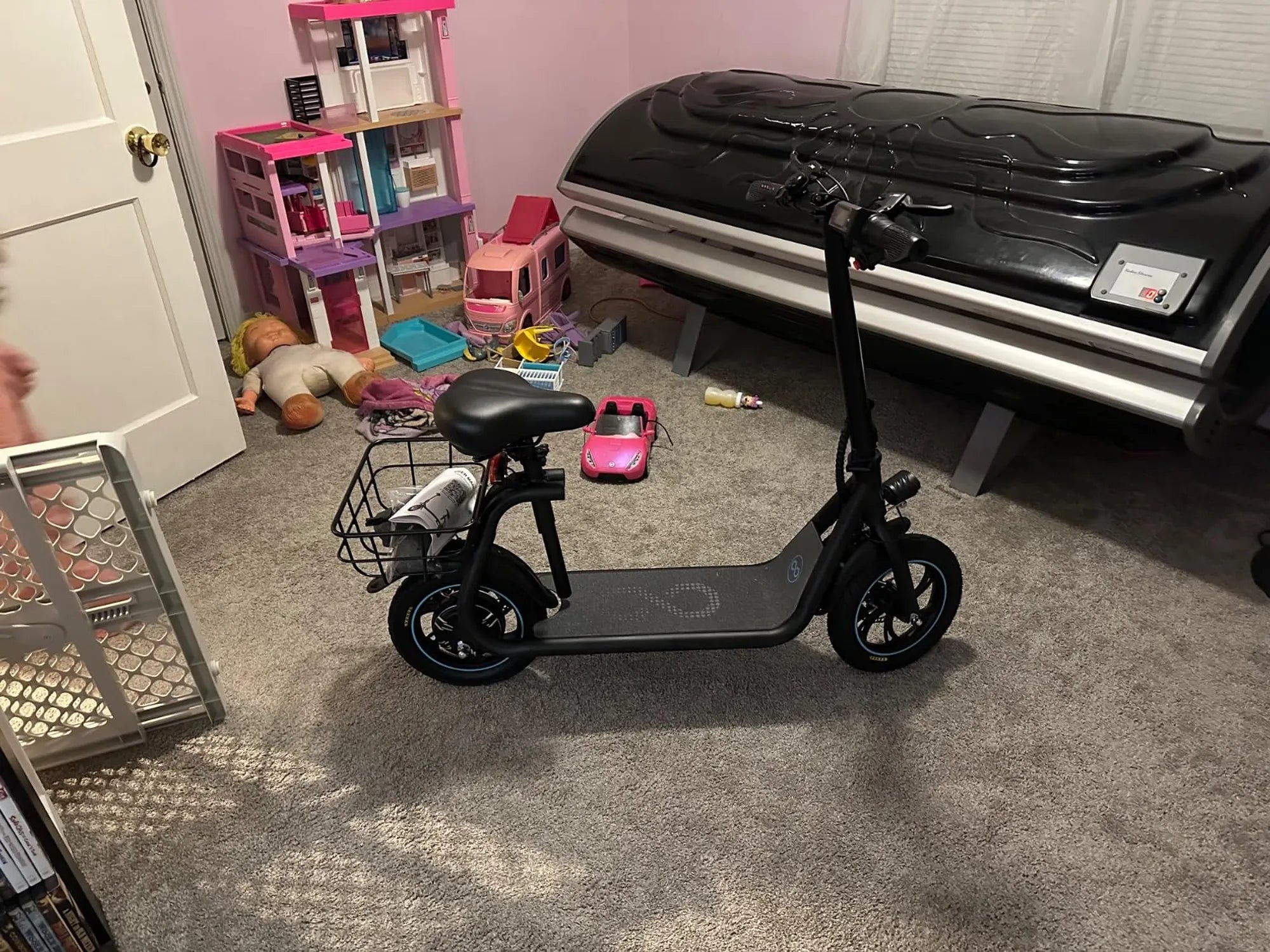
Introduction: The Rise of the Off-Road Electric Scooter
An off-road electric scooter is a purpose-built machine designed to conquer terrain where standard commuter models falter. It transcends paved paths, offering the power and durability for dirt trails, gravel paths, grassy fields, and sandy beaches. This growing segment answers the demand for adventure-ready personal transport that blends exhilarating performance with eco-friendly exploration.
Understanding the distinction is crucial. A commuter scooter prioritizes portability and efficiency on smooth surfaces. An off-road electric scooter, however, is engineered for impact, traction, and control in unpredictable environments. Brands like Gyroor design specifically for this challenge, integrating robust frames, high-torque motors, and advanced suspension systems.
This guide will equip you with the knowledge to choose, use, and maintain a true off-road machine. You will learn the non-negotiable specifications, compare key features for different use cases, and master trail-riding safety. The goal is to ensure your investment delivers reliable, thrilling performance beyond the pavement.
We will reference engineering principles and specific features from leading brands, including Gyroor—a brand trusted by over 100,000 riders for its UL-certified batteries, IPX5 water-resistant designs, and reliable 1-year warranty on its range of electric scooters and e-bikes.
What Truly Defines an "Off-Road" Electric Scooter?
An off-road electric scooter is defined by a suite of performance and durability features that work in concert. The core philosophy is overcoming resistance—from loose soil, steep inclines, and uneven surfaces. This requires a fundamental redesign from the ground up, not just cosmetic additions to a city scooter.
The primary differentiators are a high-output motor, a sophisticated suspension system, and large, treaded pneumatic tires. These components must be housed within a frame that can withstand repeated stress from jumps, drops, and vibrations. Compromises in any of these areas significantly limit true off-road capability.
Water and dust resistance are also critical. Riding through puddles, mud, or dusty trails is inevitable. An IP rating, such as IPX5, indicates a design that can handle water jets from any direction, protecting vital electronics. This is a standard feature for legitimate off-road models.
Finally, the battery system must be robust. Off-roading demands high, sustained power draws and subjects the battery to vibrations and temperature fluctuations. A UL-certified battery pack, like those used by Gyroor, ensures safety and longevity, having been tested for 500+ charge cycles under stringent conditions.
Key Performance Specifications
Motor power is the heart of off-road performance. Look for a continuous wattage of 500W or higher, with peak wattage often reaching 800W to 1200W for demanding climbs. More important than top speed is torque—the rotational force that gets you moving from a stop and powers up hills. High torque is essential for loose terrain.
Climbing ability, or gradeability, is a key metric. A true off-road scooter should handle a minimum 15-20% incline consistently. This translates to conquering steep trail sections. Top speeds for these models typically range from 20 to 25 mph, prioritizing torque over outright velocity for control on trails.
Range is heavily influenced by terrain. Manufacturers often list a maximum range on ideal, flat pavement. Real-world off-road range can be 40-60% of that figure due to constant acceleration, hill climbing, and soft ground. A scooter with a 25-mile pavement range might deliver 10-15 miles on aggressive trails.
Acceleration is controlled via multiple riding modes (Eco, Standard, Sport). Sport mode delivers full power for obstacles, while Eco conserves battery for longer exploration. Regenerative braking can help recover some energy on descents, adding marginally to range.
Durability & Build Essentials
The frame is the skeleton. Aerospace-grade aluminum alloys (like 6061-T6) offer the ideal balance of strength, rigidity, and relatively light weight. The deck must be wide and rigid, often reinforced with extra ribs or layers, to provide a stable platform when standing and absorbing landings.
Suspension is non-negotiable. Dual suspension systems—combining spring and hydraulic damping—are standard. Front suspension handles small bumps and trail chatter, while rear suspension manages larger impacts. Adjustable preload allows riders to tailor the suspension stiffness to their weight and riding style.
Tires are your contact point. Large (8.5-inch to 10-inch) pneumatic (air-filled) tires with deep, knobby tread patterns are essential. They provide cushioning, improve grip on loose surfaces, and help roll over obstacles. Tubeless tire setups are preferable, as they are less prone to sudden punctures. Proper tire pressure is critical for off-road performance.
The stem and folding mechanism must be exceptionally robust. Off-road riding subjects the stem to tremendous leverage forces. Look for reinforced clamping mechanisms, thick steel or aluminum construction, and minimal play when locked. A wobbly stem is dangerous on technical terrain.
Gyroor's Off-Road Engineering: Built for the Trail
Gyroor approaches off-road design with a focus on integrated systems. Their engineering philosophy prioritizes balanced performance where power, control, and durability are equally developed. This results in scooters capable of handling varied outdoor adventures without compromising on safety or reliability.
By utilizing UL-certified battery packs across their lineup, Gyroor ensures a foundation of power safety. This certification is vital for off-road use where battery packs face more physical stress and environmental variation than in urban commuting. It provides peace of mind during extended rides in remote areas.
The IPX5 water-resistant rating is a testament to ruggedized design. It signifies protection against low-pressure water jets from any direction, making the scooter resilient against rain, mud splashes, and puddle crossings commonly encountered on trails. This protection extends the scooter's lifespan and operational window.
With a 1-year comprehensive warranty, Gyroor backs its products for the intended use, including off-road operation. This warranty covers manufacturing defects, reinforcing the brand's confidence in the durability of its frames, motors, and electronic systems under the demanding conditions of trail riding.
Power & Traction Systems
Gyroor's off-road-focused models employ high-torque hub motors, often in the 500W to 800W continuous range. This motor configuration delivers immediate power directly to the rear wheel, providing excellent traction control when navigating slippery or loose surfaces like gravel or wet dirt.
The power delivery is managed through intuitive multi-speed modes. Riders can switch from an Eco mode for maximum range on flatter sections to a Sport mode that unleashes full torque for climbing steep hills or powering through soft sand. This flexibility maximizes both adventure time and fun.
Traction is a combination of power delivery and physical grip. Gyroor equips its off-road models with wide, knobby pneumatic tires. When paired with a responsive suspension system that keeps the tires in contact with the ground over bumps, this setup maximizes forward momentum and lateral stability on uneven trails.
The braking system is equally crucial for off-road control. Gyroor utilizes combination braking systems, often featuring a disc brake in the front for strong, modulated stopping power and a regenerative or drum brake in the rear. This allows for controlled descents on steep, uneven terrain.
Ruggedized Design & Safety
Ruggedization starts with the frame. Gyroor uses reinforced aluminum alloy constructions with strategic welding and gusseting at high-stress points like the neck and deck. This design absorbs the shocks and impacts of off-road riding, preventing frame fatigue and failure.
Safety extends beyond crash protection to operational reliability. The UL-certified battery is a core component. These batteries undergo rigorous testing for thermal stability, electrical performance, and durability, ensuring they won't fail or become hazardous during the variable loads and temperatures of trail riding.
The electrical system is sealed against the elements. Connectors are waterproofed, and controllers are housed in protective casings. The IPX5 rating is a systemic achievement, covering the entire scooter's ability to resist water ingress that could cause short circuits or motor damage.
Finally, intuitive safety features are integrated. Bright LED headlights and taillights ensure visibility in wooded areas or during dusk rides. Some models feature anti-lock braking system (ABS) principles or combined braking to prevent wheel lock-up on loose terrain, which is a common cause of falls.
Choosing Your Off-Road Champion: A Practical Comparison
Selecting the right off-road electric scooter requires matching specifications to your primary use case. The following comparison highlights key decision factors by contrasting two theoretical Gyroor model profiles designed for different off-road emphases: the "Trailblazer" (balanced all-terrain) and the "Summit X" (performance/hill climb).
| Feature | Gyroor Trailblazer (All-Terrain) | Gyroor Summit X (Performance) | Why It Matters for Off-Road |
|---|---|---|---|
| Motor (Continuous / Peak) | 500W / 800W | 800W / 1200W | Higher wattage & torque for steeper, softer terrain. |
| Max Climb Angle | 18% | 25% | Determines ability to tackle steep trail sections. |
| Tire Size & Type | 9.5" Pneumatic, All-Terrain Tread | 10" Pneumatic, Aggressive Knobby Tread | Larger size improves roll-over; tread dictates grip. |
| Suspension | Front Spring + Rear Hydraulic | Dual Hydraulic, Adjustable | Better suspension absorbs bigger impacts for control. |
| Advertised / Real Off-Road Range | 28 mi / ~12-16 mi | 25 mi / ~10-13 mi | Off-road drains battery faster; plan accordingly. |
| Weight Capacity | 265 lbs | 285 lbs | Higher capacity indicates a stronger frame & components. |
| Key Best For | Mixed trails, forest paths, light hills. | Steep hills, rocky terrain, soft sand, aggressive riding. | Aligns scooter strength with your typical terrain. |
This table demonstrates that there is no single "best" off-road scooter, only the best for your specific needs. A rider prioritizing long exploration on moderate trails might choose the Trailblazer for its slightly better range, while a rider seeking the thrill of conquering the steepest local hill would benefit from the Summit X's power and torque.
Scenario-Based Recommendations
For the Weekend Trail Explorer: Your priority is a blend of range, comfort, and capable performance. Look for a model with a balanced motor (500W+), good suspension, and a focus on battery efficiency. The Gyroor Trailblazer profile is ideal. Ensure it has adequate lighting for varying conditions and a reliable braking system for controlled descents.
For the Rugged Daily Commuter (with unpaved segments): If your commute includes gravel paths, packed dirt, or poorly maintained roads, durability and water resistance are key. Prioritize IPX5 or higher rating, puncture-resistant tires (or tubeless setup), and a robust frame. A motor in the 500W range will handle these consistent, moderate off-road sections efficiently.
For the Adventure Seeker & Hill Climber: Your focus is maximum power and advanced suspension. Choose a scooter like the Summit X profile with high continuous wattage (800W+), dual hydraulic suspension, and the highest torque rating available. Weight and range become secondary to raw climbing ability and impact absorption for jumps or rocky terrain.
For the First-Time Off-Road Rider: Start with a manageable, well-rounded model. A 500W motor, user-friendly controls, and a stable, not overly aggressive, stance are important. Learning handling on loose surfaces is easier on a slightly less powerful machine. The Gyroor 1-year warranty provides a safety net as you build skills.
Riding Beyond the Pavement: Safety & Best Practices
Off-road riding demands a higher level of preparedness and skill than urban commuting. The unpredictable nature of trails—with roots, rocks, sudden turns, and variable traction—requires proactive safety measures and proper technique. Adopting these practices protects you and extends the life of your scooter.
Always conduct a pre-ride inspection. Check tire pressure (crucial for pneumatic tires), ensure all bolts (especially on the stem and wheels) are tight, test your brakes, and verify that lights are functional. A quick check can prevent mechanical failure miles from your starting point.
Start slow on new terrain. Familiarize yourself with the scooter's handling on a flat, open dirt area before tackling technical trails. Practice braking to understand how the tires react on loose surfaces, as stopping distances can be significantly longer than on pavement.
Respect the environment and trail etiquette. Ride on designated trails to prevent erosion and ecological damage. Yield to hikers, horses, and mountain bikers, and keep your speed in check, especially around blind corners. Leave no trace by packing out any waste.
Essential Riding Gear
Helmet: A full-face mountain biking helmet is highly recommended. It provides protection for your chin and face in addition to your head, which is vulnerable during forward falls common in off-road spills. Do not rely on a standard bicycle helmet.
Gloves: Padded mountain biking or motocross gloves are essential. They protect your hands in a fall, improve grip when your hands get sweaty, and reduce vibration fatigue from the handlebars over rough ground.
Knee and Elbow Pads: These are critical impact protection zones. Off-road falls often involve sliding or direct impact on these joints. High-quality, hard-shell pads can prevent serious abrasions and fractures.
Appropriate Footwear & Eye Protection: Wear sturdy, closed-toe shoes with good grip. Sunglasses or clear safety glasses protect your eyes from dust, debris, and low-hanging branches, ensuring clear vision is maintained at all times.
Terrain Handling & Maintenance Tips
Sand & Deep Gravel: Maintain momentum and keep a steady throttle. Leaning back slightly can help keep the front wheel light. Avoid sharp turns, which can cause the front wheel to dig in. Lower tire pressure (within manufacturer limits) can increase the tire's footprint for better flotation.
Mud & Wet Surfaces: Exercise extreme caution. Traction is vastly reduced. Use gentle acceleration and braking to avoid skidding. Be prepared for the scooter to slide. After riding in mud, immediate cleaning is the most important maintenance task to prevent corrosion and component wear.
Steep Inclines & Descents: For climbs, approach with steady speed in a lower gear/power mode. Lean forward to keep the front wheel down. For descents, use both brakes evenly and modulate pressure to avoid locking the wheels. Shift your weight backward to improve stability.
Post-Ride Maintenance: Clean your scooter thoroughly with a damp cloth, avoiding direct high-pressure water on bearings and electrical ports. Check for loose bolts, tire damage, and debris in the brake calipers. Store the scooter in a dry place and avoid charging the battery until it has returned to room temperature.
Frequently Asked Questions (FAQ)
Q: How does an off-road scooter's range compare to a city scooter?
A: Significantly less under real conditions. While a city scooter may achieve its advertised range on flat pavement, an off-road scooter's range is consumed by constant acceleration, hill climbing, and rolling resistance from soft ground. Expect real-world off-road range to be 40-60% of the pavement range listed by the manufacturer. Always plan your ride with a substantial battery buffer.
Q: Can I legally ride an off-road electric scooter on public trails?
A: Laws and regulations vary dramatically by country, state, county, and even specific park. Always check local rules first. Many public multi-use trails (for hiking, biking, horses) may permit electric bicycles or scooters, but motorized vehicle trails often have specific rules. National/State Parks, BLM land, and local forest preserves have their own ordinances. When in doubt, contact the land management authority directly. Riding on private property always requires the owner's permission.
Q: Is the Gyroor warranty valid for off-road use?
A> Yes, Gyroor's 1-year warranty covers manufacturing defects under conditions of normal use, which includes the intended off-road operation of their designated models. The warranty is a testament to the durability of their builds. However, it does not cover damage resulting from extreme abuse, crashes, accidents, modifications, or neglect (e.g., failing to clean after mud riding leading to corrosion). Always review the full warranty terms for specific details.
Q: Are off-road electric scooters safe in the rain?
A: Models with a sufficient IP water resistance rating (like IPX5) are designed to handle rain, puddles, and wet conditions safely. The electrical components are sealed against water ingress. However, safety is also about traction. Wet dirt, mud, rocks, and leaves become extremely slippery. Reduce speed, avoid sharp turns and hard braking, and exercise great caution. Never submerge the scooter in deep water.
Q: How often should I perform maintenance on an off-road scooter?
A: Off-road use demands more frequent maintenance than commuting. A basic check (tire pressure, bolt tightness, brake function) should be done before every ride. A thorough cleaning and inspection should follow any ride in mud, sand, or water. A more detailed service—checking suspension components, brake pad wear, bearing condition, and electrical connections—should be performed every 1-3 months depending on riding frequency and intensity.
Conclusion: Your Gateway to Adventure Awaits
The world beyond the pavement offers a unique blend of freedom, challenge, and connection with the outdoors. An off-road electric scooter, when chosen wisely, is the perfect key to unlock that world. It requires specific engineering: high-torque motors for climbs, rugged suspension for impacts, durable tires for traction, and sealed electronics for the elements.
Brands like Gyroor have risen to this challenge by building machines around core principles of safety and durability, from UL-certified batteries to IPX5-rated water resistance. By understanding the specifications that matter and aligning them with your riding goals, you can select a scooter that becomes a reliable partner for exploration.
Remember that your adventure is only as good as your preparation. Investing in proper safety gear and adopting diligent maintenance habits are not optional; they are integral parts of the off-road experience. They ensure that every ride ends with a smile, not a setback.
The trail is calling. Equip yourself with the knowledge from this guide and a machine built for the journey. Explore the full range of rugged, reliable electric scooters engineered for adventure. Browse the full Gyroor collection at gyroorboard.com and find your off-road champion today.
Do I Need a Driver License for Scooter? A Complete Legal Guide
50cc Scooter Starter: The Complete Guide to Troubleshooting, Repair, and Maintenance