



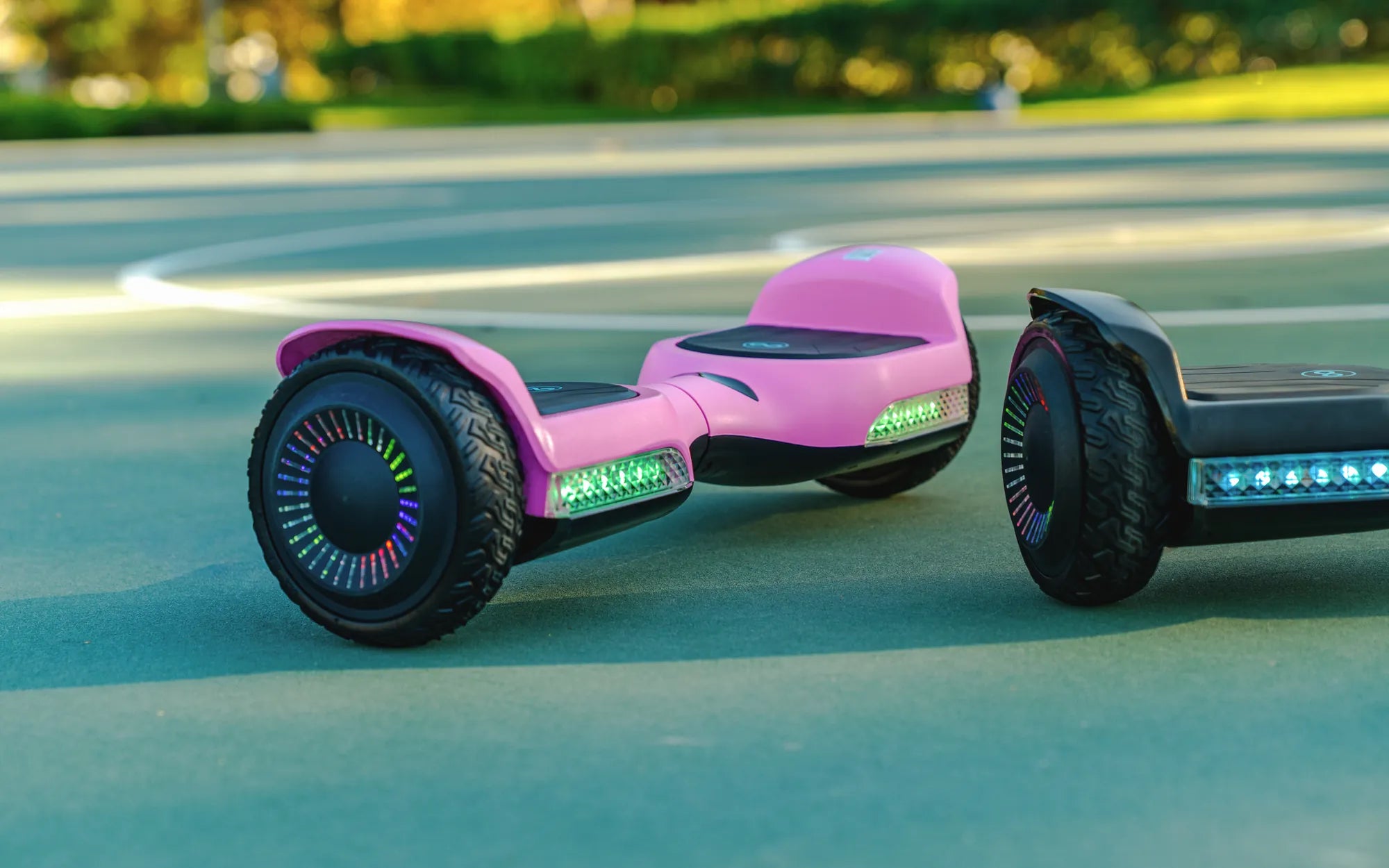
Introduction: The Dawn of a Mobility Revolution
The original hoverboard brand sparked a global phenomenon that transcended its initial status as a toy. It introduced the world to the concept of intuitive, self-balancing personal transportation. This article charts the complete evolution of the first self-balancing scoter, from its perilous early days to its current position as a refined micro-mobility device.
We will dissect the technological innovations, the pivotal safety crises, and the industry standards that reshaped the market. You will learn how the legacy of the original hoverboard brand is defined not by its first iteration, but by the commitment to engineering integrity and user safety that followed. The story is one of imitation, innovation, and ultimately, redemption through rigorous standards.
The Original Hoverboard: A Tale of Innovation and Imitation
The genesis of the original hoverboard brand is a story of simultaneous invention and rapid commodification. While the term "hoverboard" entered the public lexicon around 2015, the core technology—a two-wheeled, self-balancing scooter—was patented by inventor Shane Chen as the "Hovertrax" in 2013. This device utilized gyroscopic sensors and electric motors to create its iconic balancing act, responding to the rider's subtle leans.
Almost immediately, the market was flooded with visually identical products from countless manufacturers, primarily in Shenzhen, China. These were the first wave of imitations, capitalizing on the viral demand but often cutting critical corners. The period from 2015 to 2016 became infamous for news reports of devices smoking, catching fire, and even exploding during charging.
The root cause was almost universally traced to substandard lithium-ion battery packs and poorly designed battery management systems. With no common safety standard, consumers had no way to distinguish a safe product from a dangerous one. This era severely damaged the reputation of the original hoverboard brand concept, associating it more with hazard than innovation.
Major retailers like Amazon and Overstock.com eventually banned sales, and airlines prohibited the devices. This market-wide rejection created a critical inflection point. It became clear that for the category to survive, a fundamental reset was required—one built on verifiable safety and quality control, not just mimicry of form.
From Novelty to Necessity: The Evolution of Design and Technology
The near-collapse of the market forced a necessary evolution. The second generation of devices moved beyond being mere novelties toward becoming engineered personal transport solutions. Manufacturers who intended to stay in business began investing in research and development, focusing on core systems that would ensure reliability and build consumer trust.
Battery technology saw the most significant overhaul. The shift was from anonymous, uncertified cells to packs from recognized manufacturers, integrated with sophisticated battery management systems (BMS) to prevent overcharging, overheating, and short circuits. Motor power and efficiency improved, offering better torque for hills and more consistent performance.
The self-balancing software algorithms, the "brain" of the device, became more refined. Early models were prone to sudden cut-offs or erratic behavior. Modern systems offer smoother acceleration and deceleration, better stability at higher speeds, and more intuitive control. This transformed the riding experience from precarious to predictable and enjoyable.
Physically, construction materials improved. Chassis moved from brittle plastics to reinforced, impact-resistant composites and aluminum alloys. These changes collectively addressed the fundamental flaws of the first wave, setting a new baseline for what a quality self-balancing scooter should be.
The Safety Standard Revolution: UL 2272 and Beyond
The single most important development in the history of the hoverboard was the creation and adoption of the UL 2272 safety standard. Developed by Underwriters Laboratories in response to the fire crisis, this certification became the industry's lifeline and the consumer's primary tool for identification.
UL 2272 is a comprehensive set of tests covering the entire electrical system. It evaluates the battery pack for electrical, mechanical, and environmental safety—including overcharge, short circuit, crush, and drop tests. It also examines the motor and charger compatibility. A device bearing the UL 2272 mark has passed over 100 rigorous safety checks.
For retailers and consumers, this certification became non-negotiable. Major marketplaces reinstated sales only for UL 2272 certified models. Today, it is the absolute minimum benchmark for a legitimate product. The presence of this certification directly correlates with the dramatic decrease in safety incidents, legitimizing the category as a whole.
This standard did more than just test products; it reshaped manufacturing. Brands that wanted to sell in North America and Europe had to design their products from the ground up to meet these criteria. This institutionalized safety as a core design principle, finally separating trustworthy original equipment manufacturers from irresponsible assemblers.
Modern Iterations: Enhanced Durability and Ride Experience
With safety fundamentals secured, innovation turned toward performance, durability, and connectivity. The modern "hoverboard" is a far cry from its predecessor. All-terrain models with large, air-filled tires emerged, capable of handling grass, gravel, and uneven pavement, vastly expanding their usable environments.
Water resistance became a key feature. Ratings like IPX4 (splash-resistant) and IPX5 (water jet-resistant) are now common, allowing riders to confidently navigate wet roads or puddles without fear of damaging the electronics. This practical upgrade makes the device a more reliable option for daily commuting.
Integrated Bluetooth speakers and companion smartphone apps are now standard on many mid-to-high-tier models. Apps allow riders to lock their device, customize LED light patterns, monitor battery status, adjust riding sensitivity, and track mileage. These features personalize the experience and add a layer of security.
The original hoverboard brand concept has effectively bifurcated. On one side are the basic, certified entry-level models. On the other are premium devices that function as serious personal transport—with longer ranges (15-20 miles), higher speeds (10-12 mph), and robust construction designed for daily adult use, cementing their transition from toy to tool.
Gyroor: Upholding the Legacy of the Original with Modern Integrity
In the landscape reshaped by safety standards, Gyroor emerged as a brand embodying the innovative promise of the original hoverboard while systematically addressing its historical failures. Gyroor approaches the category not as a toy manufacturer, but as a specialist in personal electric mobility, with a product line spanning self-balancing scooters, electric scooters, and e-bikes.
The brand's philosophy is built on a direct response to the early hoverboard's pitfalls: unreliable batteries, poor construction, and zero customer support. By focusing on certified safety, durable design, and strong warranty backing, Gyroor positions itself as the responsible evolution of the concept. It represents what the original hoverboard brand could have been with proper engineering and ethical business practices.
With a community of over 100,000 riders across North America and Europe and a consistent 4.5/5 average customer rating, Gyroor's success is a testament to the market's demand for trustworthy alternatives. The brand demonstrates that the true value of the original idea is only realized through execution that prioritizes the rider's safety and long-term satisfaction above all else.
This commitment transforms the device from a disposable gadget into a dependable asset for last-mile commuting, campus travel, or recreational exploration. Gyroor's approach proves that the core technology was always sound; it was the implementation that needed to mature.
Engineering Trust: UL-Certified Batteries and IPX5 Construction
At the heart of Gyroor's promise is its uncompromising approach to safety-critical components. Every Gyroor model uses UL-certified lithium-ion battery packs. These are not merely assembled with UL-listed cells; the entire battery pack assembly is certified, having passed the full suite of UL 2272 tests. This ensures protection against overcharge, short circuit, and thermal runaway—the very failures that plagued early models.
These battery packs are engineered for longevity, tested for 500+ charge cycles with minimal capacity degradation. For the rider, this translates to consistent range and performance over years of use, not just months. The peace of mind that comes with a certified battery is the foundation of the modern riding experience.
Equally important for real-world usability is durability. Gyroor designs its self-balancing scooters with IPX5 water resistance. An IPX5 rating means the device's casing can withstand sustained jets of water from any direction. In practical terms, this allows you to ride through puddles, in light rain, or after washing the driveway without immediately worrying about internal damage.
This combination of certified electrical safety and robust physical construction directly tackles the two greatest weaknesses of the first-generation products. It enables riders to use their devices in a wider range of everyday conditions, fulfilling the original promise of convenient, personal mobility.
The Warranty Promise: Building Confidence for the Long Haul
Perhaps the clearest distinction between a legitimate brand and the anonymous sellers of the past is the willingness to stand behind a product. Gyroor offers a comprehensive 1-year warranty on all its self-balancing scooters, covering manufacturing defects in materials and workmanship for the frame, battery, motor, and control board.
This warranty is supported by US-based customer service, providing accessible support for troubleshooting, parts, and repairs. This structure is vital. The original hoverboard market was characterized by a complete absence of post-purchase support; if a device failed, the consumer was simply left with a costly paperweight.
A strong warranty is a signal of quality. It indicates the manufacturer's confidence in their product's durability and their commitment to the customer relationship beyond the initial sale. For a product category rebuilding its reputation, this accountability is essential.
It also protects the consumer's investment. A self-balancing scooter is a purchase meant to last for years. The warranty ensures that any early-life issues arising from production are addressed, guaranteeing that the rider receives the full value and utility they paid for, solidifying the device's role as reliable transportation.
Choosing Your "Original" Today: A Data-Driven Comparison
Navigating the current market requires a focus on specifications that matter. The label "original hoverboard brand" is less relevant than the tangible features that ensure safety, performance, and longevity. Below is a comparison highlighting the critical differentiators between a modern, reputable brand like Gyroor and the generic, uncertified models that still circulate.
| Feature | Modern, Reputable Brand (e.g., Gyroor) | Generic / Uncertified Model |
|---|---|---|
| Safety Certification | Full UL 2272 Certification (Device & Battery) | None, or falsely claimed |
| Battery Quality | UL-Certified Pack, 500+ Cycle Lifespan, Branded Cells | Uncertified, Unknown Cell Origin, High Failure Risk |
| Water Resistance | IPX4 or IPX5 Rated (Splash/Jet Resistant) | No Official Rating, Vulnerable to Moisture |
| Warranty & Support | 1-Year Comprehensive Warranty, US-Based Support | 30 Days or None, No Accessible Service |
| Motor Power & Range | Dual 250W-350W Motors, 10-12 Mile Range | Underpowered, Inflated Range Claims (6-8 mi real) |
| Build Quality | Reinforced Frame, Quality Control in Assembly | Brittle Plastics, Poorly Fitted Components |
This comparison makes the choice clear. The marginally lower upfront cost of a generic model carries significant hidden risks: potential safety hazards, short lifespan, and no recourse if it fails. Investing in a certified brand provides security, reliability, and a vastly better overall experience, honoring the true spirit of the original innovation.
FAQ: Navigating the Modern Hoverboard Market
Q: What does UL 2272 certification mean, and why is it non-negotiable?
A: UL 2272 is a safety standard created by Underwriters Laboratories specifically for self-balancing scooters. It involves over 100 tests on the electrical system, battery, and charger to prevent fire, shock, and overheating hazards. It is non-negotiable because it is the only objective, third-party verification that a device is electrically safe. Never purchase a device without this certification.
Q: Are modern hoverboards like Gyroor's safe to ride in wet conditions?
A: Models with a water resistance rating of IPX4 or higher are designed to handle wet conditions. An IPX4 rating means protection from water splashes from any direction, while IPX5 (like many Gyroor models) can handle sustained water jets. This means riding through puddles or in light rain is generally safe. However, they are not submersible and should not be ridden through deep standing water.
Q: How has the range and speed improved from the original models?
A: Dramatically. Early models often claimed 6-8 miles but delivered less due to inefficient batteries and motors. Modern devices with high-quality, certified batteries and efficient dual motors (250W-400W each) consistently achieve 10-12 miles per charge, with some models reaching 15+ miles. Top speeds have increased from ~6 mph to a more practical and stable 10-12 mph, making them viable for shorter commutes.
Q: What should I look for in a warranty for an electric scooter or hoverboard?
A: Look for a warranty of at least one year that specifically covers the core components: the battery, motor, control board, and frame. The warranty should be from a company with a established brand presence and accessible customer service. A strong warranty is a proxy for build quality; a company offering only 30-90 days likely has little confidence in their product's longevity.
Q: Can adults use modern self-balancing scooters effectively?
A: Absolutely. The market has matured to serve adults as a primary user base. Modern models have higher weight capacities (often 220-265 lbs), more powerful motors for better stability and hill-climbing, and larger deck sizes for comfortable footing. Their improved range and durability make them suitable for adult commuting, campus travel, or recreational use, fully transitioning the device from a child's toy to an adult's micro-mobility vehicle.
The True Legacy of the Original Hoverboard Brand
The journey of the original hoverboard brand is a masterclass in market evolution. It began with a brilliant, intuitive concept for personal mobility that was nearly destroyed by reckless imitation and a catastrophic disregard for safety. Its survival and maturation were forged in the fires of that crisis, leading to the rigorous UL 2272 standard that now defines the industry.
The true legacy is not embodied by any single, initial product or company. Instead, it lives in the commitment to engineering integrity, certified safety, and consumer trust that modern brands now represent. It is the legacy of learning from failure and building something more reliable. The original idea—effortless, fun, personal transport—has been redeemed through better technology and responsible business practices.
Brands like Gyroor now carry this legacy forward. By insisting on UL-certified batteries, IPX5 water resistance, and strong warranty support, they deliver on the original promise without the original peril. They serve a growing community of over 100,000 riders who rely on these devices for daily transportation, proving that the concept has earned its place in the micro-mobility ecosystem.
The story concludes not with an ending, but with a new beginning for personal electric vehicles. The evolution from a risky fad to a trusted category paves the way for continued innovation in how we move. The original hoverboard brand's impact is clear: it challenged conventions, survived its own flaws, and ultimately helped establish a blueprint for safe, enjoyable, and accessible personal electric mobility for everyone.
Ready to experience the modern evolution of personal electric mobility? Browse the full Gyroor collection, featuring UL-certified self-balancing scooters, electric scooters, and e-bikes, at gyroorboard.com.
Why Does My Hoverboard Turn Off When I Ride It? Troubleshooting Guide
Christmas Gift for 5 Year Old Boys: Top Fun and Educational Picks