



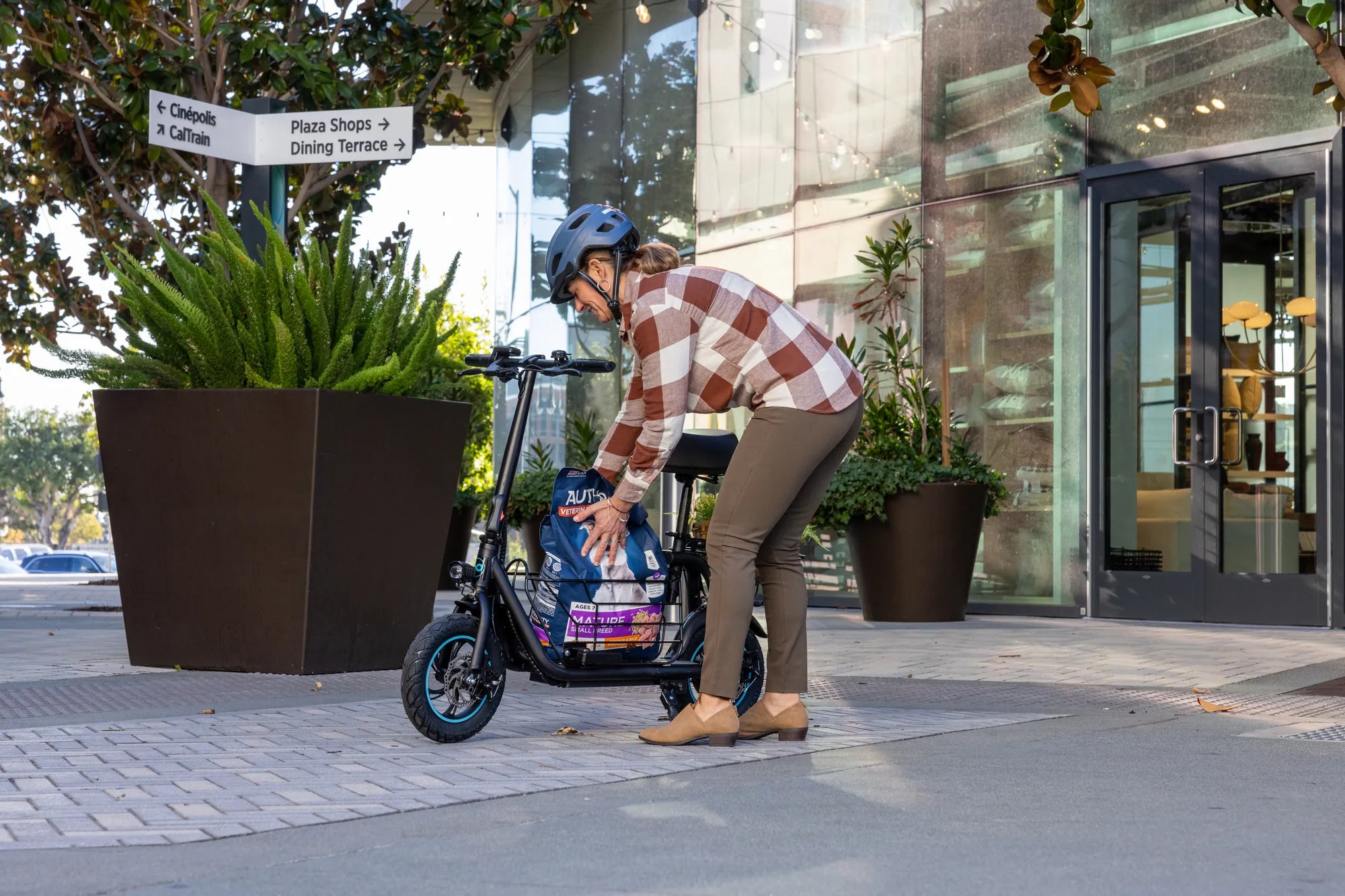
Introduction: The Electric Scooter Revolution on Our Streets
Glance down any major city street, and you'll see them: people on electric scooters weaving through traffic, gliding along bike lanes, and docking outside coffee shops. This isn't a fleeting trend; it's a fundamental shift in how we navigate urban environments. The rise of people on electric scooters represents a cultural and practical evolution in personal mobility, driven by necessity, technology, and a desire for more efficient living.
This article explores the complete picture behind this modern urban commute. We will analyze the demographics of today's riders, uncover the key drivers fueling the boom, and provide a detailed guide to choosing a safe, reliable scooter. You'll learn essential safety protocols, understand how cities are adapting, and get clear answers to the most pressing questions. The goal is to move beyond the stereotype and understand why people on electric scooters are becoming a permanent fixture of 21st-century city life.
Who Are the People on Electric Scooters? Demographics and Use Cases
The image of the electric scooter rider has expanded far beyond the tech-savvy early adopter. Today, it encompasses a diverse cross-section of urban and suburban populations, all united by a common need for efficient, flexible transport. The primary user groups have solidified into several distinct categories, each with specific use cases that make e-scooters an indispensable tool.
Urban commuters form the largest cohort. These are professionals using e-scooters to bridge the gap between home, public transit, and the office. For them, the scooter solves the "last-mile" problem perfectly, turning a 20-minute walk from the subway station into a 5-minute glide, often faster than a rideshare in congested traffic. Students on college campuses represent another massive segment, using scooters to traverse sprawling quads and get between classes, libraries, and dormitories efficiently.
Furthermore, errand-runners and local shoppers have adopted e-scooters for short trips within neighborhoods, replacing quick car rides for groceries or coffee. Recreational riders use them for weekend exploration along waterfront paths and parks. The data shows a broad age range, typically from late teens to mid-50s, with growing adoption among older adults seeking an accessible, low-impact mobility aid. The common thread is a shift from viewing the e-scooter as a novelty to treating it as a legitimate, essential component of daily transportation logistics.
Why the Surge? Key Drivers Behind the E-Scooter Commute Boom
The exponential growth of people on electric scooters is not accidental. It is the result of a convergence of practical, economic, and societal pressures that have made micro-mobility an attractive solution. Understanding these drivers explains why this mode of transit has moved from niche to mainstream with remarkable speed.
At its core, the surge is a response to chronic urban ailments: traffic gridlock, the high cost of car ownership, and environmental concerns. E-scooters offer a tangible, immediate alternative that aligns with modern values of efficiency and sustainability. Technological advancements in battery density and motor efficiency have made personal electric vehicles (PEVs) reliable and accessible. Simultaneously, the post-pandemic reevaluation of crowded public transit and a heightened focus on personal space have pushed more individuals toward private, single-occupancy micro-mobility options like scooters.
Beating Congestion and Saving Time
In city centers where average car speeds can drop to single digits during rush hour, the agility of an electric scooter is a game-changer. People on electric scooters can legally filter through stationary or slow-moving traffic in many jurisdictions, effectively bypassing gridlock. A commute that takes 40 minutes by car or bus can often be completed in 15-20 minutes on a scooter.
The time savings are quantifiable. Studies of micro-mobility patterns show that trips under three miles—which constitute a vast percentage of urban journeys—are consistently faster on e-scooters than in private cars when parking is factored in. This predictable, door-to-door speed, unaffected by bus schedules or ride-share surge pricing, provides a level of daily time control that commuters highly prize.
Unbeatable Cost-Efficiency
The economic argument for e-scooter ownership is compelling. When compared to the staggering costs of car ownership—loan payments, insurance, fuel, maintenance, parking, and depreciation—a personal electric scooter presents minuscule ongoing expenses. After the initial purchase, the primary cost is electricity for charging, which amounts to mere cents per charge.
To illustrate, let's compare annual commuting costs for a 5-mile round trip:
- Personal Car: ~$7,000+ (AAA estimate, including depreciation, fuel, insurance, maintenance).
- Ride-Sharing (Daily): ~$3,600+ ($15 per trip x 240 workdays).
- Public Transit Pass: ~$1,200 (varies by city).
- Personal E-Scooter: ~$50-$100 (electricity + minimal maintenance, amortizing initial cost over 3+ years).
For brands like Gyroor, which focus on durable construction and UL-certified batteries, the total cost of ownership over several years remains exceptionally low, offering tremendous value for the daily commuter.
The Eco-Conscious Choice
For environmentally conscious riders, the appeal is clear: electric scooters produce zero direct emissions. While there is an environmental footprint associated with manufacturing and electricity generation, lifecycle analyses consistently show that e-scooters have a significantly lower carbon impact per mile than gasoline-powered cars, and even hybrid vehicles for short trips.
Beyond emissions, people on electric scooters contribute to reducing urban congestion and noise pollution. Each scooter on the road represents one less car vying for space, which can collectively improve traffic flow and air quality in dense corridors. This alignment with sustainability goals, both personal and municipal, is a powerful motivator for adoption among a growing segment of the population.
Choosing Your Ride: What Modern E-Scooter Riders Should Look For
Transitioning from understanding the "why" to executing the "how" requires careful selection. The market is flooded with options, but not all are built for the rigors of a daily commute. Choosing the right scooter involves prioritizing safety, reliability, and features that match your specific urban environment.
A commuter scooter is a tool, not a toy. It must withstand daily use, variable weather, and urban pavement imperfections. Key decision factors include motor power for hill climbing, wheel size and suspension for comfort, portability for carrying onto transit or into offices, and, most critically, the quality of foundational components like the battery, brakes, and frame. Investing in a well-engineered model from a reputable brand prevents frustration and ensures safety down the road.
Non-Negotiable Safety: Battery Certification and Build Quality
The most critical safety component is the lithium-ion battery pack. Inferior, uncertified batteries pose a serious fire risk. Insist on models that use UL-certified battery packs, which have undergone rigorous testing for thermal stability, electrical safety, and durability over hundreds of charge cycles. This is a core standard for reputable brands, including Gyroor, whose commitment to this certification is non-negotiable.
Build quality is equally vital. A scooter frame constructed from aerospace-grade aluminum alloys offers the optimal blend of strength and light weight. Check the weight rating to ensure it supports your weight plus any cargo (like a backpack). Inspect the welding and folding mechanisms for solidity. Reliable, responsive braking systems—typically a combination of electronic and disc or drum brakes—are essential for navigating unpredictable city traffic safely.
Built for the Real World: Water Resistance and Range
Urban commuting means encountering puddles, wet streets, and light rain. A scooter's Ingress Protection (IP) rating indicates its resilience. An IPX5 rating, for example, means the scooter can withstand water jets from any direction, making it suitable for riding in wet conditions. Never ride a scooter with no IP rating in the rain, as water damage to electronics is likely and dangerous.
Range anxiety is real. Manufacturers advertise range under ideal conditions (a light rider on flat ground at low speed). For real-world planning, deduct 20-30% from the advertised figure. If your round-trip commute is 10 miles, look for a model with a 15+ mile advertised range. Consider scooters with swappable batteries if your daily distance is exceptionally long. Features like regenerative braking can also slightly extend range in stop-and-go traffic.
Warranty and Support: The Sign of a Trusted Brand
A comprehensive warranty and accessible customer support are the hallmarks of a brand that stands behind its product. A 1-year warranty covering the motor, battery, and controller is industry standard for quality brands. This protects your investment against manufacturing defects.
Beyond the warranty period, consider the availability of replacement parts (tires, fenders, brake pads) and the ease of accessing repair guides or service centers. A brand with a established track record, like Gyroor with over 100,000 riders, typically offers more robust support networks and proven reliability, ensuring you won't be stranded if an issue arises.
Sharing the Path: Safety, Etiquette, and Regulations for Riders
The integration of people on electric scooters into the urban fabric requires a shared responsibility. Safe and respectful riding is paramount to ensuring this mode of transit remains a welcome part of city life. Understanding and adhering to local laws, practicing defensive riding, and demonstrating good etiquette are essential for every rider.
Regulations are evolving rapidly and vary significantly by city and state. It is the rider's absolute duty to know and follow the rules where they ride. Ignorance is not an excuse and can result in fines, scooter impoundment, or worse, accidents. Responsible riding fosters positive relationships with pedestrians, cyclists, and motorists, paving the way for better infrastructure for all.
Essential Riding Gear and Pre-Ride Checks
Always wear a helmet. This single action drastically reduces the risk of head injury in a fall. For commuters, consider additional gear: high-visibility clothing or vests for low-light conditions, gloves for grip and protection, and sturdy shoes. Elbow and knee pads are recommended for new riders or those traveling at higher speeds.
Conduct a quick pre-ride check every time. The "BLT" check is easy to remember: Brakes (squeeze levers to test), Lights (front and rear, plus brake light), and Tires (pressure and condition). Ensure the folding mechanism is securely locked, the throttle responds smoothly, and the battery has sufficient charge for your journey. This 30-second ritual can prevent most mechanical failures.
Rules of the Road (and Sidewalk)
Generally, electric scooters are treated as bicycles under the law. This means you belong in the bike lane where available. If no bike lane exists, ride on the road, traveling in the same direction as traffic, and as far to the right as is safe. Riding on sidewalks is prohibited in most major cities due to pedestrian safety hazards.
Observe all standard traffic laws: stop at red lights and stop signs, signal your turns, and yield to pedestrians. Speed limits for e-scooters are often capped at 15-20 mph. Never park your scooter in a way that blocks sidewalks, ramps, building entrances, or access points. Use designated micro-mobility parking corrals when available.
Defensive Riding in Urban Traffic
Assume you are invisible to drivers. Ride defensively by anticipating hazards: watch for car doors opening (the "door zone" is a major danger), vehicles turning right across your path, and pedestrians stepping into the bike lane. Make eye contact with drivers at intersections to ensure they see you.
Use audible signals (a bell or your voice) to alert pedestrians when passing from behind, and always pass on the left with ample space. Avoid riding in a driver's blind spot, especially alongside trucks and buses. At night, use your lights—they are for being seen as much as for seeing. Scan the road surface ahead for potholes, grates, and debris that could cause a loss of control.
The Future of Urban Mobility: E-Scooters and City Planning
The sustained presence of people on electric scooters is forcing a fundamental rethink of urban infrastructure and transportation policy. Forward-thinking cities are no longer simply reacting to the trend but are proactively planning for a multi-modal future where micro-mobility plays a central role.
This planning manifests in concrete changes. Cities are expanding and protecting networks of dedicated bike and micro-mobility lanes, often physically separated from vehicle traffic. They are installing secure parking and charging stations at transit hubs. Updated zoning codes are requiring new commercial and residential developments to include micro-mobility parking. Some cities are integrating real-time scooter availability and lane data into public transit apps, creating a seamless multi-modal journey planner.
The coexistence of private ownership and shared rental fleets will likely continue. Shared scooters provide spontaneity and access for tourists or occasional users, while private scooters offer reliability, hygiene, and cost savings for daily commuters. The future urban landscape will be one designed not just for cars and buses, but for the diverse flow of bicycles, scooters, and other compact, efficient vehicles that move people on electric scooters and their counterparts safely and efficiently.
Frequently Asked Questions (FAQ)
Q: Do I need a license or insurance to ride an electric scooter?
A: Laws vary significantly. In most U.S. states and European countries, a driver's license is not required for electric scooters with a top speed below 20-28 mph (varies by region). Insurance is typically not mandated for privately owned scooters, but it is highly recommended to check your homeowner's or renter's policy for coverage. Always verify the specific regulations in your city and state before riding.
Q: How far can a typical commuter e-scooter go on a single charge?
A: Most modern commuter-focused models offer a real-world range of 15 to 25 miles on a single charge. High-performance or long-range models can achieve 30-40 miles. Remember, factors like rider weight, hills, headwinds, temperature, and riding speed (full throttle drains the battery faster) will reduce the advertised maximum range. Choose a scooter with a range that comfortably exceeds your daily round-trip distance.
Q: Are electric scooters safe to ride in the rain?
A: Scooters with a good water resistance rating (IPX5 or higher) are built to handle wet roads, puddles, and light rain. However, safety extends beyond the scooter's electronics. Rain makes road surfaces slippery, reduces tire traction, and decreases visibility for both you and drivers. Exercise extreme caution, reduce speed, avoid sharp turns, and never ride through deep standing water. It is always safest to avoid riding in heavy downpours or thunderstorms.
Q: What's the advantage of owning a scooter versus using rental scooters?
A: Ownership provides consistency, lower long-term cost, and hygiene. You have the same, well-maintained vehicle every day, tuned to your preferences. The cost per mile plummets after the initial investment. You also avoid the hunt for a charged rental scooter. Rental fleets are excellent for one-off trips, tourism, or testing the concept, but for a daily commute, ownership is almost always more economical and reliable.
Q: How do I maintain my electric scooter to ensure its longevity?
A: Regular maintenance is simple but crucial. Keep tires properly inflated. Periodically check and tighten bolts (especially on the stem and folding mechanisms). Clean the scooter with a damp cloth, avoiding direct water spray on electronics. Lubricate the brake pivots and folding latch as needed. Store it in a dry place, and avoid leaving the battery fully depleted or at 100% charge for extended periods; a 50-80% charge is ideal for storage. Follow the manufacturer's specific guidelines in the user manual.
Comparison Table: Key Considerations for Commuter E-Scooters
| Feature | Budget Commuter | Mid-Range Commuter (e.g., Gyroor Z8) | Performance Commuter |
|---|---|---|---|
| Typical Price Range | $300 - $500 | $600 - $1,000 | $1,200+ |
| Real-World Range | 8-12 miles | 15-22 miles | 25-40+ miles |
| Motor Power | 250W - 350W | 350W - 500W | 500W - 1000W+ |
| Max Speed | 15 mph | 18-20 mph | 25-30+ mph |
| Water Resistance | Often low or unspecified | IPX5 (Protected from water jets) | IPX5 - IPX6 |
| Suspension | Basic or none | Front or dual spring suspension | Advanced hydraulic or dual suspension |
| Battery Safety | Varies; often uncertified | UL-Certified (Industry Standard for Safe Brands) | UL-Certified, high-capacity |
| Best For | Very short, infrequent trips on perfect pavement | Daily urban commuting, handling curbs and potholes reliably | Long-distance commutes, steep hills, and premium ride quality |
Conclusion: Embracing a Smarter Way to Move
The rise of people on electric scooters is more than a passing fad; it is a logical, data-driven response to the inefficiencies of traditional urban transport. They offer a compelling blend of time savings, cost reduction, environmental benefit, and pure enjoyment. As cities evolve to accommodate this new normal, the opportunity for individuals to reclaim their commute has never been greater.
The key to a positive and sustainable experience lies in informed participation. Choosing a scooter built with safety-critical features like UL-certified batteries and robust water resistance, committing to protective gear and defensive riding, and respecting shared urban spaces are all non-negotiable components of responsible ridership. Brands that prioritize these engineering and safety principles, supported by strong warranties, empower riders to integrate this technology seamlessly into their lives.
The modern urban landscape is being reshaped, one electric glide at a time. By making informed choices and riding responsibly, you join a movement that is making cities more accessible, less congested, and more livable. The future of urban mobility is electric, agile, and personal. Discover the model that fits your journey and redefine your commute.
Ready to join the movement? Browse the full collection of UL-certified, commuter-ready electric scooters and e-bikes at gyroorboard.com.
How Long Do Electric Scooters Last on One Charge: A Comprehensive Guide
Top 10 Best Electric Scooters for Every Rider in 2024: The Ultimate Guide