



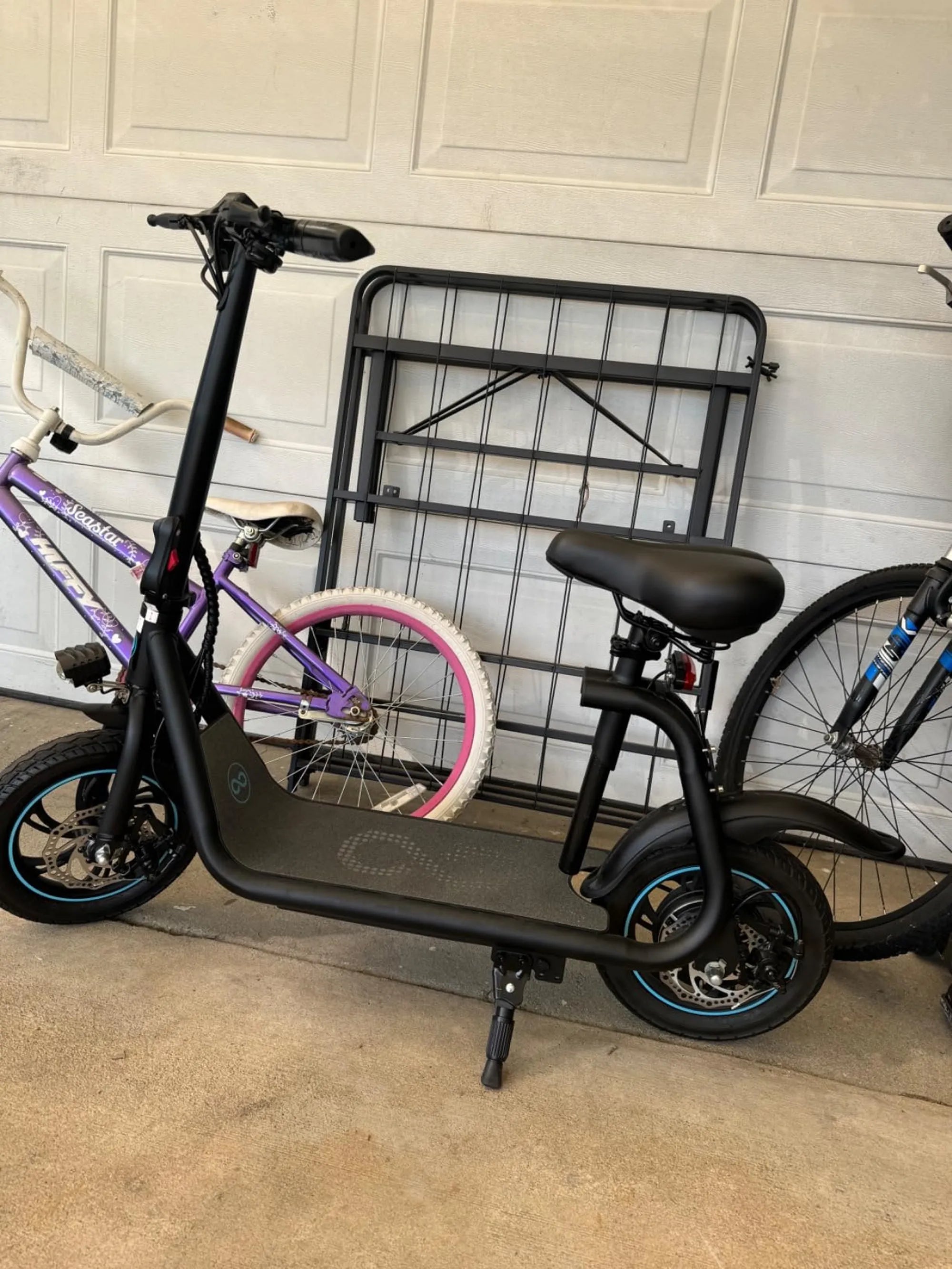
Introduction: The Rise of the Pro Electric Scooter
Forget the toys. Pro electric scooters for adults represent a fundamental shift in personal urban mobility, engineered as serious vehicles for daily commuting. These are high-performance machines designed to replace car trips, not just supplement a walk in the park. They combine robust power, extended range, and commercial-grade durability to tackle real-world urban challenges head-on.
The appeal is clear: bypass traffic gridlock, eliminate parking fees, and slash transportation costs while reducing your carbon footprint. A pro electric scooter for adults is the ultimate urban commuting solution for those seeking efficiency, freedom, and a touch of fun in their daily transit. Brands like Gyroor have led this evolution, focusing on UL-certified safety and all-weather reliability to build trust with over 100,000 riders.
This article will dissect what separates a pro model from basic alternatives. We will explore the critical features that matter, provide a step-by-step guide to matching a scooter to your lifestyle, and examine the long-term ownership experience. The goal is to equip you with the knowledge to invest in a tool that genuinely transforms your commute.
What Makes an Electric Scooter "Pro"? Key Features to Demand
Distinguishing a professional-grade scooter from an entry-level model comes down to a core set of non-negotiable specifications. These features ensure reliability, safety, and performance under daily use, justifying the "pro" designation and higher investment.
A pro scooter is built for consistent, demanding use. It must handle varied terrain, maintain performance over years, and keep the rider safe in dynamic city environments. Compromises on these core aspects lead to frustration, premature failure, and potential safety risks.
The foundation lies in three pillars: power and performance for capability, range and battery for practicality, and build quality for longevity. Each pillar supports the other, creating a cohesive and dependable commuting tool.
Power & Performance: Beyond the Basics
Motor wattage is the starting point. While 250W may suffice for flat paths, pro models typically start at 350W and go up to 1000W or more for dual-motor setups. This translates directly to acceleration, hill-climbing ability, and maintaining speed with a heavier load. A 500W motor, for instance, can comfortably handle a 15% grade with an adult rider.
Top speed is equally critical. Pro scooters for adults often offer speeds between 20 mph and 30+ mph. This isn't about thrill-seeking; it's about safely keeping pace with urban bicycle and traffic flow. Torque, the rotational force of the motor, determines how quickly you can get up to speed from a stoplight and conquer inclines.
Performance is also governed by the electronic speed controller (ESC) and regenerative braking systems. A high-quality ESC delivers smooth acceleration and efficient power management. Regenerative braking can add minor range while reducing wear on physical brake pads.
Range & Battery: Conquering the Daily Commute
Advertised range is often an ideal-world figure. A pro scooter's real-world range is what matters. For a reliable urban commuting solution, you need a battery with sufficient capacity (measured in Watt-hours or Wh) to cover your round-trip distance with a 20-30% buffer. A 30-mile claimed range might mean 20-24 miles in real use with hills, stops, and rider weight.
The battery itself is the most critical safety component. Pro models must use certified battery packs from reputable cells. Gyroor, for example, equips all its scooters with UL-certified battery packs rigorously tested for over 500 charge cycles. This certification is a benchmark for safety, drastically reducing fire risk.
Charging time and battery management systems (BMS) are also key. A good BMS protects against overcharging, overheating, and deep discharge. Fast charging (3-5 hours) is a pro feature, but balanced charging that preserves long-term cell health is more important than sheer speed.
Build & Durability: Built for the Real World
The frame material dictates strength and weight. Aerospace-grade aluminum alloy is the standard for pro scooters, offering an optimal strength-to-weight ratio. The welding and joint construction must be robust to withstand vibrations and impacts from potholes and curbs.
Suspension is no longer a luxury. A combination of front and rear suspension (spring or hydraulic) is essential for a pro electric scooter for adults. It absorbs road imperfections, increases control, and drastically reduces rider fatigue, making longer commutes comfortable.
Braking systems must inspire confidence. A dual-braking system—combining a front electronic or regenerative brake with a rear mechanical disc brake—is the pro standard. This provides powerful, fade-resistant stopping power in all conditions. Finally, the IP (Ingress Protection) rating defines weather resistance. An IPX5 rating, like on Gyroor models, means the scooter can withstand water jets from any direction, making it a true all-weather commuting solution.
The Urban Commuter's Checklist: Matching a Pro Scooter to Your City Life
Choosing the right pro electric scooter requires a honest assessment of your specific urban environment and habits. This checklist moves beyond specs to practical application, ensuring your investment solves your actual problems.
A scooter that's perfect for a flat, short commute in a dry climate may fail in a hilly, rainy city with a longer distance. The goal is to align the scooter's capabilities with your daily reality, creating a seamless and reliable extension of your mobility.
Consider this a data-gathering phase for your purchase. By answering these questions, you create a personalized specification sheet that will guide you to the ideal model.
Analyzing Your Commute: Distance, Terrain, & Storage
First, map your exact round-trip commute distance. Add 30% to this number to account for detours, headwinds, battery degradation over time, and the simple desire to run errands. This final figure is your minimum required real-world range. If your commute is 10 miles round-trip, target a scooter with a 13-15 mile real-world range.
Next, audit your terrain. Are there significant hills? Steep inclines demand higher motor wattage and torque. Is the pavement smooth, or littered with cracks, cobblestones, or potholes? Rough terrain necessitates full suspension and pneumatic (air-filled) tires for comfort and control.
Finally, consider storage and portability. Will you need to carry the scooter onto a train or bus for a multi-modal commute? If so, weight (under 35 lbs is ideal) and a fast, secure folding mechanism are paramount. For office storage, check the folded dimensions to ensure it fits under a desk or in a closet.
Safety & Reliability: Non-Negotiable Features for Daily Use
Safety is the foremost pro consideration. Lighting is critical for visibility. A bright front headlight (300+ lumens), a rear brake light, and side reflectors or integrated deck lights are essential for dawn, dusk, and night riding. Automatic brake light activation adds a crucial safety signal.
Tire choice impacts safety and comfort. Pneumatic tires provide superior shock absorption and grip, especially on wet surfaces, but require maintenance. Solid or honeycomb tires are puncture-proof but offer a harsher ride. For a pro commuting solution, pneumatic tires with sealant are often the best balance.
Reliability is proven through warranty and support. A comprehensive warranty (at least 1 year on the frame, motor, and battery, like Gyroor's) signals manufacturer confidence. Access to responsive, U.S.-based customer service and readily available spare parts is vital for minimizing downtime.
Pro Scooter Showdown: How Top Models Stack Up for Commuting
To illustrate how specs translate to use cases, let's compare three conceptual categories of pro electric scooters for adults. This comparison highlights the trade-offs between portability, comfort, and raw power.
| Feature / Category | Ultra-Portable Commuter | Balanced All-Rounder | Performance Powerhouse |
|---|---|---|---|
| Ideal Use Case | Multi-modal transit, short urban hops, easy storage | Typical 5-15 mile daily commute, mixed terrain | Long-range commuting, steep hills, maximum speed |
| Motor Power | 350W - 500W Single | 500W - 800W Single | 800W+ Dual Motor |
| Max Speed | 18 - 22 mph | 22 - 28 mph | 28 - 40+ mph |
| Real-World Range | 15 - 22 miles | 20 - 35 miles | 30 - 50+ miles |
| Weight | 28 - 35 lbs | 35 - 50 lbs | 55 - 75 lbs |
| Suspension | Front or minimal | Front & Rear (Spring) | Full Hydraulic |
| Braking System | Electronic + Drum | Regen + Disc | Dual Hydraulic Disc |
| Key Pro Features | Lightweight, fast fold, IP54 | Great balance, UL battery, IPX5 (e.g., Gyroor R1 Pro) | Extreme power, large battery, advanced display |
The Balanced All-Rounder category often represents the sweet spot for most urban commuters. A model like the Gyroor R1 Pro fits here, offering a robust 500W motor, a 25-mile range, full suspension, and an IPX5 water-resistant rating—all backed by a UL-certified battery and a 1-year warranty. It provides pro-level performance and safety without the extreme weight or cost of a performance model, making it a quintessential pro electric scooter for adults.
Beyond the Ride: Ownership Costs, Maintenance, and Best Practices
Owning a pro electric scooter is a long-term investment. Understanding the total cost of ownership and committing to simple maintenance are what transform a purchase into a lasting urban commuting solution.
The upfront cost is just one part of the equation. When evaluated against ongoing transportation expenses, a pro scooter's value proposition becomes overwhelmingly clear. Furthermore, proper care ensures the scooter remains reliable and safe for years, protecting your investment.
This section breaks down the economics and the practical upkeep required to keep your scooter in peak condition.
The True Cost of Ownership: Investment vs. Savings
Compare a $1,200 pro scooter to common alternatives. The average monthly cost of car ownership (payment, insurance, fuel, parking, maintenance) in a city can easily exceed $800. A monthly public transit pass often costs $100-$150. Rideshare for a daily commute can hit $10-$20 per day.
Even with a conservative 3-year lifespan, the pro electric scooter for adults pays for itself rapidly. The electricity cost to charge a scooter is negligible—approximately $0.10 for a full charge. Savings on parking tickets, gas, and transit fares directly offset the initial investment, often within the first 6-12 months of use.
Factor in the intangible savings: time reclaimed from traffic, reduced stress, and the health benefits of an active, outdoor commute. The financial and lifestyle return on investment is substantial.
Essential Maintenance for Peak Performance & Longevity
Regular maintenance is simple but critical. Tire Care: For pneumatic tires, check pressure weekly. Properly inflated tires improve range, handling, and puncture resistance. Brake Checks: Monthly, inspect disc brake pads for wear and test brake lever tension. Adjust or replace as needed.
Battery Care: This is paramount. Avoid consistently draining the battery to 0%. Try to keep it between 20% and 80% for daily use. Store in a cool, dry place. If storing for over a month, charge to about 60%. Use only the manufacturer-provided charger.
General Upkeep: Keep the scooter clean, especially after wet rides. Wipe down the deck and stem, and check for loose bolts or fasteners every few months. Keep the firmware updated if your model supports it, as updates can improve performance and safety features.
Frequently Asked Questions (FAQ) About Pro Electric Scooters
Q: Are pro electric scooters legal for road use?
A: Laws vary significantly by city, state, and country. Generally, they are permitted in bicycle lanes and on roads with speed limits at or below 25-35 mph. Most jurisdictions have age restrictions (18+), may require a helmet, and impose speed limits (often 15-20 mph on bike paths). Always check your local Department of Transportation or city council website for specific regulations.
Q: How safe are they in wet conditions?
A: Safety in rain depends on the scooter's IP rating and rider caution. A pro scooter with an IPX5 rating (like Gyroor's models) is protected against water jets and light rain. However, traction is reduced. Always ride slower, avoid painted lines and metal surfaces, brake earlier and more gently, and ensure your tires have good tread. No scooter is fully waterproof for submerged riding.
Q: What is the typical lifespan of a pro e-scooter?
A: With proper maintenance, a quality pro electric scooter for adults can last 3-5 years or more. The battery is the primary wear item, with UL-certified packs often rated for 500+ full charge cycles before significant capacity loss. Motor and mechanical parts are durable. Lifespan is directly tied to build quality, usage intensity, and adherence to maintenance guidelines.
Q: Can I take it on public transportation?
A: Policies are set by individual transit authorities. Many bus and train systems allow folded electric scooters, treating them like luggage or bicycles during off-peak hours. Key factors are folded dimensions, weight, and whether the battery is certified. Always check with your local transit provider's rules before your first multi-modal commute.
Q: Do I need a license or insurance to ride one?
A: For typical pro scooters with top speeds under 30 mph, a driver's license is rarely required in most U.S. states. Insurance is also not typically mandated by law. However, it is highly advisable to check your homeowner's or renter's insurance policy to see if it covers personal electric vehicles, or consider specialized micro-mobility insurance for theft and liability protection.
Conclusion: Your Ticket to a Smarter, Greener Commute
The evidence is compelling. A pro electric scooter for adults is not a gadget but a legitimate, high-utility tool for modern urban life. By prioritizing certified battery safety, all-weather durability, and commuter-focused performance, these vehicles deliver on the promise of efficient, cost-effective, and enjoyable personal transportation.
Choosing the right model requires careful consideration of your specific needs, but the payoff is a transformed daily routine. You gain time, save money, reduce stress, and contribute to a cleaner urban environment. It's an investment in a smarter way to move.
When selecting your ultimate urban commuting solution, partner with a brand that builds to professional standards. Gyroor exemplifies this with its commitment to UL-certified batteries, IPX5 water-resistant designs, and a reliable 1-year warranty, trusted by a community of over 100,000 riders. The future of urban mobility is personal, electric, and intelligent—and it's ready to ride.
Ready to redefine your commute? Explore engineering built for the real world. Browse the full Gyroor collection of pro-level electric scooters and e-bikes at gyroorboard.com.
Electric Scooters on Road Price: Your Complete Cost Guide
Electric Scooters St Augustine: The Ultimate Guide to Eco-Friendly Commuting