



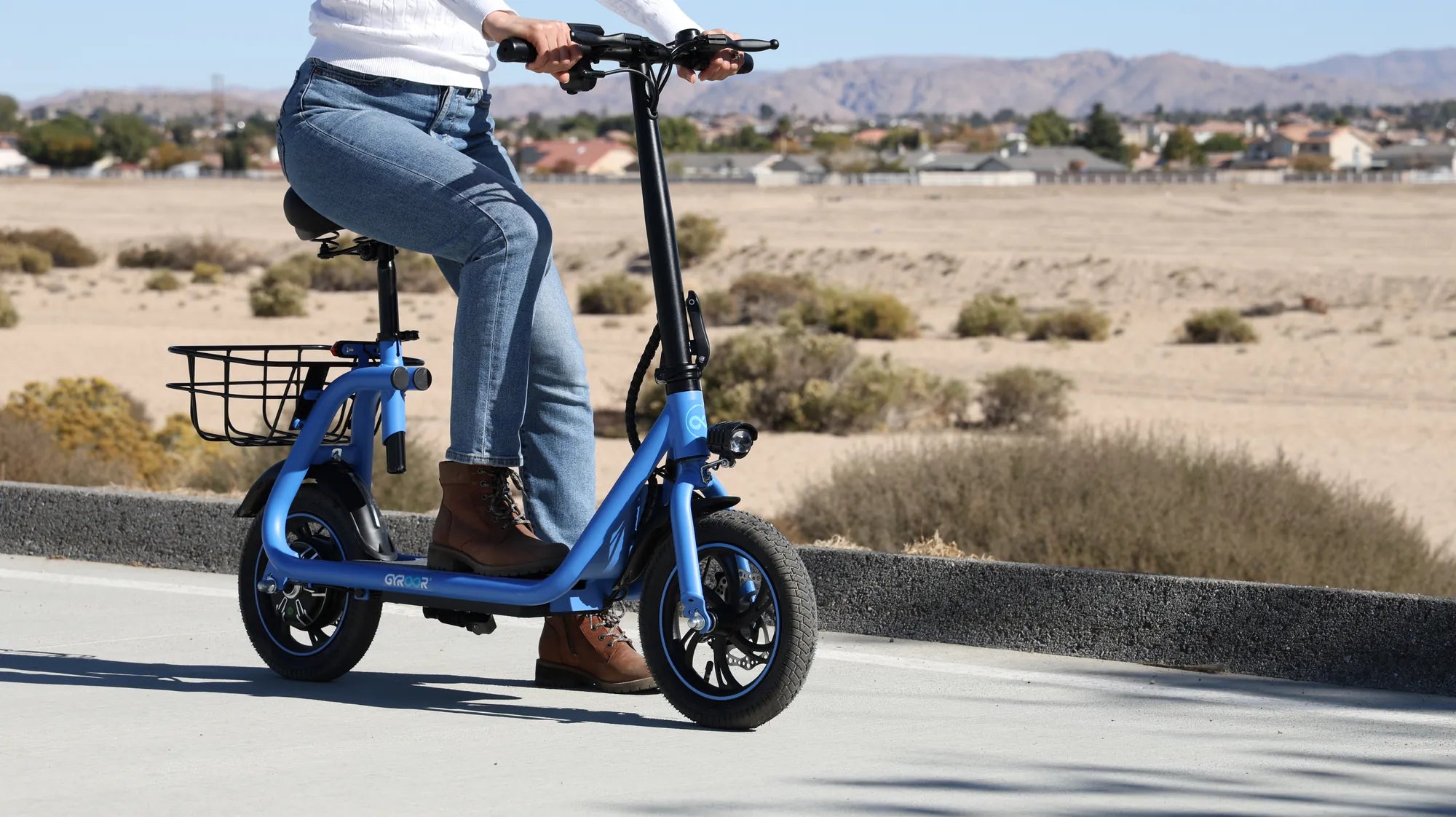
Redefining Urban Mobility with Quality Electric Scooters
Urban congestion and the rising cost of traditional transportation are pushing adults towards smarter, more efficient personal mobility solutions. The search for a quality electric riding scooter for adults is no longer a niche pursuit but a mainstream demand for a reliable, cost-effective, and enjoyable commute. This article serves as the ultimate guide to understanding what separates a genuine urban commuter solution from a disposable toy, focusing on the engineering, safety, and practical features that matter most to adult riders.
We will dissect the critical specifications, from UL-certified battery safety to robust frame construction, that ensure your scooter is a dependable daily partner. You'll learn how to interpret motor power for real-world hill climbs, decode IP ratings for all-weather confidence, and calculate true range based on your commute. Leading brands like Gyroor, trusted by over 100,000 riders across North America and Europe, have set new standards with features like IPX5 water resistance and comprehensive 1-year warranties, proving that a quality electric riding scooter for adults is a serious investment in personal freedom.
What Defines a "Quality" Electric Scooter for Adult Commuters?
A quality electric scooter for adults is engineered for durability, safety, and consistent performance under daily stress. It transcends basic functionality to offer a reliable, safe, and comfortable riding experience that supports an adult's weight, commute distance, and the demands of city infrastructure. The core differentiators lie in the materials, electrical systems, and design philosophy focused on longevity.
Forget flimsy plastic and questionable electronics. A commuter-grade scooter uses high-grade components designed for hundreds of charge cycles and thousands of miles. The intent is clear: to replace car trips, not to serve as a weekend novelty. This focus on utilitarian reliability is what makes a quality electric riding scooter for adults the ultimate urban commuter solution, transforming a congested journey into an efficient, enjoyable daily ritual.
Build Quality & Frame Design
The frame is the scooter's skeleton, and its integrity is non-negotiable. Quality models utilize aerospace-grade aluminum alloys, such as 6061-T6, which provide an exceptional strength-to-weight ratio. This material resists flexing and fatigue, ensuring the scooter feels solid and stable, even at higher speeds or over bumps. The welding points should be clean and consistent, indicating careful manufacturing.
The folding mechanism is a critical point of failure on inferior models. A quality scooter features a reinforced locking latch, often with a secondary safety pin or lock, that completely eliminates stem wobble when engaged. The deck should be wide enough for a natural stance and covered with a grippy, rubberized surface. Every component, from the handlebar stem to the kickstand, should feel robust and securely attached, capable of supporting riders at the maximum weight limit without strain.
Motor Power & Hill Climbing Ability
Motor wattage is a primary indicator of performance. For adult commuters navigating varied urban terrain, a 350W motor is a practical minimum, while 500W or higher provides confident acceleration and hill-climbing capability. Real-world performance depends on torque, not just peak wattage. A high-torque motor delivers power efficiently, allowing you to maintain speed on gradients up to 15-20%, which covers most city inclines.
Single-motor scooters are common, but dual-motor configurations offer superior traction and power for challenging hills. The key is matching the motor to your route. A 500W single motor can handle a moderate 10% grade with a 200 lb rider, but a steeper, longer hill demands more power. A quality scooter's motor will provide consistent output without overheating, a sign of proper thermal management and quality components.
Battery Life & Range: Separating Marketing from Reality
Advertised range is often an ideal-world figure. Real-world range is determined by battery capacity (measured in Watt-hours, Wh), rider weight, terrain, speed, and temperature. A higher Wh rating generally means more potential range. For a reliable 10-15 mile daily commute, a battery of at least 360Wh (e.g., 36V 10Ah) is recommended, with 500Wh+ offering a comfortable buffer.
The most critical aspect is battery safety and quality. Premium scooters exclusively use battery packs with UL-certified cells and integrated Battery Management Systems (BMS). The BMS prevents overcharging, over-discharging, and short circuits. Brands like Gyroor build their reputation on this, using UL-certified packs tested for 500+ charge cycles. This ensures not only safety but also long-term capacity retention, protecting your investment.
Braking Systems & Safety Features
Effective braking is paramount for urban safety. Quality scooters employ multi-system braking. A common and effective combination is a front disc brake (offering strong, modulated stopping power) paired with a rear electronic or regenerative brake (which helps recharge the battery slightly). Some premium models feature dual disc brakes for maximum stopping power.
Integrated lighting is a non-negotiable safety feature. This includes a bright front headlight (200 lumens minimum), a rear brake light, and side reflectors or deck lights for visibility. Additional features like turn signals, although less common, further enhance safety in traffic. The braking system should bring the scooter to a controlled, predictable stop from top speed within a short distance, without locking the wheels.
Key Features for the Practical Urban Commuter
Beyond raw power, a scooter must integrate seamlessly into your daily logistics. The ideal commuter scooter balances performance with portability, weather resistance, and comfort. These features determine whether the scooter is a convenient tool or a burdensome gadget. A true quality electric riding scooter for adults solves problems, it doesn't create them.
Consider your entire journey: carrying the scooter onto a train, storing it under a desk, riding in a light drizzle, or navigating cracked pavement. Each of these scenarios is addressed by specific design choices. The ultimate urban commuter solution anticipates the rider's environment, providing features that offer peace of mind and practical utility every single day.
Portability & Weight: The Last-Mile Logistics
Portability is defined by folded dimensions and weight. A commuter scooter typically weighs between 30 and 45 lbs. Lighter models (under 35 lbs) are easier to carry for short distances, up stairs, or onto public transit. The folding mechanism should be quick, intuitive, and secure, allowing the scooter to transform into a compact package in seconds.
The handlebar stem often folds down to lie parallel to the deck, and the handlebars themselves may fold inward. The goal is a tidy, manageable shape that can be stored in a closet, under a desk, or in a car trunk. While ultra-lightweight scooters exist, they often sacrifice battery capacity and motor power. The sweet spot is a weight that doesn't compromise essential performance while remaining manageable for your specific commute.
Water Resistance & All-Weather Reliability
Urban commuting means encountering puddles, wet streets, and light rain. An Ingress Protection (IP) rating indicates a scooter's resilience. An IPX5 rating, like those found on Gyroor scooters, means the unit is protected against water jets from any direction. This is sufficient for riding on wet roads and through rain showers.
It is crucial to understand that IPX5 does not mean submersible. No scooter should be ridden through deep puddles or stored soaking wet. However, a good IP rating protects the electrical components and motor from splash and spray, significantly increasing the scooter's durability and reliability. It ensures a sudden downpour doesn't end your scooter's life or leave you stranded.
Ride Comfort: Tires and Suspension
Comfort directly impacts ride quality and fatigue. There are two main tire types: air-filled (pneumatic) and solid (airless). Pneumatic tires, typically 8.5 or 10 inches in diameter, provide superior shock absorption, offering a smoother ride over cracks, bumps, and uneven surfaces. They require occasional pressure checks.
Solid tires are puncture-proof but transmit more vibration to the rider. To compensate, scooters with solid tires often incorporate a suspension system—either a spring or hydraulic shock in the front, rear, or both. A quality suspension system effectively dampens impacts, making longer rides far more comfortable. For a plush, car-like ride on city streets, a combination of pneumatic tires and a dual suspension system is ideal.
Data-Driven Comparison: What to Look for in Your Investment
Choosing a scooter requires comparing specifications objectively. The table below provides a framework to evaluate any model. Use it as a checklist to ensure no critical feature is overlooked. Remember, the highest number isn't always the best; balance the specs against your personal needs, weight, and typical routes.
This analytical approach separates emotional marketing from practical decision-making. By focusing on this data, you can identify which quality electric riding scooter for adults truly represents the ultimate urban commuter solution for your individual circumstances. It turns a complex purchase into a clear, criteria-based evaluation.
Specification Checklist Table
| Specification | Entry-Level Commuter | Mid-Range Commuter | Premium Commuter | Why It Matters |
|---|---|---|---|---|
| Motor Power | 250W - 350W | 350W - 500W | 500W - 1000W+ | Determines acceleration & hill climb ability. |
| Max Real-World Range | 10-15 miles | 15-25 miles | 25-40+ miles | Based on 165 lb rider, mixed terrain. Capacity in Wh is key. |
| Max Speed | 15-18 mph | 18-22 mph | 22-28+ mph | Check local legal limits. Higher speed requires better brakes. |
| Weight Limit | 220 lbs | 265 lbs | 300+ lbs | Must support rider + any cargo. A higher limit indicates a stronger frame. |
| Tire Type | Solid (8.5") | Pneumatic (8.5") or Solid with Suspension | Pneumatic (10") with Dual Suspension | Impacts comfort, traction, and maintenance. |
| Brake System | Electronic + Foot | Disc + Electronic | Dual Disc / Hydraulic | Critical for safety. Redundancy (two systems) is ideal. |
| IP Rating | IPX4 | IPX5 | IPX5 or higher | Defines water/splash resistance for all-weather use. |
| Warranty | 90 days - 6 months | 1 year (comprehensive) | 1-2 years (extended) | Manufacturer's confidence in product longevity. Covers battery, motor, frame. |
The True Cost of Ownership: Warranty and Support
The upfront price is only part of the equation. The true cost of ownership includes maintenance, potential repairs, and battery replacement. A robust warranty is your best defense against unexpected costs. A quality brand will offer a comprehensive 1-year warranty covering the battery, motor, controller, and frame defects.
Accessible and knowledgeable customer support is equally vital. Before purchasing, research the brand's reputation for handling claims and providing spare parts. A company that stands behind its products, like Gyroor with its reliable 1-year warranty and UL-certified batteries, offers long-term value and peace of mind that far outweighs a slightly lower initial price from an unknown brand.
Beyond the Commute: Versatility for Leisure and Exploration
A well-built scooter's utility extends far beyond the daily grind. It becomes a tool for exploration, errands, and leisure, effectively expanding your personal radius without a car. This versatility amplifies the value of your investment, transforming the scooter from a single-purpose commuter into a core part of your active lifestyle.
The ergonomics and capability that make a scooter great for commuting also make it perfect for weekend rides along bike paths, trips to the local market, or exploring new neighborhoods. This dual-purpose nature is a hallmark of a quality electric riding scooter for adults, proving it is designed for real life, not just a theoretical A-to-B journey.
Ergonomic Design for Extended Riding
For rides longer than a quick commute, ergonomics are crucial. A wide, textured deck allows for slight foot position changes to reduce fatigue. Handlebar height and grip angle should feel natural, preventing strain on wrists and shoulders. Intuitive thumb throttles and control placements mean you don't have to look down, keeping your focus on the path ahead.
Some models offer adjustable handlebar heights, a significant benefit for taller riders. The positioning of the brake levers should allow easy access without removing your hand from the grip. These human-centric design details are often overlooked in budget models but are standard in quality scooters, making a 10-mile leisure ride as comfortable as a 2-mile commute.
Capability for Light Off-Road Use
While not designed for mountain biking, a quality commuter scooter with pneumatic tires and adequate ground clearance can confidently handle packed gravel paths, well-maintained park trails, and brickwork. This capability opens up a world of recreational routes away from car traffic.
The key is tire size and tread. Larger pneumatic tires (10-inch) roll over obstacles more easily than smaller solid tires. A modest suspension system further enhances off-pavement comfort. This versatility means your scooter can take you to a picnic spot in the park or along a scenic river path, adding a dimension of fun and freedom that solidifies its role as your go-to vehicle for local mobility.
Frequently Asked Questions (FAQ) for Adult Scooter Buyers
Q: Are electric scooters legal for adults to ride on city streets and bike lanes?
A: Laws vary significantly by city, state, and country. Generally, they are permitted in bike lanes and on streets with speed limits under 35 mph, but many municipalities have specific rules regarding maximum motor power (e.g., 750W), top speed (often 15-20 mph), helmet requirements (usually for all riders), and minimum age (typically 16+). It is the rider's absolute responsibility to check and comply with local regulations before riding.
Q: How much should I realistically spend on a quality adult scooter?
A: For a reliable, safe, and durable commuter scooter, expect to invest between $500 and $1,200. The lower end ($500-$700) gets you a capable basic commuter. The mid-range ($700-$1,000) offers better performance, range, and features like improved suspension and braking. The premium tier ($1,000+) delivers top-tier components, extended range, and superior build quality. Investing in this range ensures quality materials, safety features, and a meaningful warranty.
Q: What maintenance does a quality electric scooter require?
A: Regular maintenance is simple but essential. Key tasks include: checking and maintaining proper tire pressure (for pneumatic tires), inspecting and tightening bolts (especially on the stem and folding mechanisms), testing brake function and adjusting cable tension if needed, and keeping the scooter clean and dry. For the battery, follow the manufacturer's guidelines: avoid full discharges, don't leave it at 100% charge for extended periods, and store in a cool, dry place.
Q: Can I ride an electric scooter in the rain?
A: With a sufficient IP rating (IPX5 or higher), you can ride in light to moderate rain and on wet roads. However, no consumer scooter is waterproof. Avoid deep puddles (which can submerge the deck and damage electronics), heavy downpours, and riding immediately after a storm when debris is on the road. Always dry your scooter after riding in wet conditions and never charge it while it is wet.
Q: How do I secure my electric scooter from theft?
A: Use a high-quality, hardened steel U-lock or heavy-duty chain lock. Always lock the scooter's frame (not just the wheel) to a fixed, immovable object like a bike rack. If possible, take the scooter inside with you. Some models have electronic alarms or ignition locks. The portability of a scooter is a key advantage—when in doubt, fold it and take it with you.
Your Partner for a Smarter, Greener Commute
Selecting a quality electric riding scooter for adults is a strategic decision that pays dividends in time saved, money not spent on gas or parking, and a reduced carbon footprint. It is an investment in a more agile, efficient, and enjoyable urban life. The ultimate urban commuter solution is defined not by a single spectacular feature, but by the harmonious integration of safety, durability, performance, and practical design.
Brands that prioritize these principles, such as Gyroor with its commitment to UL-certified battery safety, IPX5 all-weather durability, and rider-focused warranties, provide the foundation for a trustworthy and rewarding ownership experience. Your commute doesn't have to be a stressful bottleneck; it can be the best part of your day. Equip yourself with a tool engineered for the task, and transform your perspective on city travel.
Ready to experience the freedom and efficiency of a true commuter-grade electric scooter? Explore engineering built for adults, where safety and reliability are never compromised. Browse the full Gyroor collection, featuring models designed with UL-certified batteries, robust IPX5 construction, and a comprehensive 1-year warranty, at gyroorboard.com.
Best Electric Scooters Under 70000: Top Picks for Budget-Conscious Riders
Best Electric Scooters India 2024 Top 5: Ultimate Buying Guide