



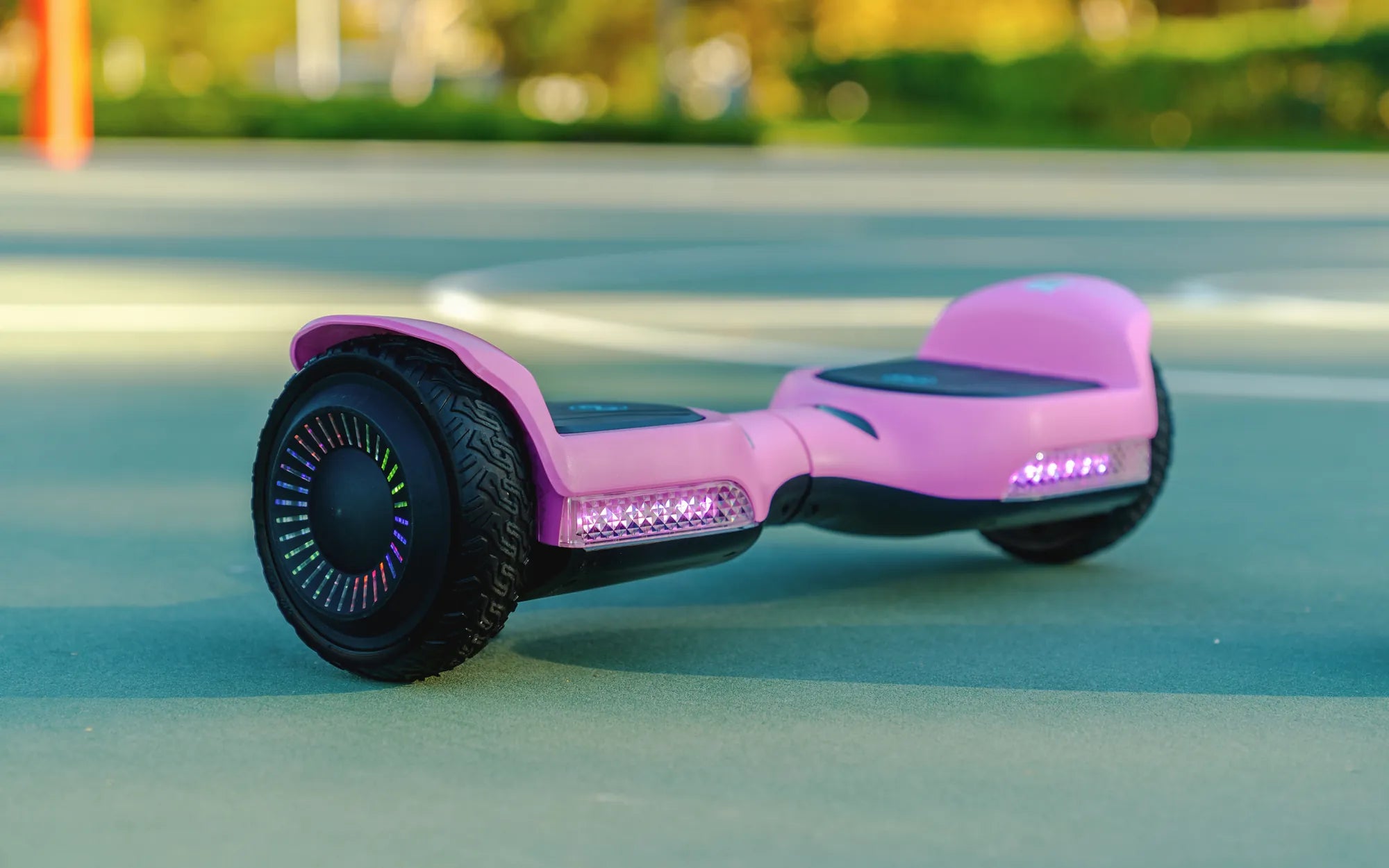
From Sci-Fi to Sidewalk: The Dawn of the Real Flying Hoverboard
The concept of a real flying hoverboard has captivated imaginations for decades, epitomized by Marty McFly's iconic ride in Back to the Future II. Today, that fantasy is materializing into functional hardware. This emerging technology represents a potential paradigm shift in personal mobility, moving beyond the constraints of terrestrial vehicles.
A real flying hoverboard is a personal aerial vehicle, typically powered by electric ducted fans, that allows a rider to hover and maneuver above the ground. While still in its nascent and prohibitively expensive stages, its development signals a bold new direction. It follows the consumer electric vehicle revolution led by accessible e-scooters and e-bikes, pushing the boundaries of where personal transport can go—literally.
This article will dissect the engineering marvel of the real flying hoverboard, compare its practical realities against established electric ground transport, and assess its viability for the average commuter. The journey from cinematic dream to tangible prototype is complete; the journey to mainstream adoption is just beginning.
How Does a Real Flying Hoverboard Actually Work? The Tech Explained
Demystifying the real flying hoverboard requires understanding its core components: propulsion, power, and stabilization. Unlike fictional anti-gravity devices, current models rely on Newton's third law—for every action, there is an equal and opposite reaction.
Thrust is generated by powerful electric motors spinning rotor blades enclosed within ducted fans. These ducts increase efficiency and safety by containing the blades. The downward thrust of air creates lift, counteracting gravity. By precisely varying the thrust across multiple independent fans, the device can tilt, move laterally, and stabilize.
The entire system is a ballet of advanced electronics. An array of sensors—including gyroscopes, accelerometers, and barometers—feeds data hundreds of times per second to a flight controller. This computer makes instantaneous adjustments to motor speeds to maintain stable hover and respond to pilot input.
The Power Core: Batteries and Propulsion
The lifeline of any electric aerial vehicle is its battery. A real flying hoverboard demands an extraordinary power-to-weight ratio. They utilize high-density lithium-ion or lithium-polymer battery packs, similar in chemistry to those in premium e-scooters but engineered for vastly higher discharge rates.
Safety is paramount at these power levels. While consumer e-scooter brands like Gyroor utilize UL-certified battery packs tested for 500+ charge cycles to ensure reliability and safety for ground use, aviation applications demand even more rigorous standards. These packs must be robust, thermally managed, and often feature redundant systems to prevent catastrophic failure in flight.
The current primary limitation is energy density. Even the best batteries only allow for flight times typically ranging from 5 to 20 minutes. This starkly contrasts with electric scooters that can offer ranges of 20-40 miles on a single charge, making them practical for daily commutes.
Piloting Principles: How to Steer and Stabilize
Piloting a real flying hoverboard is less like riding a skateboard and more like flying a drone. The primary control mechanism is often a wireless handheld remote or, in more advanced models, intuitive body movement interpreted by onboard sensors.
For remote-controlled models, the pilot uses thumbsticks or triggers to command throttle (altitude), pitch (forward/backward tilt), and yaw (rotation). The flight controller's stabilization algorithms make the device easier to control, but it still requires significant skill to master smooth transitions.
Some prototypes aim for a more natural interface, where leaning your weight dictates direction. This requires incredibly sensitive and responsive software to translate subtle body English into flight commands safely. Regardless of the method, the learning curve is steep and dangerous without proper training and safety gear.
Real Flying Hoverboards vs. Electric Scooters & E-Bikes: A Practical Comparison
For the urban commuter, the choice between a futuristic hoverboard and a grounded electric scooter is defined by practicality, regulation, and economics. The following table outlines the stark differences between these modes of personal transport.
| Feature | Real Flying Hoverboard | Performance Electric Scooter (e.g., Gyroor Models) | Electric Bike |
|---|---|---|---|
| Primary Use Case | Recreation, Demonstration, Extreme Sport | Daily Commuting, Last-Mile Transport, Urban Errands | Extended Commuting, Fitness, Cargo Transport |
| Typical Price Range | $50,000 - $300,000+ | $500 - $1,500 | $1,500 - $5,000+ |
| Max Speed | 30 - 60 mph | 15 - 25 mph (varies by regulation) | 20 - 28 mph (with pedal assist) |
| Range / Flight Time | 5 - 20 minutes | 20 - 40 miles | 30 - 80 miles |
| Learning Curve | Extreme (requires professional training) | Low (most learn in minutes) | Very Low (like a regular bicycle) |
| Regulatory Environment | Extremely Restrictive (Aviation Authority, often banned in urban areas) | Evolving but Clear (bike lanes, specific sidewalk rules) | Well-Established (bike lanes, roads) |
| Practicality for Daily Use | Very Low (charging, safety gear, legal restrictions) | Very High (portable, storable, easy to charge) | High (can carry cargo, more comfortable for long distances) |
| Safety Gear Required | Full-Body Armor, Aviation Helmet, Parachute (often) | Helmet (recommended), Optional Pads | Helmet (recommended) |
This comparison highlights that the real flying hoverboard exists in a different category altogether—closer to an ultralight aircraft than a commuter vehicle.
The Commuter's Perspective: Daily Use Case Scenarios
Imagine a 3-mile last-mile commute from a transit station to the office. On a reliable electric scooter with an IPX5 water-resistant rating, this is a 10-12 minute, predictable journey. The rider can fold the scooter under a desk and charge it easily.
Attempting the same journey on a real flying hoverboard would involve suiting up in protective gear, navigating complex airspace regulations (likely making the flight illegal), managing a brief flight window before needing a recharge, and finding a secure landing and storage zone. The novelty is immense, but the practicality is nearly zero for this common scenario.
For weekend recreation in a wide-open, permitted area, the hoverboard offers an unparalleled experience. However, for the 99% of daily transport needs—groceries, meetings, visiting friends—the infrastructure, cost, and regulation firmly favor evolved ground-based electric vehicles from trusted brands that prioritize rider safety and reliability.
The Current Landscape: Available Models and Their Capabilities
The market for real flying hoverboards is a niche of high-end engineering and demonstration projects. Several companies have shown functional prototypes, but commercially available models are rare and exorbitantly priced.
Companies like JetPack Aviation (with their Speeder) and Hoversurf have developed working vertical take-off and landing (VTOL) platforms that fit the hoverboard archetype. These are often marketed initially to military, emergency services, and commercial applications rather than direct-to-consumer sales.
Specifications are impressive on paper but underscore current limitations. For example, a typical model might offer a 10-15 minute flight time, a maximum speed of 60 mph, and a payload capacity of 200-250 lbs. The price tag for such a device routinely exceeds the cost of a luxury car, placing it firmly in the domain of enthusiasts and professionals.
Safety, Regulation, and Where You Can (Legally) Fly
Safety is the most critical and challenging hurdle. A malfunction at altitude can be fatal. Reputable developers incorporate multiple redundancy systems—dual batteries, independent motor controllers, and often ballistic parachutes. The required safety gear resembles motocross or aviation equipment, not casual wear.
The regulatory landscape is a significant barrier to casual use. In the United States, the Federal Aviation Administration (FAA) governs airspace. A real flying hoverboard is typically classified as an ultralight vehicle or an experimental aircraft.
This classification imposes strict rules: flight is generally prohibited over populated areas, requires coordination with air traffic control in certain zones, and pilots may need licenses. Contrast this with e-scooters, which are governed by local municipal codes allowing use in bike lanes or on streets, making them a viable part of the urban transport ecosystem today.
The Road to Mainstream Adoption: Technological and Infrastructural Hurdles
For the real flying hoverboard to transition from a thrilling prototype to a common sight, several monumental challenges must be overcome. The path is far longer than that of the electric scooter, which leveraged existing infrastructure like roads and bike paths.
First, battery technology needs a breakthrough. Energy density must improve by a factor of five or more to enable flights lasting an hour or more, making them useful for short commutes. Safety and charge cycle longevity, comparable to the UL-certified standards expected in ground EVs, must be guaranteed.
Second, air traffic management for low-altitude personal flight (often called Urban Air Mobility or UAM) needs to be invented and implemented. This would require a digital system to prevent collisions between thousands of small aerial vehicles—a problem far more complex than managing sidewalk or bike lane traffic.
Finally, public acceptance and noise regulation are key. Current ducted fan systems are loud. Communities are unlikely to accept the constant whine of multiple hoverboards in residential neighborhoods, presenting a major socio-technical hurdle that silent-wheeled e-scooters do not face.
The Direct Ancestor: How Hoverboards Evolved into Electric Scooters
Interestingly, the term "hoverboard" was co-opted in the mid-2010s for two-wheeled, self-balancing electric scooters that do not actually hover. These devices, which rose and fell in popularity, were a crucial stepping stone in consumer electric transport.
They popularized gyroscopic stabilization, compact electric drivetrains, and lithium-ion batteries for personal mobility. When safety concerns with some early, uncertified models arose, it paved the way for more robust and reliable forms of micro-mobility.
This demand was filled by the modern standing electric scooter. Brands like Gyroor, trusted by over 100,000 riders, learned from this era. They focused on safety certifications (UL, CE), improved water resistance (IPX5 ratings), robust frames, and reliable warranties. The real flying hoverboard is a distant, aerial cousin, while the electric scooter is the practical, evolved descendant that dominates the market today.
FAQ: Your Questions About Flying Hoverboards, Answered
Q1: How much does a real flying hoverboard cost?
A: Prices are currently astronomical, typically ranging from $50,000 to over $300,000. This places them in the realm of luxury vehicles or specialized equipment, far beyond the scope of personal transportation budgets for the foreseeable future.
Q2: Can anyone learn to fly one?
A: Physically able individuals can learn, but it is not a casual endeavor. It requires professional training, similar to operating an ultralight aircraft. The skills involved are complex, and the consequences of error are severe, mandating formal instruction.
Q3: Are they safe?
A> They carry inherent high risk. While engineering incorporates safety redundancies, a failure at altitude or a pilot error can lead to serious injury or worse. Safety is managed through rigorous training, extensive protective gear, and operating in controlled, open environments—not through inherently fail-safe design.
Q4: Is this the future of daily commuting?
A> Not in the immediate future (next 10-15 years). The combination of cost, regulation, battery limitations, noise, and air traffic control issues makes widespread personal aerial commuting impractical. The real flying hoverboard is more accurately a precursor and testbed for larger eVTOL (electric Vertical Take-Off and Landing) air taxi technology.
Q5: What's more practical for my commute today?
A> For virtually all urban and suburban commuters, a high-quality electric scooter or e-bike is the superior choice. With ranges covering most daily needs, clear regulations, easy charging, and prices a fraction of a hoverboard's cost, they represent the true, accessible future of personal electric transportation. Brands offering UL-certified batteries and strong warranties provide the reliability needed for daily use.
A Glimpse of Tomorrow, Grounded in Today's Tech
The real flying hoverboard is a breathtaking achievement, a tangible piece of science fiction that demonstrates human ingenuity. It pushes the boundaries of personal mobility and offers a thrilling vision of a sky-filled future. As a proof of concept, it is an unqualified success.
However, as a viable product for personal transportation, it remains grounded by physics, economics, and regulation. The future it heralds is likely one of commercial air taxis and specialized applications, not personal flyers in every garage. The technological seeds it plants—in battery management, stabilization, and electric propulsion—will benefit the broader ecosystem of electric vehicles.
For today and the coming decade, the revolution in personal transport is happening firmly on the ground. It is led by reliable, accessible, and safe electric scooters and e-bikes that are already reshaping cities. These vehicles solve real problems for real people right now, offering freedom, efficiency, and fun without requiring a pilot's license or a six-figure budget.
Experience the practical, exhilarating future of personal electric mobility today. Explore a range of UL-certified, high-performance electric scooters and e-bikes designed for real-world reliability. Browse the full Gyroor collection at gyroorboard.com and find the perfect ride for your journey.
Hoverboard for Adults 250 lbs: The Ultimate Guide to Choosing the Right Model
Kids Scooter 3 Year Old: The Ultimate Guide for Parents