



Introduction: Why Safety is Non-Negotiable in Kids' Hoverboards
Choosing a hoverboard for your child involves more than picking a color. It's a decision that directly impacts their physical safety. Historical incidents involving battery fires and injuries have rightfully made parents cautious. This guide cuts through the marketing to provide a factual, engineering-based framework for your choice.
The core mission is to identify the safest hoverboard for kids by focusing on independent certifications and robust design. We will analyze the critical safety benchmarks that separate secure products from potential hazards. This approach empowers you to make an informed decision based on evidence, not just claims.
Brands that prioritize safety, like Gyroor, build their reputation on certified components and transparent engineering. With over 100,000 riders trusting their products, such brands demonstrate that safety and fun are not mutually exclusive. This guide will detail the specific features that contribute to this reliability.
You will learn to interpret safety certifications, evaluate physical design elements, and implement essential riding protocols. The goal is to provide your child with a toy that encourages active play while giving you genuine peace of mind. Let's begin with the single most important safety standard in the industry.
The Gold Standard of Safety: Understanding UL 2272 Certification
UL 2272 certification is the definitive benchmark for hoverboard electrical and fire safety. Developed by Underwriters Laboratories, a global safety science leader, this standard was created specifically in response to safety concerns with self-balancing scooters. A hoverboard without this certification presents an unacceptable risk.
The certification process involves over 100 rigorous tests on the complete system. Engineers evaluate the battery pack, charger, and motor drive electronics under extreme conditions. These tests simulate mechanical abuse, overcharging, short circuits, and abnormal operation to ensure failure modes are controlled and non-hazardous.
For the battery, UL 2272 mandates stringent criteria. The cells themselves must be from a certified source, and the entire battery management system (BMS) is tested. The BMS monitors voltage, temperature, and current, preventing overcharge, over-discharge, and thermal runaway—the primary cause of battery fires.
When you verify a hoverboard is UL 2272 certified, you are confirming its electrical system has passed the highest level of safety scrutiny. This should be the first and non-negotiable filter in your search for the safest hoverboard for kids. It is the foundation upon which all other safety features are built.
Beyond the Certification: 5 Key Design Features for Child Safety
While UL 2272 addresses electrical safety, physical design determines operational safety and stability. These five features work in tandem with certification to create a secure riding experience tailored for younger, less-experienced riders.
Stable Wheel Design and Deck Geometry
Wheel size and deck design fundamentally affect balance. Hoverboards designed for kids often feature 6.5-inch or 8.5-inch wheels. Larger wheels (8.5-inch) provide better stability over cracks and minor pavement imperfections, reducing the chance of a sudden stop that could throw the rider.
The deck's width and texture are equally critical. A wider deck offers a more stable platform for a child's feet. A textured, rubberized surface provides essential grip, preventing feet from slipping during acceleration or turns. The deck should also be low to the ground to lower the center of gravity, enhancing control.
Responsive and Smooth Acceleration/Braking
Jerky starts and abrupt stops are a leading cause of falls for beginners. A quality hoverboard uses sensor-driven motors that provide progressive acceleration. This means the board responds smoothly to the rider's lean, rather than lurching forward. Look for models advertised with a "beginner mode" that caps speed and softens response.
The braking system should be equally gradual. Regenerative braking, which slows the board by using the motors as generators, is standard. However, its calibration is key. It should engage predictably as the rider shifts their weight backward, allowing for controlled deceleration without throwing the rider off balance.
Durable, Shock-Absorbing Construction
A child's hoverboard will encounter curbs, bumps, and the occasional tip-over. The frame material must absorb these impacts. High-quality models use magnesium alloy or reinforced ABS plastic frames. Magnesium alloy is particularly advantageous for its excellent strength-to-weight ratio and vibration-dampening properties.
This durable construction protects the internal components—the battery, BMS, and gyroscope sensors—from damage during impacts. A compromised internal component can lead to erratic behavior or electrical faults, even in a certified board. Robust external construction is the first line of defense for the sensitive electronics inside.
Effective LED Lighting for Visibility
Safety extends to being seen. Integrated LED lighting is a non-negotiable feature for any hoverboard a child will use. Front white lights and rear red lights allow the rider to see the path ahead and make themselves visible to others from behind, much like a bicycle.
Wheel rim lights or under-glow LEDs provide 360-degree visibility, crucial at dawn, dusk, or in shaded areas. This makes the child conspicuous to cyclists, pedestrians, and drivers, significantly reducing the risk of a collision. Lighting should be bright, auto-on, and powered by the main battery for reliability.
IPX5 Water-Resistance for Real-World Use
Kids ride through puddles, on dewy grass, and may not avoid wet pavement. An IPX5 water-resistance rating means the hoverboard's casing can withstand water jets from any direction. This protects the electrical systems from short circuits caused by moisture ingress, a common failure point in non-protected units.
This rating, a standard feature in Gyroor's design philosophy, directly contributes to long-term safety and durability. It ensures that everyday use doesn't gradually degrade the board's internal safety systems. It is a practical feature that acknowledges how children actually interact with their toys.
Gyroor's Engineering Commitment: How Design Prioritizes Your Child's Safety
Gyroor's product development philosophy aligns directly with the safety parameters outlined above. Their approach is to engineer hazards out of the product from the beginning, rather than adding features as an afterthought. This results in a cohesive safety system.
At the core of every Gyroor hoverboard is a UL 2272 certified battery pack. This isn't just a claim; it's a verifiable certification for the complete system. The battery management system is programmed with conservative thresholds to maximize cell longevity and prevent stress, undergoing 500+ cycle testing to ensure reliability over time.
The IPX5 water-resistant rating is applied across their hoverboard lineup. This is a deliberate design choice that involves sealed compartments, gaskets, and protected port covers. It ensures that the UL-certified electrical system remains protected from the environmental challenges of active play.
Furthermore, Gyroor backs this engineering with a clear 1-year warranty and US-based customer support. This provides a direct channel for safety-related inquiries and ensures that any potential issue can be addressed promptly by experts familiar with the product's design. It transforms safety from a static feature into an ongoing commitment.
Practical Parental Guidance: Rules, Gear, and Supervision
The safest hoverboard for kids is only one component of a safe riding experience. Parental oversight and established protocols are equally vital. This section outlines the non-negotiable practices that complement a well-engineered product.
Essential Protective Gear Checklist
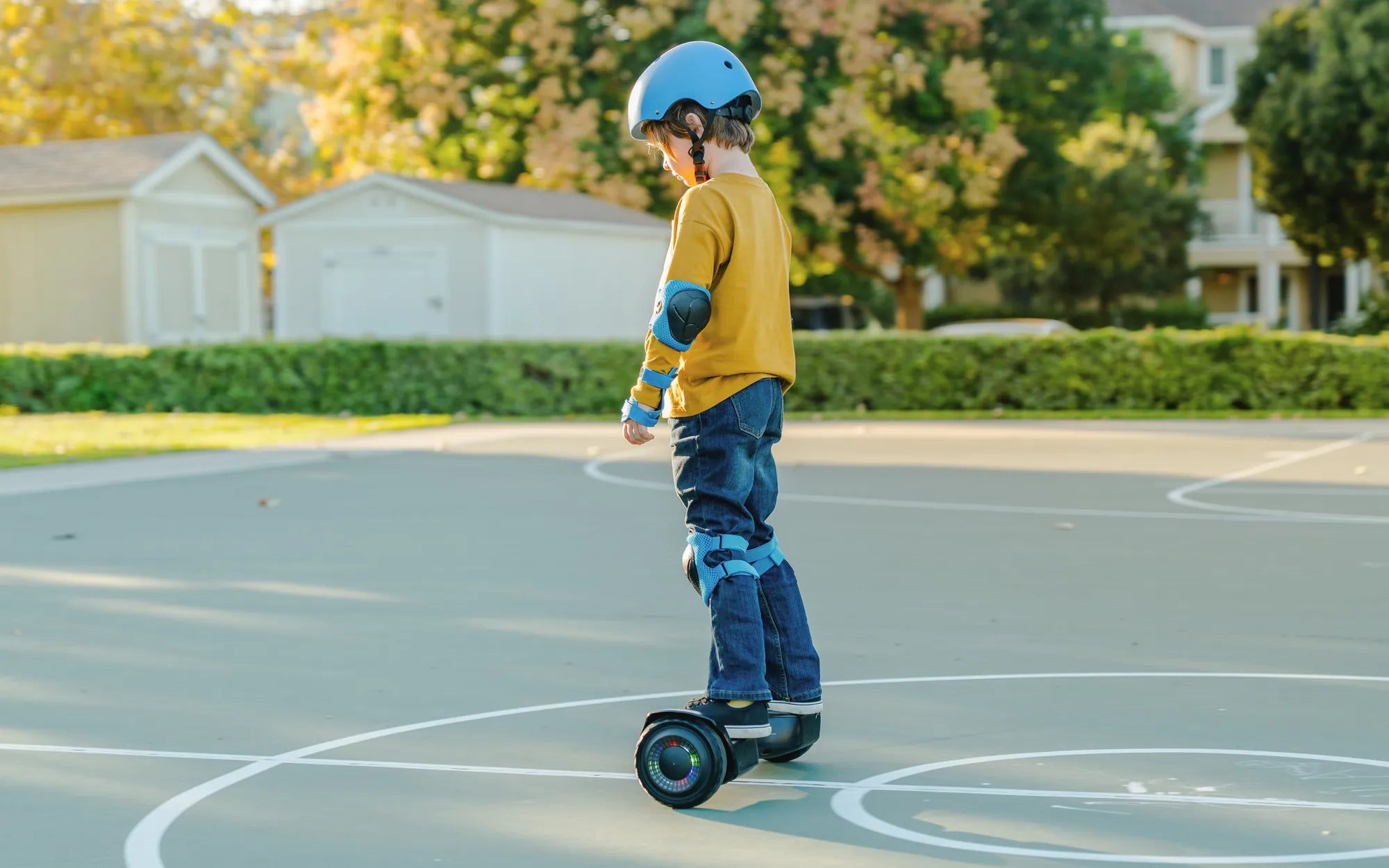
Full protective gear is mandatory, not optional. This set forms a basic safety system for the rider.
- Helmet (CPSC Certified): A properly fitted bicycle or multi-sport helmet is essential for head protection. Ensure it sits level on the head and the strap is snug.
- Wrist Guards: The most common injuries from hoverboard falls are wrist fractures. Guards with splints can prevent these serious injuries.
- Knee and Elbow Pads: These protect joints from abrasions and impacts during falls. Look for hard plastic caps with comfortable foam backing.
Make wearing this gear an unbreakable rule before the board is ever turned on. Consistency from the first ride establishes it as part of the fun.
Choosing the Right Riding Environment
Location is a critical safety factor. The ideal learning and primary riding zone is a smooth, flat, paved surface away from traffic.
Empty tennis courts, basketball courts, or smooth driveways are perfect. Strictly avoid public roads, streets with vehicle traffic, areas near swimming pools, or steep hills. Even small slopes can cause a beginner to lose control as speed increases unintentionally.
Wet surfaces, including wet pavement, grass, and gravel, drastically reduce tire traction and increase the risk of slips and falls. The IPX5 rating protects the board from water damage, but it does not make the riding surface safe.
Establishing House Rules and Supervision
Clear, simple rules set boundaries for safe use. Key rules should include: always wearing full gear; riding only in pre-approved areas; no passengers (hoverboards are designed for one rider); a strict speed limit for beginners; and a ban on night riding unless under direct, close supervision with lights on.
Active adult supervision is crucial, especially during the first 5-10 hours of riding. A parent or guardian should be present to help the child learn balance, practice dismounting safely, and enforce the rules. This supervision ensures good habits are formed from the start.
Comparison: Safety-Centric Hoverboard Features
The table below contrasts essential safety features, highlighting how certified, well-designed models differ from basic or non-compliant options. This data-driven comparison helps visualize the safety gap.
| Safety Feature | Premium/Safe Choice (e.g., Gyroor) | Basic/Non-Compliant Risk |
|---|---|---|
| Electrical Certification | Full UL 2272 System Certification | No certification or falsified marks |
| Battery Management | Advanced BMS with temp control | Simple or no BMS; cell mismatch |
| Water Resistance | IPX5 Rating (protected jets of water) | No rating; exposed ports and seams |
| Frame Material | Magnesium Alloy (strong, dampening) | Thin, brittle plastic |
| Acceleration Control | Beginner Mode, Smooth Curve | Aggressive, jerky response |
| Lighting System | Front, Rear, & Wheel LEDs (Auto-on) | No lights or dim, single-color LEDs |
| Warranty & Support | 1-Year Comprehensive, US-Based | 30 days or less, no reliable support |
Frequently Asked Questions (FAQs) on Hoverboard Safety
What age is appropriate for a hoverboard?
Most manufacturers recommend ages 8 and up. This considers the average child's weight (meeting the minimum, typically 44 lbs), coordination, and ability to follow safety instructions. Always assess your individual child's maturity and physical competence, not just their age.
How do I maintain the hoverboard to keep it safe?
Maintenance is key to long-term safety. Use only the provided UL-certified charger. Store the board in a cool, dry place away from direct sunlight and freezing temperatures. Regularly check tire pressure if applicable, and inspect the board for cracks, loose parts, or damaged wires. Never leave it charging unattended or overnight.
Are Gyroor hoverboards covered for safety-related issues?
Yes. Gyroor's 1-year warranty specifically covers defects in materials and workmanship, which includes the battery pack and electrical systems central to safety. If a safety-related defect arises, their support team will address it per the warranty terms, providing repair or replacement.
What should I do if the hoverboard gets wet?
While Gyroor boards are IPX5 rated, you should still power off the board immediately after riding through significant water. Wipe it down with a dry cloth, especially around wheel axles and seams. Allow it to air dry fully in a ventilated area before the next charge or use. Do not submerge the board.
Can my child learn to ride safely on their own?
It is strongly discouraged. The initial learning phase involves many falls. An adult can physically steady the child, teach safe mounting/dismounting techniques, and provide immediate feedback. This supervised learning period dramatically reduces the risk of a bad fall that could lead to injury or loss of confidence.
Conclusion: Investing in Confidence for Your Child's Adventure
Selecting the safest hoverboard for kids is a multi-factor decision that blends verified engineering with proactive parenting. The journey begins with the non-negotiable requirement for UL 2272 certification, the only reliable guarantee of electrical and fire safety. From there, prioritizing design features like stable wheels, smooth controls, durable construction, lights, and water resistance builds multiple layers of protection.
Brands that embed these principles into their engineering, such as Gyroor with its certified batteries, IPX5 rating, and robust warranty, offer a transparent safety proposition. This allows you to trust the product so you can focus on supervising the rider. Your role in enforcing gear, choosing environments, and setting rules completes the safety ecosystem.
This investment is not merely in a toy, but in a tool for active, outdoor play and the confidence that comes with it. By applying this guide's data-driven criteria, you can make a choice that delivers fun without compromise. Empower your child's adventure with the security that comes from informed, careful selection.
Ready to explore hoverboards built with these safety priorities? Browse the full collection of UL 2272 certified, family-tested models at gyroorboard.com and find the perfect match for your young rider's next adventure.
Hoverboard for 10-Year-Old Girl: The Ultimate Guide to Fun and Safety
Hoverboard for 10-Year-Old Girl: The Ultimate Guide to Fun and Safety